The tractor is a working machine, and the useful questions are the unglamorous ones. How long does it run between services, what does it need from the operator, how is it moved and what happens when a part is needed. Those are answered below in that order.
Hydraulic capacity decides what the hitch can do. The lifter on this class of machine has to raise the heaviest implement with the linkage geometry the farm uses, and that is a specification rather than an assumption.
Early faults are usually simple. The unit in daily use that behaves differently in its first few hours is more often mis-set than defective, and a call to the supplier at that point usually resolves it the same day.
Air filtration matters in field work. A machine of this size working in dust and straw needs a cab filter that is checked and changed, and neglecting it takes the operator more than it takes the machine.
Delivery planning includes the receiving end. Knowing whether the equipment on site will be craned, driven or forked off, and whether the site can accept it, is settled before dispatch rather than on the day.
The specification should be written from the job backwards. Listing the loads, the ground and the hours first, then matching the machine itself to that list, avoids buying capacity the work never uses and avoids discovering a shortfall in the first week. Buyers who specify the model in question on paper before enquiring get specifications that can be compared. Without that list, two suppliers will propose two different machines and the simpler one is usually the smaller one, not the better value.
Consumption is best measured over a full week rather than judged per hour. Idle time, repositioning and waiting for other trades are often the largest share of the fuel the machine in that duty burns on a site. Planning the work to reduce empty movement is free. Fewer repositioning cycles on the unit on the job means less fuel, less wear on the undercarriage or tyres and more of the shift spent on productive work.
Most incidents around machinery come from the space rather than the machine. Exclusion zones, a clear signal person and a check on what is behind the equipment in service before it moves cover the large majority of the risk on a working site. Slopes and edges deserve a separate check. A machine built for the work that is stable on level ground behaves differently across a gradient, and the safe working angle is a number worth knowing rather than estimating.
Wear rate follows conditions far more than hours. The tractor working on abrasive ground or in mud will consume undercarriage or tyre life much faster than the same machine on clean ground. Replacing wear items early is usually simpler. Worn components on this class of machine load the parts they run against, so a worn part left too long often becomes a major repair.
Export orders add steps that domestic buyers never see. Packed dimensions, securing points, documentation and any dismantling required are all settled before a machine of this size leaves the factory, and each one affects the freight booking.
Abrasive conditions shorten service intervals. Air filters, seals and any exposed sliding surface on the machine itself need attention more often in dusty or muddy work, and the extra checks prevent far more wear than the time they take.
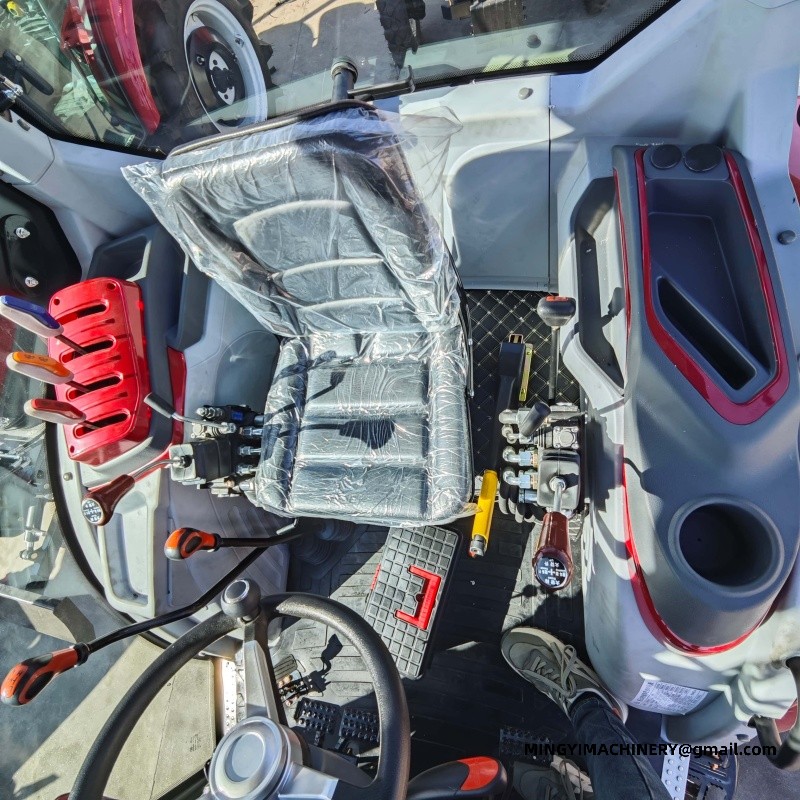
The decision is economic as well as technical. Comparing the work of reconfiguring the machine in that duty against a different machine is a short calculation that usually gives a clear answer.
Machine productivity depends on what happens around it. Deliveries, other trades and the sequence of work decide how much of the shift a machine built for the work spends actually working rather than waiting. Sequencing avoids rework. Doing the work in the order that suits the ground and the following trades keeps the equipment in service productive and prevents finishing a task that then has to be opened up again.
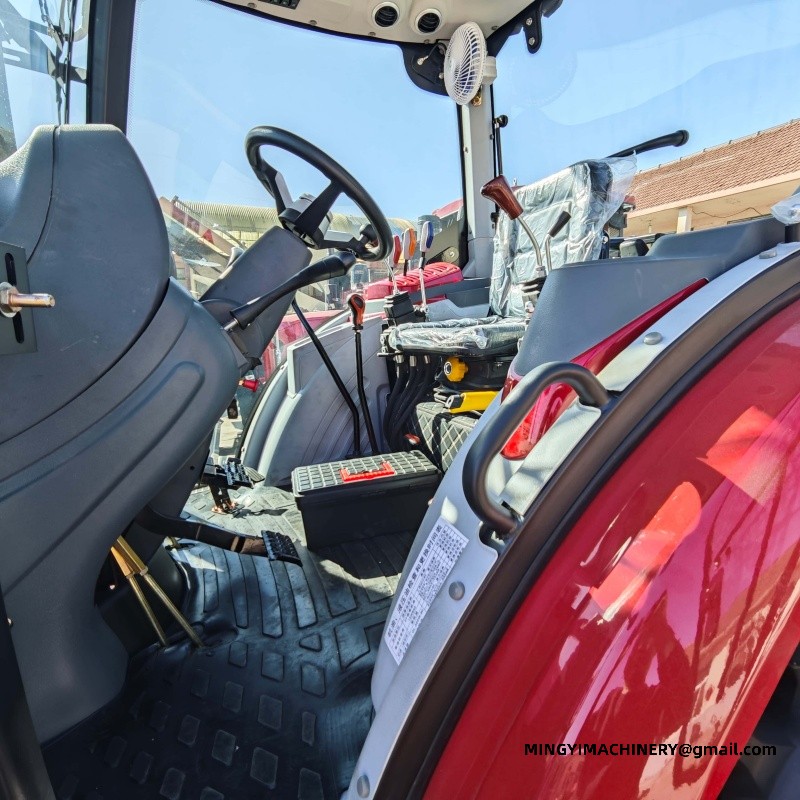
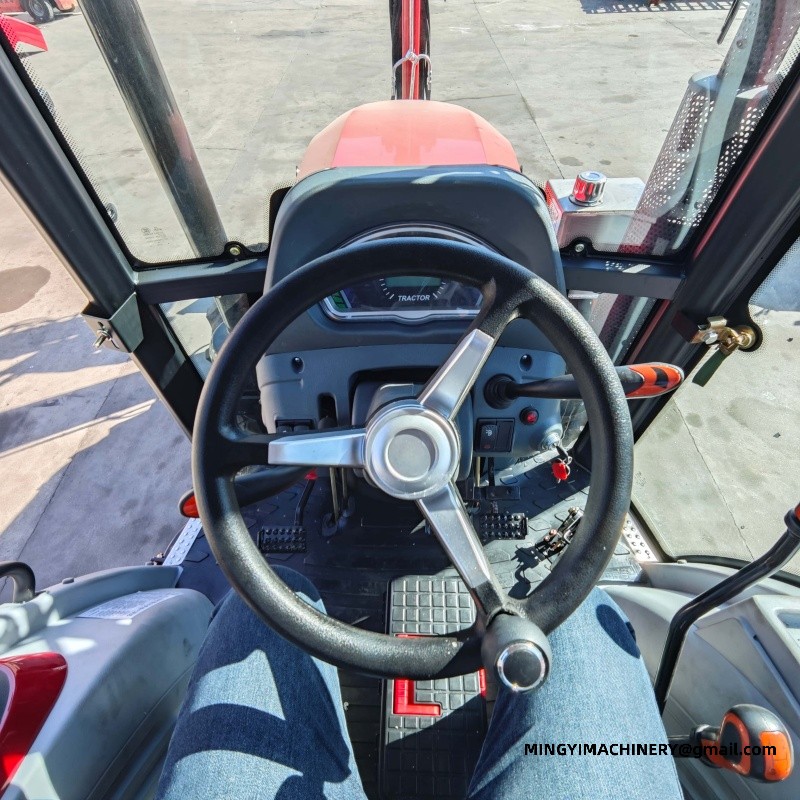
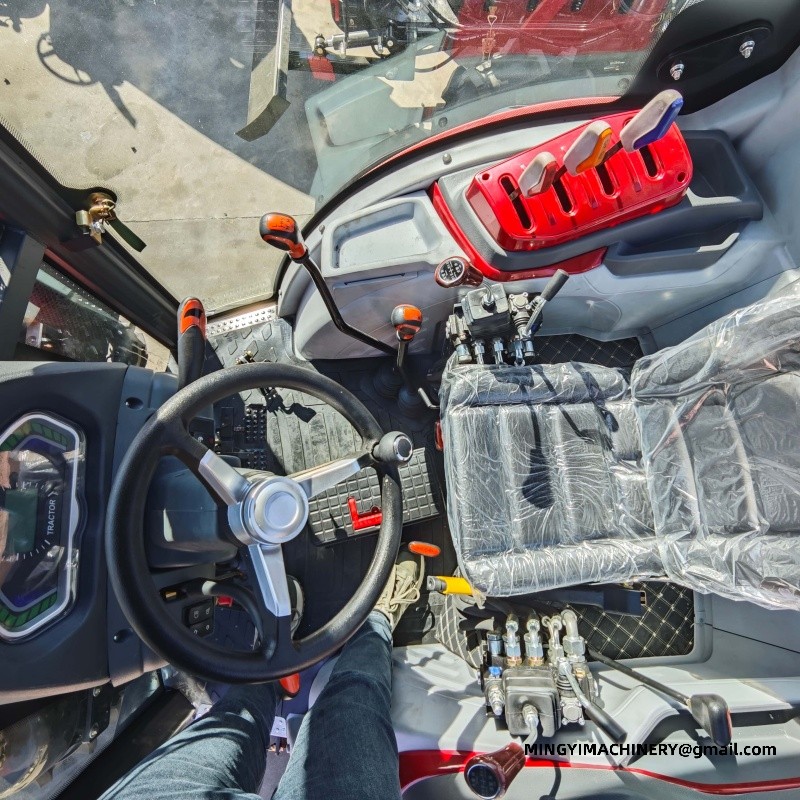
Familiarisation should cover the limits as well as the controls. Knowing where the tractor loses stability, how it behaves at full reach, and what the warning lights mean prevents the incidents that are put down to bad luck.
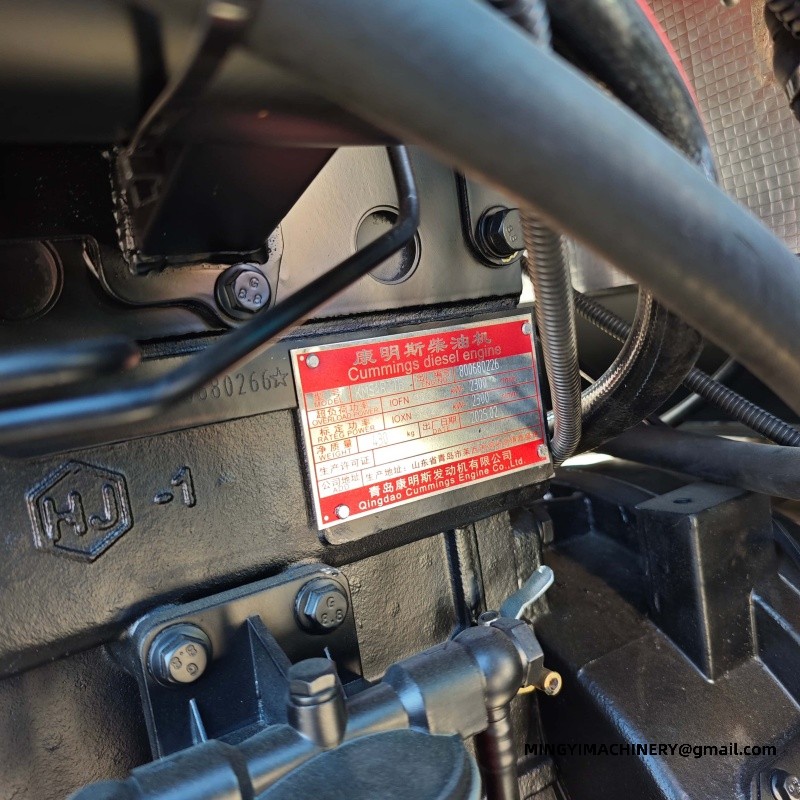
The implement list is the specification. Ploughing, tilling, seeding and hauling each ask something different of the unit in daily use, and writing the list down is what turns a tractor enquiry into a machine that fits. Hitch category and PTO shaft should be confirmed at build. Getting these right on a machine of this size means every implement on the farm connects without an adapter, which is a daily saving rather than a one-off convenience.
Fleet buyers often want consistency rather than variety. Specifying the machine itself so that several units share controls, filters and service points reduces training time and keeps the parts shelf small.
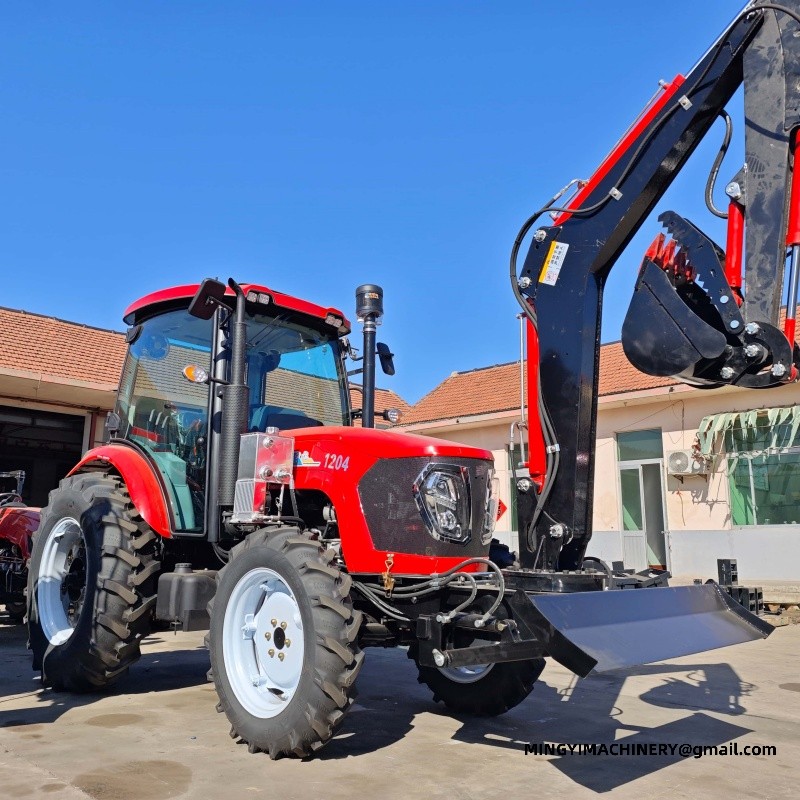
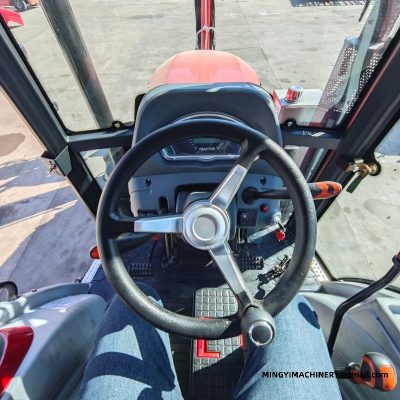
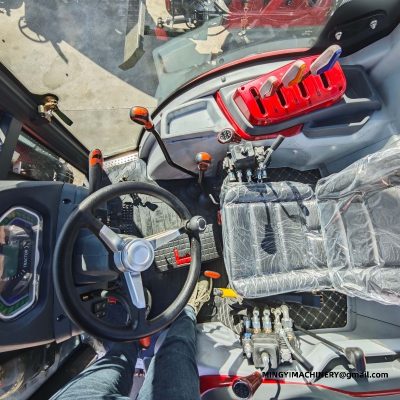
The gearbox is used more than any other control. The machine in that duty with a shuttle shift and sensible spacing between the working gears makes headland turns quicker and reduces the fatigue of a long day. Clutch and linkage adjustment is routine. Keeping the shuttle and the hitch on the unit on the job correctly adjusted protects the gearbox and gives the operator the control needed for accurate implement work.
Shipping dimensions matter as much on export orders as they do locally. Confirming the packed size of the equipment in service before booking avoids re-booking freight after the machine is built.
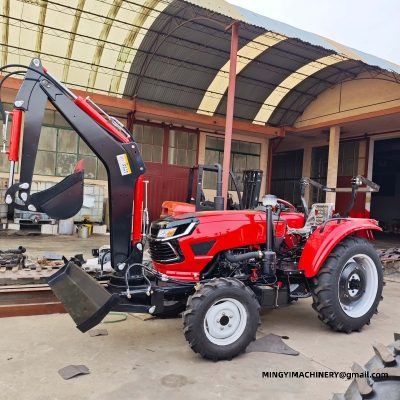
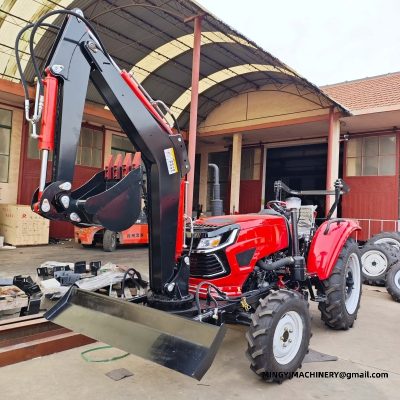
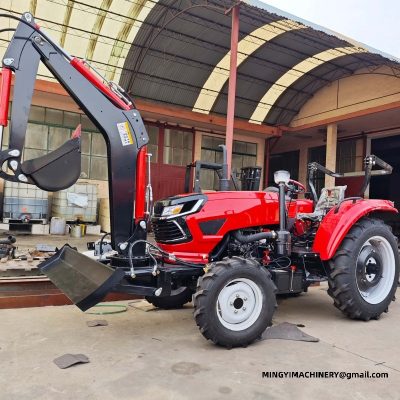
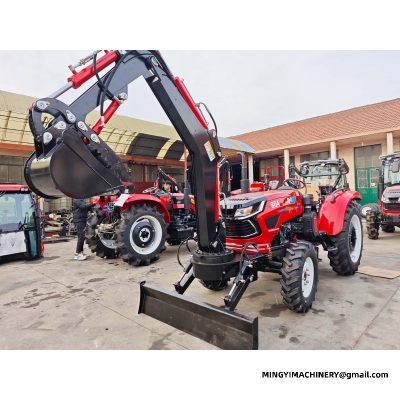
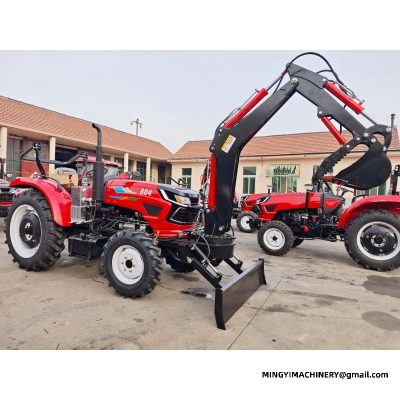
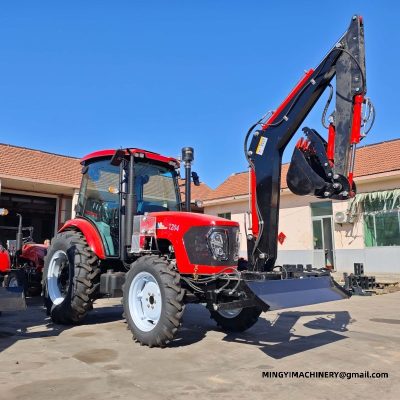
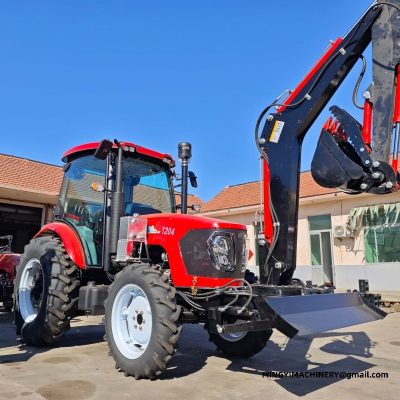
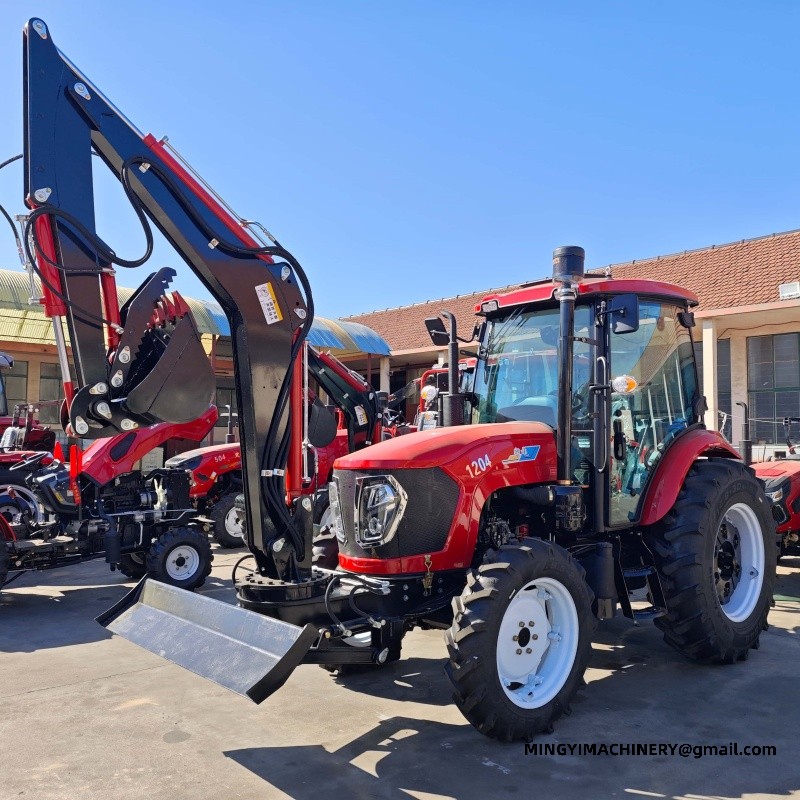
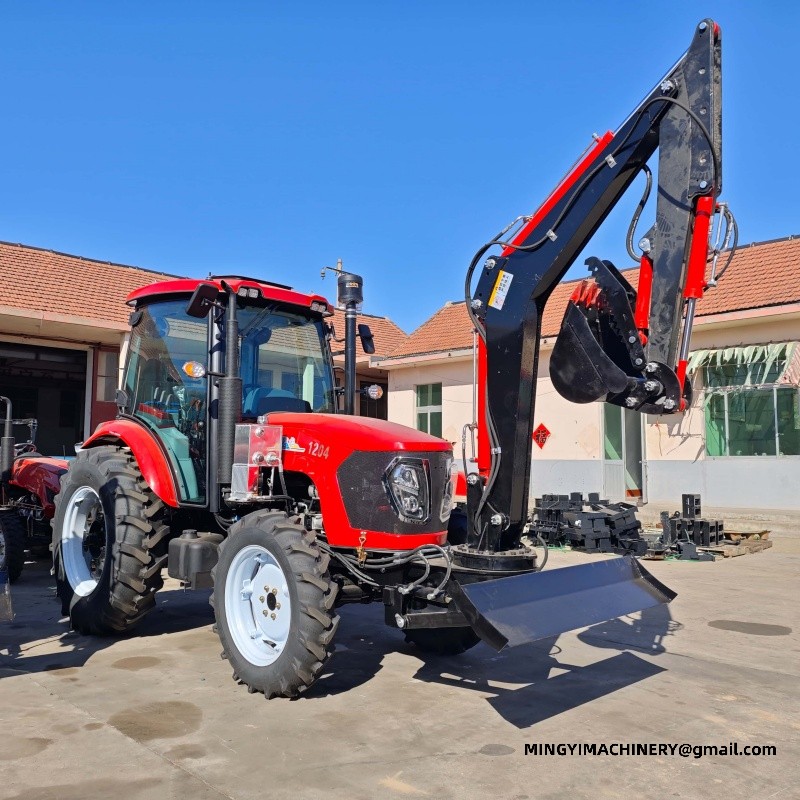
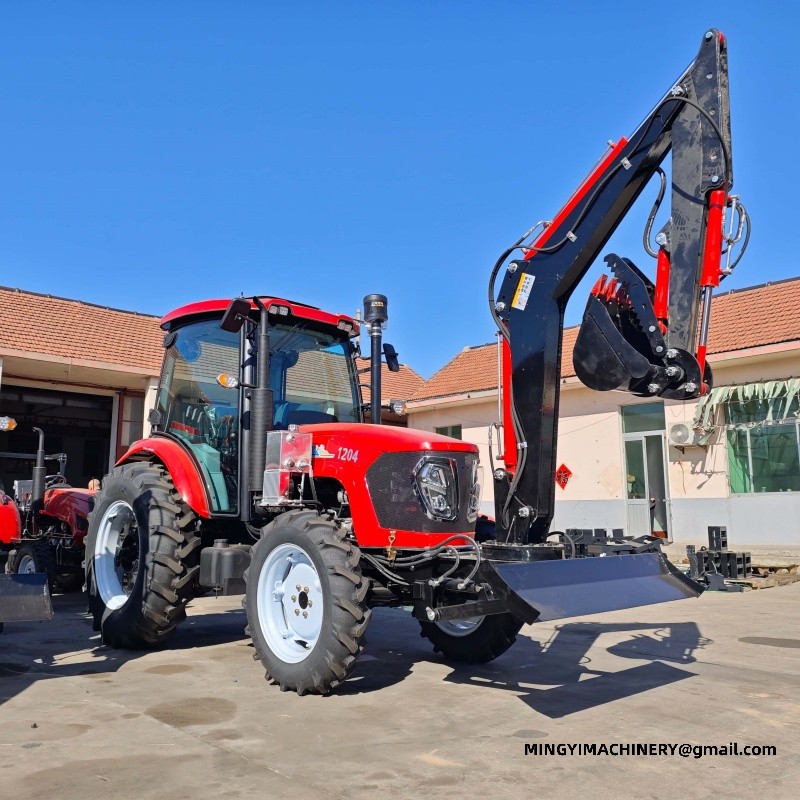
The models below are the four-wheel drive wheel tractors most often matched to this work. Overall size, tyre sizes and operating weight are confirmed together, because the row width and the implement list decide those before the power rating does.
| Model | Overall size | Operating weight | Tyres |
|---|---|---|---|
| 904 mid frame | 3.1 x 1.5 x 2.05 m, track adjustable | 1600 KG | — |
| 704 mid frame | 3.2 x 1.5 x 2.05 m, track adjustable | — | front 750-16 rear 11.2-28 |
| 604 mid frame | 3.1 x 1.45 x 1.95 m, track adjustable | 1600 KG | front 650-16 rear 11.2-24 |
| 604 wheel tractor | 2.4 x 1.3 x 1.3 m, track adjustable | 1270 kg | front 600-12 rear 9.5-16 |
| 504 wheel tractor | 2.4 x 1.3 x 1.3 m, track adjustable | — | front 600-12, rear 9.5-16 |
| 804 mid frame | 3.2 x 1.5 x 2.05 m, track adjustable | 1500 KG | front 750-16 rear 11.2-28 |
| 504 mid frame | 3.1 x 1.5 x 1.97 m, track adjustable | 1450 kg | front 650-16 rear 11.2-24 |
| 804 wheel tractor | 2.4 x 1.3 x 1.3 m, track adjustable | — | front 600-12 rear 9.5-16 |
| Item | Note |
|---|---|
| PTO | Rear PTO at 540 / 720 rpm drives implements directly; the gearbox and shuttle shift are specified with the implement list. |
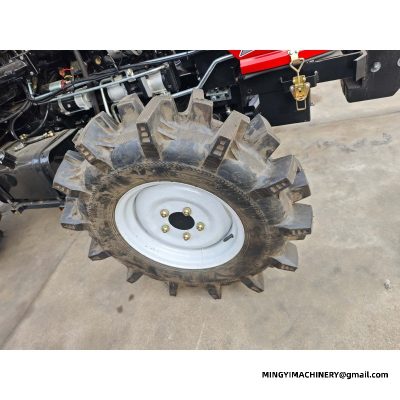
| Tyre options | Front and rear tyre sizes can be changed at build; wider rear tyres suit soft ground and narrow fronts suit row crop work. |
| Ballast and canopy | Front and rear ballast blocks and a sun canopy are fitted to suit the heaviest implement the tractor will pull. |
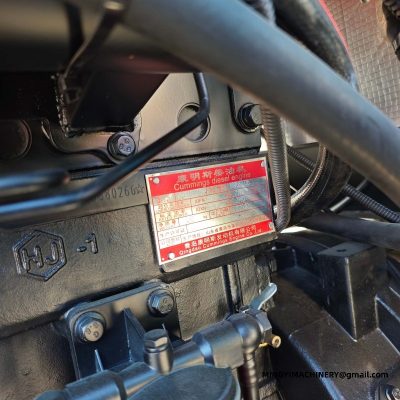
| Engine by power band | 50/60 hp: 490Engine ; 70/80 hp: 490turboEngine |
The first hour on site should be slow. Before a machine of this size is put to work the fluid levels are rechecked after transport, the fasteners are gone over and the machine is run light so that anything loosened in transit shows up early.
The parts that stop a machine are rarely the parts that are hardest to find. Filters, belts, seals and the ground engaging tools on the machine itself are easy to hold and slow to replace, which is why they belong on the shelf rather than on an order.
Standing still is harder on a machine than working. Preparing the machine in that duty for a long idle period means clean fluids, a charged battery and protection for the exposed surfaces, because neglect is not the same as rest.
Familiarisation is not the same as reading the manual. Sitting on a machine built for the work, working through the controls at low speed and learning where the machine balances takes an hour, and that hour is what keeps the first week uneventful.
The record should follow the machine, not the owner. When the tractor changes hands the service history travels with it, and a complete folder is often the difference between a quick sale and a long one.
An added function should pay for itself quickly. Whether the unit in daily use gains a different bucket, a hydraulic service or a protection package, the test is the number of days a year it is actually used.
Most engine trouble starts with what went into the tank. Clean fuel, stored properly and filtered before it reaches the equipment on site, prevents more downtime than any other single habit an owner can adopt.
How a machine travels decides how it starts on arrival. Securing the model in question against movement, protecting the exposed cylinders and keeping the battery and fluids in the right state for the voyage all belong to the packing list.
Every line above comes from the build sheet for the machine in that duty, and the final configuration is confirmed against the working conditions and the destination before production.
E-mail:sales@mingycn.com
LINE(ID):mingyicn