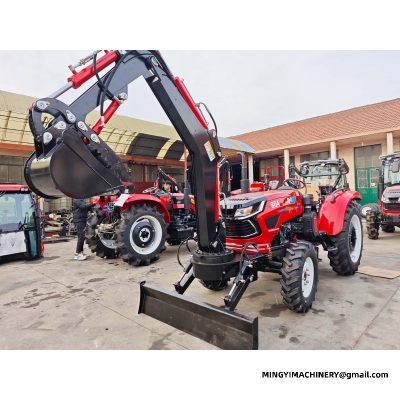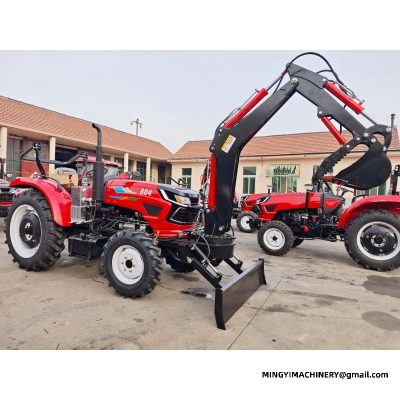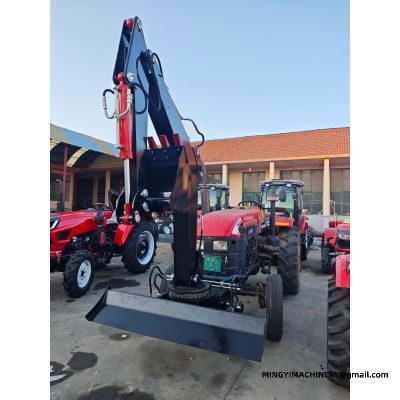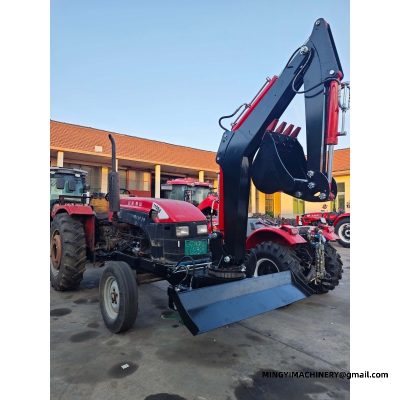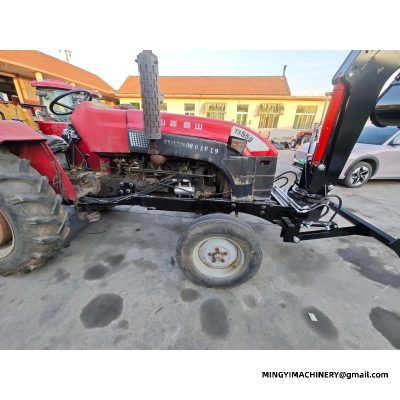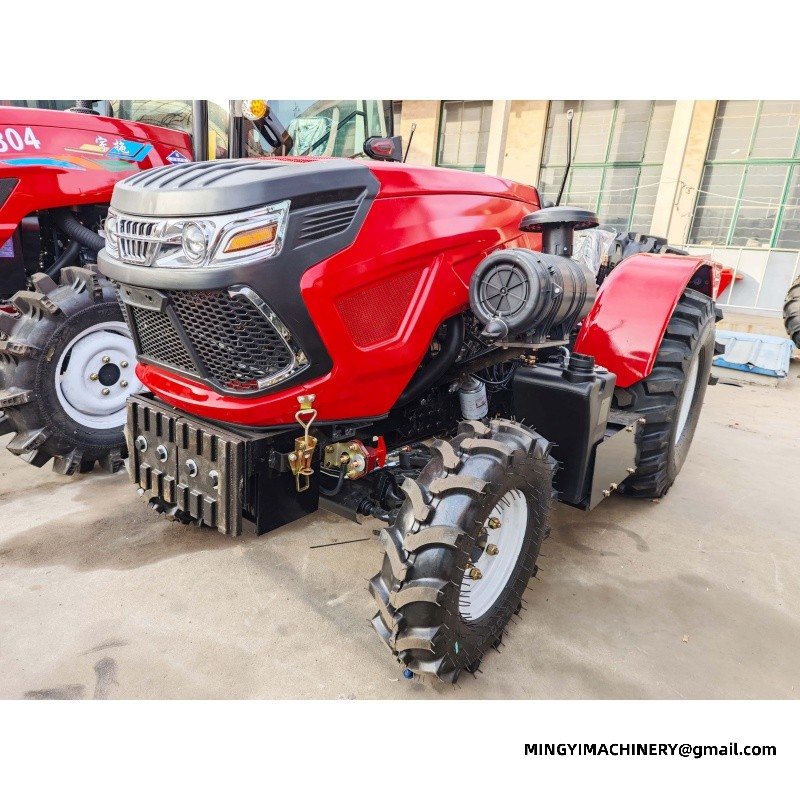
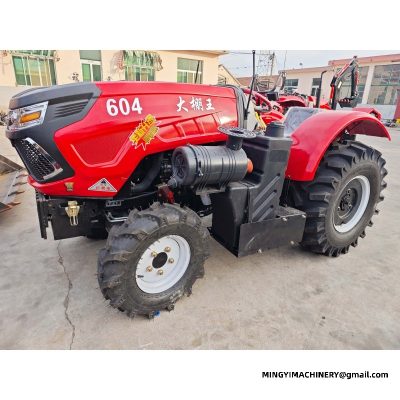
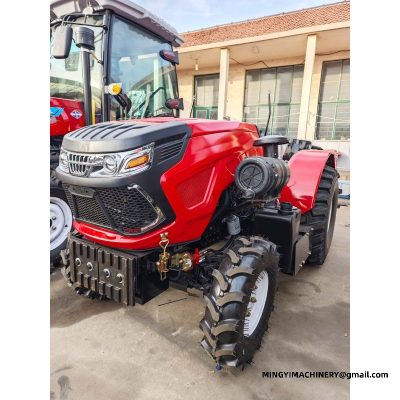
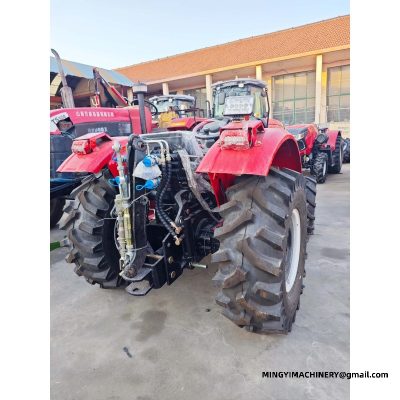
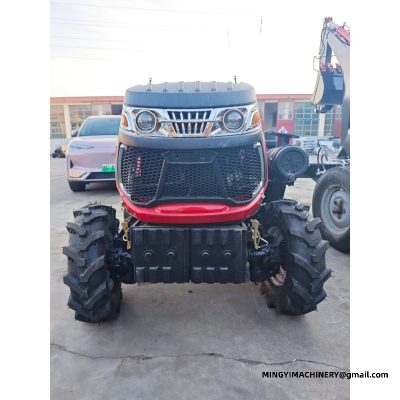
Most enquiries about the tractor start with a job rather than a machine. Someone has a site, a material and a deadline, and the specification follows from those three. This page works back from the job to the build sheet.
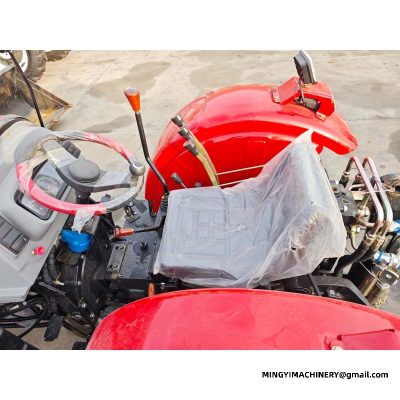
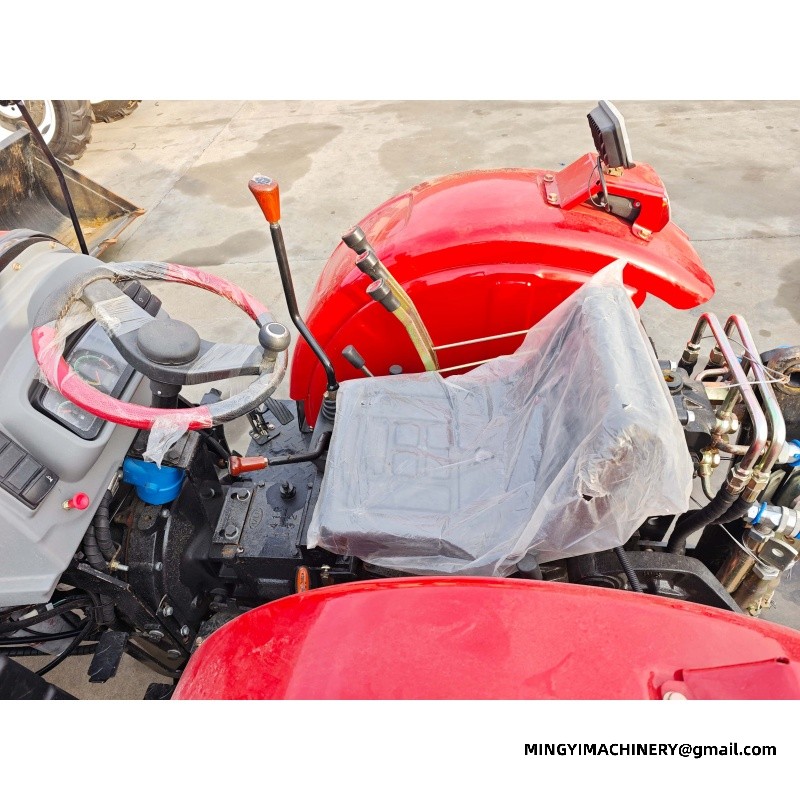
Comfort is a productivity item. This class of machine with a sun canopy, a usable seat and controls that fall to hand lets an operator work a full day, and the difference shows in the quality of the last hour. Air filtration matters in field work. The unit in daily use working in dust and straw needs a cab filter that is checked and changed, and neglecting it takes the operator more than it takes the machine. Visibility to the hitch and to the front axle is what makes accurate work possible. Seeing the linkage from the seat of a machine of this size is the difference between a clean run and repeated correction.
Carrying and travelling with a load needs its own plan. Speed, gradient and surface all matter more once the equipment on site is loaded, and the safe combination is the conservative one.
Machine output varies more between operators than between brands. Smooth, planned movements put less load on the structure and use less fuel, and that difference is visible on the hour meter and in the service bills for the machine itself. A short handover pays for itself. Operators who understand why the model in question is set up the way it is will report a change in behaviour early, which is usually the point where a repair is simplest.
Replacement timing is a planning decision. Knowing the intended working life of the machine in that duty lets an owner sell while the machine still has value rather than after a major repair becomes due.
Standing still is hard on machinery. The unit on the job left for weeks benefits from a clean, dry, covered space, a charged battery and a fuel system prepared for the layoff, and all three effort very little. A periodic start is better than none. Running a machine built for the work to operating temperature during a long layoff keeps seals and the charging system in better condition than leaving it untouched until the next job.
The gearbox is used more than any other control. The equipment in service with a shuttle shift and sensible spacing between the working gears makes headland turns quicker and reduces the fatigue of a long day. Working gears matter more than top speed. Most of the hours on the tractor are spent in two or three gears, and having the right ratios there is worth more than a high road speed that is rarely used.
The specification should be written from the job backwards. Listing the loads, the ground and the hours first, then matching the unit in daily use to that list, avoids buying capacity the work never uses and avoids discovering a shortfall in the first week. Buyers who specify a machine of this size on paper before enquiring get specifications that can be compared. Without that list, two suppliers will propose two different machines and the simpler one is usually the smaller one, not the better value. A written duty list is the simplest part of the purchase. It takes an hour to note the material, the distance, the gradient and the hours per week, and it is what turns this class of machine enquiry into a machine that fits.
Documentation should be agreed at order stage. The commercial invoice, packing list and any certificate required at destination are part of shipping the equipment on site, and missing papers delay clearance longer than the voyage takes.
Service intervals exist because wear is predictable. Following the maker schedule on the model in question takes far less time than repairing the damage that follows a missed oil change or a filter left in place past its life.
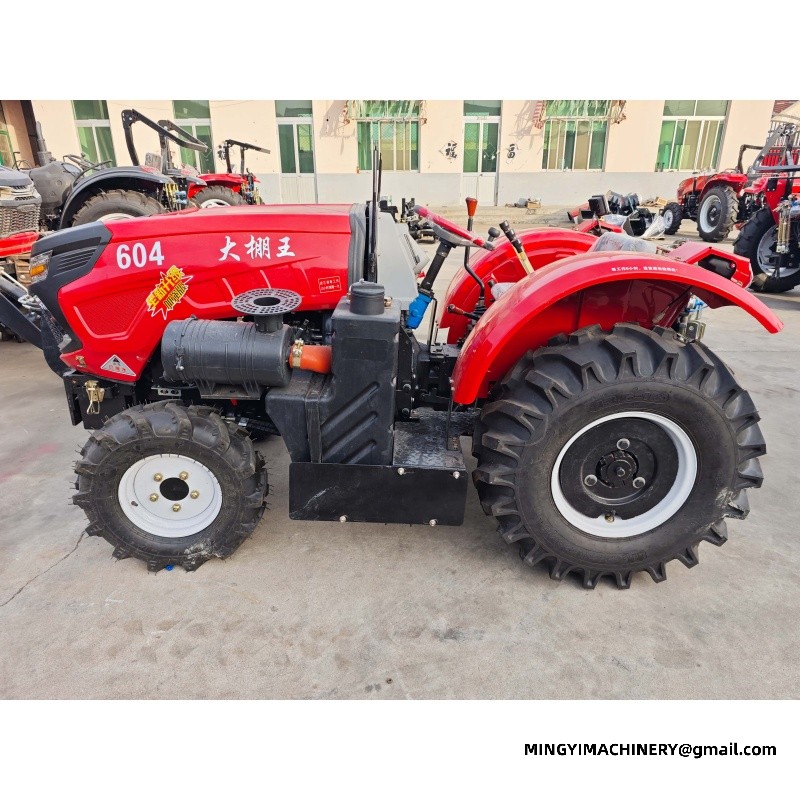
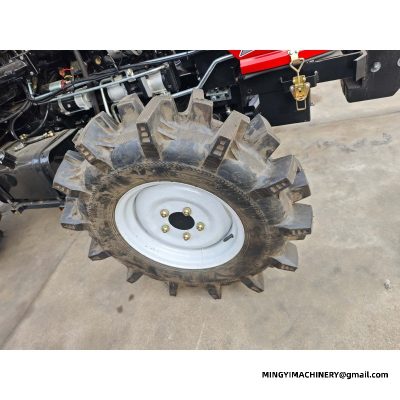
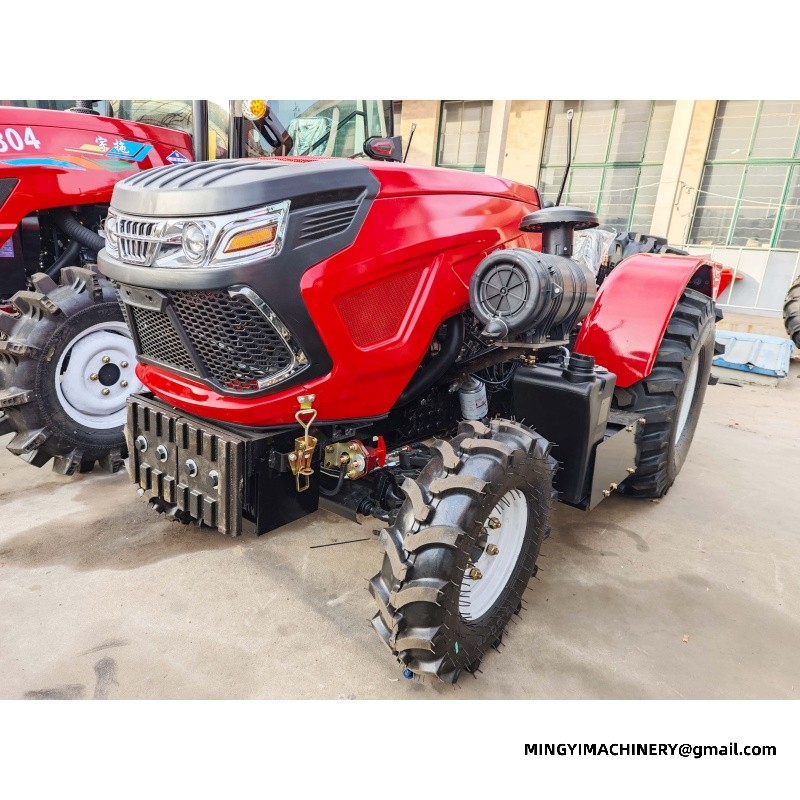
Tyre choice is the simplest traction improvement available. Correct sizes and the right tread on the unit on the job put more of the power on the ground, and a slip figure that looks acceptable is still lost work every hour. Ballast is part of the specification. Weights on the front and rear of a machine built for the work keep the axle loads correct when a heavy implement is lifted, and an unballasted tractor is unstable as well as inefficient.
Commissioning is the point where most avoidable issues are found. Checking levels, fasteners and function on the equipment in service before it goes to work takes an hour and prevents a claim conversation later. Warranty terms are clearer when they are read before purchase. Knowing what is covered, what counts as a wearing item and what documentation is required makes a claim on the tractor straightforward rather than contested.
Hour planning helps at resale as well. The unit in daily use with a recorded service history and a sensible hour count is easier to sell than one with the same hours and no records, whatever its condition.
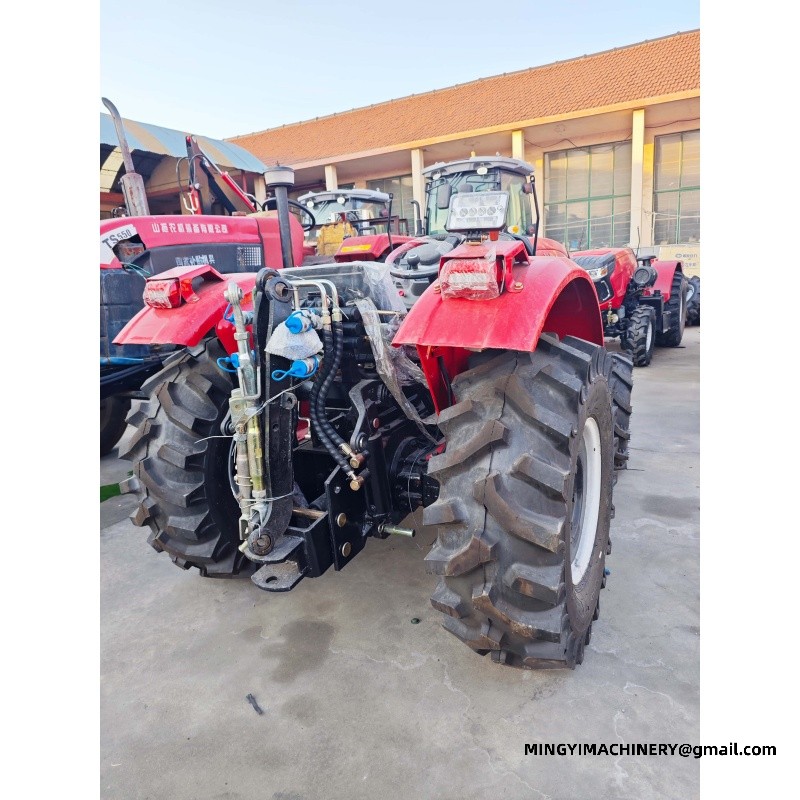
Hitch category and PTO shaft should be confirmed at build. Getting these right on the equipment on site means every implement on the farm connects without an adapter, which is a daily saving rather than a one-off convenience.
Personal protective equipment and a stop rule are simple controls. Agreeing before work starts that anyone can stop the job is the single measure that most often prevents a serious incident near the model in question.
Build options are where a standard machine becomes the right machine. Colour, guarding, lighting, seating and hydraulic provisions can usually be set at build time on the unit on the job, and are far simpler then than as a retrofit.
Sealed points and guarded areas deserve a look in these conditions. The equipment in service working in abrasive dust benefits from checked boots, intact guards and clean breathers, all of which are quick to verify.
Certain parts are designed to be consumed. Knowing which items on this class of machine are wearing parts, and roughly how long they last in the duty the machine sees, turns replacement into a plan rather than a breakdown.
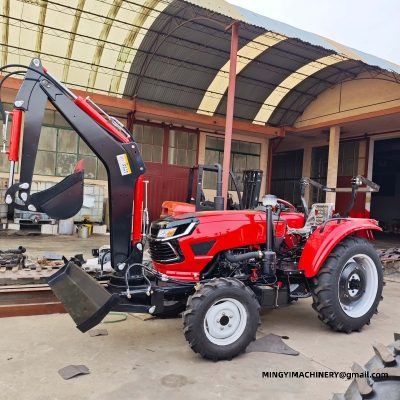
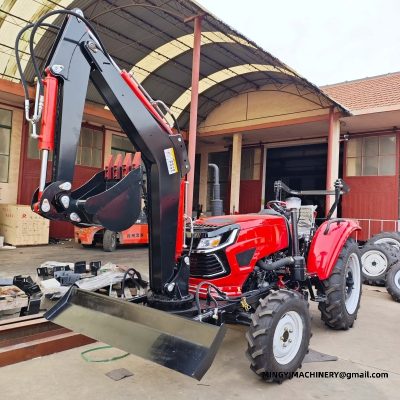
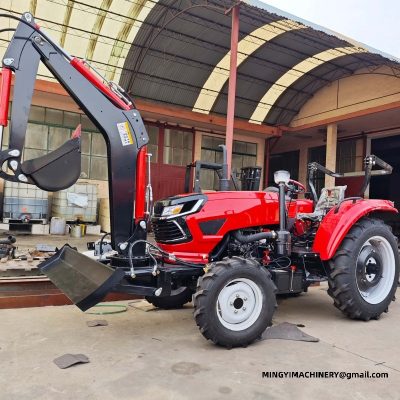
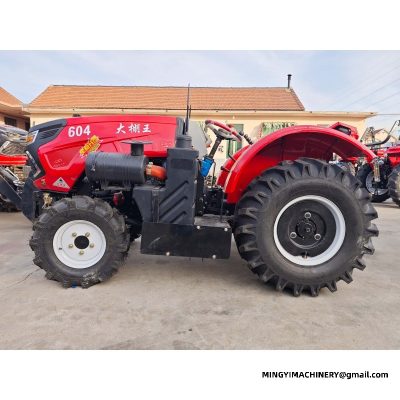
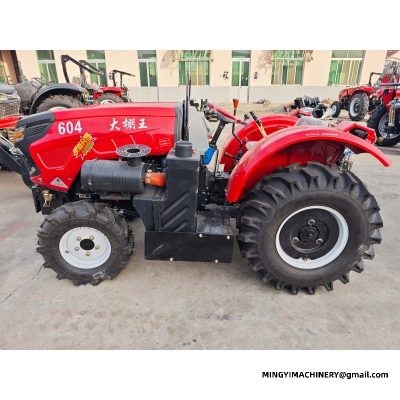
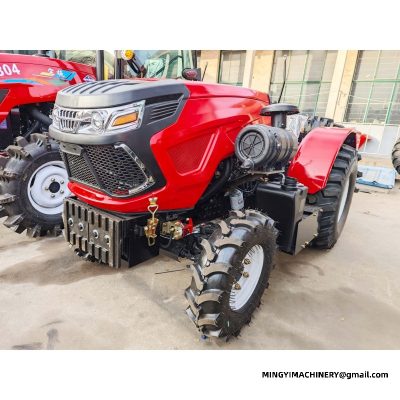
The models below are the four-wheel drive wheel tractors most often matched to this work. Overall size, tyre sizes and operating weight are confirmed together, because the row width and the implement list decide those before the power rating does.
| Model | Overall size | Tyres | Operating weight |
|---|---|---|---|
| 804 wheel tractor | 2.4 x 1.3 x 1.3 m, track adjustable | front 600-12 rear 9.5-16 | — |
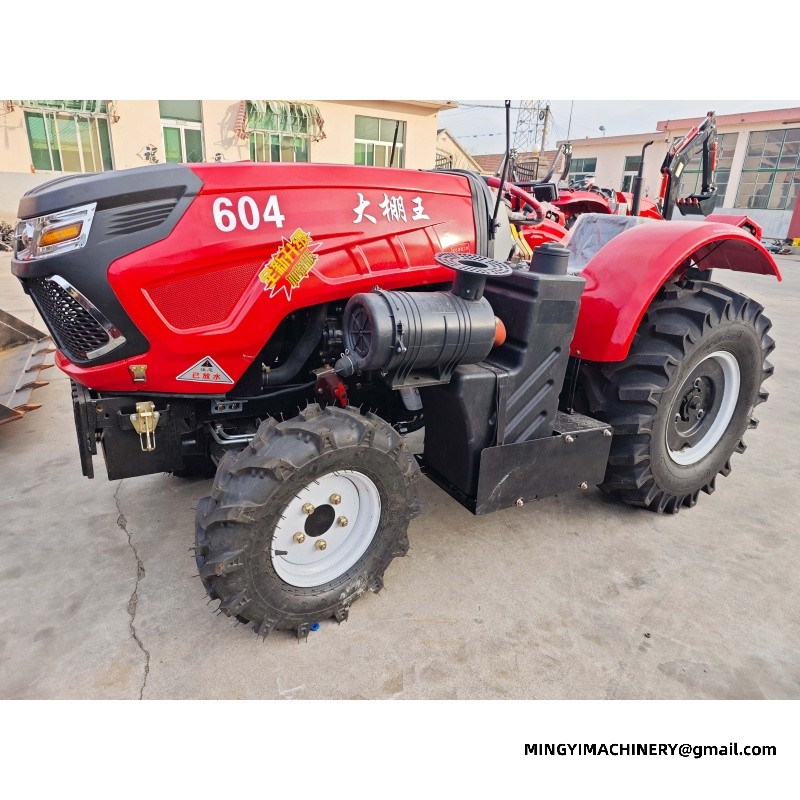
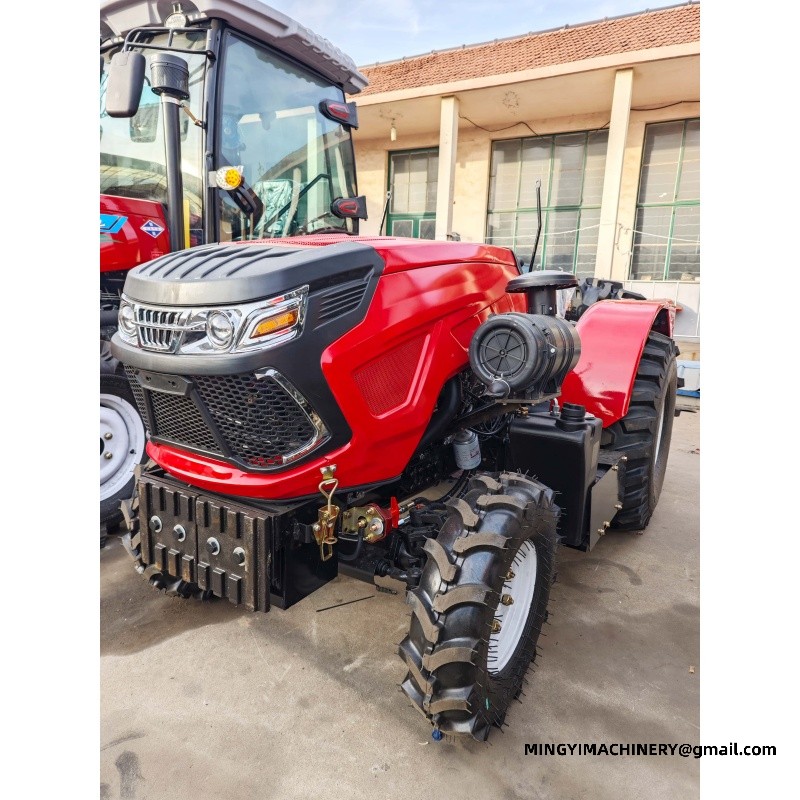
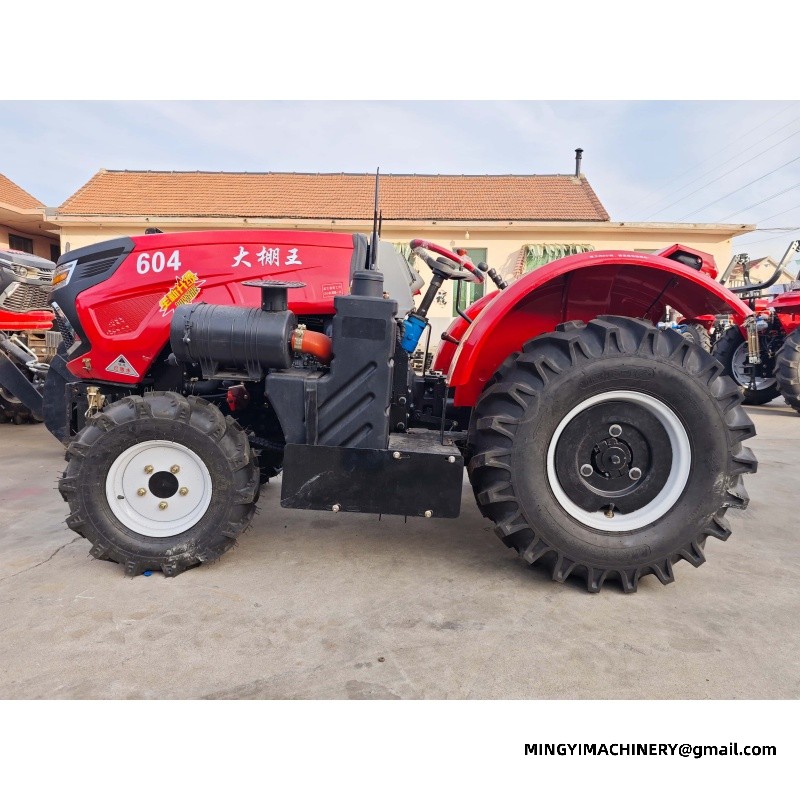
| 604 mid frame | 3.1 x 1.45 x 1.95 m, track adjustable | front 650-16 rear 11.2-24 | 1600 KG |
| 804 mid frame | 3.2 x 1.5 x 2.05 m, track adjustable | front 750-16 rear 11.2-28 | 1500 KG |
| 704 mid frame | 3.2 x 1.5 x 2.05 m, track adjustable | front 750-16 rear 11.2-28 | — |
| 504 mid frame | 3.1 x 1.5 x 1.97 m, track adjustable | front 650-16 rear 11.2-24 | 1450 kg |
| 904 mid frame | 3.1 x 1.5 x 2.05 m, track adjustable | — | 1600 KG |
| 504 wheel tractor | 2.4 x 1.3 x 1.3 m, track adjustable | front 600-12, rear 9.5-16 | — |
| 604 wheel tractor | 2.4 x 1.3 x 1.3 m, track adjustable | front 600-12 rear 9.5-16 | 1270 kg |
| Item | Note |
|---|---|
| Tyre options | Front and rear tyre sizes can be changed at build; wider rear tyres suit soft ground and narrow fronts suit row crop work. |
| Engine by power band | 50/60 hp: 490Engine ; 70/80 hp: 490turboEngine |
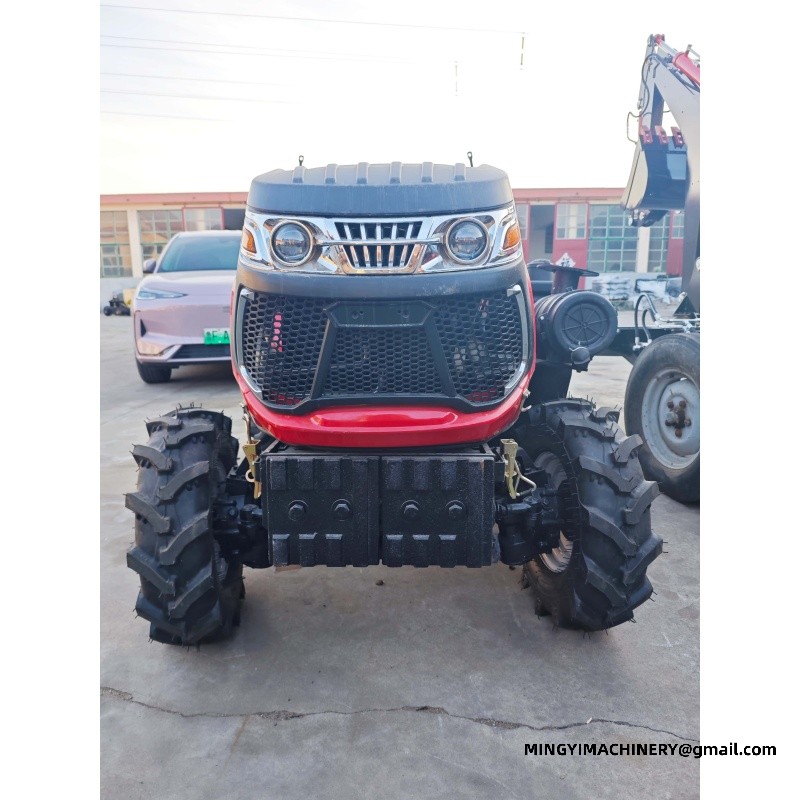
| Ballast and canopy | Front and rear ballast blocks and a sun canopy are fitted to suit the heaviest implement the tractor will pull. |
| PTO | Rear PTO at 540 / 720 rpm drives implements directly; the gearbox and shuttle shift are specified with the implement list. |
The first day with a new machine sets the pattern for the next five years. Handover for the machine itself covers the control layout, the daily check points and the limits the operator needs to know before the first real load is lifted or carried.
Documentation should match the machine that was actually built. The sheet supplied with the machine in that duty records the configuration as delivered, because the generic catalogue description is not what the customer needs when ordering a part.
Fluid quality is a storage problem before it is a machine problem. Water and sediment in a drum will find the injection system of a machine built for the work eventually, and a settling period is nothing compared with a pump.
A machine that only one person can use is a single point of failure. Training a second operator on the tractor takes a day and removes the dependency that otherwise governs holidays, illness and busy weeks.
Export packing is part of the machine, not an afterthought. The unit in daily use is blocked and braced inside the container so that it arrives in the same condition it left, and the load plan is decided by the dimensions rather than by what fits loosely.
A machine that works on one site still has to reach the next. The overall dimensions and the operating weight of the equipment on site decide what trailer or truck is needed, and that decision belongs before the job is booked.
An added function should pay for itself quickly. Whether the model in question gains a different bucket, a hydraulic service or a protection package, the test is the number of days a year it is actually used.
Every line above comes from the build sheet for the machine in that duty, and the final configuration is confirmed against the working conditions and the destination before production.
E-mail:sales@mingycn.com
LINE(ID):mingyicn