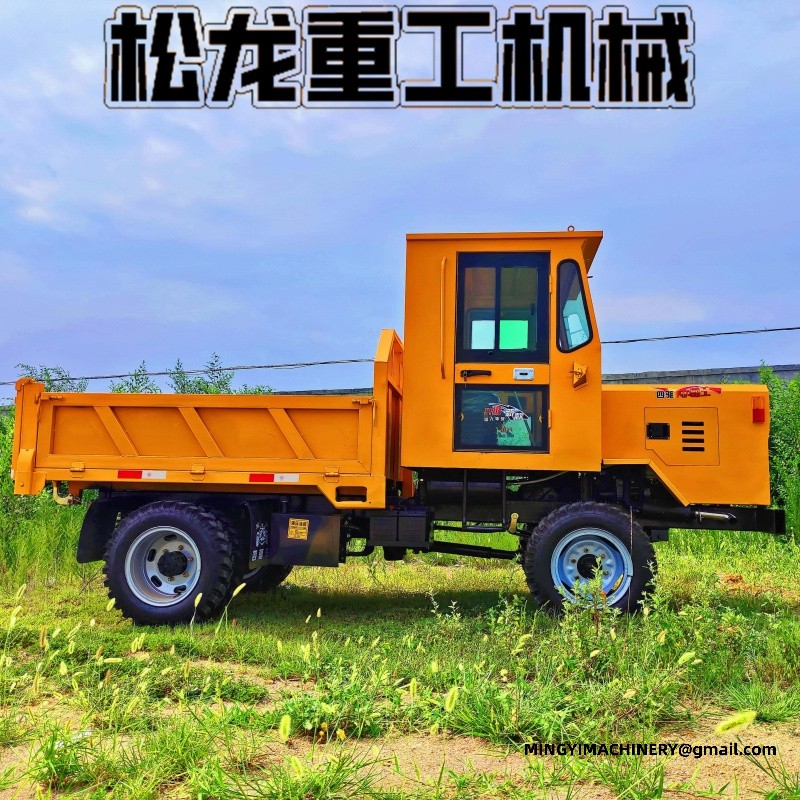
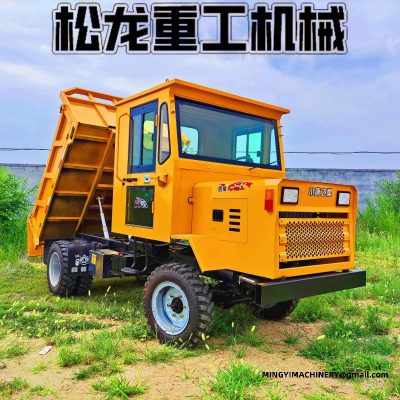
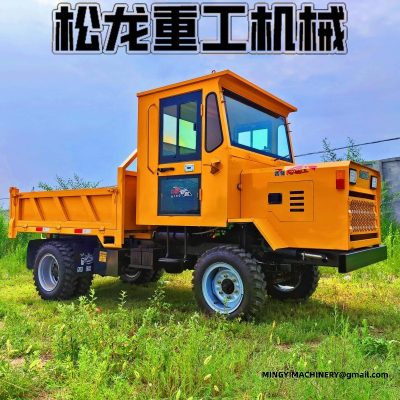
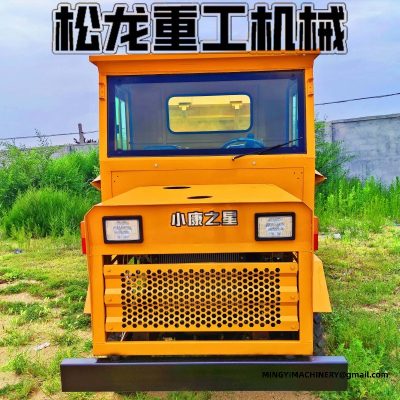
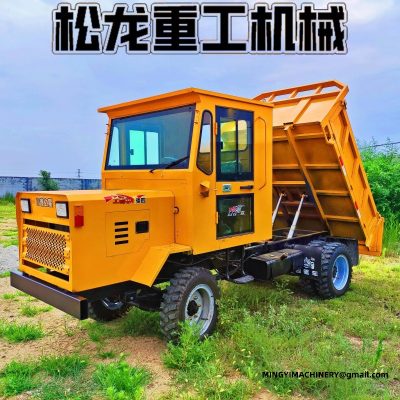
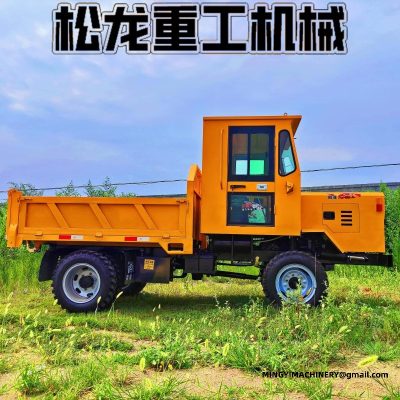
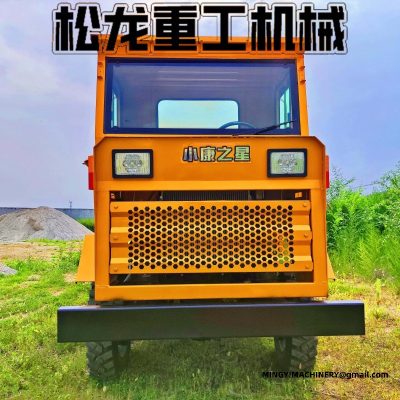
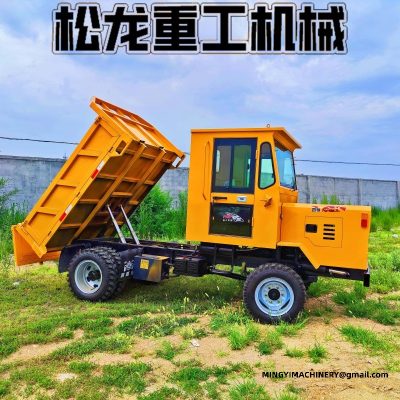
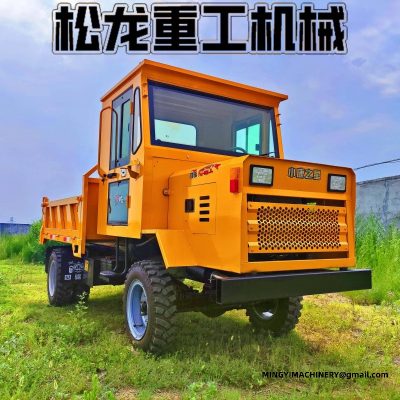
Every the dumper leaves the shop configured for a particular buyer. This page explains the choices that configuration involves, covering frame, power, running gear, cab and attachments, and what each one means once the machine is on site.
Remote diagnosis shortens most faults. A walk-around on video with the panels open often identifies the cause on this class of machine without waiting for a visit, and avoids shipping a part that turns out not to be needed.
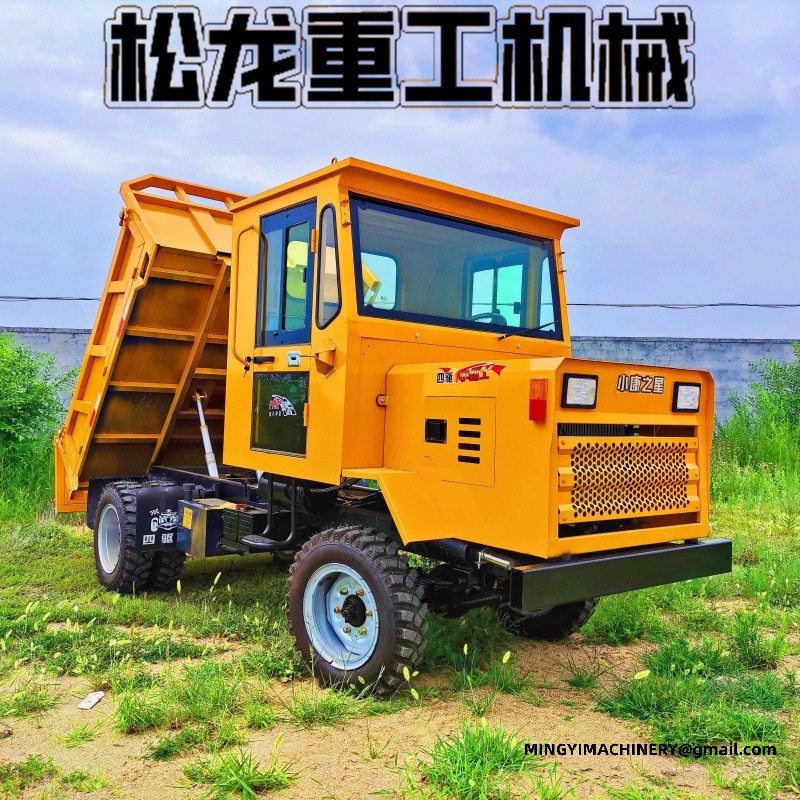
Carrying concrete changes the duty entirely. The unit in daily use with a mixer drum is working against the clock, and the specification follows the delivery distance and the site access rather than the load alone. Drum bodies need power and stability. A machine of this size set up for concrete has to carry the drum, the load and the water, and the frame and brakes should be specified for that combined weight. Cleaning and discharge are part of the job. The equipment on site used for concrete is judged on how quickly it can discharge and wash out, because that turnaround is what the site is paying for.
Stability follows the load and its position. Knowing the rated capacity of the machine itself at the working radius, rather than at its best case, is what keeps handling predictable and the machine upright. Ballast and attachment weight change the machine. Adding a heavy tool to the model in question moves the centre of gravity, and the counterweight or configuration should be matched to the tool rather than assumed.
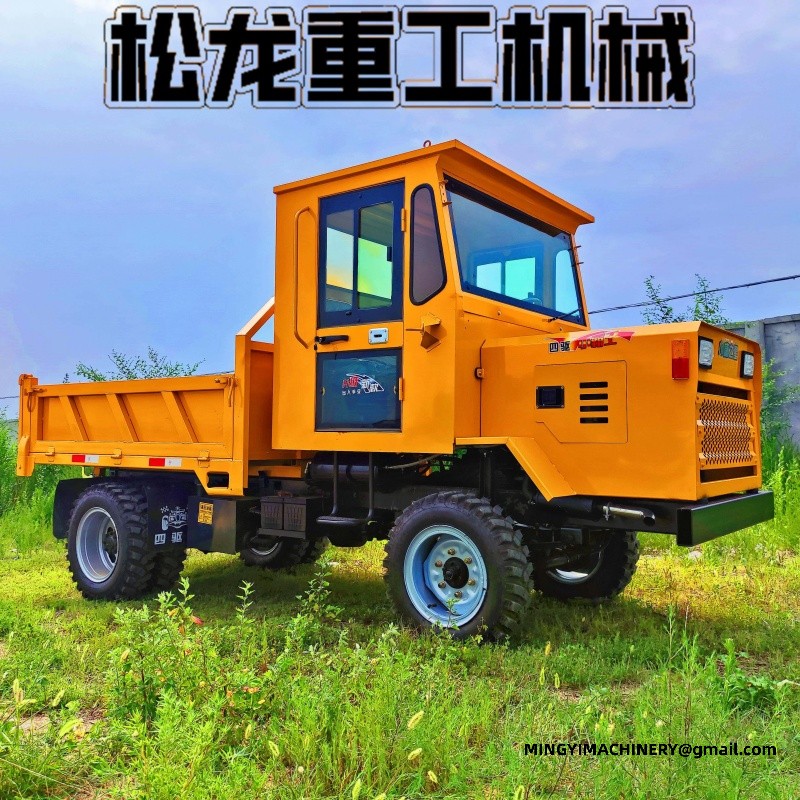
Replacement timing is a planning decision. Knowing the intended working life of the machine in that duty lets an owner sell while the machine still has value rather than after a major repair becomes due. Records are part of the asset. Keeping the service history and the hour records with the unit on the job makes it easier to sell, easier to insure and easier to justify the replacement machine internally.
Working after daylight changes the risk. Lighting coverage on the machine built for the work and across the working area, plus high-visibility clothing for anyone on foot, are the items that make low-light work practical.
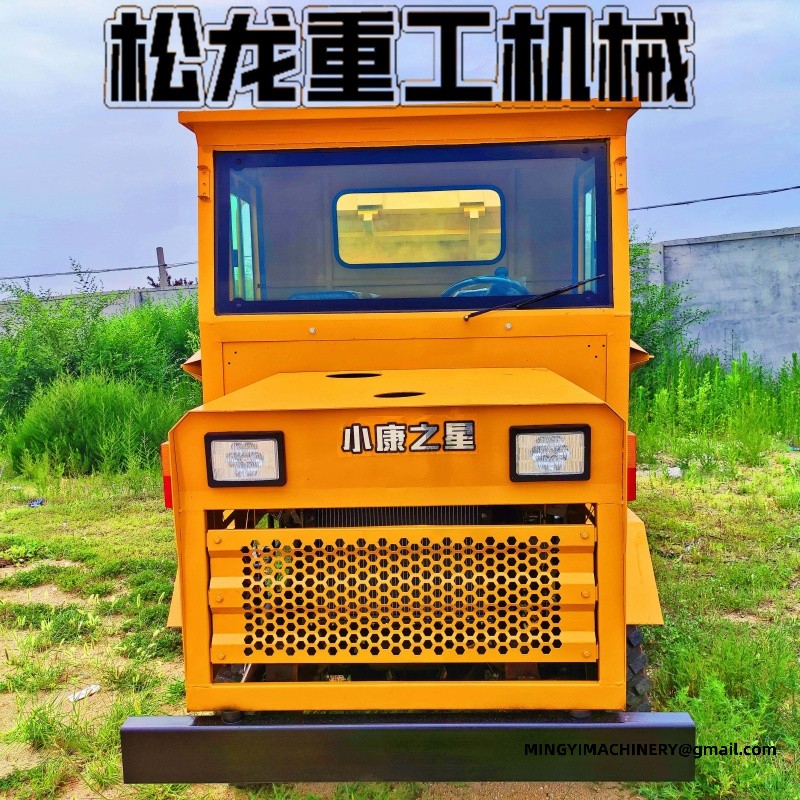
Size matters underground. Overall height and width decide whether the equipment in service can work in a tunnel at all, and those dimensions are the first thing to confirm rather than the last.
Most incidents around machinery come from the space rather than the machine. Exclusion zones, a clear signal person and a check on what is behind the class of machine before it moves cover the large majority of the risk on a working site. Personal protective equipment and a stop rule are simple controls. Agreeing before work starts that anyone can stop the job is the single measure that most often prevents a serious incident near the dumper.
Farm work is seasonal and varied. The unit in daily use that hauls feed in one month and muck or aggregate in the next earns its place by being usable across the year rather than by being optimised for one task.
A written duty list is the simplest part of the purchase. It takes an hour to note the material, the distance, the gradient and the hours per week, and it is what turns the equipment on site enquiry into a machine that fits.
Duty cycle is the honest measure of a machine. The model in question working a few hours a week has different needs from one working two shifts, and the cooling, filtration and service intervals should follow the hours rather than the calendar.
Moving the machine is part of owning it. Overall length, width and height decide which trailer or container the unit on the job fits, and a machine that needs a permit or an abnormal load escort is a machine with a delivery delay built in.
Timber work changes what the vehicle carries. The equipment in service fitted with a log grab loads and unloads without a second machine, which is usually the reason a forestry contractor specifies one over a conventional truck. Access tracks in forestry are narrow, soft and often steep. The dumper chosen for that work is chosen for the track, and the body, cab and tyre specification follow from the route rather than from the load alone.
Machine productivity depends on what happens around it. Deliveries, other trades and the sequence of work decide how much of the shift the unit in daily use spends actually working rather than waiting.
Cold changes how a machine starts and how it warms up. Allowing the equipment on site to reach operating temperature before loading it, and using the correct grade of oil and fuel for the season, prevents most cold-start problems. Batteries and fluids are the parts that notice the cold first. The machine itself kept on a maintainer through a freezing spell starts on the first turn, while one left standing is the usual cause of a lost morning.
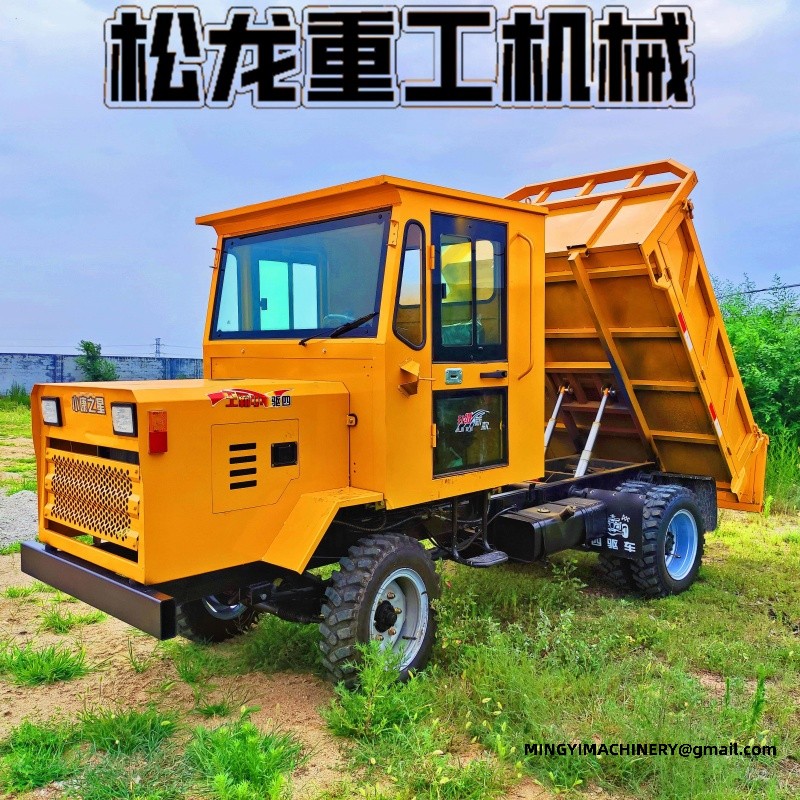
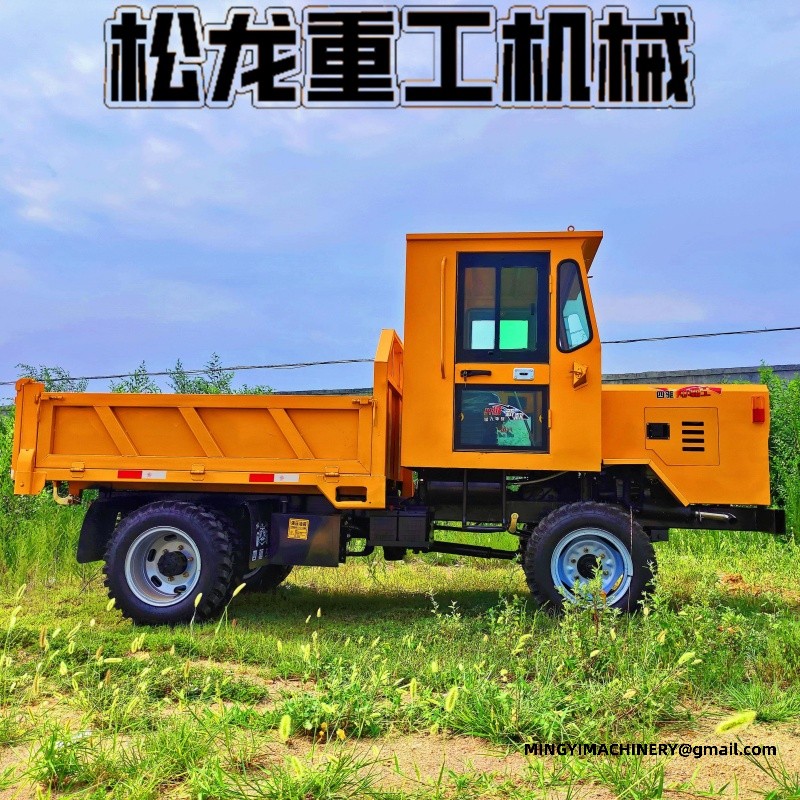
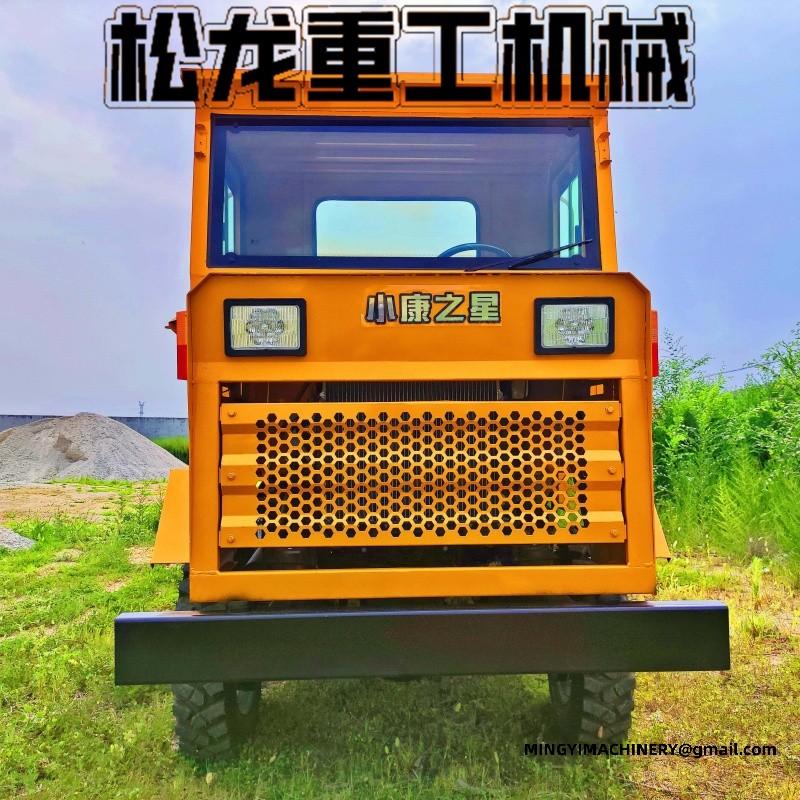
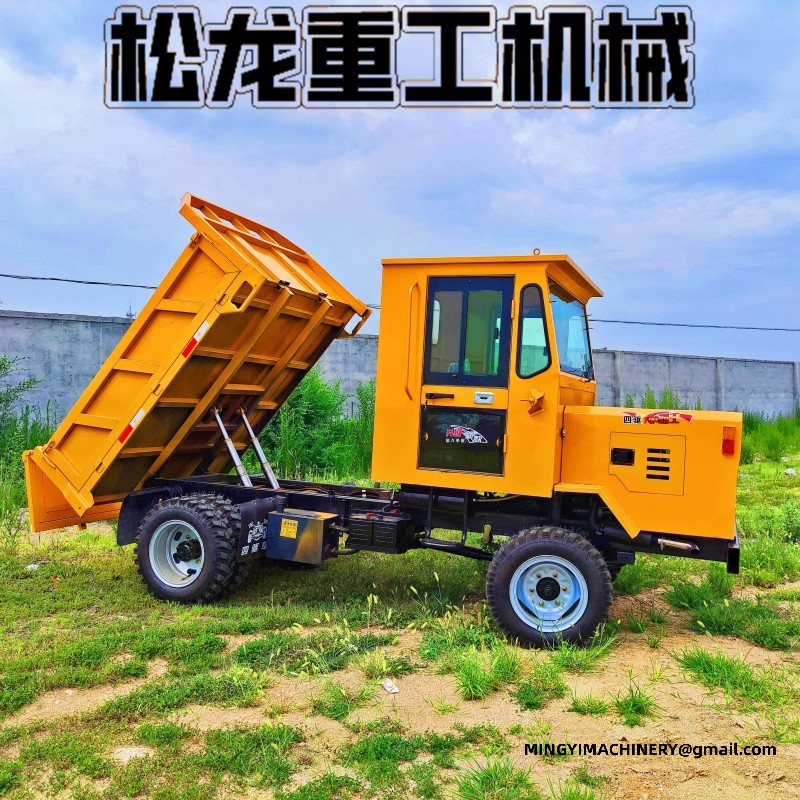
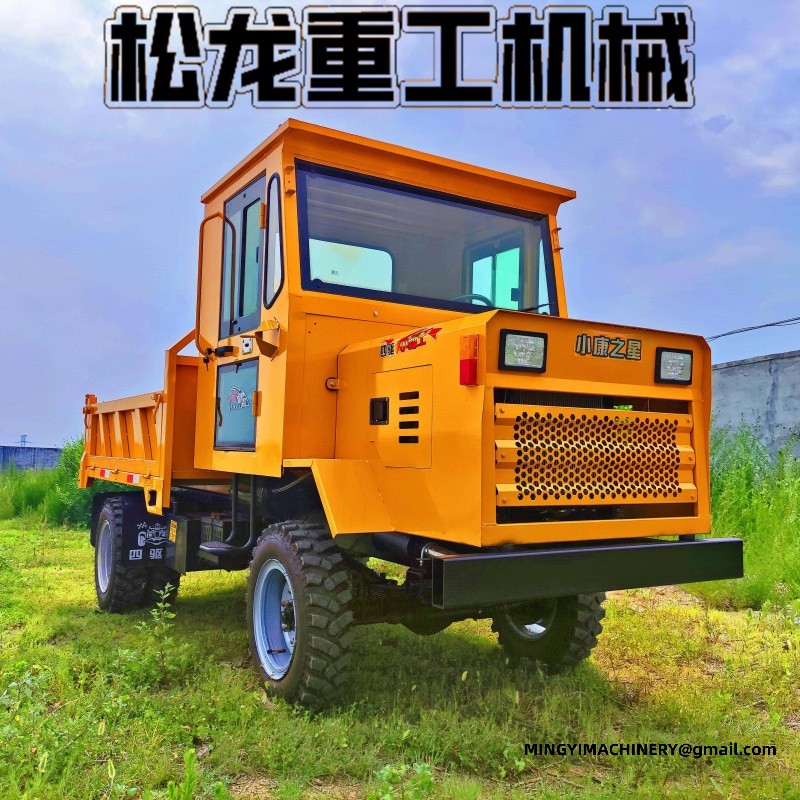
The configurations below are the build sheets most often matched to the machine in that duty. Engine, gearbox, axles, frame and body dimensions are confirmed together, because the body size and the axle rating have to suit the load before the engine rating matters.
| # | 16.Upgraded | 20.Luxury | 4.Upgraded | 8.Luxury |
|---|---|---|---|---|
| 1 | Four-cylinder 490 diesel engine | Four-cylinder 4102 turbocharged diesel engine | Single-cylinder diesel engine, 25 hp | Single-cylinder diesel engine, 28 hp |
| 2 | Full-time gearbox with four-wheel drive | Model 140 part-time gearbox with four-wheel drive | Full-time gearbox with four-wheel drive | Part-time gearbox, selectable 2WD/4WD |
| 3 | High/low range with crawler gear | High/low range with crawler gear | High/low range with crawler gear | High/low range with crawler gear |
| 4 | Fully enclosed cab | Fully enclosed cab | Front axle clutch | Enclosed cab |
| 5 | Oil brakes | Six 825R16 steel-belted radial tyres | Fully enclosed cab | Six 700-16 mountain tyres |
| 6 | Six 700-16 mountain tyres | Reinforced ISUZU-pattern front axle | Oil brakes | Model 212 front axle |
| 7 | Front axle 212 | Reinforced 1080 rear axle | Four 700-16 mountain tyres | Model 130 rear axle |
| 8 | Rear axle 130 | Air cut-off brakes | Front axle 212 | Air cut-off brakes |
| 9 | Reinforced 60 x 140 mm square tube frame | Reinforced 80 x 180 mm square tube frame | Rear axle 130 | Reinforced 60 x 140 mm square tube frame |
| 10 | Rear body 2.2 m long x 1.5 m wide x 0.45 m high | Rear body 3.0 m long x 2.2 m wide x 0.45 m high | Reinforced 60 x 140 mm square tube frame | Rear body 2.2 m long x 1.5 m wide x 0.45 m high |
| 11 | Tailgate with self-dumping function | Tailgate with self-dumping function | Rear body 2.2 m long x 1.5 m wide x 0.45 m high | Tailgate with self-dumping function |
| 12 | Hydraulic power steering | Side-opening rear body tailgate with cab ladder | Tailgate with self-dumping function | Side-opening rear body tailgate |
| 13 | Twin hydraulic rams | Hydraulic power steering | Hydraulic power steering | Hydraulic power steering |
| 14 | Two-person comfort seat | Twin hydraulic rams | Twin hydraulic rams | Twin hydraulic rams |
| 15 | Twin-battery electric start | Two-person comfort seat | Two-person comfort seat | Two-person comfort seat |
| 16 | Round-nose bonnet | Heavy-duty thickened leaf springs | Twin-battery electric start | Heavy-duty leaf springs |
| 17 | — | Twin-battery electric start | Square-nose bonnet | Twin-battery electric start |
| 18 | — | Square-nose bonnet | — | Square-nose bonnet |
| 19 | — | Four-cylinder 4105 turbocharged | — | — |
| 20 | — | Four-cylinder 4108 turbocharged | — | — |
| 21 | — | Single-cylinder engine, 25 hp | — | — |
| 22 | — | Single-cylinder engine, 28 hp | — | — |
| 23 | — | Single-cylinder engine, 32 hp | — | — |
| 24 | — | Two-cylinder engine, 38 hp | — | — |
| 25 | — | Four-cylinder 490 engine | — | — |
| 26 | — | Four-cylinder 4102 turbocharged engine | — | — |
Later changes are easier when they were anticipated. Asking for the extra hydraulic circuit or the heavier mounting plate on a machine built for the work at build time adds little and leaves the option open.
A written record is worth more than a good memory. Dates, hours and the parts fitted on the dumper turn a guess about the next service into a fact, and they are the first thing a buyer asks to see.
Temperature and pressure are the two things worth watching. The unit in daily use that runs hotter than it used to, or whose pressure has drifted, is reporting a problem that is still simple to fix.
Shared machines need shared habits. Two operators on the equipment on site should do the same daily checks in the same order, because the check that one person skips is the check that eventually matters.
Downtime is simplest when it is planned. Booking the service for the model in question in the quiet part of the season takes nothing from the schedule, while the same work in the busy weeks gives up a day of output every time.
The machine should be introduced to the site as well as the operator. Walking the route the unit on the job will take, noting the soft spots and the turns, prevents the kind of first-day incident that has nothing to do with the machine.
Keeping the documents together is part of ownership. The manual, the service record and the build sheet for the equipment in service belong in one folder, and the machine is easier to sell later when that folder is complete.
Every line above is a build item rather than an optional extra, and the final sheet for the dumper is confirmed against the destination, the ground and the load before production.
E-mail:sales@mingycn.com
LINE(ID):mingyicn









