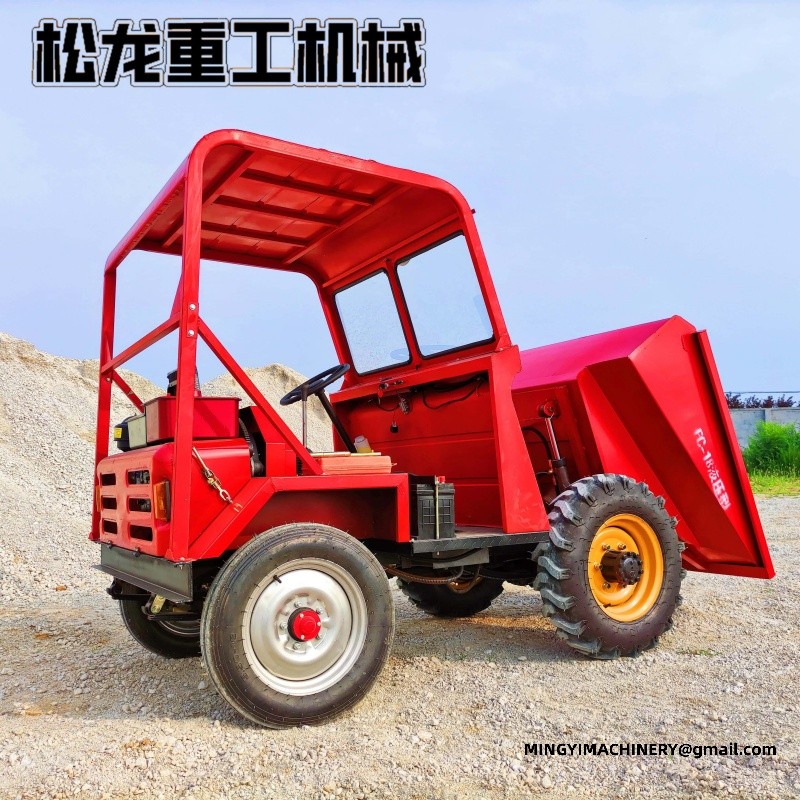
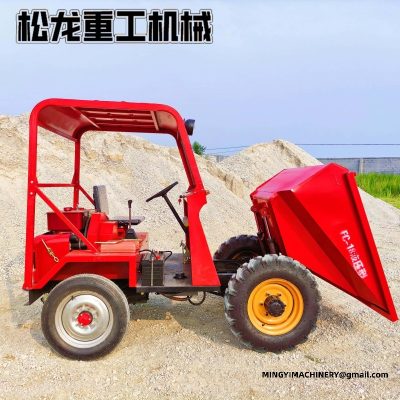
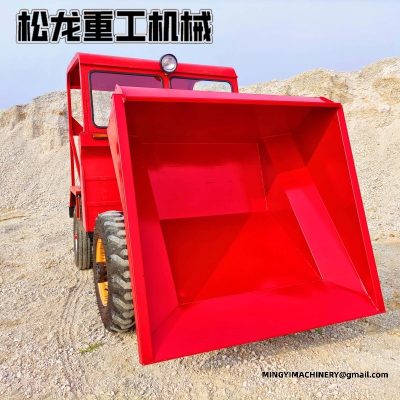
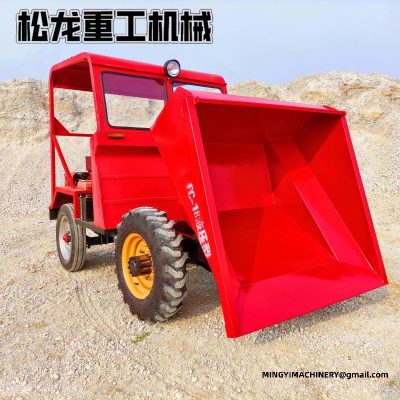
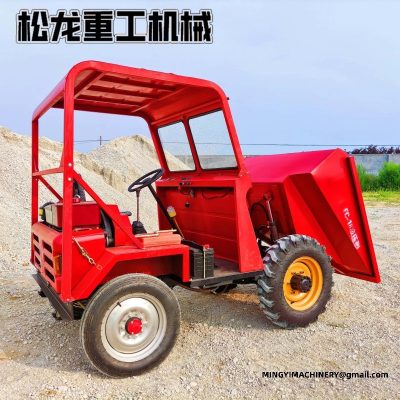
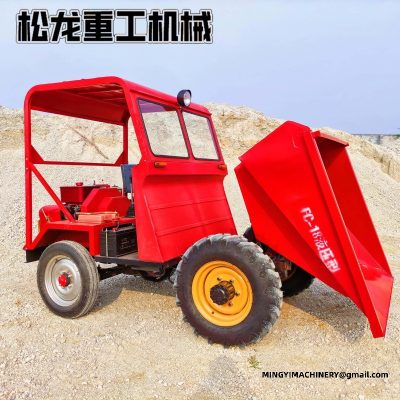
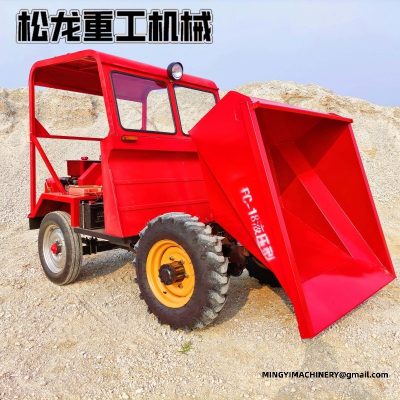
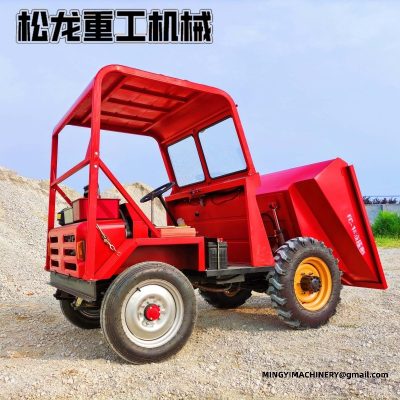
The dumper is usually bought to replace something, whether a method, an older machine or a hired unit. The notes below are written for that comparison: what changes on day one, what stays the same and what to check before the switch is made.
Abrasive conditions shorten service intervals. Air filters, seals and any exposed sliding surface on this class of machine need attention more often in dusty or muddy work, and the extra checks prevent far more wear than the time they take.
Loading method affects the machine as much as the load does. Material dropped from height into the unit in daily use shocks the frame and the body floor, while material placed evenly spreads the load and extends body life.
Shipping dimensions matter as much on export orders as they do locally. Confirming the packed size of a machine of this size before booking avoids re-booking freight after the machine is built.
Traction and flotation are two separate questions. The equipment on site may have the power for a slope and still not have the grip, so the surface, not the engine rating, is usually what limits the working day.
Attachment decisions are best made before delivery. Specifying hydraulics and couplers at build time is simpler than adding them later, and it avoids the downtime of a workshop visit in the first month. Most owners find that the second attachment changes how often the machine is used. The machine itself that was bought for one task often becomes the general machine on site once a second tool is available.
Most incidents around machinery come from the space rather than the machine. Exclusion zones, a clear signal person and a check on what is behind the model in question before it moves cover the large majority of the risk on a working site.
Keeping the manuals where they can be reached matters. The machine in that duty whose documents stay with the machine gets serviced on schedule; one whose paperwork was filed elsewhere tends to run on memory instead.
Access and storage are worth settling early. Where the unit on the job will be parked, refuelled and serviced on site affects the working day more than most specification details, and it takes nothing to plan. Sequencing avoids rework. Doing the work in the order that suits the ground and the following trades keeps a machine built for the work productive and prevents finishing a task that then has to be opened up again.
Emissions documentation is part of engine selection for some destinations. Confirming which units can be supplied and documented for the destination country is worth doing at enquiry stage rather than after the build sheet is signed. Matching the engine to the duty matters more than the peak rating. The dumper that spends its day at part load benefits from a different setup than one that works at full output, and the difference shows in fuel use over a season.
Fuel is usually the largest controllable running demand. Operating style, correct tyre or track condition and a clean air supply all move consumption on the unit in daily use by more than most buyers expect. Planning the work to reduce empty movement is free. Fewer repositioning cycles on a machine of this size means less fuel, less wear on the undercarriage or tyres and more of the shift spent on productive work.
Certain parts are designed to be consumed. Knowing which items on the machine itself are wearing parts, and roughly how long they last in the duty the machine sees, turns replacement into a plan rather than a breakdown. Wear rate follows conditions far more than hours. The model in question working on abrasive ground or in mud will consume undercarriage or tyre life much faster than the same machine on clean ground.
Commissioning is the point where most avoidable issues are found. Checking levels, fasteners and function on the machine in that duty before it goes to work takes an hour and prevents a claim conversation later. Warranty terms are clearer when they are read before purchase. Knowing what is covered, what counts as a wearing item and what documentation is required makes a claim on the unit on the job straightforward rather than contested. Early faults are usually simple. A machine built for the work that behaves differently in its first few hours is more often mis-set than defective, and a call to the supplier at that point usually resolves it the same day.
Machine output varies more between operators than between brands. Smooth, planned movements put less load on the structure and use less fuel, and that difference is visible on the hour meter and in the service bills for the equipment in service. A short handover pays for itself. Operators who understand why the dumper is set up the way it is will report a change in behaviour early, which is usually the point where a repair is simplest.
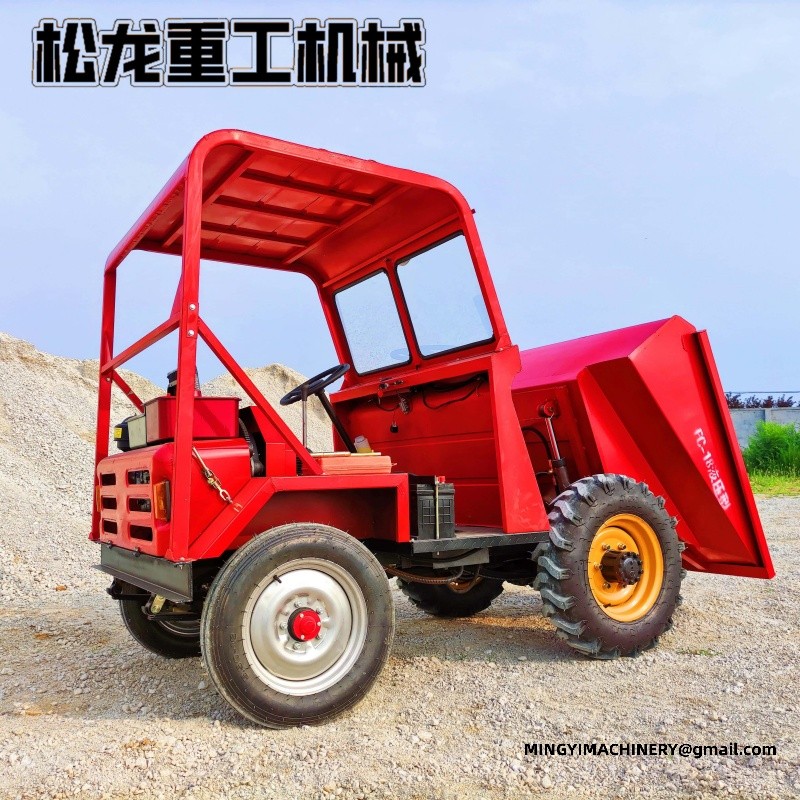
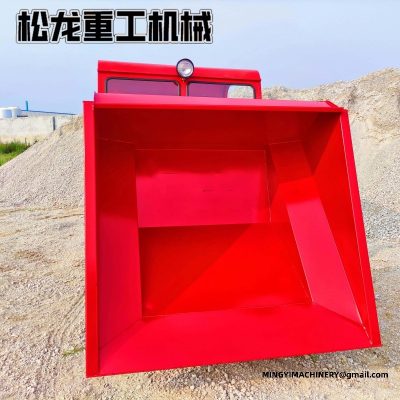
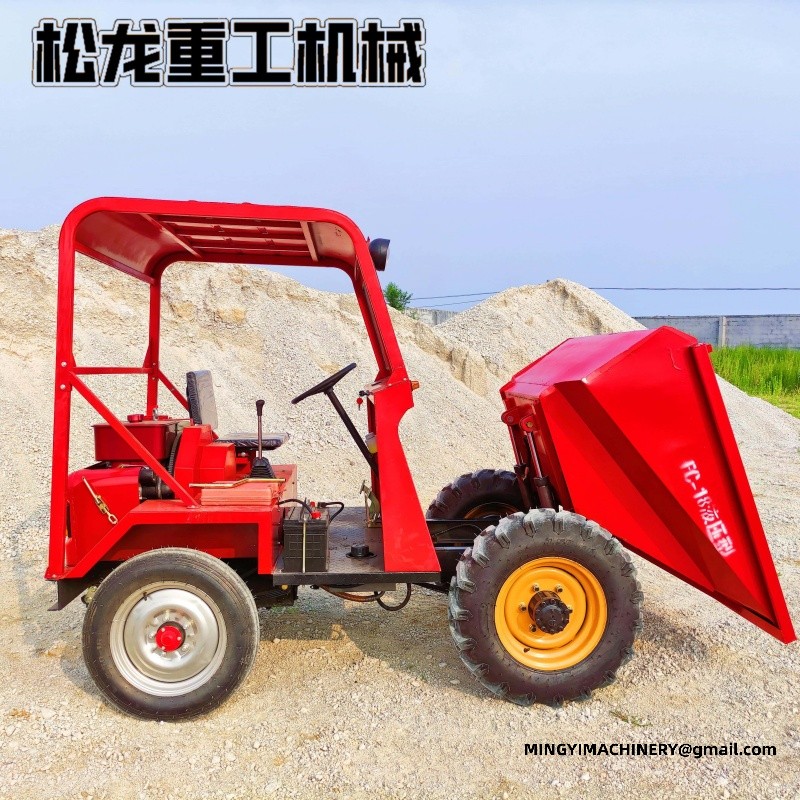
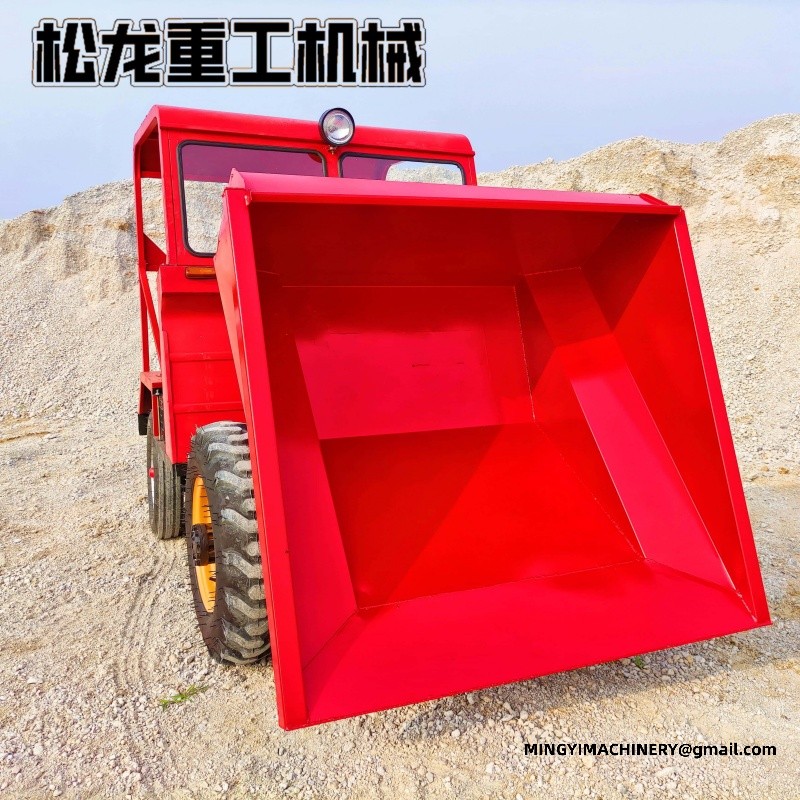
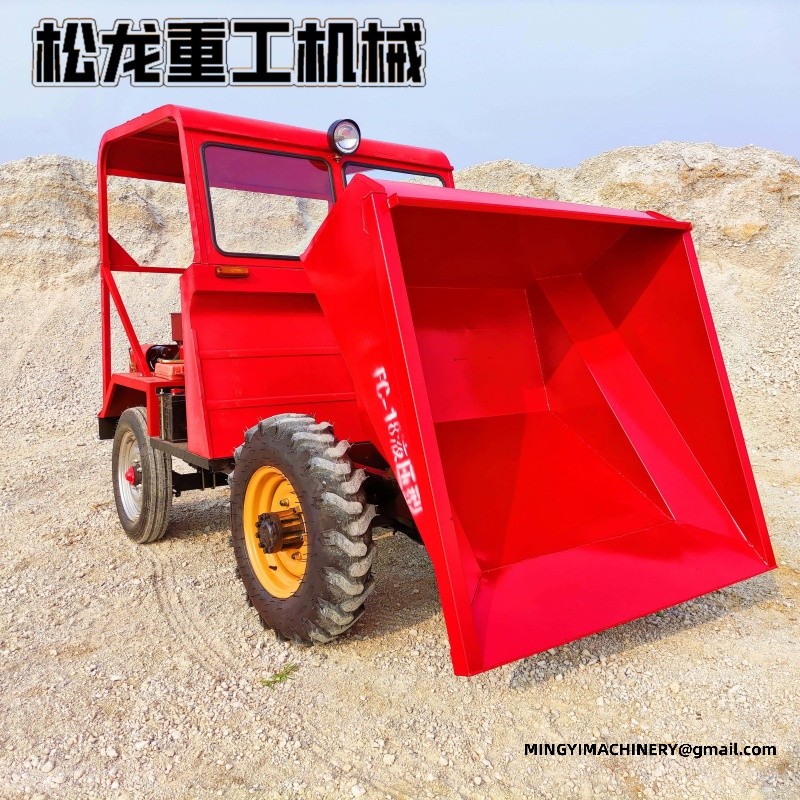
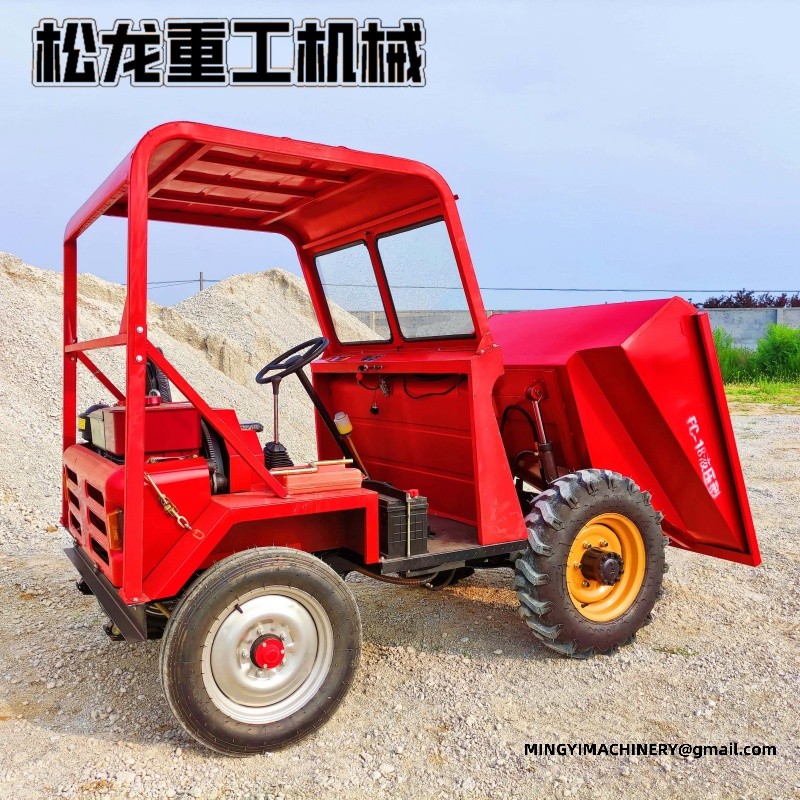
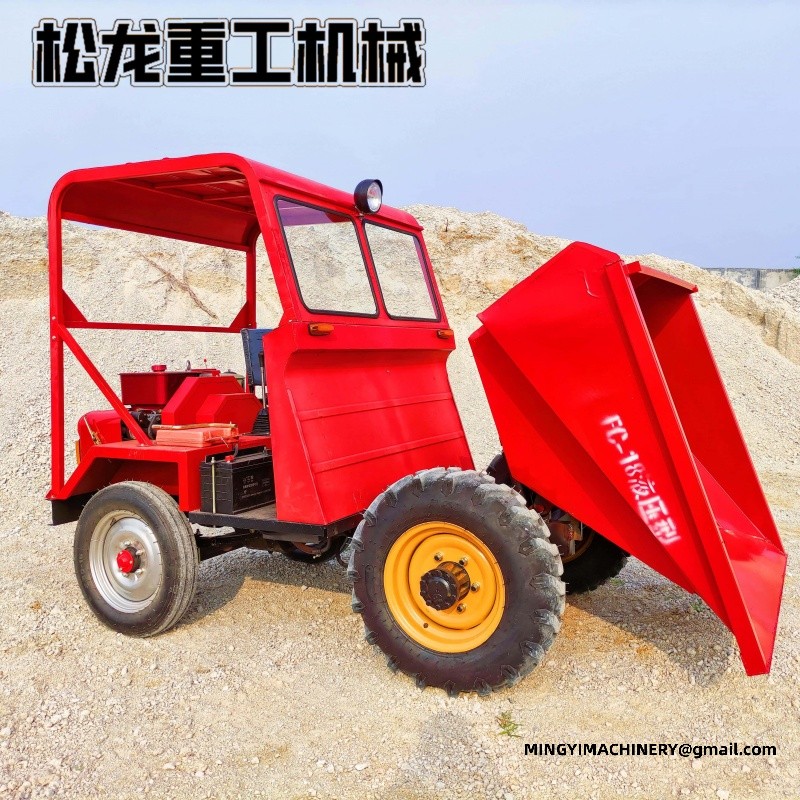
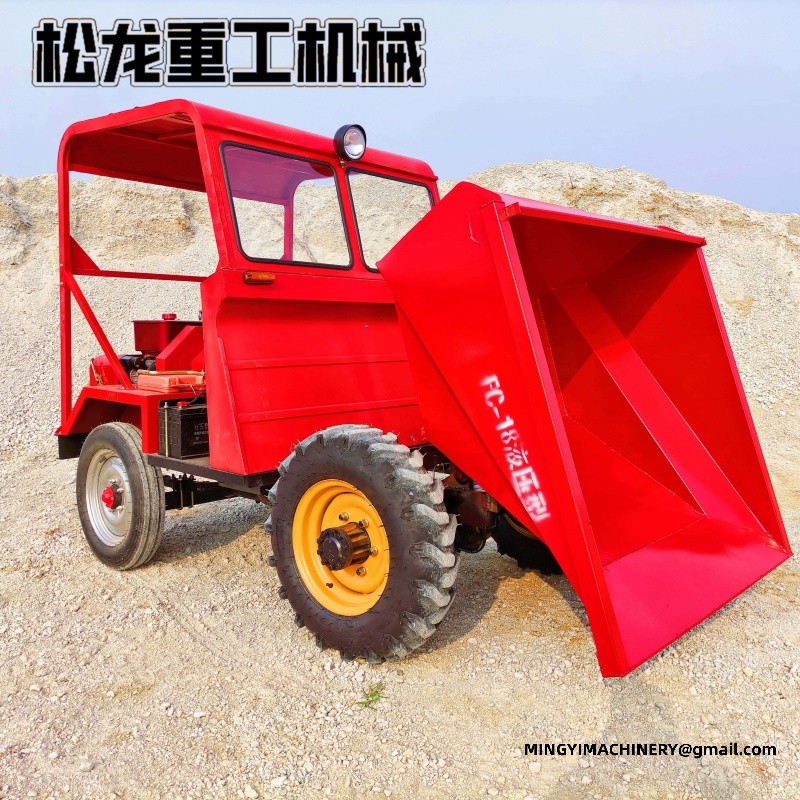
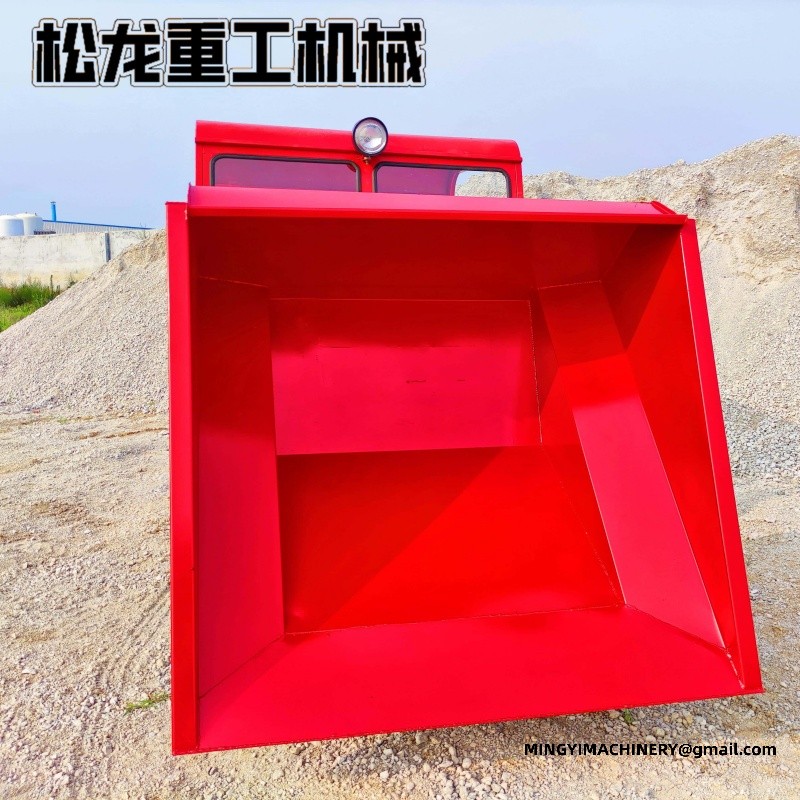
The configurations below are the build sheets most often matched to the unit in daily use. Engine, gearbox, axles, frame and body dimensions are confirmed together, because the body size and the axle rating have to suit the load before the engine rating matters.
| # | 18.Standard | 20.Luxury | 21.Upgraded | 9.Standard |
|---|---|---|---|---|
| 1 | Four-cylinder 4102 turbocharged diesel engine | Four-cylinder 4102 turbocharged diesel engine | Four-cylinder 4105 turbocharged diesel engine | Single-cylinder diesel engine, 32 hp |
| 2 | Model 140 part-time gearbox with four-wheel drive | Model 140 part-time gearbox with four-wheel drive | Model 140 part-time gearbox with four-wheel drive | Full-time gearbox with four-wheel drive |
| 3 | High/low range with crawler gear | High/low range with crawler gear | High/low range with crawler gear | High/low range with crawler gear |
| 4 | Simple cab | Fully enclosed cab | Simple cab | Simple cab |
| 5 | Oil brakes | Six 825R16 steel-belted radial tyres | Six 825R16 steel-belted radial tyres | Oil brakes |
| 6 | Six 700-16 mountain tyres | Reinforced ISUZU-pattern front axle | Reinforced ISUZU-pattern front axle | Four 700-16 mountain tyres |
| 7 | Reinforced ISUZU-pattern front axle | Reinforced 1080 rear axle | Reinforced 1080 rear axle with air cut-off brake | Front axle 212 |
| 8 | Reinforced 1061 rear axle | Air cut-off brakes | Air cut-off brakes | Rear axle 130 |
| 9 | Reinforced 80 x 180 mm square tube frame | Reinforced 80 x 180 mm square tube frame | Reinforced 80 x 180 mm square tube frame | Reinforced 60 x 140 mm square tube frame |
| 10 | Rear body 2.2 m long x 2.1 m wide x 0.45 m high | Rear body 3.0 m long x 2.2 m wide x 0.45 m high | Rear body 3.0 m long x 2.2 m wide x 0.45 m high | Rear body 2.2 m long x 1.5 m wide x 0.45 m high |
| 11 | Tailgate with self-dumping function | Tailgate with self-dumping function | Tailgate with self-dumping function | Tailgate with self-dumping function |
| 12 | Hydraulic power steering | Side-opening rear body tailgate with cab ladder | Hydraulic power steering | Hydraulic power steering |
| 13 | Twin hydraulic rams | Hydraulic power steering | Twin hydraulic rams | Twin hydraulic rams |
| 14 | Two-person comfort seat | Twin hydraulic rams | Two-person comfort seat | Two-person comfort seat |
| 15 | Twin-battery electric start | Two-person comfort seat | Heavy-duty leaf springs | Twin-battery electric start |
| 16 | Square-nose bonnet | Heavy-duty thickened leaf springs | Twin-battery electric start | Square-nose bonnet |
| 17 | — | Twin-battery electric start | Square-nose bonnet | — |
| 18 | — | Square-nose bonnet | — | — |
| 19 | — | Four-cylinder 4105 turbocharged | — | — |
| 20 | — | Four-cylinder 4108 turbocharged | — | — |
| 21 | — | Single-cylinder engine, 25 hp | — | — |
| 22 | — | Single-cylinder engine, 28 hp | — | — |
| 23 | — | Single-cylinder engine, 32 hp | — | — |
| 24 | — | Two-cylinder engine, 38 hp | — | — |
| 25 | — | Four-cylinder 490 engine | — | — |
| 26 | — | Four-cylinder 4102 turbocharged engine | — | — |
An added function should pay for itself quickly. Whether the equipment on site gains a different bucket, a hydraulic service or a protection package, the test is the number of days a year it is actually used.
Rubber, seals and hoses age whether the machine works or not. Keeping the model in question out of direct sun and off damp ground slows that, and running it briefly at intervals keeps everything moving.
The calendar decides more than the specification does. Planning when the unit on the job will be working, when it will be serviced and when it can be spared keeps the maintenance out of the weeks that matter.
Export packing is part of the machine, not an afterthought. The equipment in service is blocked and braced inside the container so that it arrives in the same condition it left, and the load plan is decided by the dimensions rather than by what fits loosely.
Loading is where most damage happens. Ramps, angle of approach and the condition of the ground under them matter more than the machine when this class of machine is being loaded, and a careful driver is worth more than a fast one.
Most engine trouble starts with what went into the tank. Clean fuel, stored properly and filtered before it reaches a machine of this size, prevents more downtime than any other single habit an owner can adopt.
Shared machines need shared habits. Two operators on the machine itself should do the same daily checks in the same order, because the check that one person skips is the check that eventually matters.
Patterns show up in the record before they show up in the machine. Rising oil consumption or a filter that keeps blocking on the machine in that duty is obvious on paper long before it becomes a failure on site.
Every line above is a build item rather than an optional extra, and the final sheet for the unit on the job is confirmed against the destination, the ground and the load before production.
E-mail:sales@mingycn.com
LINE(ID):mingyicn









