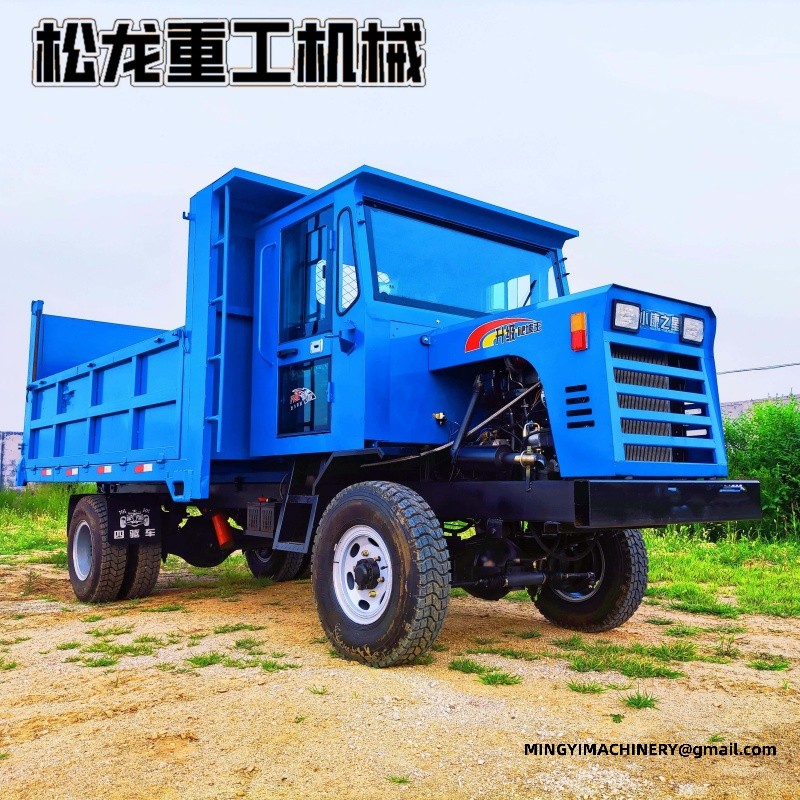
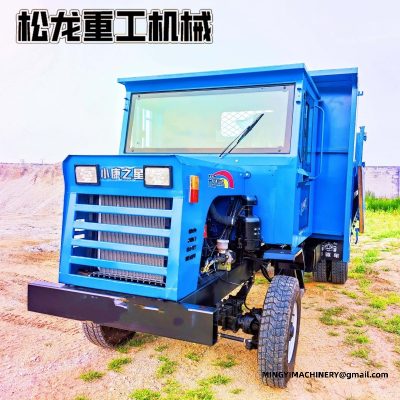
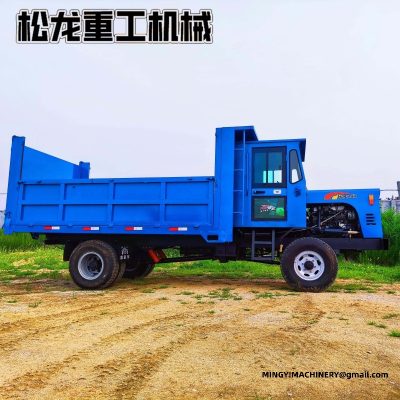
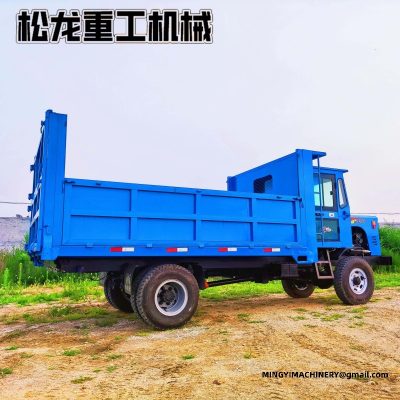
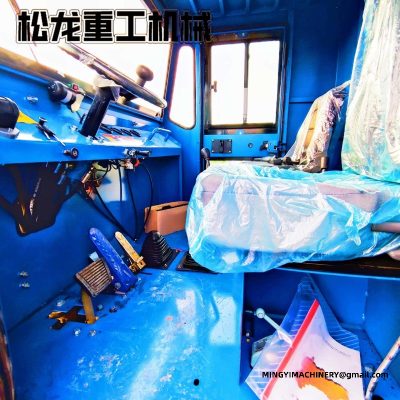
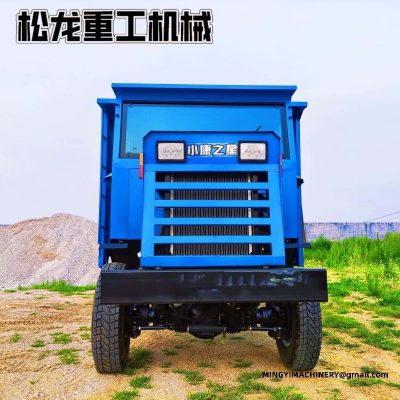
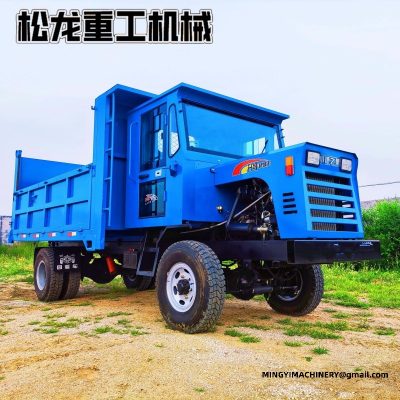
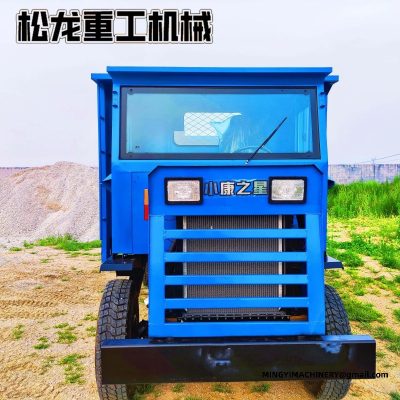
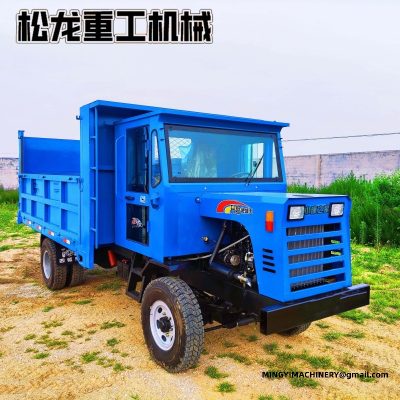
The range covered here includes the dumper in the configurations that are built and shipped. Rather than repeat a specification table on its own, the sections below explain what each figure means in use and where the trade-offs sit.
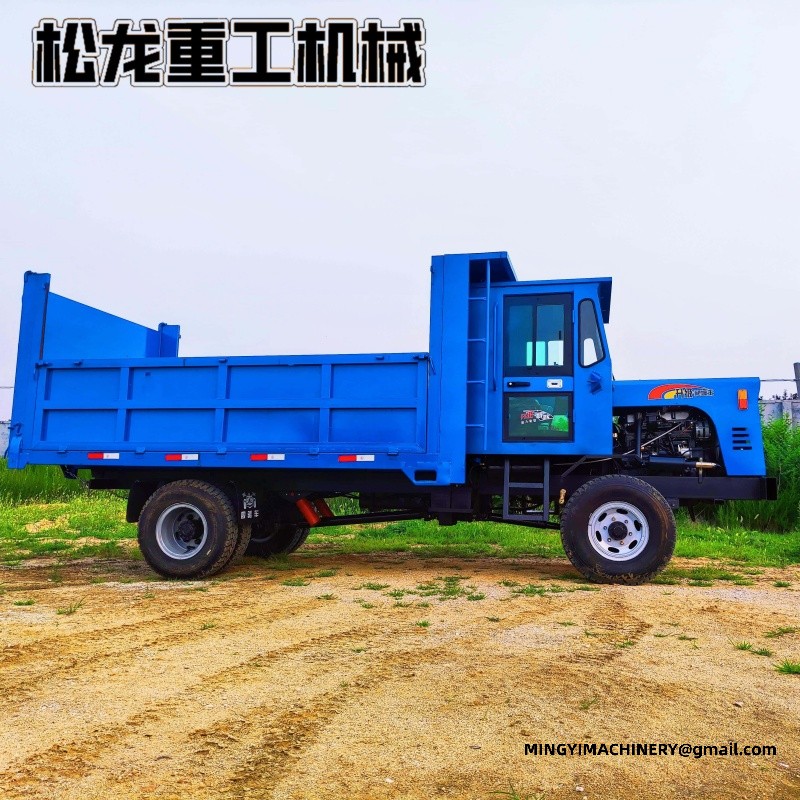
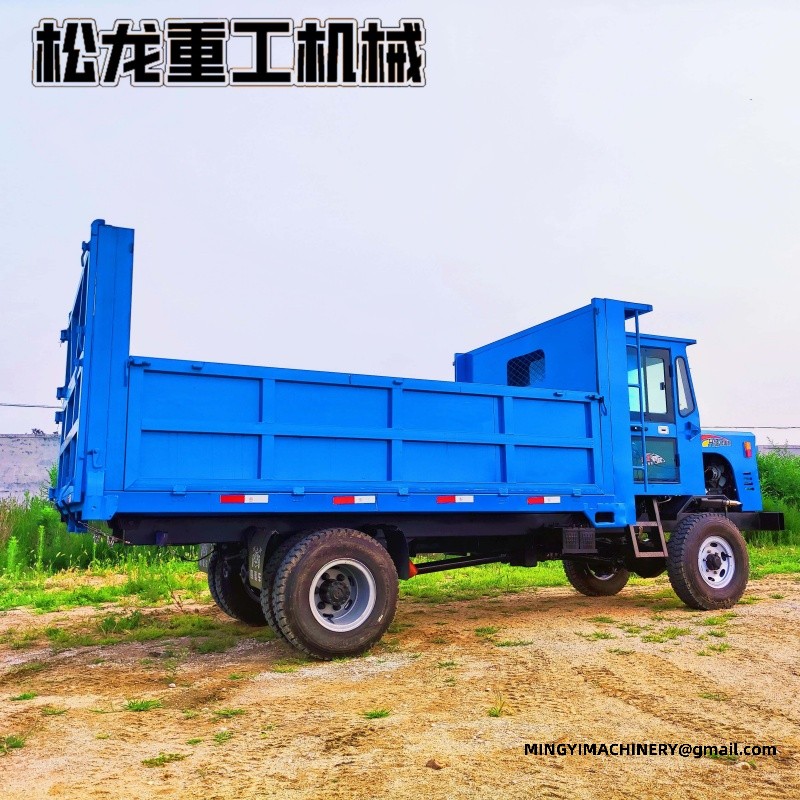
The tipping body is the part that does the work. This class of machine specified with twin hydraulic rams and a tailgate that opens under load unloads in one pass, which matters more on a short haul than top speed does. Unloading method should follow the material. Wet spoil, aggregate and green timber behave differently in the body, and matching the body and tailgate arrangement to the load is what keeps the unit in daily use cycling rather than being hand-cleared. Body size is a compromise with access. A larger body on a machine of this size carries more per trip but needs more room to turn and tip, so the useful question is how many trips the route allows rather than how much it holds.
Reconfiguration can extend the useful life of a machine. The equipment on site that no longer suits the current work may suit it again with a different attachment, guarding or control arrangement. Upgrades should be checked against the base machine. Hydraulic capacity, mounting interface and stability all limit what can reasonably be added to the machine itself, and confirming those limits avoids an unsatisfactory result. The decision is economic as well as technical. Comparing the work of reconfiguring the model in question against a different machine is a short calculation that usually gives a clear answer.
The base machine is only as useful as the tool on the end of it. Matching the attachment to the task - rather than to what arrived with the machine - is what lets one the unit on the job cover several jobs across a week. Attachment decisions are best made before delivery. Specifying hydraulics and couplers at build time is simpler than adding them later, and it avoids the downtime of a workshop visit in the first month. Most owners find that the second attachment changes how often the machine is used. The machine in that duty that was bought for one task often becomes the general machine on site once a second tool is available.
Handover should include the documents as well as the keys. Parts list, service schedule and the operator notes for a machine built for the work are what the workshop needs in month six, and they are much harder to obtain later. A short familiarisation session prevents the early faults. Most first-month problems on the equipment in service come from unfamiliarity with controls, limits or checks rather than from the machine itself.
Slopes and edges deserve a separate check. The dumper that is stable on level ground behaves differently across a gradient, and the safe working angle is a number worth knowing rather than estimating.
Stability follows the load and its position. Knowing the rated capacity of this class of machine at the working radius, rather than at its best case, is what keeps handling predictable and the machine upright. Ballast and attachment weight change the machine. Adding a heavy tool to the unit in daily use moves the centre of gravity, and the counterweight or configuration should be matched to the tool rather than assumed.
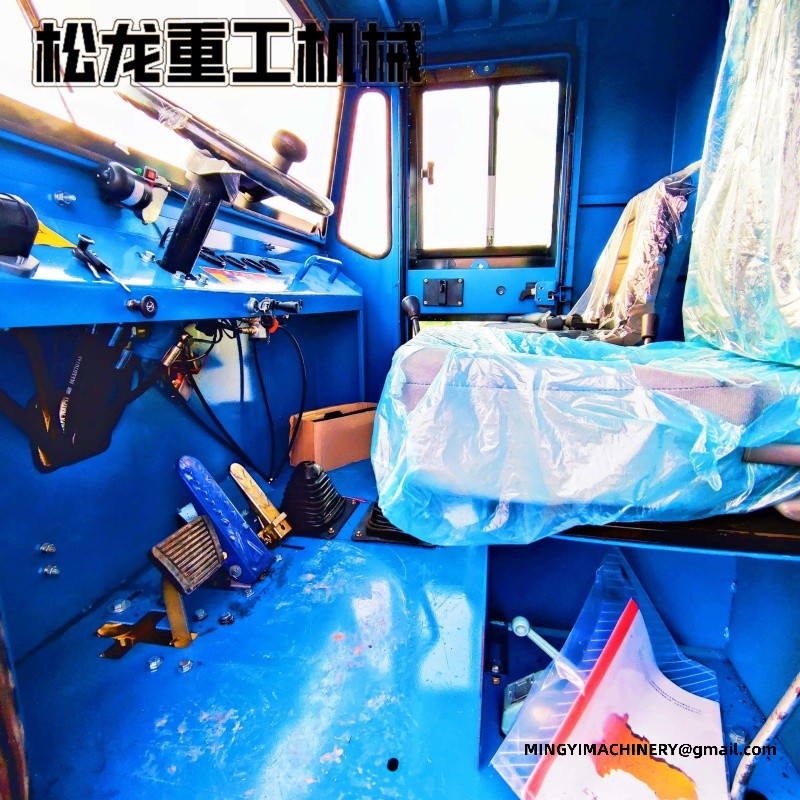
Gradient is where a haul vehicle earns its keep. A machine of this size with a crawler gear and a low range climbs loaded where a road vehicle would need a second attempt, and that difference decides whether a track is usable at all. Descending matters as much as climbing. A loaded the equipment on site on a steep gradient needs engine braking and brakes in good order, and the safe practice is to plan the descent before the load rather than during it.
Carrying concrete changes the duty entirely. The machine itself with a mixer drum is working against the clock, and the specification follows the delivery distance and the site access rather than the load alone. Drum bodies need power and stability. The model in question set up for concrete has to carry the drum, the load and the water, and the frame and brakes should be specified for that combined weight. Cleaning and discharge are part of the job. The machine in that duty used for concrete is judged on how quickly it can discharge and wash out, because that turnaround is what the site is paying for.
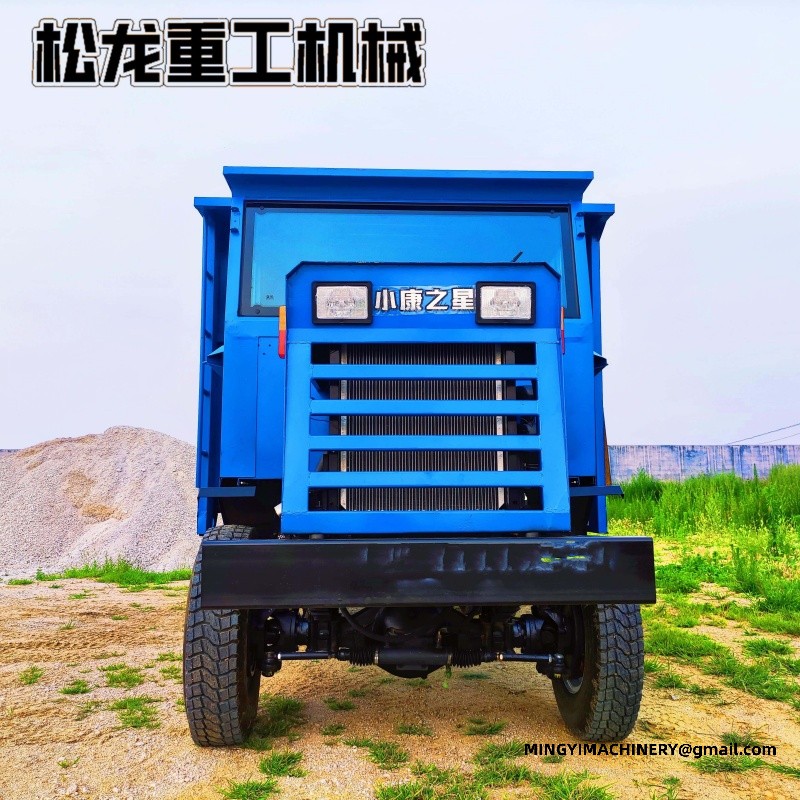
Quarry and tunnel work is hard on vehicles. Abrasive dust, sharp material and continuous loading mean a machine built for the work in this duty needs attention to filtration, body wear and brake condition far more often.
Service intervals exist because wear is predictable. Following the maker schedule on the dumper takes far less time than repairing the damage that follows a missed oil change or a filter left in place past its life.
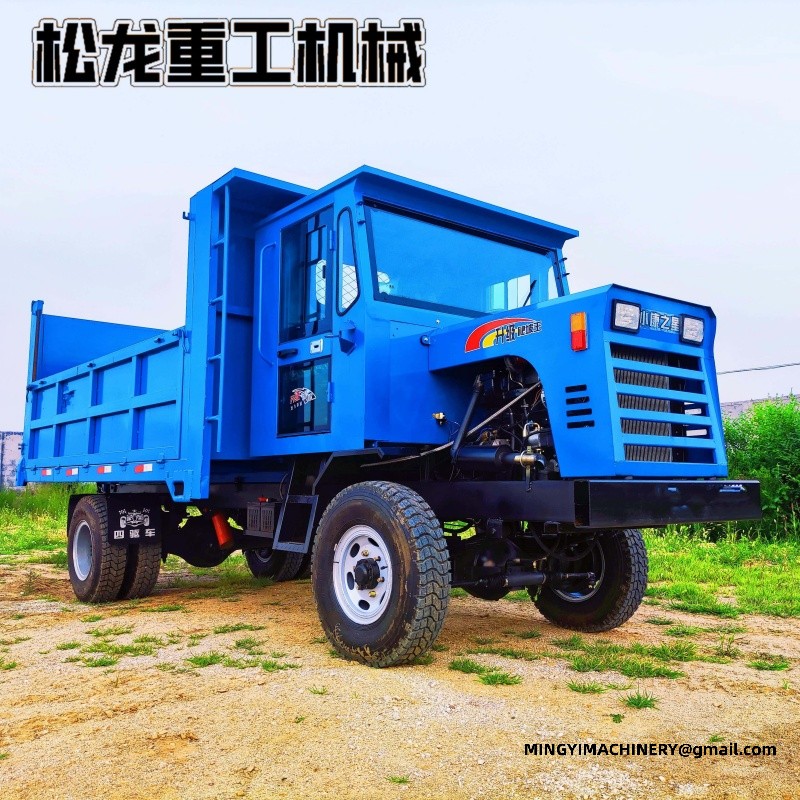
The order should state the configuration in writing. Engine, attachments, colour, documents and any market requirement are clearer on the build sheet for the unit in daily use than in a conversation after delivery. Delivery planning includes the receiving end. Knowing whether a machine of this size will be craned, driven or forked off, and whether the site can accept it, is settled before dispatch rather than on the day.
Matching the engine to the duty matters more than the peak rating. The machine itself that spends its day at part load benefits from a different setup than one that works at full output, and the difference shows in fuel use over a season.
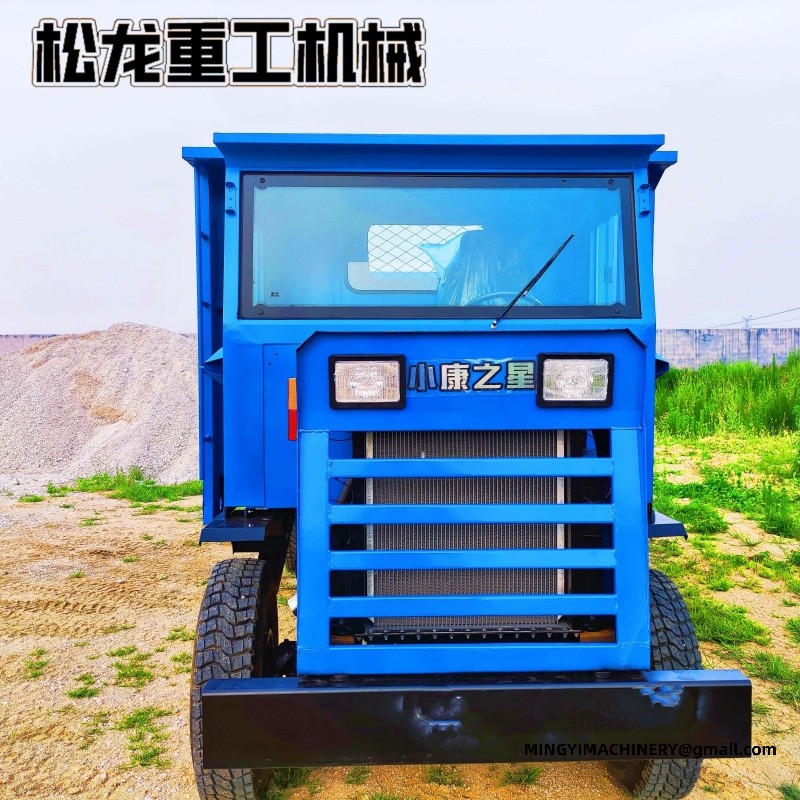
Adding a crane changes the vehicle specification. Hydraulic capacity, frame strength and braking all need to suit the attachment, and it is simpler to specify them at build than to add them later.
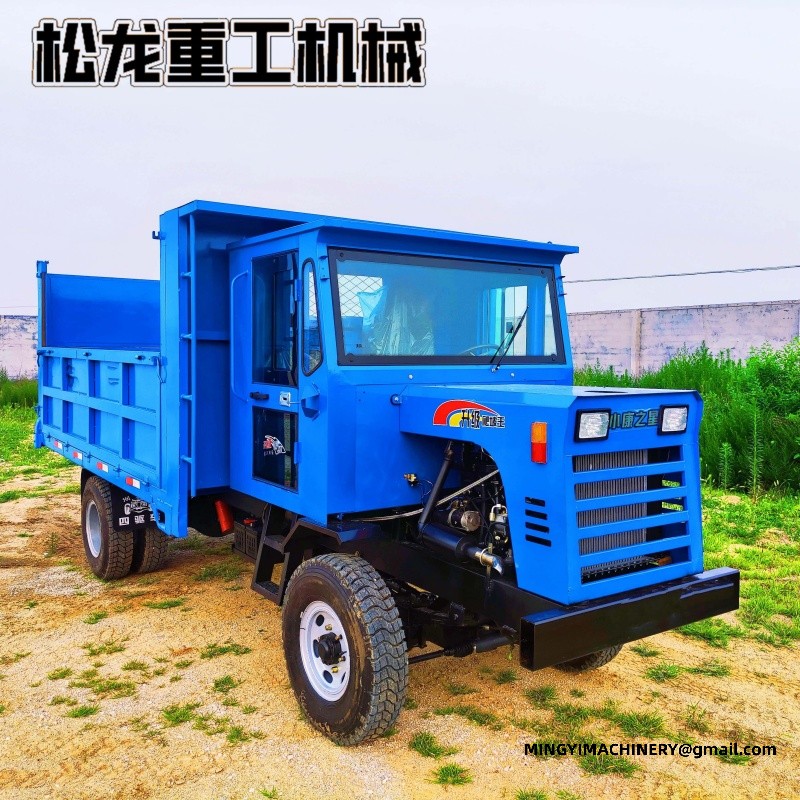
Timber work changes what the vehicle carries. The unit on the job fitted with a log grab loads and unloads without a second machine, which is usually the reason a forestry contractor specifies one over a conventional truck. Access tracks in forestry are narrow, soft and often steep. A machine built for the work chosen for that work is chosen for the track, and the body, cab and tyre specification follow from the route rather than from the load alone.
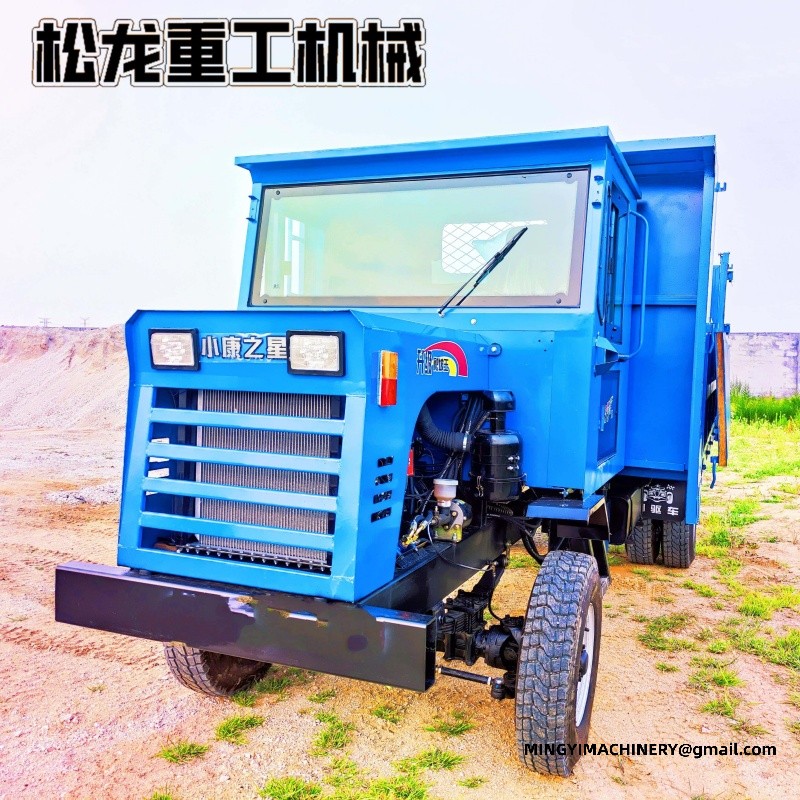
The configurations below are the build sheets most often matched to the dumper. Engine, gearbox, axles, frame and body dimensions are confirmed together, because the body size and the axle rating have to suit the load before the engine rating matters.
| # | 14.Luxury | 15.Standard | 21.Upgraded | 7.Upgraded |
|---|---|---|---|---|
| 1 | Two-cylinder diesel engine, 38 hp | Four-cylinder 490 diesel engine | Four-cylinder 4105 turbocharged diesel engine | Single-cylinder diesel engine, 28 hp |
| 2 | Part-time gearbox, selectable 2WD/4WD | Full-time gearbox with four-wheel drive | Model 140 part-time gearbox with four-wheel drive | Full-time gearbox with four-wheel drive |
| 3 | High/low range with crawler gear | High/low range with crawler gear | High/low range with crawler gear | High/low range with crawler gear |
| 4 | Enclosed cab | Simple cab | Simple cab | Front axle clutch |
| 5 | Six 700-16 mountain tyres | Oil brakes | Six 825R16 steel-belted radial tyres | Fully enclosed cab |
| 6 | Model 212 front axle | Four 700-16 mountain tyres | Reinforced ISUZU-pattern front axle | Oil brakes |
| 7 | Reinforced 130 rear axle | Front axle 212 | Reinforced 1080 rear axle with air cut-off brake | Four 700-16 mountain tyres |
| 8 | Air cut-off brakes | Rear axle 130 | Air cut-off brakes | Front axle 212 |
| 9 | Reinforced 60 x 140 mm square tube frame | Reinforced 60 x 140 mm square tube frame | Reinforced 80 x 180 mm square tube frame | Rear axle 130 |
| 10 | Rear body 2.2 m long x 1.5 m wide x 0.45 m high | Rear body 2.2 m long x 1.5 m wide x 0.45 m high | Rear body 3.0 m long x 2.2 m wide x 0.45 m high | Reinforced 60 x 140 mm square tube frame |
| 11 | Tailgate with self-dumping function | Tailgate with self-dumping function | Tailgate with self-dumping function | Rear body 2.2 m long x 1.5 m wide x 0.45 m high |
| 12 | Side-opening rear body tailgate | Hydraulic power steering | Hydraulic power steering | Tailgate with self-dumping function |
| 13 | Hydraulic power steering | Twin hydraulic rams | Twin hydraulic rams | Hydraulic power steering |
| 14 | Twin hydraulic rams | Two-person comfort seat | Two-person comfort seat | Twin hydraulic rams |
| 15 | Heavy-duty leaf springs | Twin-battery electric start | Heavy-duty leaf springs | Two-person comfort seat |
| 16 | Two-person comfort seat | Round-nose bonnet | Twin-battery electric start | Twin-battery electric start |
| 17 | Twin-battery electric start | — | Square-nose bonnet | Square-nose bonnet |
| 18 | Round-nose bonnet | — | — | — |
What the customer sees on arrival is decided before departure. The walk-around given to the unit in daily use covers the same points the operator will check on day one, so there are no surprises when the crate is opened at the destination.
Cold exposes weak batteries, thick oil and water in the fuel. Preparing the equipment on site for winter means the right grade of oil, a battery in good condition and fuel that will not wax in the tank overnight.
The paperwork matters as much as the packing. Serial numbers, dimensions and weights recorded for the model in question at loading are the same figures the destination needs, and a mismatch here loses more days than the voyage itself.
Most engine trouble starts with what went into the tank. Clean fuel, stored properly and filtered before it reaches the unit on the job, prevents more downtime than any other single habit an owner can adopt.
A good handover covers the awkward cases, not just the easy ones. Starting the equipment in service on a slope, turning in a confined space and recovering from soft ground are the situations an operator should meet first with someone beside them.
Temperature and pressure are the two things worth watching. This class of machine that runs hotter than it used to, or whose pressure has drifted, is reporting a problem that is still simple to fix.
Humidity attacks the parts that are not used. Storage in a damp climate means a machine of this size needs the exposed metal protected and the machine run regularly, because standing still does more damage than working.
Every line above is a build item rather than an optional extra, and the final sheet for the equipment on site is confirmed against the destination, the ground and the load before production.
E-mail:sales@mingycn.com
LINE(ID):mingyicn









