Reading about the dumper is easier when the page follows the life of the machine. What follows moves from selection through delivery, first weeks of work, routine care and the point at which the unit is replaced or sold on.
Seasonal work changes the maintenance calendar. Machines that work hard for two months and stand for ten need preparation before storage and a check before returning to work, and both are simpler than the repairs they prevent.
Fleet value comes from interchangeability. Operators who can step between machines without retraining, and a workshop that stocks one set of filters, keep utilisation higher than a fleet of individually optimised units.
Export orders add steps that domestic buyers never see. Packed dimensions, securing points, documentation and any dismantling required are all settled before this class of machine leaves the factory, and each one affects the freight booking.
Drum bodies need power and stability. The unit in daily use set up for concrete has to carry the drum, the load and the water, and the frame and brakes should be specified for that combined weight.
Standing still is hard on machinery. A machine of this size left for weeks benefits from a clean, dry, covered space, a charged battery and a fuel system prepared for the layoff, and all three effort very little. Before-storage preparation prevents most return-to-work faults. Draining or treating fuel, protecting exposed rods and relieving pressure where the maker specifies it are the items worth an hour when the equipment on site is parked.
Resale starts at purchase. Specification choices, service records and the condition of wearing parts are what a buyer looks at, and the machine itself that has been maintained on schedule is worth more than one that merely looks clean. Replacement timing is a planning decision. Knowing the intended working life of the model in question lets an owner sell while the machine still has value rather than after a major repair becomes due. Records are part of the asset. Keeping the service history and the hour records with the machine in that duty makes it easier to sell, easier to insure and easier to justify the replacement machine internally.
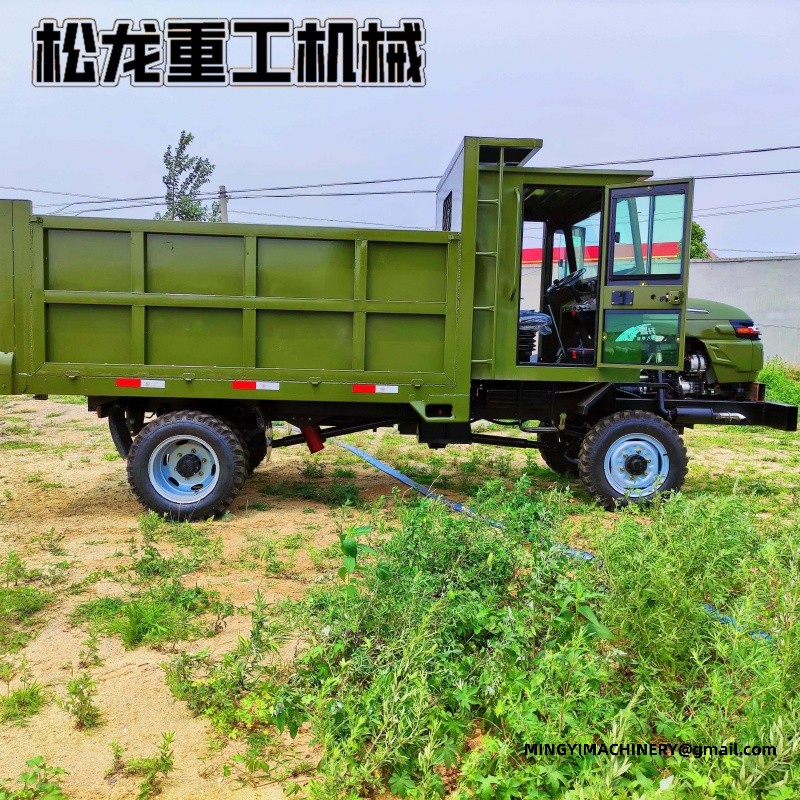
Stability follows the load and its position. Knowing the rated capacity of the unit on the job at the working radius, rather than at its best case, is what keeps handling predictable and the machine upright.
Attachment decisions are best made before delivery. Specifying hydraulics and couplers at build time is simpler than adding them later, and it avoids the downtime of a workshop visit in the first month. Most owners find that the second attachment changes how often the machine is used. A machine built for the work that was bought for one task often becomes the general machine on site once a second tool is available.
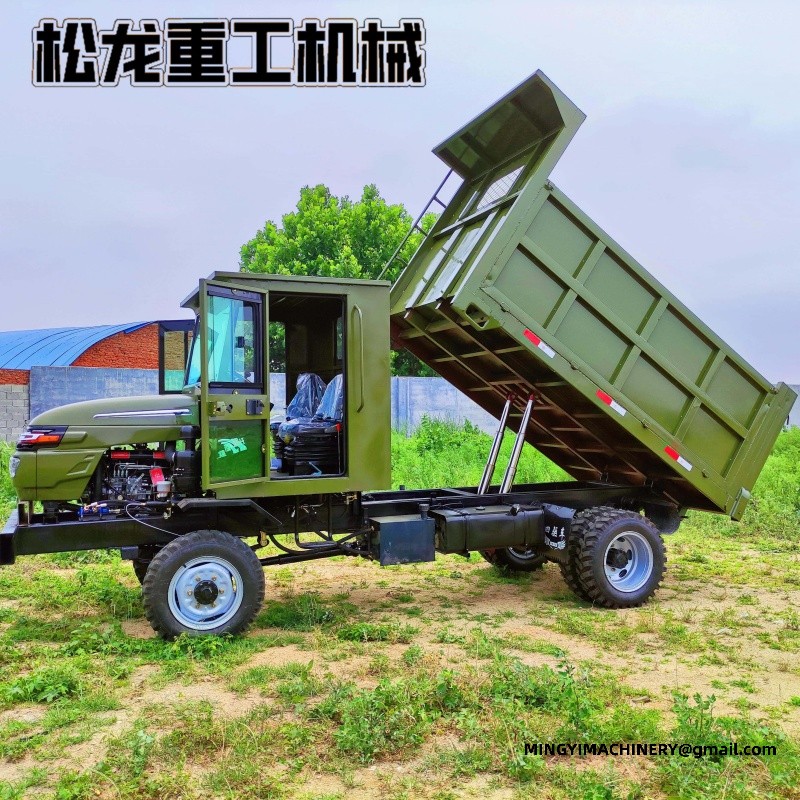
A water tank turns the vehicle into a different machine. The dumper carrying water for dust control or irrigation is specified around tank size, baffles and the route, because a part-filled tank behaves very differently on a slope.
Abrasive conditions shorten service intervals. Air filters, seals and any exposed sliding surface on the unit in daily use need attention more often in dusty or muddy work, and the extra checks prevent far more wear than the time they take.
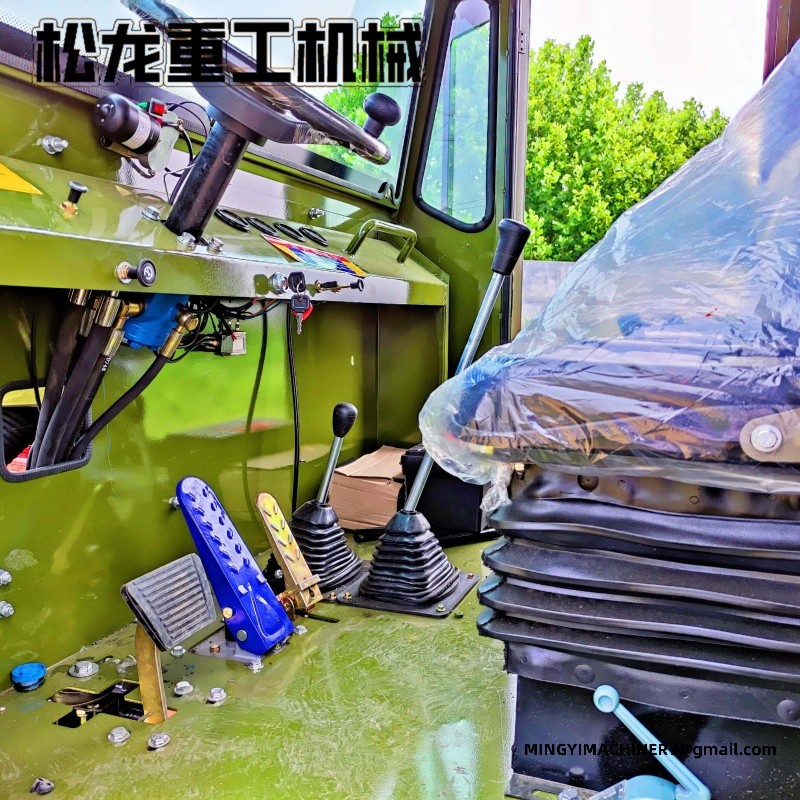
Emissions documentation is part of engine selection for some destinations. Confirming which units can be supplied and documented for the destination country is worth doing at enquiry stage rather than after the build sheet is signed. Matching the engine to the duty matters more than the peak rating. The equipment on site that spends its day at part load benefits from a different setup than one that works at full output, and the difference shows in fuel use over a season.
Ground decides more of the outcome than power does. Soft, wet or loose surfaces call for a wider footprint and lower ground pressure, while hard standing allows a narrower machine that turns in less space and travels faster between tasks. Traction and flotation are two separate questions. The model in question may have the power for a slope and still not have the grip, so the surface, not the engine rating, is usually what limits the working day.
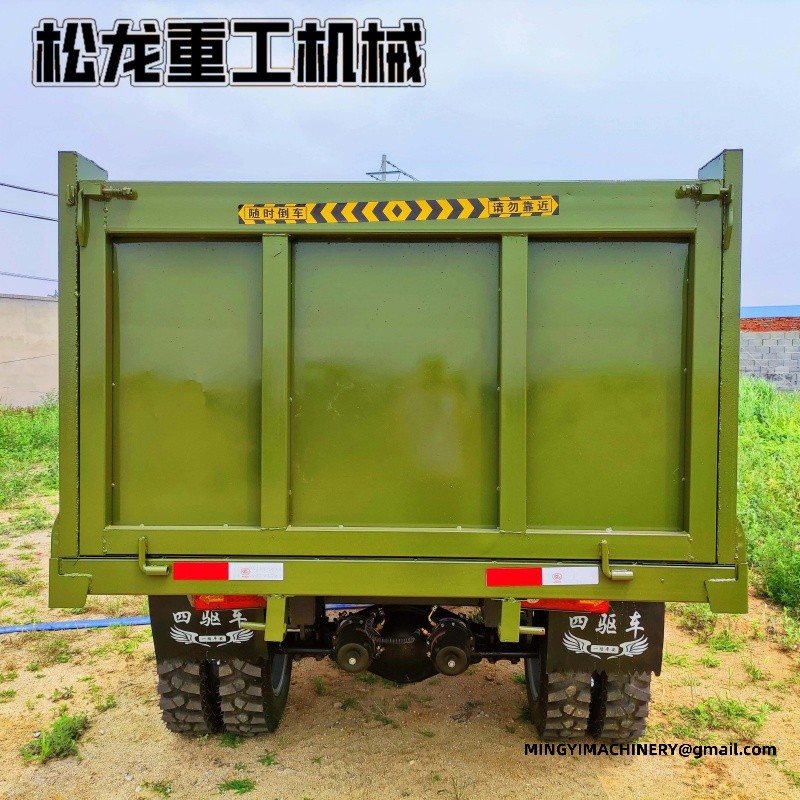
Four-wheel drive is only part of soft ground capability. Tyre choice, ground clearance and weight distribution decide whether the unit on the job keeps moving in a paddy field or a marsh, and all three are specified rather than assumed. Soft ground punishes the wrong tyre. Mountain pattern tyres on a machine built for the work clear mud that a road pattern would pack with, and the difference is measured in whether the machine finishes the day.
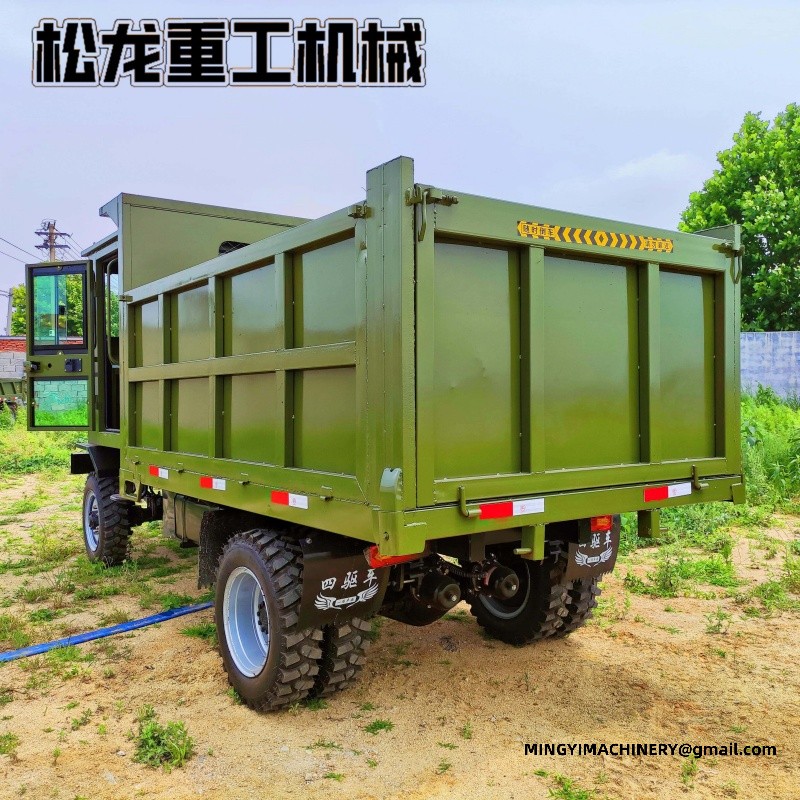
Batteries and fluids are the parts that notice the cold first. The dumper kept on a maintainer through a freezing spell starts on the first turn, while one left standing is the usual cause of a lost morning.
Timber work changes what the vehicle carries. The unit in daily use fitted with a log grab loads and unloads without a second machine, which is usually the reason a forestry contractor specifies one over a conventional truck.
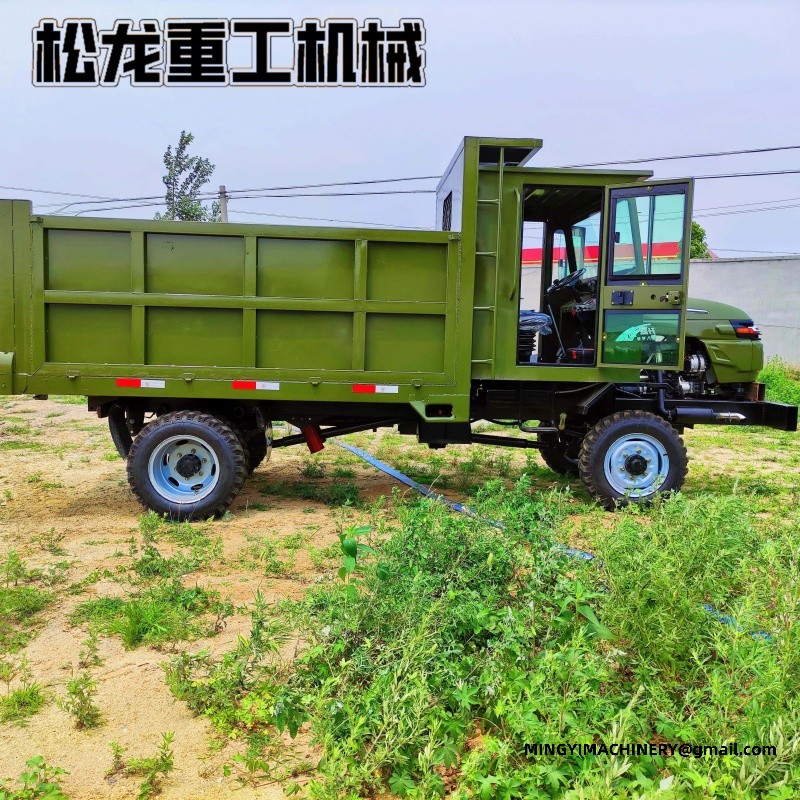
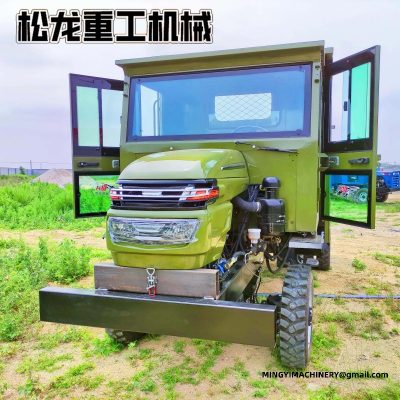
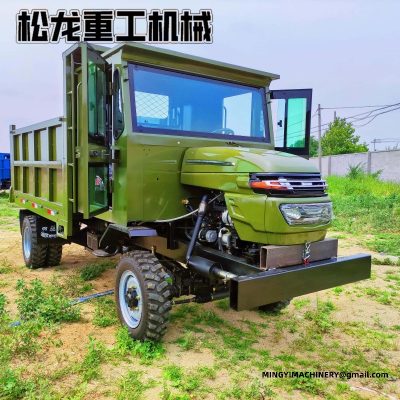
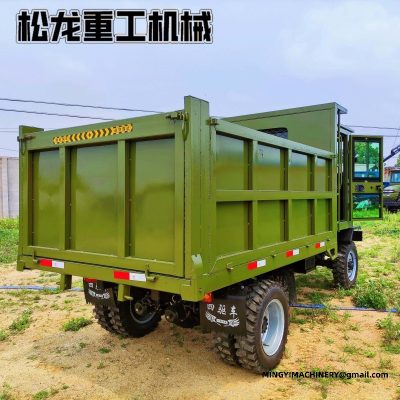
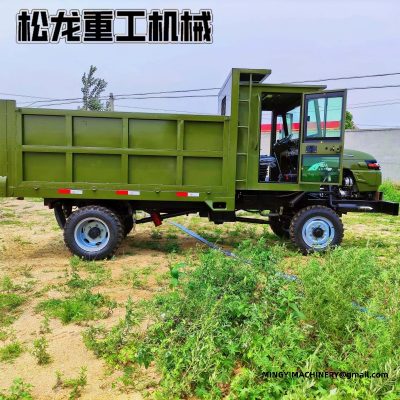
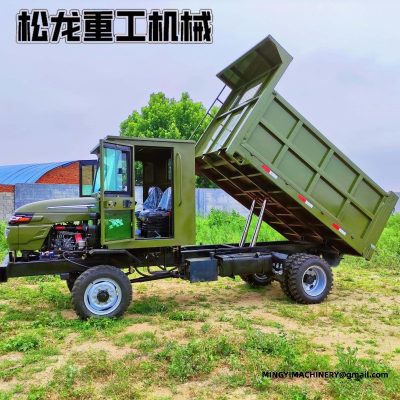
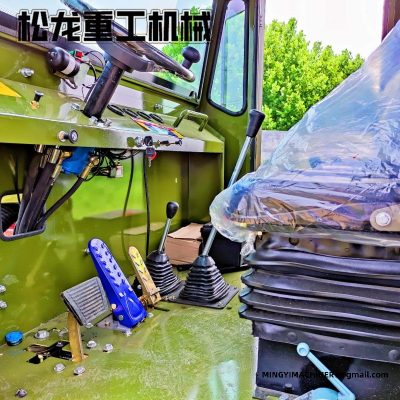
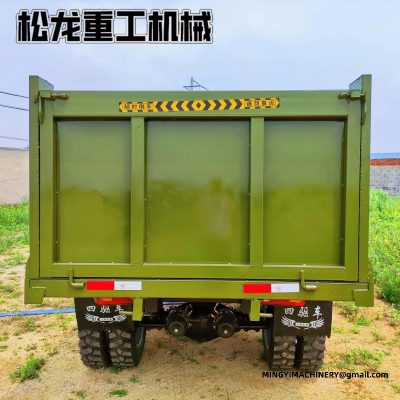
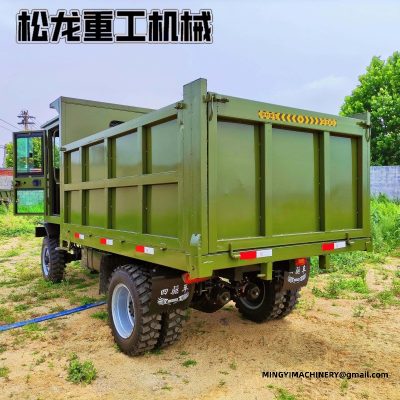
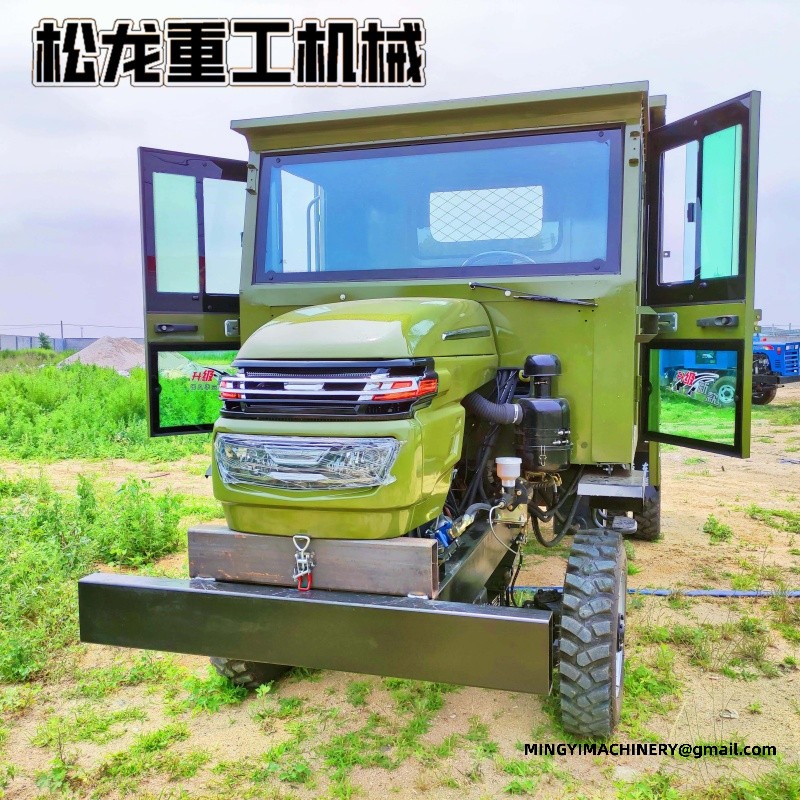
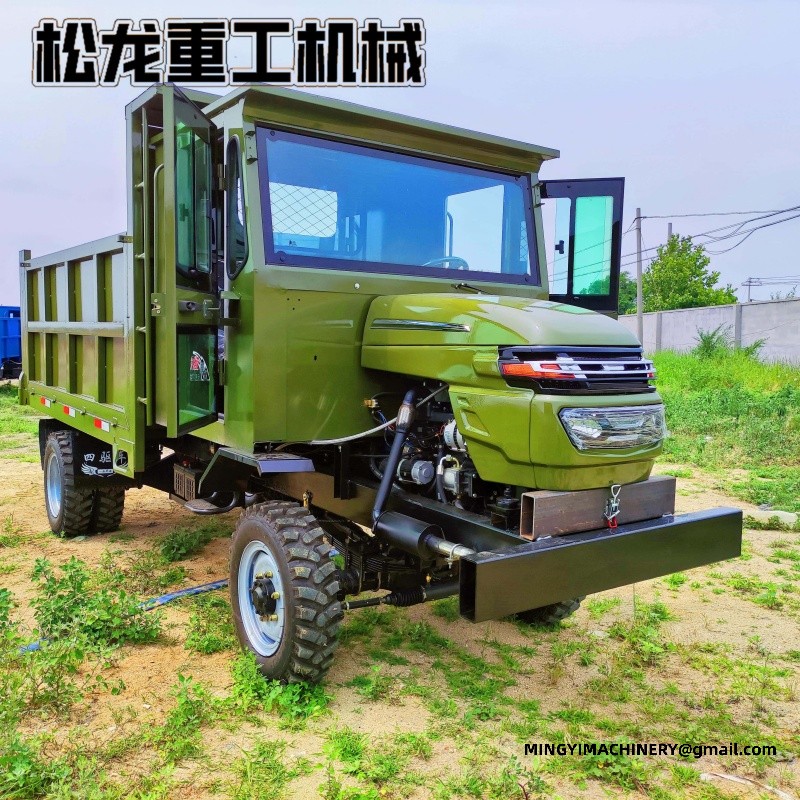
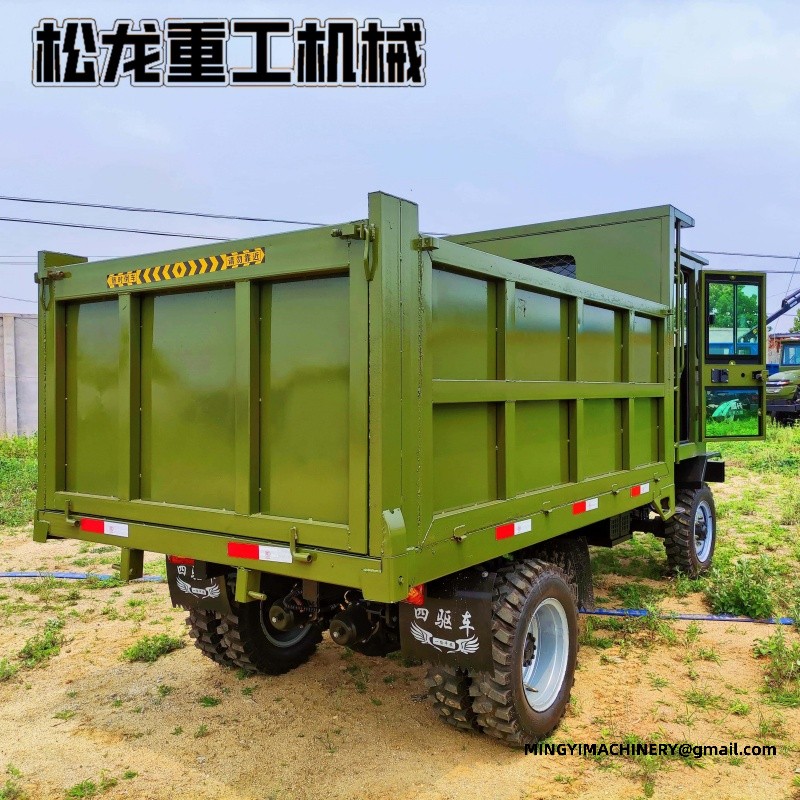
The configurations below are the build sheets most often matched to the equipment on site. Engine, gearbox, axles, frame and body dimensions are confirmed together, because the body size and the axle rating have to suit the load before the engine rating matters.
| # | 13.Upgraded | 19.Upgraded | 20.Luxury | 6.Standard |
|---|---|---|---|---|
| 1 | Two-cylinder diesel engine, 38 hp | Four-cylinder 4102 turbocharged diesel engine | Four-cylinder 4102 turbocharged diesel engine | Single-cylinder diesel engine, 28 hp |
| 2 | Full-time gearbox with four-wheel drive | Model 140 part-time gearbox with four-wheel drive | Model 140 part-time gearbox with four-wheel drive | Full-time gearbox with four-wheel drive |
| 3 | High/low range with crawler gear | High/low range with crawler gear | High/low range with crawler gear | High/low range with crawler gear |
| 4 | Front axle clutch | Fully enclosed cab | Fully enclosed cab | Simple cab |
| 5 | Fully enclosed cab | Six 750R16 steel-belted radial tyres | Six 825R16 steel-belted radial tyres | Oil brakes |
| 6 | Oil brakes | Reinforced ISUZU-pattern front axle | Reinforced ISUZU-pattern front axle | Four 700-16 mountain tyres |
| 7 | Four 700-16 mountain tyres | Reinforced 1061 rear axle | Reinforced 1080 rear axle | Front axle 212 |
| 8 | Front axle 212 | Air cut-off brakes | Air cut-off brakes | Rear axle 130 |
| 9 | Rear axle 130 | Reinforced 80 x 180 mm square tube frame | Reinforced 80 x 180 mm square tube frame | Reinforced 60 x 140 mm square tube frame |
| 10 | Reinforced 60 x 140 mm square tube frame | Rear body 3.0 m long x 2.1 m wide x 0.45 m high | Rear body 3.0 m long x 2.2 m wide x 0.45 m high | Rear body 2.2 m long x 1.5 m wide x 0.45 m high |
| 11 | Rear body 2.2 m long x 1.5 m wide x 0.45 m high | Tailgate with self-dumping function | Tailgate with self-dumping function | Tailgate with self-dumping function |
| 12 | Tailgate with self-dumping function | Side-opening rear body tailgate with cab ladder | Side-opening rear body tailgate with cab ladder | Hydraulic power steering |
| 13 | Hydraulic power steering | Hydraulic power steering | Hydraulic power steering | Twin hydraulic rams |
| 14 | Twin hydraulic rams | Twin hydraulic rams | Twin hydraulic rams | Two-person comfort seat |
| 15 | Two-person comfort seat | Two-person comfort seat | Two-person comfort seat | Twin-battery electric start |
| 16 | Twin-battery electric start | Thickened heavy-duty leaf springs | Heavy-duty thickened leaf springs | Square-nose bonnet |
| 17 | Round-nose bonnet | Twin-battery electric start | Twin-battery electric start | — |
| 18 | — | Square-nose bonnet | Square-nose bonnet | — |
| 19 | — | — | Four-cylinder 4105 turbocharged | — |
| 20 | — | — | Four-cylinder 4108 turbocharged | — |
| 21 | — | — | Single-cylinder engine, 25 hp | — |
| 22 | — | — | Single-cylinder engine, 28 hp | — |
| 23 | — | — | Single-cylinder engine, 32 hp | — |
| 24 | — | — | Two-cylinder engine, 38 hp | — |
| 25 | — | — | Four-cylinder 490 engine | — |
| 26 | — | — | Four-cylinder 4102 turbocharged engine | — |
Temperature and pressure are the two things worth watching. The model in question that runs hotter than it used to, or whose pressure has drifted, is reporting a problem that is still simple to fix.
A machine that works on one site still has to reach the next. The overall dimensions and the operating weight of the unit on the job decide what trailer or truck is needed, and that decision belongs before the job is booked.
Fluid quality is a storage problem before it is a machine problem. Water and sediment in a drum will find the injection system of the equipment in service eventually, and a settling period is nothing compared with a pump.
A stored machine should be brought back carefully. Before this class of machine returns to work the fluids, the brakes and the controls are checked, because months of standing change more than a weekend does.
Operators who come from a different machine need a short conversion. The controls on a machine of this size follow the usual pattern, but the response, the sightlines and the stopping distance are learned by doing rather than by reading.
Later changes are easier when they were anticipated. Asking for the extra hydraulic circuit or the heavier mounting plate on the machine itself at build time adds little and leaves the option open.
Dust is the enemy of every rotating joint. Keeping the radiator and the air intake of the machine in that duty clean, and cleaning them before they are blocked rather than after, is what separates a machine that lasts from one that overheats.
Every line above is a build item rather than an optional extra, and the final sheet for the unit on the job is confirmed against the destination, the ground and the load before production.
E-mail:sales@mingycn.com
LINE(ID):mingyicn









