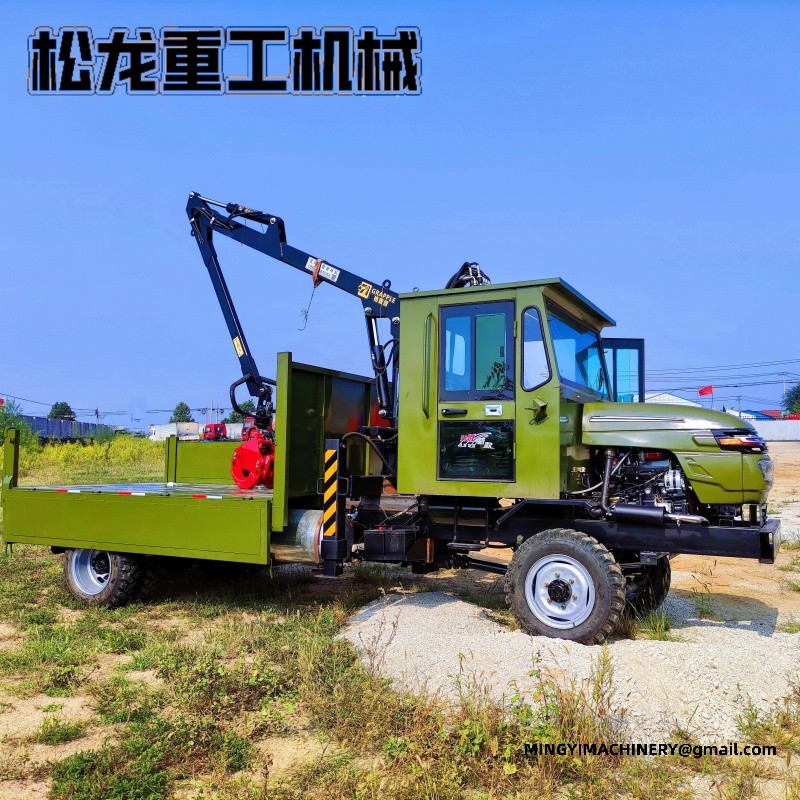
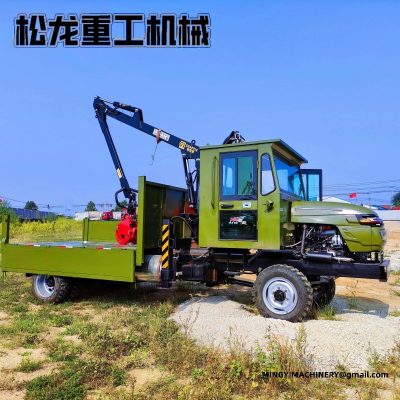
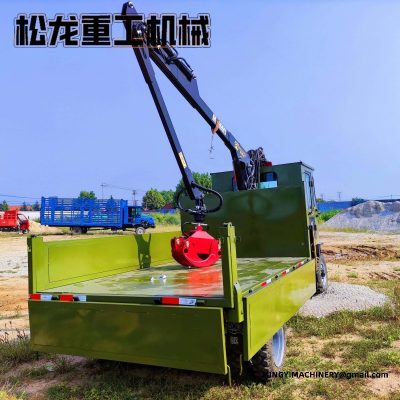
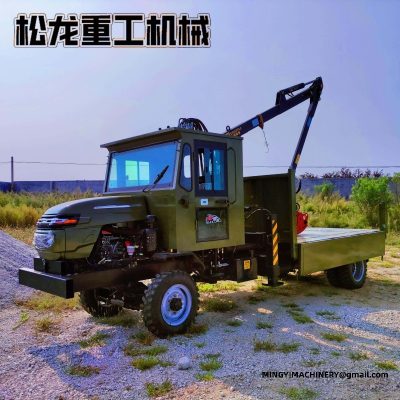
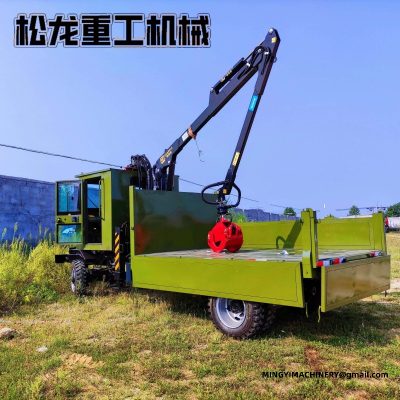
An articulated log carrier earns its place on the tight turns, where a rigid vehicle would have to stop, back up and take a second cut at the corner. The pivot in the middle lets the machine fold around a standing tree or a stump and keep the load moving, which is what a forest haul needs more than raw speed. The trade-off is that the articulation is also where the machine flexes under load, so the pivot, the frame and the steering all have to be built to work together. The four configurations below are set up around that narrow-corner work.
The hinge between the two halves is what lets an articulated machine turn inside a radius that a rigid one simply cannot match. Between close-set trees and around stumps, that tighter circle is the difference between one pass and two, and it is what keeps the whole haul moving. The pivot also lets the front and rear halves follow the ground independently, so the wheels stay planted through a rut where a rigid frame would lift one axle. For a log carrier working a real forest rather than a made road, that articulation is the reason to choose this layout at all.
Hydraulic power steering is fitted throughout, and on an articulated machine it does the work of swinging the two halves around the pivot rather than turning a pair of wheels. Without it the driver would be hauling on the wheel through every corner, and the tight manoeuvring that the layout exists for would become a chore. The power assistance is what lets the machine fold around a tree in one smooth movement and hold the line while the body is full. In a forest the steering is working constantly, so this is not a line on the sheet to downgrade.
Where a rigid vehicle lifts a wheel on rough ground and loses drive, an articulated machine is supposed to keep both halves on the ground and both axles pulling. Full-time four-wheel drive is fitted to the 10.Upgraded, the 13.Upgraded and the 15.Standard, keeping drive at both ends all day without the driver reaching for a lever, and the high and low range with a crawler gear lets it inch through soft ground under load. The 11.Luxury uses a part-time, selectable driveline for a route that is firm enough for two-wheel drive part of the time. On soft forest ground the full-time arrangement is the safer starting point, because the ground gives way without warning.
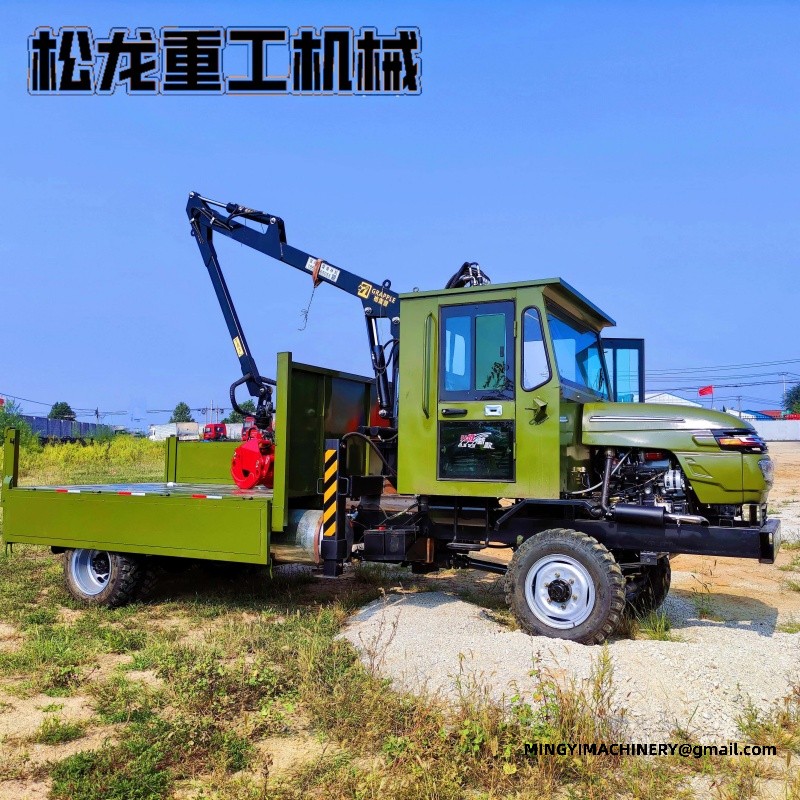
The range is built for a lighter class of work than the rigid carriers, because the articulated layout is about manoeuvring rather than outright tonnage. The 10.Upgraded and the 11.Luxury use a single-cylinder diesel of 32 hp, the 13.Upgraded a two-cylinder diesel of 38 hp, and the 15.Standard a four-cylinder 490 diesel. The single-cylinder machines suit short, tight runs on soft ground, the two-cylinder a mixed day, and the 490 the longest, fullest haul of the four. The choice comes down to the loaded run through the trees rather than the empty return to the landing.
All four configurations sit on the reinforced 60 x 140 mm square tube frame, which suits the 2.2 m body this page carries throughout. On an articulated machine the frame section matters as much at the pivot as along the rails, because that is where the two halves meet and where the load tries to bend the machine. A frame that flexes at the hinge works the steering and the body together until something gives. For the narrow-corner work this layout is chosen for, a straight, stiff frame is what keeps the machine tracking true through the turn instead of wallowing.
The front axle clutch on the 10.Upgraded and the 13.Upgraded lets the driver disengage drive to the front when the machine is making the tightest turns, which reduces the scrub between the wheels and saves the tyres and the driveline on hard ground. It is a detail that matters most where the machine spends its day folding around stumps rather than running a straight haul. On soft ground the clutch stays engaged so both ends keep pulling. It is one of those options that looks small on the sheet and shows up every hour in the woods.
The 700-16 mountain tyre is the standard fit here because the forest floor is soft, uneven and scattered with debris, and its open tread clears mud rather than packing it. The 11.Luxury carries six of them, while the 10.Upgraded, the 13.Upgraded and the 15.Standard run four, a lighter footprint matched to their lighter duty. The tyre reaches down through a wet surface to whatever is solid beneath, which is what keeps the machine moving through a soft patch instead of sitting in it. For this work the mountain pattern is the right tool rather than a compromise.
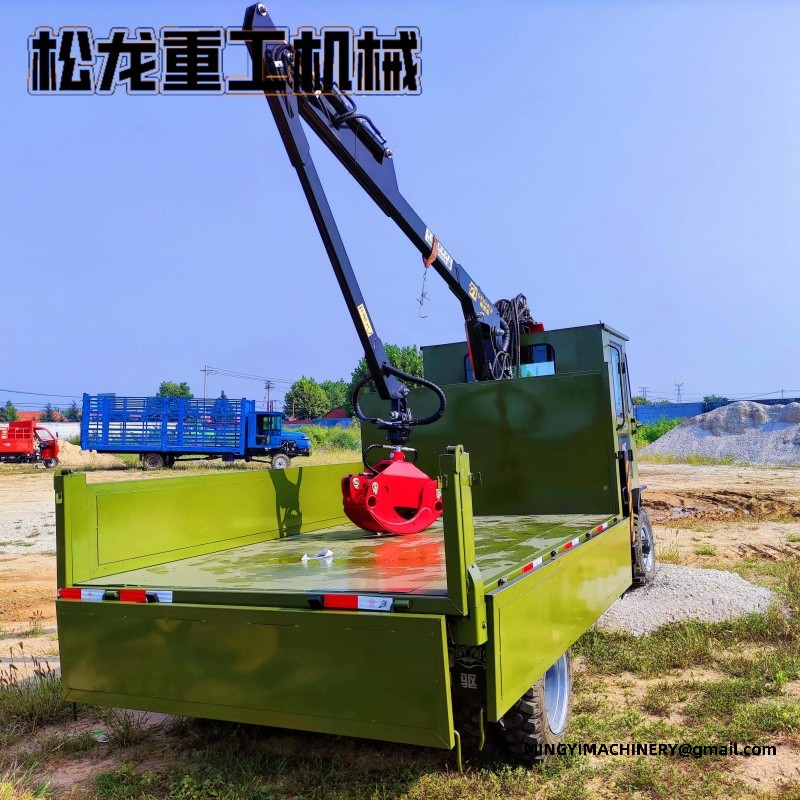
Every configuration on this page carries the 2.2 m long body, 1.5 m wide and 0.45 m high, a size that matches the short rounds and pulpwood this class of machine moves and keeps the overall length tight enough to turn between the trees. A longer body would make the articulation pointless, because the machine could no longer fold through the corners it was bought to make. The body has a tailgate with a self-dumping function throughout, so the load starts to leave before the body reaches full height. The 2.2 m length is a choice about the turn, not a compromise on capacity.
The 11.Luxury carries a side-opening rear body tailgate, which lets the driver tip the stems beside a deck or along a rack instead of in a pile. The self-dumping function on the other configurations still starts the load moving early, but the side-opening gate adds the ability to place material where the next machine wants it. In a forest, that is the difference between leaving timber ready for the deck and having to re-handle it later. It is a small option, but it changes the shape of every load the machine drops at the end of the run.
Twin hydraulic rams raise the body on all four configurations, and on an articulated machine the lift has to be square because the load shifts as the two halves straighten out. Stems that rolled to one side during the run would twist a single-ram body, so the pair lifts it evenly and the self-dumping tailgate starts the load moving before the body is fully up. The result is a clean dump at the landing that does not require the machine to be parked on the flat. For a carrier that spends its day folding through trees, that is one less thing to line up.
Cab choice follows the season the crew works in. The 10.Upgraded and the 13.Upgraded use a fully enclosed cab, the 11.Luxury an enclosed cab, and the 15.Standard a simple cab for dry, warm work. In a forest the cab is also the driver's shelter from the dust and the insects as much as from rain, so the choice is about the whole shift rather than the forecast. The two-person comfort seat fitted throughout carries a second worker to the landing, which saves a separate trip on a road where movement is slow. Pick the cab for the worst week of the year.
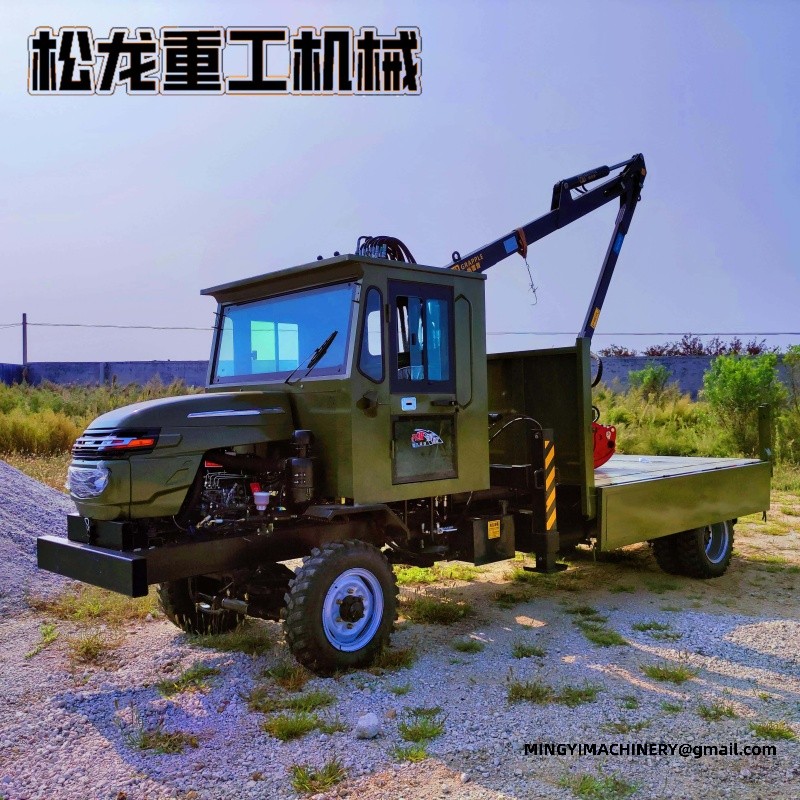
The bonnet shape is partly a preference and partly a clearance question under low branches. The 10.Upgraded and the 11.Luxury use a square-nose bonnet, and the 13.Upgraded and the 15.Standard a round-nose, which sits slightly lower at the front. The choice rarely changes how the machine performs, but it can change how easy it is to open the engine bay for the daily checks that are done in the field rather than in a workshop. Tell the factory which side the driver services the machine from, and whether the route runs under hanging growth, and the bonnet decision mostly makes itself.
Twin-battery electric start is carried on all four configurations, and in the woods it is the difference between a machine that fires and one that has to be coaxed. The second battery keeps the cranking strong when the temperature has dropped and the engine oil has thickened, which is exactly the moment a single battery gives out. An articulated carrier parked at the landing overnight is usually beyond the reach of a charger or another machine, so the start has to happen on its own. The spare battery also feeds the idle load between runs. For an early shift in the cold, this is a small spec with a long reach.
The articulation point is the one part of an articulated machine that has no equivalent on a rigid one, and it is where wear shows first. The pivot bearing and its pins take the load every time the machine turns, and a dry or worn pivot lets the two halves move against each other in a way that transmits into the frame and the steering. Greasing the pivot on schedule is most of what keeps it right, and a walk-around that includes the hinge before the shift catches a dry pin before it becomes a failed one. The build sheet should note the pivot for the workshop that will service the fleet.
The right build is the one that fits the corner, not the one with the biggest engine. Before you order, measure the tightest gap the machine must thread and the fullest body it must move, and note where the floor is softest after rain; those three details pin the configuration down. When two remain in the running, take the full-time driveline and the mountain tyres, because in a tight forest the ground gives way without warning and there is no time to select a mode. Give the factory the narrowest number and let it do the rest.
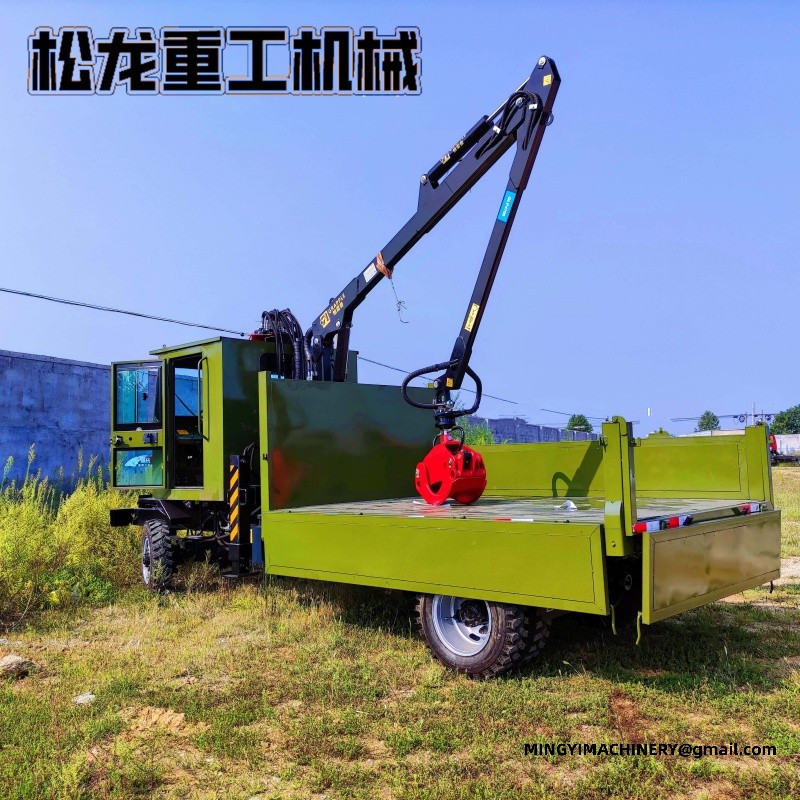
| # | 10.Upgraded | 11.Luxury | 13.Upgraded | 15.Standard |
|---|---|---|---|---|
| 1 | Single-cylinder diesel engine, 32 hp | Single-cylinder diesel engine, 32 hp | Two-cylinder diesel engine, 38 hp | Four-cylinder 490 diesel engine |
| 2 | Full-time gearbox with four-wheel drive | Part-time gearbox, selectable 2WD/4WD | Full-time gearbox with four-wheel drive | Full-time gearbox with four-wheel drive |
| 3 | High/low range with crawler gear | High/low range with crawler gear | High/low range with crawler gear | High/low range with crawler gear |
| 4 | Front axle clutch | Enclosed cab | Front axle clutch | Simple cab |
| 5 | Fully enclosed cab | Six 700-16 mountain tyres | Fully enclosed cab | Oil brakes |
| 6 | Oil brakes | Model 212 front axle | Oil brakes | Four 700-16 mountain tyres |
| 7 | Four 700-16 mountain tyres | Model 130 rear axle | Four 700-16 mountain tyres | Front axle 212 |
| 8 | Front axle 212 | Air cut-off brakes | Front axle 212 | Rear axle 130 |
| 9 | Rear axle 130 | Reinforced 60 x 140 mm square tube frame | Rear axle 130 | Reinforced 60 x 140 mm square tube frame |
| 10 | Reinforced 60 x 140 mm square tube frame | Rear body 2.2 m long x 1.5 m wide x 0.45 m high | Reinforced 60 x 140 mm square tube frame | Rear body 2.2 m long x 1.5 m wide x 0.45 m high |
| 11 | Rear body 2.2 m long x 1.5 m wide x 0.45 m high | Tailgate with self-dumping function | Rear body 2.2 m long x 1.5 m wide x 0.45 m high | Tailgate with self-dumping function |
| 12 | Tailgate with self-dumping function | Side-opening rear body tailgate | Tailgate with self-dumping function | Hydraulic power steering |
| 13 | Hydraulic power steering | Hydraulic power steering | Hydraulic power steering | Twin hydraulic rams |
| 14 | Twin hydraulic rams | Twin hydraulic rams | Twin hydraulic rams | Two-person comfort seat |
| 15 | Two-person comfort seat | Two-person comfort seat | Two-person comfort seat | Twin-battery electric start |
| 16 | Twin-battery electric start | Heavy-duty leaf springs | Twin-battery electric start | Round-nose bonnet |
| 17 | Square-nose bonnet | Twin-battery electric start | Round-nose bonnet | — |
| 18 | — | Square-nose bonnet | — | — |
For a specification discussion or a build sheet for this articulated 4WD log carrier, contact mingyimachinery@gmail.com or reach us on LINE (ID: mingyicn).









