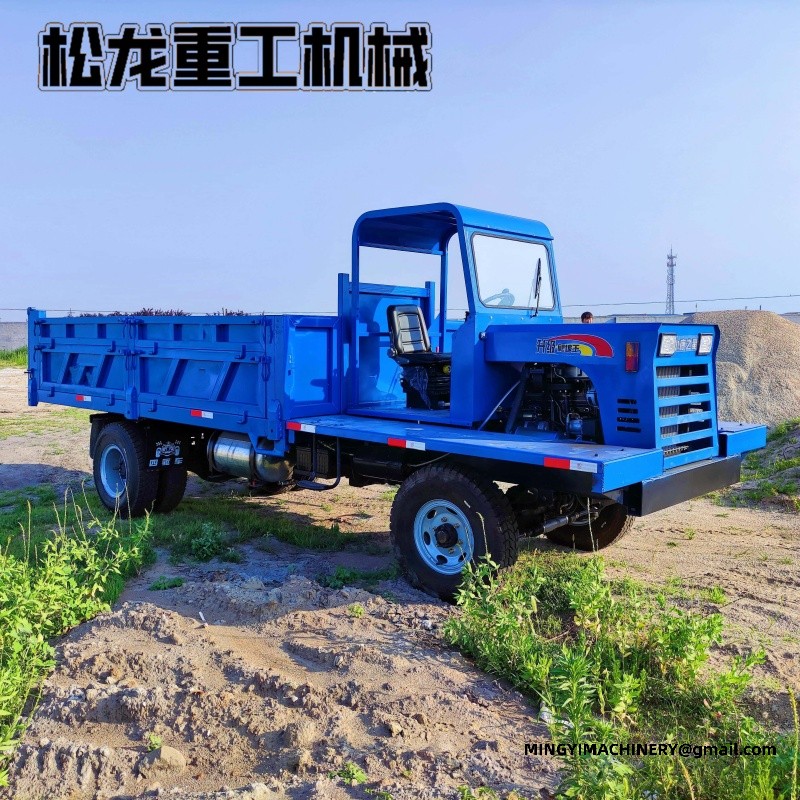
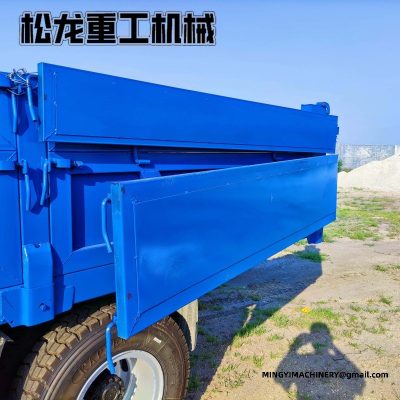
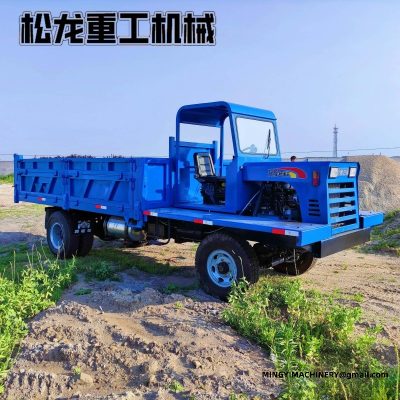
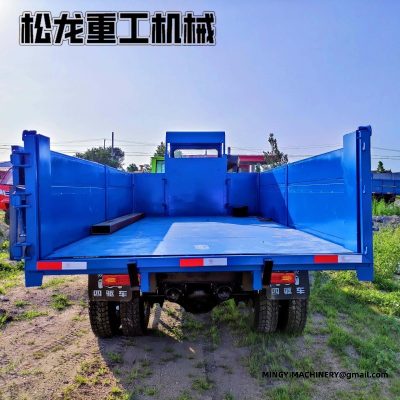
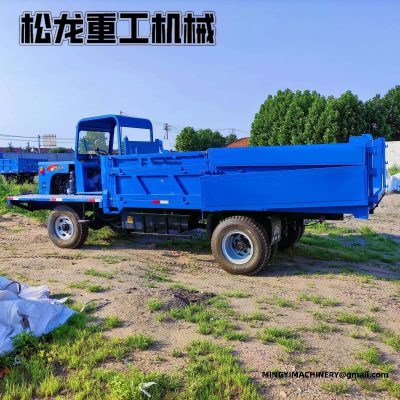
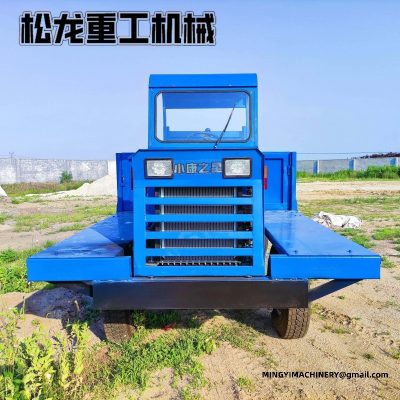
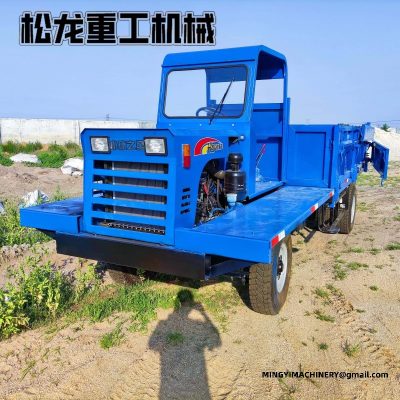
Model MY-4x4-10T · 10 t payload · 120 hp engine
On a muddy road the machine is only as good as what meets the ground, and what meets the ground is the tyre. A cargo transporter that works wet, soft and slippery surfaces day after day is specified from the tread and the footprint outward, not from the engine inward. This page reads the range that way: the 700-16 mountain tyres, the full-time four-wheel drive, the crawler gear and the axle sets as a single traction system, and what each configuration contributes when the road turns to mud and every metre has to be earned.
Mud does not ask for more power; it asks for grip, and grip is decided by three things working together: a tread that clears itself, a footprint that spreads the weight, and drive that reaches every wheel that can bite. A machine with all three crosses ground that stops a more powerful machine with none. On a muddy road the failure is usually not a lack of horsepower but a tyre that fills with mud and spins, or drive that never reaches the wheel that still has something firm under it. Specification starts there, with the tread and the footprint, and everything else is built out from them.
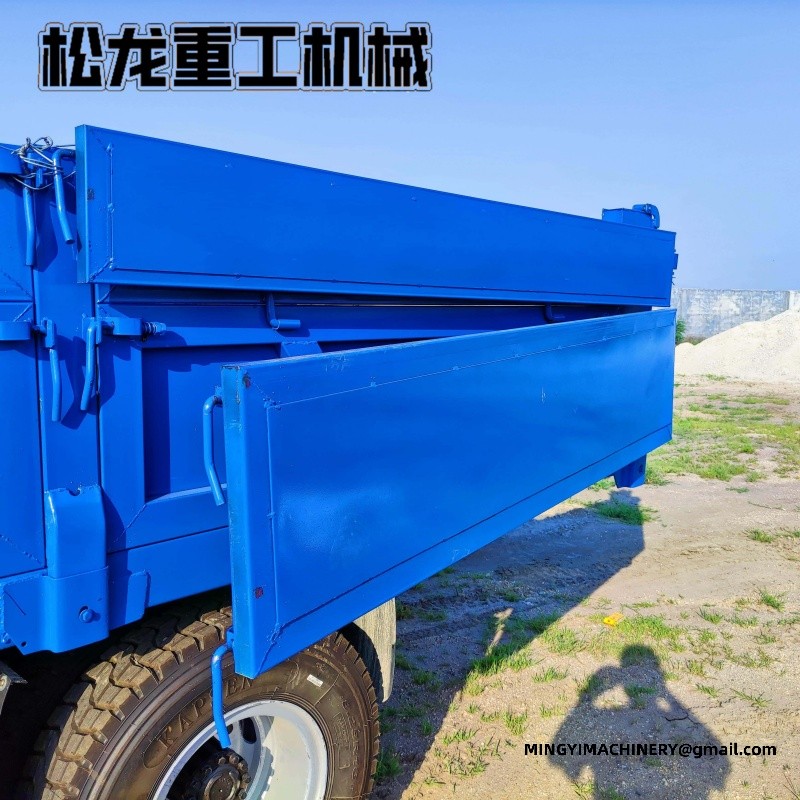
The 700-16 mountain tyres fitted across this range carry a tread designed to throw mud as the wheel turns rather than hold it. A tyre that packs with mud turns into a smooth drum, and a smooth drum will not grip anything. The mountain pattern opens as it rotates, flinging the mud out of the tread so the lugs keep reaching down to whatever is firm underneath. That self-cleaning action is the whole point of the pattern, and it is the reason a muddy-road machine is specified around a mountain tyre instead of a road tyre.
The range uses both four and six 700-16 mountain tyres. Six tyres spread the loaded weight over more contact area, which keeps the machine from sinking into soft ground, and they suit the heavier configuration with the 2.2 m long by 2.1 m wide body. Four tyres suit the lighter machines, where the body is 2.2 m long by 1.5 m wide and the load is compact enough to ride on four corners. On mud, more footprint is not always better; the right footprint is the one that keeps the machine on top of the surface instead of ploughing through it.
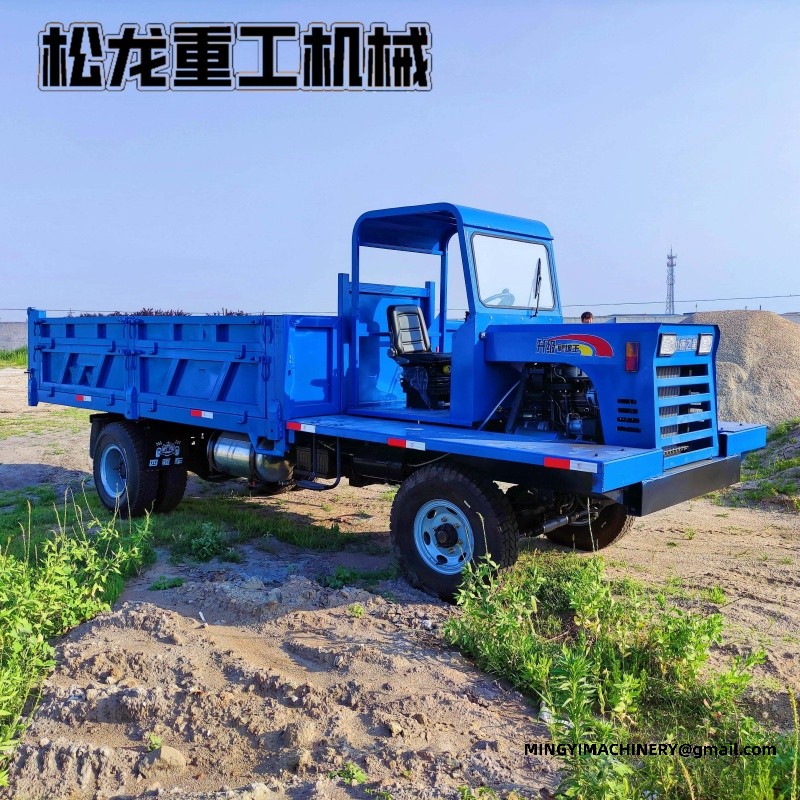
Most of this range runs a full-time gearbox with four-wheel drive, keeping every wheel pulling all the time, and that is the correct default for a muddy road. When one wheel loses grip and spins, the others keep driving and the machine keeps moving, whereas a two-wheel-drive machine on the same patch simply stops and digs in. The full-time arrangement removes the decision from the driver and the risk from the moment, which is what a wet, uncertain surface calls for. Grip that is always there beats grip that has to be selected in time.
High and low range with a crawler gear is fitted throughout, and on mud it is the difference between climbing a slope and sliding back down it. Wheel-spin on a wet grade digs the machine in and polishes the surface beneath; the crawler gear removes spin by letting the machine move at a walking pace while the engine stays in its working range. A driver who can hold that slow, steady crawl keeps the tyres turning at the speed they grip best, and that single habit is worth more than any amount of throttle, because on mud the throttle is usually the thing that breaks the grip.
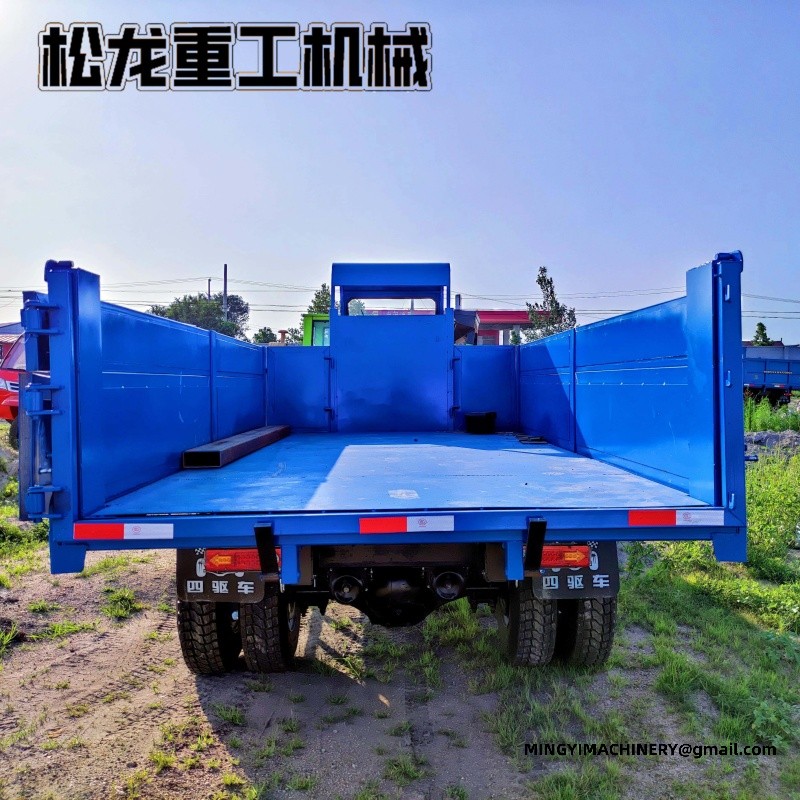
Traction is weight as much as tread, and a muddy-road machine works best when the load sits low and over the driven wheels. The bodies here are 0.45 m deep, a low floor that keeps the centre of gravity down and the weight pressing the tyres into the surface where they can find grip. A load heaped high makes the machine top-heavy and lightens the very wheels that are trying to bite. On mud the loading habit matters as much as the tyre, and the two have to agree, or the best tyre in the range is wasted.
The Model 212 front axle and Model 130 rear axle carry the lighter configurations, while the reinforced ISUZU-pattern front axle and reinforced 1061 rear axle carry the heavier one with the 2.1 m body. On a muddy road the axles take the twisting that comes when one wheel finds grip and the opposite one does not, a load that is repeated constantly on broken ground. The reinforced sets and the reinforced 60 x 140 mm and 80 x 180 mm frames are there to hold the machine straight under that uneven, continuous strain, which is what mud applies to a machine all day without ever letting up.
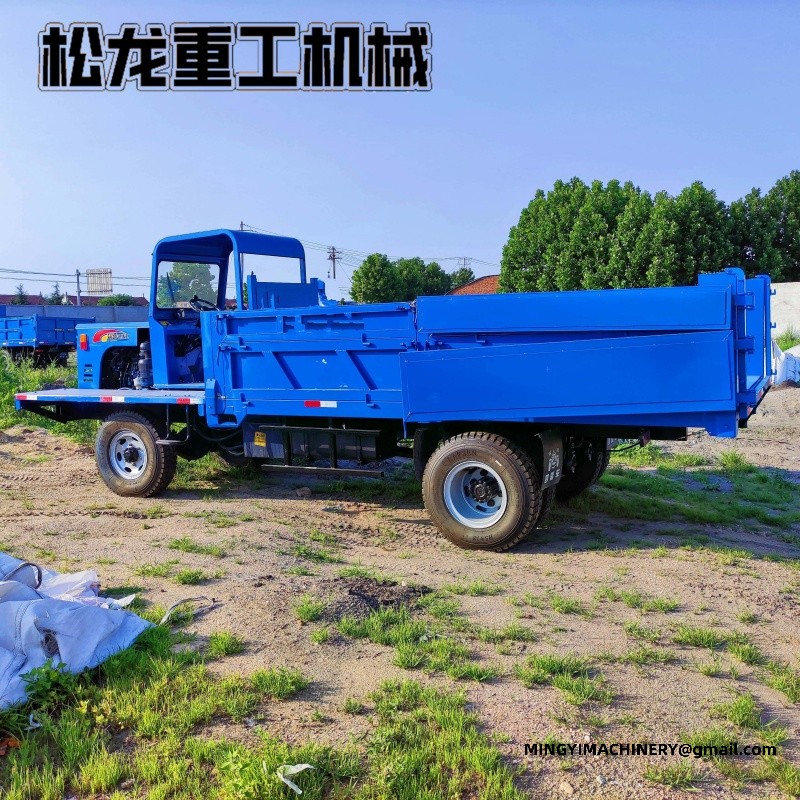
One configuration widens the body to 2.1 m while keeping the length at 2.2 m, and it is paired with the six-tyre layout and the reinforced axles. The wider body suits a load that is bulky rather than dense, and it needs the extra footprint precisely because the weight is spread over a larger floor. A muddy road punishes a wide, heavy body that outruns its tyres, so the wider body and the extra tyres are specified together, not offered as separate choices. The load, the body and the footprint move as one, and splitting them is where a muddy-road machine goes wrong.
Oil brakes are fitted across this range, matched to the low speeds and full loads of a muddy-road machine. On a wet surface stopping is as much about control as about force, because a machine that locks a wheel on mud slides instead of stops. The brake specification here is about repeated, loaded, low-speed control on a surface that gives little back, and the steepest wet descent on the route is the point where it is genuinely being tested. State that grade and the brake question settles itself, because the descent is the only place the brakes are really asked to earn their specification.
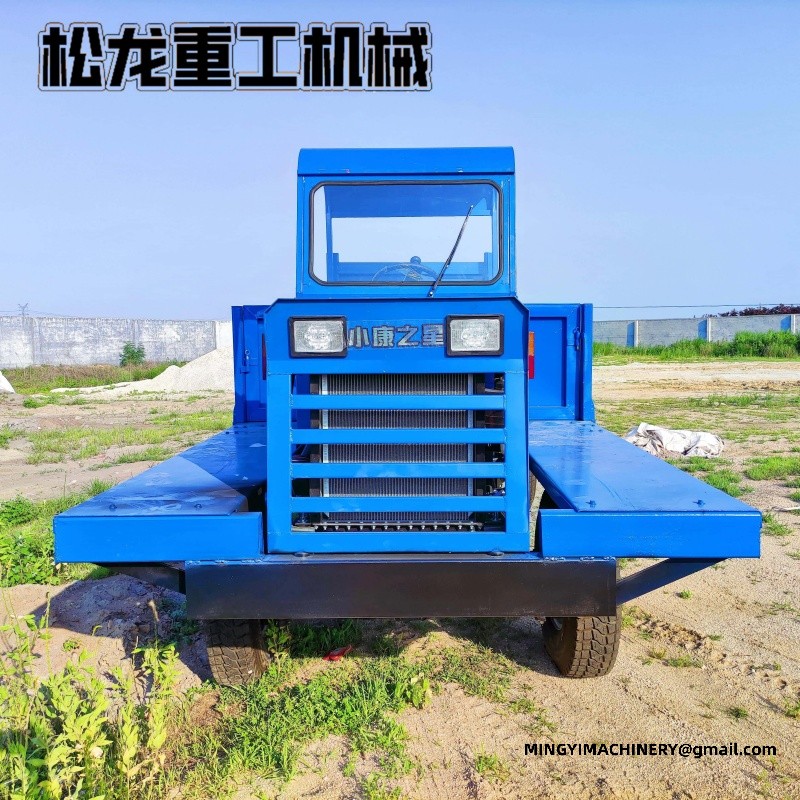
The engines run from the single-cylinder 32 hp and the two-cylinder 38 hp to the four-cylinder 4102 turbocharged diesel. On a muddy road the engine's job is not raw speed but the steady pull that keeps the machine moving without wheel-spin, and the crawler gear does much of that work. The single-cylinder machines suit short, level shuttles; the 38 hp suits a mixed, longer day; and the turbocharged 4102 suits the heavier configuration with the wider body and a long or climbing route. Gradient, not load, is the deciding fact, and it is the one to lead with when the ground is described.
The fully enclosed cab and the simple cab appear across the configurations, and on a muddy road the cab is where the driver reads the surface and decides when to crawl and when to stop. The two-person comfort seat and hydraulic power steering keep a driver and a helper working together, and on bad ground the helper is often the difference, watching a wheel that is about to spin and calling the driver off before the machine digs in. A muddy route is driven by judgement, and the cab is where that judgement is exercised.
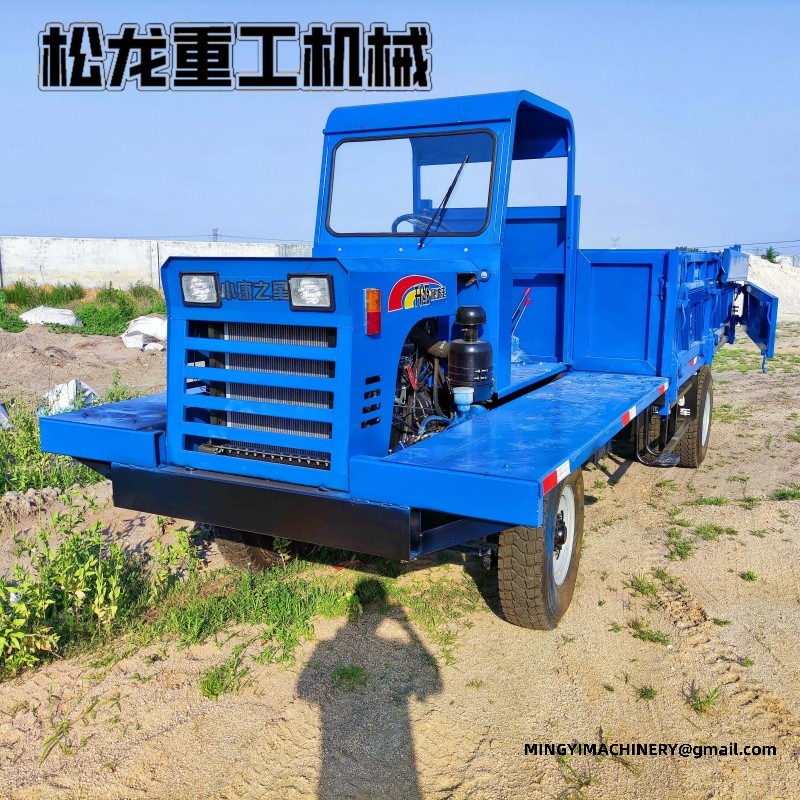
Twin hydraulic rams lift the body, and on muddy ground the value is stability while tipping. A machine that dumps on a soft, wet surface can settle or lean as the body rises, and a single ram on one side can twist the body as the load shifts. Two rams share the lift and keep the body coming up straight, while the self-dumping tailgate starts the load leaving before full height, so the machine is never balanced on a high, half-empty body on ground that is giving way beneath it, which is the most dangerous moment of the whole cycle.
Twin-battery electric start is fitted to every configuration, and on a muddy-road machine the value is about damp and cold and a machine parked out in the open. Water and moisture are hard on a starting system, and a machine that has to fire first time on a cold, wet morning decides whether the whole day begins on time. The second battery is the reserve that covers that moment, a small provision that removes the most common reason a transporter sits still at the gate when the ground is already against it, which is exactly when the crew least needs another delay.
The round-nose bonnet and the square-nose bonnet appear across the range, and the choice is mostly about clearance and preference. On a muddy road the nose is the first part of the machine into the ruts and up against the loading point, and a shape that works with the route is a small daily convenience. It is a minor point beside the tyres and the drive, but it is the kind of detail that is quick to settle at order stage and awkward to change after the machine has been living on the job, long after the mud has claimed the first set of tyres.
Because the machine is built around traction, the specification has to start from the surface. How soft and how wet the road is, how far the load moves, and how heavy and how bulky it is all sort the tyre count, the body width and the engine without any guesswork. A buyer who describes the ground, and sends a photograph of it at its worst, gets a configuration that can be checked against the very road it will cross. A muddy-road transporter is chosen from the mud, and everything else follows, from the tyre count up to the engine.
| # | 10.Upgraded | 12.Standard | 18.Standard | 9.Standard |
|---|---|---|---|---|
| 1 | Single-cylinder diesel engine, 32 hp | Two-cylinder diesel engine, 38 hp | Four-cylinder 4102 turbocharged diesel engine | Single-cylinder diesel engine, 32 hp |
| 2 | Full-time gearbox with four-wheel drive | Full-time gearbox with four-wheel drive | Model 140 part-time gearbox with four-wheel drive | Full-time gearbox with four-wheel drive |
| 3 | High/low range with crawler gear | High/low range with crawler gear | High/low range with crawler gear | High/low range with crawler gear |
| 4 | Front axle clutch | Simple cab | Simple cab | Simple cab |
| 5 | Fully enclosed cab | Oil brakes | Oil brakes | Oil brakes |
| 6 | Oil brakes | Four 700-16 mountain tyres | Six 700-16 mountain tyres | Four 700-16 mountain tyres |
| 7 | Four 700-16 mountain tyres | Front axle 212 | Reinforced ISUZU-pattern front axle | Front axle 212 |
| 8 | Front axle 212 | Rear axle 130 | Reinforced 1061 rear axle | Rear axle 130 |
| 9 | Rear axle 130 | Reinforced 60 x 140 mm square tube frame | Reinforced 80 x 180 mm square tube frame | Reinforced 60 x 140 mm square tube frame |
| 10 | Reinforced 60 x 140 mm square tube frame | Rear body 2.2 m long x 1.5 m wide x 0.45 m high | Rear body 2.2 m long x 2.1 m wide x 0.45 m high | Rear body 2.2 m long x 1.5 m wide x 0.45 m high |
| 11 | Rear body 2.2 m long x 1.5 m wide x 0.45 m high | Tailgate with self-dumping function | Tailgate with self-dumping function | Tailgate with self-dumping function |
| 12 | Tailgate with self-dumping function | Hydraulic power steering | Hydraulic power steering | Hydraulic power steering |
| 13 | Hydraulic power steering | Twin hydraulic rams | Twin hydraulic rams | Twin hydraulic rams |
| 14 | Twin hydraulic rams | Two-person comfort seat | Two-person comfort seat | Two-person comfort seat |
| 15 | Two-person comfort seat | Twin-battery electric start | Twin-battery electric start | Twin-battery electric start |
| 16 | Twin-battery electric start | Round-nose bonnet | Square-nose bonnet | Square-nose bonnet |
| 17 | Square-nose bonnet | — | — | — |
For a specification discussion or a build sheet for this muddy-road cargo transporter, contact mingyimachinery@gmail.com or reach us on LINE (ID: mingyicn).









