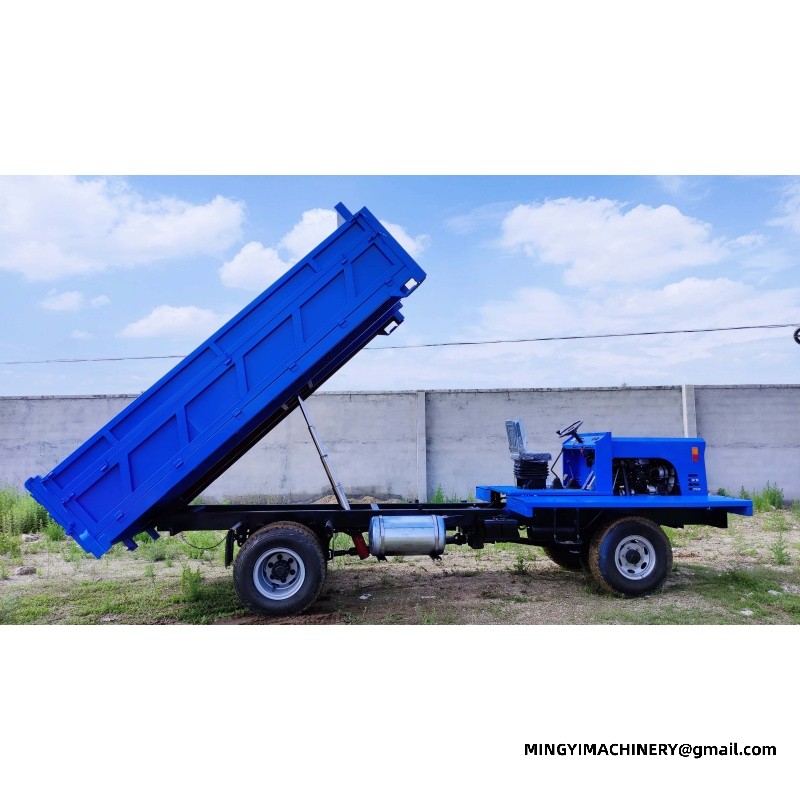
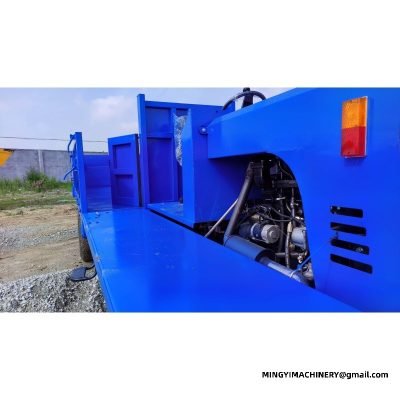
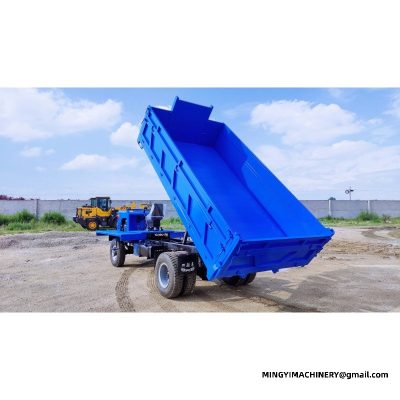
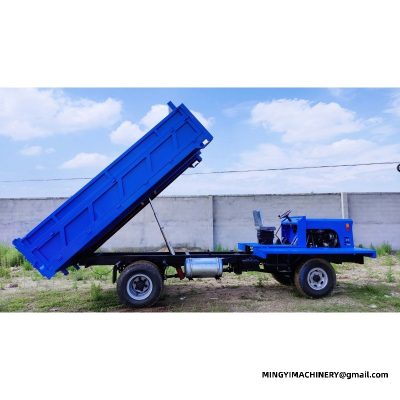
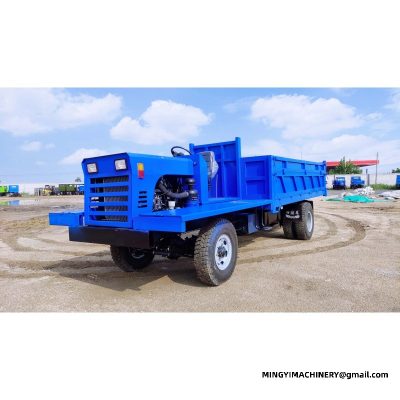
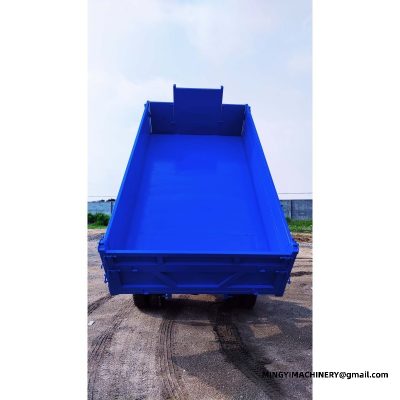
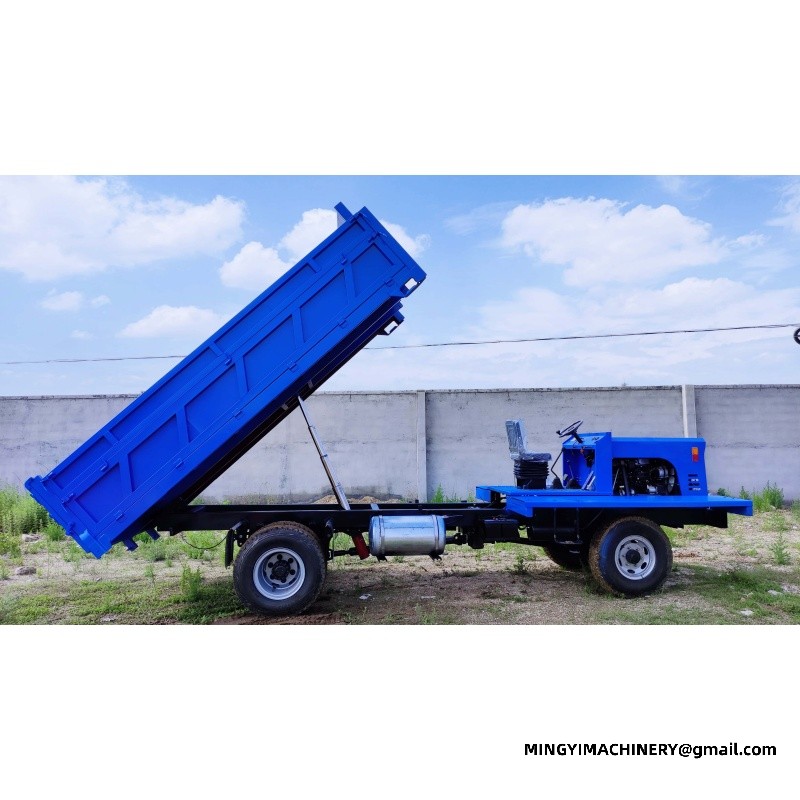
A multi-function off-road vehicle earns its living by covering several jobs on one chassis rather than one job on a specialised machine. The buyer who works a farm, a building site and a firewood yard in the same week wants a platform that hauls on Monday, tips on Tuesday and carries tools the rest of the time. That is what this range is built around: a reinforced 60 x 140 mm square tube frame, a rear body lifted by twin hydraulic rams, and an engine and gearbox line-up that runs from a single-cylinder 25 hp machine to a four-cylinder 490 diesel engine.
The strength of a multi-function platform is that the frame, the axles and the tipping body are shared, so the buyer changes what the machine does rather than changing the machine. The reinforced 60 x 140 mm square tube frame carries the same rear body whether it is hauling gravel, moving feed or taking a crew to the far side of a site, and the twin hydraulic rams lift that body whatever happens to be in it. A side-opening rear body tailgate adds a further role, letting one machine place material along an edge instead of dropping it in a heap, which is what turns a hauler into a tool.
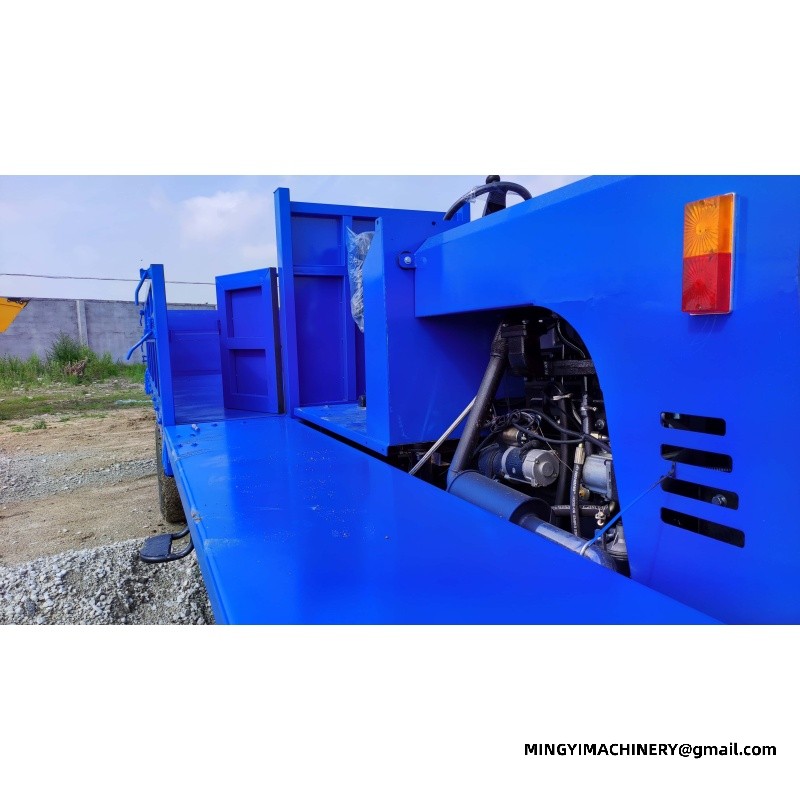
Four engines cover the range, and the choice follows the duty rather than any preference for a bigger number. The single-cylinder 25 hp and 32 hp engines suit a light, stop-start day where the machine is rarely loaded for long, while the two-cylinder 38 hp engine carries a busier mixed day. At the top, the four-cylinder 490 diesel engine is the choice for continuous work, a long haul or a real gradient. Choosing the smallest engine that covers the heaviest regular job is the practical approach, because the platform underneath does not change either way.
Two drive arrangements appear in the line-up. A full-time gearbox with four-wheel drive keeps both axles working all the time, which suits soft ground where a driven wheel that slips can be the difference between moving and digging in. The part-time gearbox selectable between two- and four-wheel drive suits a machine that travels a firm road and only needs drive at both ends in the work area. Both carry high and low range with a crawler gear, so the slow, controlled pace that loading and tipping need is available whichever arrangement is chosen, which is the point that matters most to the buyer.
The axle and brake split follows the duty. The Model 212 front axle and Model 130 rear axle appear on the lighter configurations, while the reinforced 130 front axle and reinforced ISUZU-pattern rear axle carry the heavier ones. Air cut-off brakes and oil brakes are both used across the range, each matched to its configuration rather than offered as a single fixed standard. A front axle clutch appears on two of the four configurations, which lets the front axle freewheel on a firm surface, and that detail is worth understanding before the machine is ordered, because it changes how the driveline behaves on hard and soft ground.
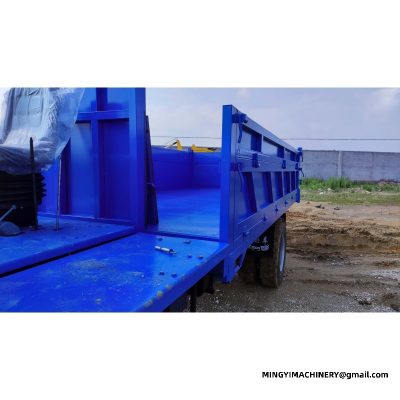
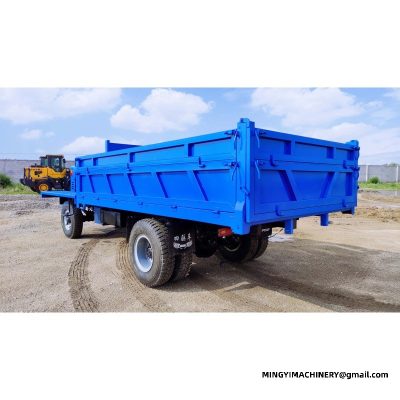
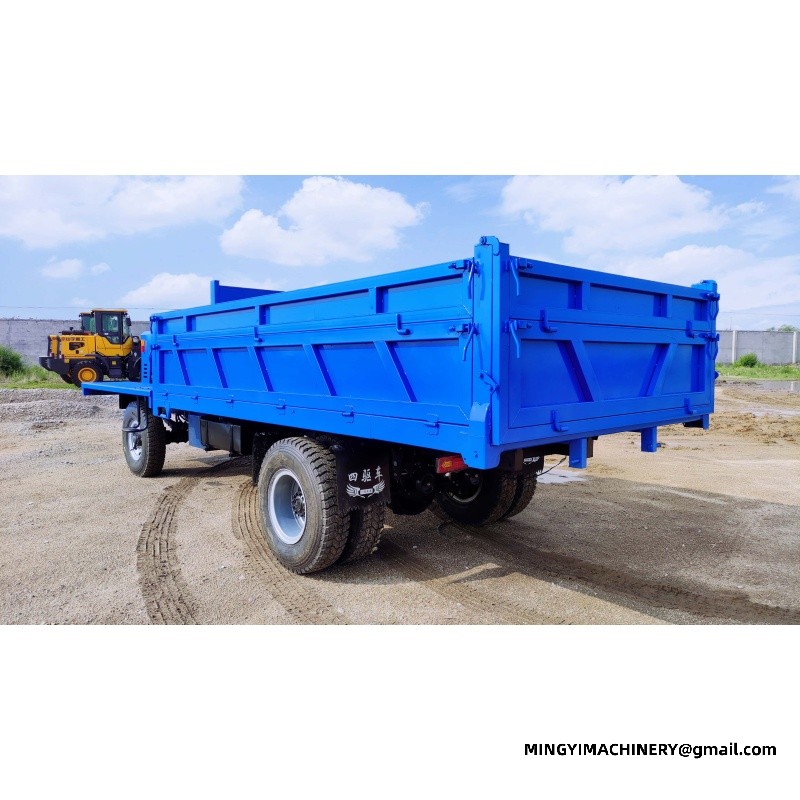
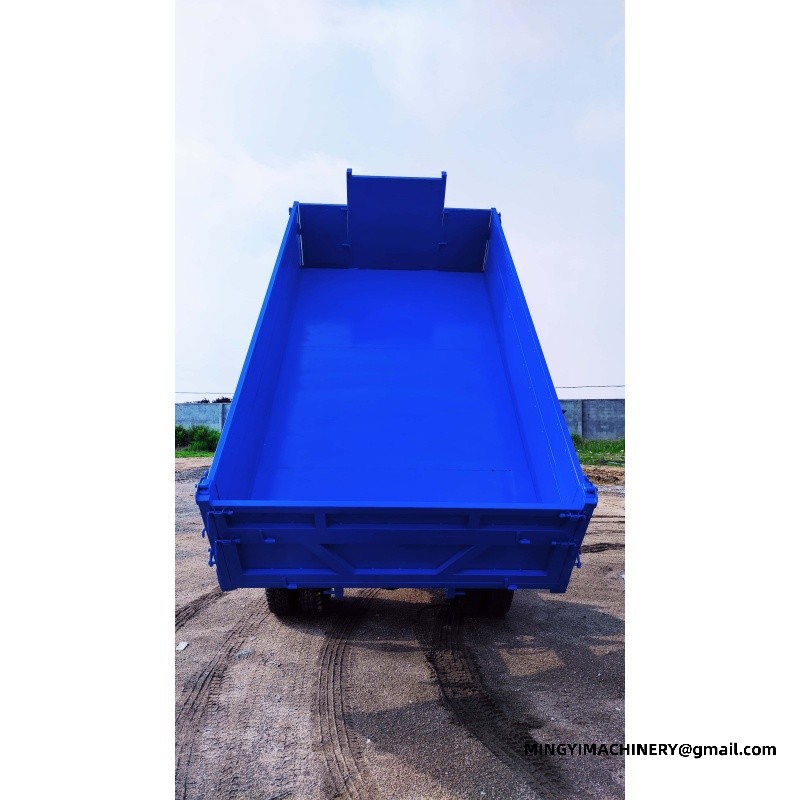
Most configurations carry a rear body 2.2 m long, 1.5 m wide and 0.45 m high, the size that suits a loader bucket and keeps the machine compact on a narrow track. One configuration widens the body to 1.8 m while keeping the same length and depth, which suits light, bulky material that fills a wider floor without adding much weight. The wider body is not a better body; it is a different body, and the decision turns on what is being carried and how it loads rather than on any idea that bigger is automatically the right answer.
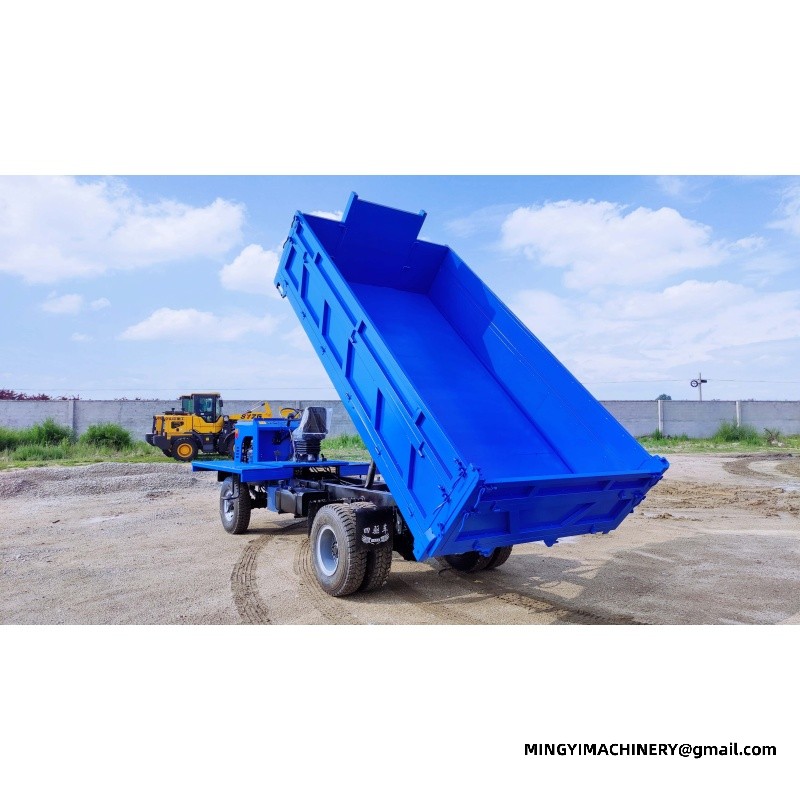
Every configuration has a tailgate with a self-dumping function, which starts the load leaving before the body reaches full height and makes tipping safer and cleaner. A side-opening rear body tailgate is fitted to two of the four configurations, and it is the feature that changes what the machine can do. With it, a driver can place material in a line, along a trench edge or beside a wall instead of dumping it in one pile, which is exactly the kind of second use that turns a single platform into what feels like several machines.
Cab specification follows the hours and the weather. The fully enclosed cab protects the driver on a long or dusty shift, while the enclosed cab suits shorter or milder work. All four configurations carry hydraulic power steering and a two-person comfort seat, so a second worker can ride to the next task and steering stays light even with a loaded body. For a machine that moves between jobs all day, the seat and the steering are what keep the driver fresh enough to work the next role as carefully as the first, which keeps a multi-role machine out of trouble.
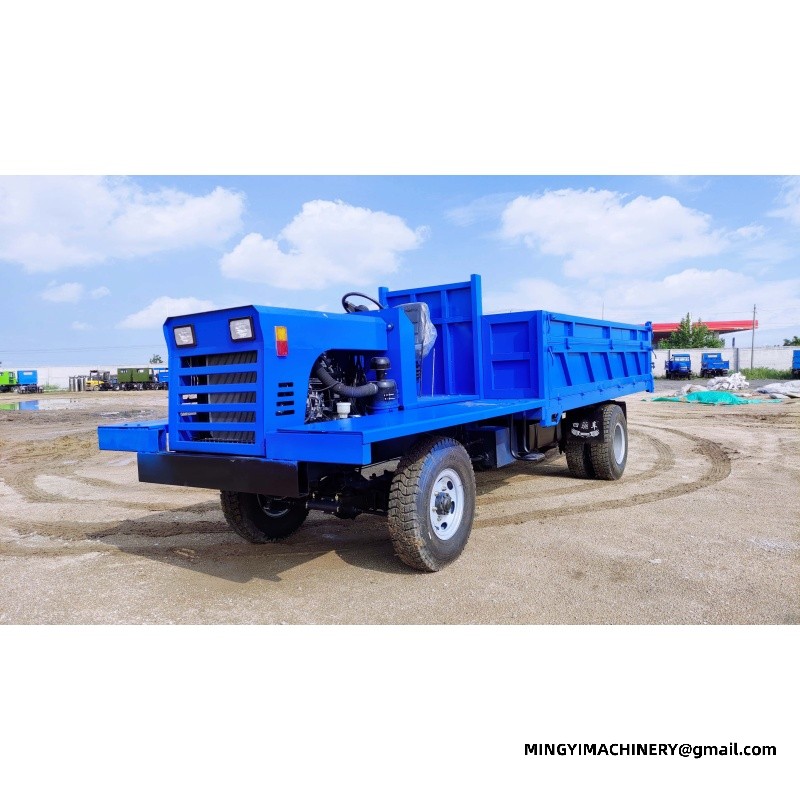
Two tyre counts are used across the range. Six 700-16 mountain tyres spread the load over a wider footprint and suit a machine that carries weight on soft ground, while four 700-16 mountain tyres suit lighter duties and a firmer surface. The mountain pattern matters on both counts because it clears mud and loose fill and cuts through a wet top layer to whatever is firm beneath. For a platform that will work on more than one type of ground, the six-tyre configuration is the safer starting point, because the extra footprint forgives a soft patch on the way to the next task.
Heavy-duty leaf springs sit between the frame and the axles and are what keep a loaded body stable when the machine crosses rough ground. On a multi-role machine the load changes shape and weight from one job to the next, and the springs are chosen to hold the body level whether it is carrying stone, feed or tools. A level body is also a safer one to tip, because a machine that leans to one side as the rams lift is harder to control and harder on its mounting bushes over time. Choosing springs for the loaded machine rather than the empty one keeps the whole assembly straight.
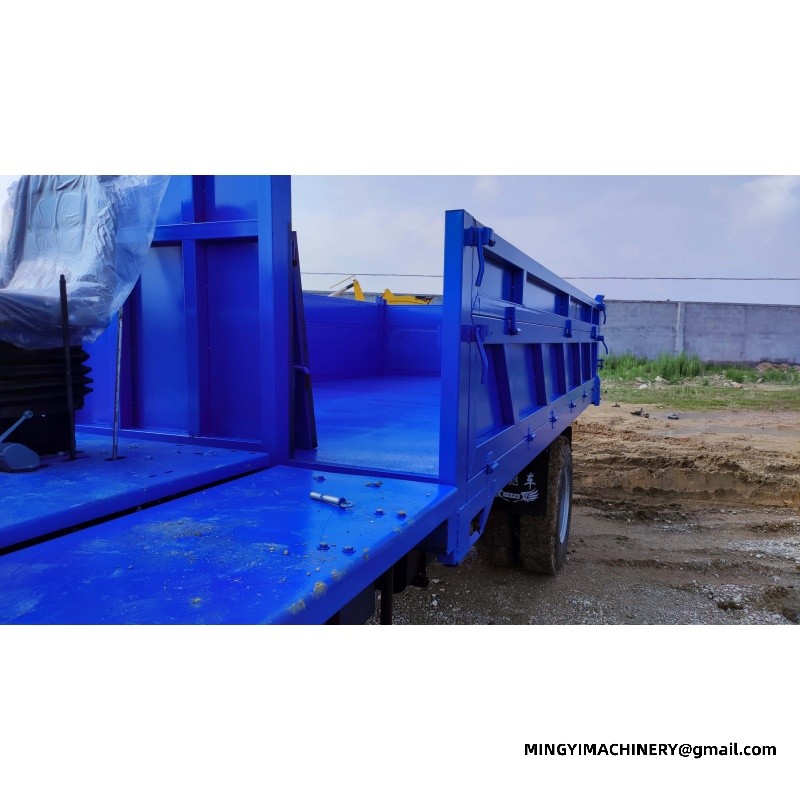
Twin-battery electric start is fitted throughout the range, and it matters most in the situations a multi-role machine actually meets: cold mornings, a machine parked between jobs, and a driver who starts and stops many times a day. The second battery holds a reserve that keeps starting reliable when the first has been drained by a long stop or by repeated short runs. For a platform that is expected to work whenever it is called on, dependable starting is as much a part of its usefulness as the engine power behind it, because a machine that will not fire holds up the whole day.
The bonnet shape is a small detail that is worth settling before production rather than discovering afterwards. The range offers a round-nose bonnet and a square-nose bonnet across its configurations, and the difference is mainly one of access and appearance rather than performance. Where the machine has to work in tight spaces, the nose shape affects how close it can get to a wall or a loading face. Settling the preference at order stage avoids a machine that arrives correct in every respect except the one the buyer never mentioned, which is why it is asked alongside the engine and the axles.
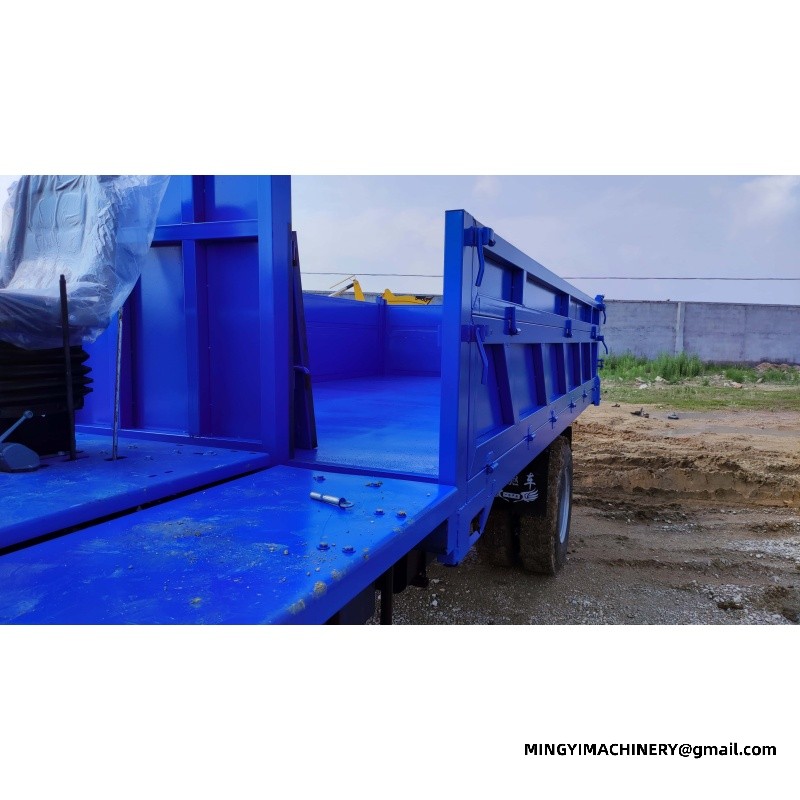
The point of a shared platform is that moving from one job to another is a matter of how the machine is used, not a workshop job. The self-dumping tailgate and the side-opening tailgate give two discharge patterns from the same body, and the twin hydraulic rams handle the full range from a light tool load to a full body of stone. Nothing has to be unbolted to switch from hauling to tipping, which is what keeps a multi-function machine busy across a whole week instead of standing idle between the jobs it was bought for.
A tipping vehicle is half of a pair, and the cycle belongs to whichever half is slower. Sizing the body to the loader bucket is the practical way to get it right: a body that takes many buckets to fill keeps the loading machine waiting, while one that fills in a single pass carries less than it could. The 2.2 m by 1.5 m body is the reference size, and the 1.8 m wide version suits a bucket that spreads light material wider. Knowing which machine will load the vehicle belongs in the enquiry, because it decides the body far more reliably than any rule of thumb.
Buyers who expect to order more than one machine should settle the platform on the first order and let later orders follow it. Keeping the same frame, the same axle pattern and the same cab across a small fleet means one parts shelf, one service routine and drivers who can move between machines without relearning the controls. Where duties genuinely differ, the useful split is one machine set up for the heavy haul and one for the light, tight work, rather than two different platforms that each demand their own spares and habits, which is the fastest way to double the burden of keeping several machines running.
The four configurations map cleanly onto four ways of working. The single-cylinder 25 hp and 32 hp machines suit intermittent, light duty; the two-cylinder 38 hp machine suits a mixed day; and the four-cylinder 490 diesel engine suits continuous work and a long haul. Add the ground, the material and the hours, and the recommendation that comes back can be checked against those facts rather than taken on trust. Say which jobs the platform must cover, and the rest of the build sheet falls into place, from the engine and the gearbox down to the bonnet shape and the tailgate.
| # | 11.Luxury | 13.Upgraded | 17.Luxury | 4.Upgraded |
|---|---|---|---|---|
| 1 | Single-cylinder diesel engine, 32 hp | Two-cylinder diesel engine, 38 hp | Four-cylinder 490 diesel engine | Single-cylinder diesel engine, 25 hp |
| 2 | Part-time gearbox, selectable 2WD/4WD | Full-time gearbox with four-wheel drive | Part-time gearbox, selectable 2WD/4WD | Full-time gearbox with four-wheel drive |
| 3 | High/low range with crawler gear | High/low range with crawler gear | High/low range with crawler gear | High/low range with crawler gear |
| 4 | Enclosed cab | Front axle clutch | Fully enclosed cab | Front axle clutch |
| 5 | Six 700-16 mountain tyres | Fully enclosed cab | Six 700-16 mountain tyres | Fully enclosed cab |
| 6 | Model 212 front axle | Oil brakes | Reinforced 130 front axle | Oil brakes |
| 7 | Model 130 rear axle | Four 700-16 mountain tyres | Reinforced ISUZU-pattern rear axle | Four 700-16 mountain tyres |
| 8 | Air cut-off brakes | Front axle 212 | Air cut-off brakes | Front axle 212 |
| 9 | Reinforced 60 x 140 mm square tube frame | Rear axle 130 | Reinforced 60 x 140 mm square tube frame | Rear axle 130 |
| 10 | Rear body 2.2 m long x 1.5 m wide x 0.45 m high | Reinforced 60 x 140 mm square tube frame | Rear body 2.2 m long x 1.8 m wide x 0.45 m high | Reinforced 60 x 140 mm square tube frame |
| 11 | Tailgate with self-dumping function | Rear body 2.2 m long x 1.5 m wide x 0.45 m high | Tailgate with self-dumping function | Rear body 2.2 m long x 1.5 m wide x 0.45 m high |
| 12 | Side-opening rear body tailgate | Tailgate with self-dumping function | Side-opening rear body tailgate | Tailgate with self-dumping function |
| 13 | Hydraulic power steering | Hydraulic power steering | Hydraulic power steering | Hydraulic power steering |
| 14 | Twin hydraulic rams | Twin hydraulic rams | Twin hydraulic rams | Twin hydraulic rams |
| 15 | Two-person comfort seat | Two-person comfort seat | Two-person comfort seat | Two-person comfort seat |
| 16 | Heavy-duty leaf springs | Twin-battery electric start | Heavy-duty leaf springs | Twin-battery electric start |
| 17 | Twin-battery electric start | Round-nose bonnet | Twin-battery electric start | Square-nose bonnet |
| 18 | Square-nose bonnet | — | Round-nose bonnet | — |
For a specification discussion or a build sheet for this multi-function off-road vehicle, contact mingyimachinery@gmail.com or reach us on LINE (ID: mingyicn).









