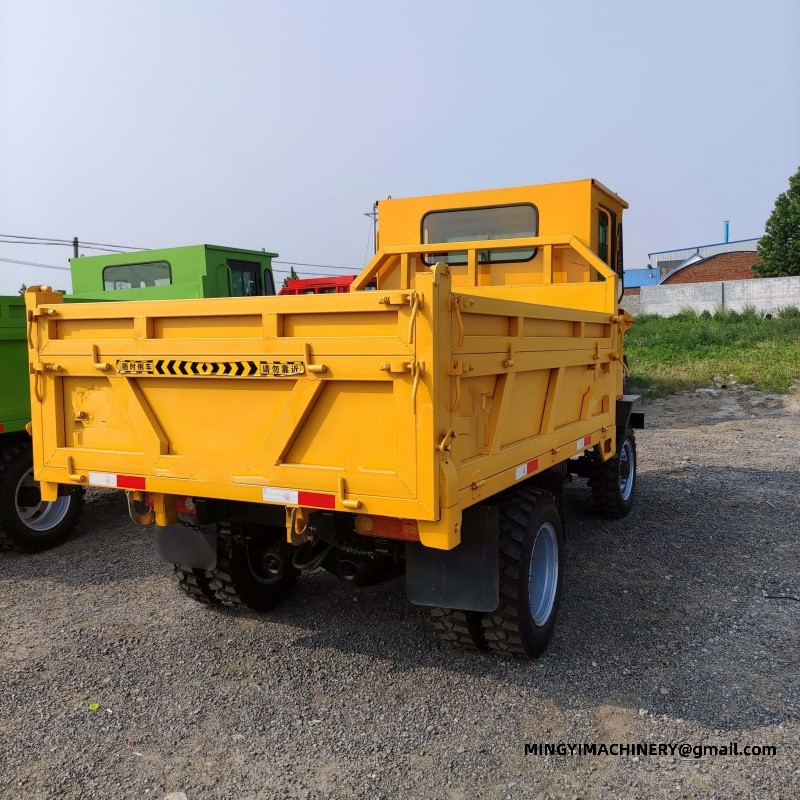
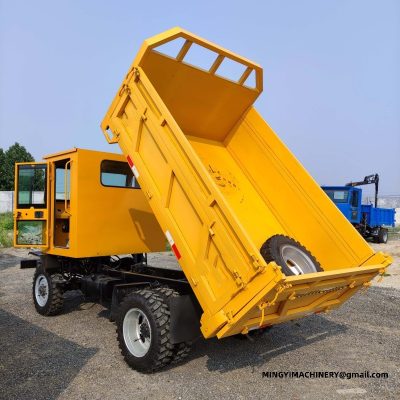
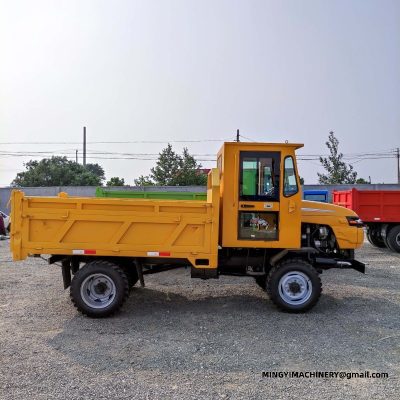
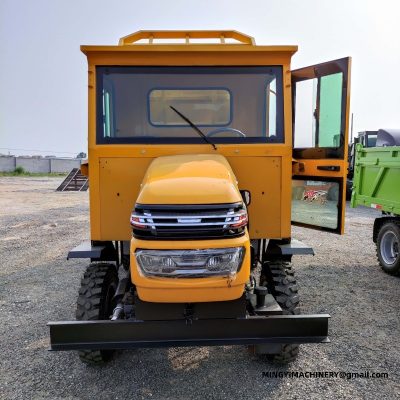
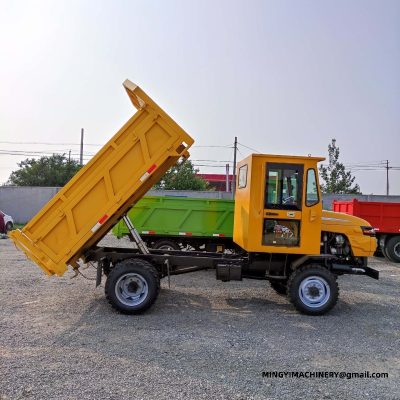
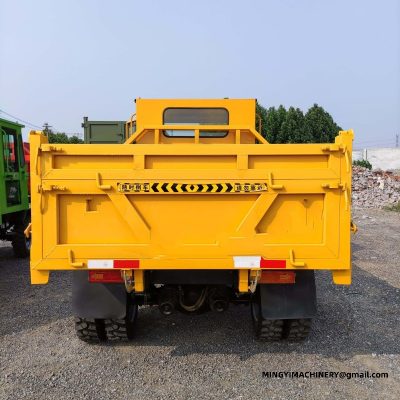
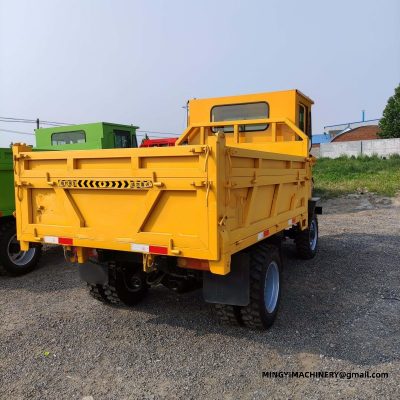
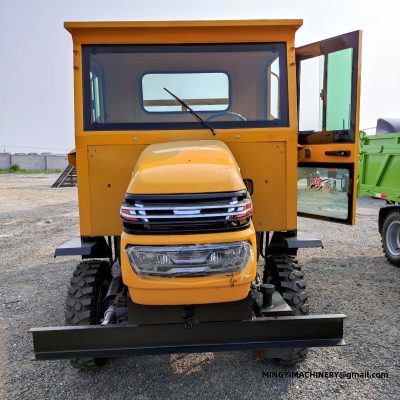
Nothing about the dumper is complicated, but the details are easy to overlook. This page gathers them in one place, from the build and the daily checks through to transport, documents and the support that comes after delivery.
Stability follows the load and its position. Knowing the rated capacity of this class of machine at the working radius, rather than at its best case, is what keeps handling predictable and the machine upright. Ballast and attachment weight change the machine. Adding a heavy tool to the unit in daily use moves the centre of gravity, and the counterweight or configuration should be matched to the tool rather than assumed.
Handover should include the documents as well as the keys. Parts list, service schedule and the operator notes for a machine of this size are what the workshop needs in month six, and they are much harder to obtain later. A short familiarisation session prevents the early faults. Most first-month problems on the equipment on site come from unfamiliarity with controls, limits or checks rather than from the machine itself.
Gradient is where a haul vehicle earns its keep. The machine itself with a crawler gear and a low range climbs loaded where a road vehicle would need a second attempt, and that difference decides whether a track is usable at all. Descending matters as much as climbing. A loaded the machine in that duty on a steep gradient needs engine braking and brakes in good order, and the safe practice is to plan the descent before the load rather than during it. Ground and gradient together set the limit. Loose surface on a slope reduces what the model in question can pull regardless of engine power, so the surface survey belongs before the specification.
The base machine is only as useful as the tool on the end of it. Matching the attachment to the task - rather than to what arrived with the machine - is what lets one the unit on the job cover several jobs across a week.
Certain parts are designed to be consumed. Knowing which items on a machine built for the work are wearing parts, and roughly how long they last in the duty the machine sees, turns replacement into a plan rather than a breakdown. Replacing wear items early is usually simpler. Worn components on the equipment in service load the parts they run against, so a worn part left too long often becomes a major repair.
Fuel is usually the largest controllable running demand. Operating style, correct tyre or track condition and a clean air supply all move consumption on the dumper by more than most buyers expect.
Timber work changes what the vehicle carries. This class of machine fitted with a log grab loads and unloads without a second machine, which is usually the reason a forestry contractor specifies one over a conventional truck. Access tracks in forestry are narrow, soft and often steep. The unit in daily use chosen for that work is chosen for the track, and the body, cab and tyre specification follow from the route rather than from the load alone.
Cold changes how a machine starts and how it warms up. Allowing a machine of this size to reach operating temperature before loading it, and using the correct grade of oil and fuel for the season, prevents most cold-start problems. Batteries and fluids are the parts that notice the cold first. The equipment on site kept on a maintainer through a freezing spell starts on the first turn, while one left standing is the usual cause of a lost morning.
Machine productivity depends on what happens around it. Deliveries, other trades and the sequence of work decide how much of the shift the model in question spends actually working rather than waiting. Access and storage are worth settling early. Where the machine in that duty will be parked, refuelled and serviced on site affects the working day more than most specification details, and it takes nothing to plan. Sequencing avoids rework. Doing the work in the order that suits the ground and the following trades keeps the unit on the job productive and prevents finishing a task that then has to be opened up again.
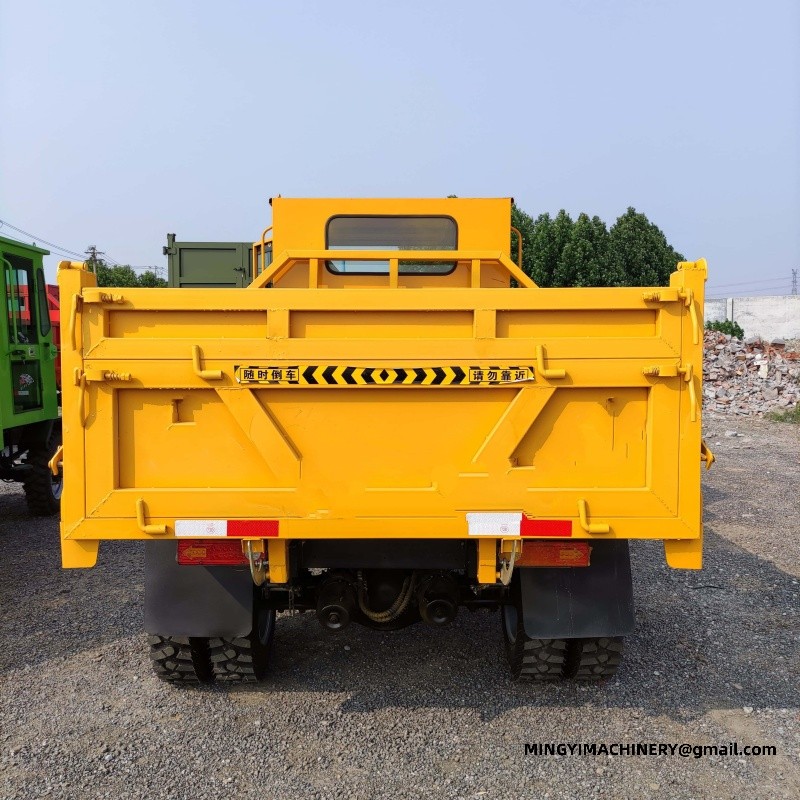
Adding a crane changes the vehicle specification. Hydraulic capacity, frame strength and braking all need to suit the attachment, and it is simpler to specify them at build than to add them later.
Moving the machine is part of owning it. Overall length, width and height decide which trailer or container the dumper fits, and a machine that needs a permit or an abnormal load escort is a machine with a delivery delay built in.
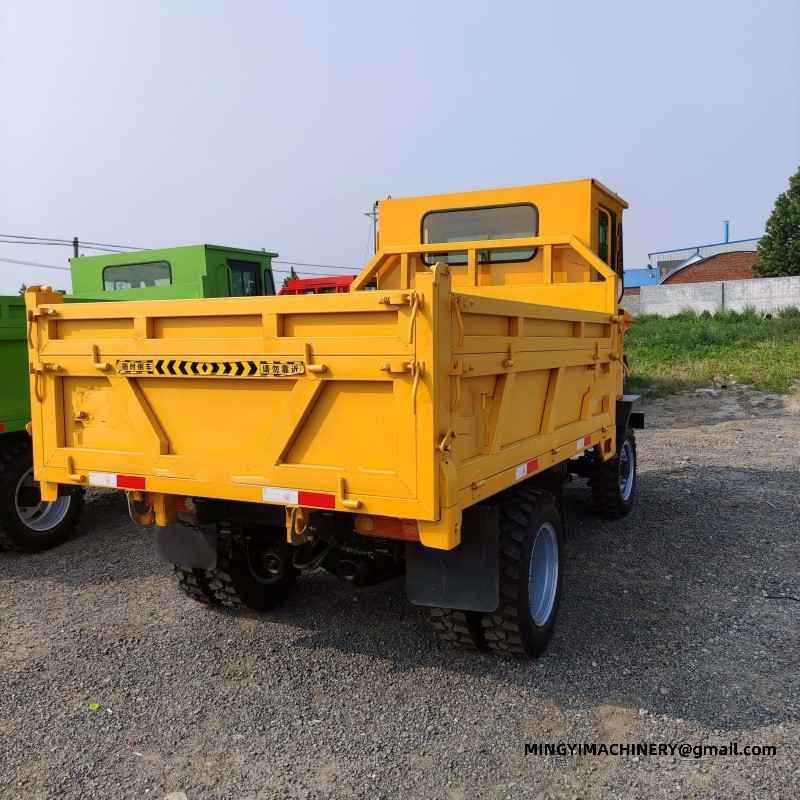
Lead time is part of the specification. Confirming build time, shipping method and what is included before ordering the unit in daily use prevents the common gap between when the machine is needed and when it can arrive. The order should state the configuration in writing. Engine, attachments, colour, documents and any market requirement are clearer on the build sheet for a machine of this size than in a conversation after delivery.
Size matters underground. Overall height and width decide whether the machine itself can work in a tunnel at all, and those dimensions are the first thing to confirm rather than the last.
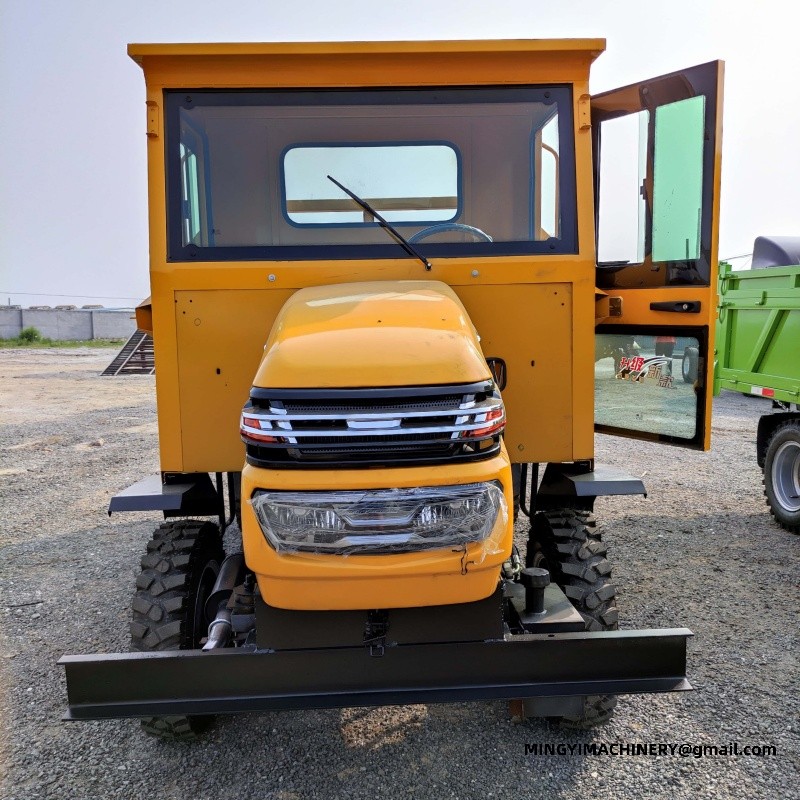
Farm work is seasonal and varied. The machine in that duty that hauls feed in one month and muck or aggregate in the next earns its place by being usable across the year rather than by being optimised for one task.
Cleaning is maintenance, not appearance. Washing the cooling surfaces and clearing packed material from a machine built for the work keeps temperatures where they should be and makes the next inspection quicker and more useful. Sealed points and guarded areas deserve a look in these conditions. The equipment in service working in abrasive dust benefits from checked boots, intact guards and clean breathers, all of which are quick to verify.
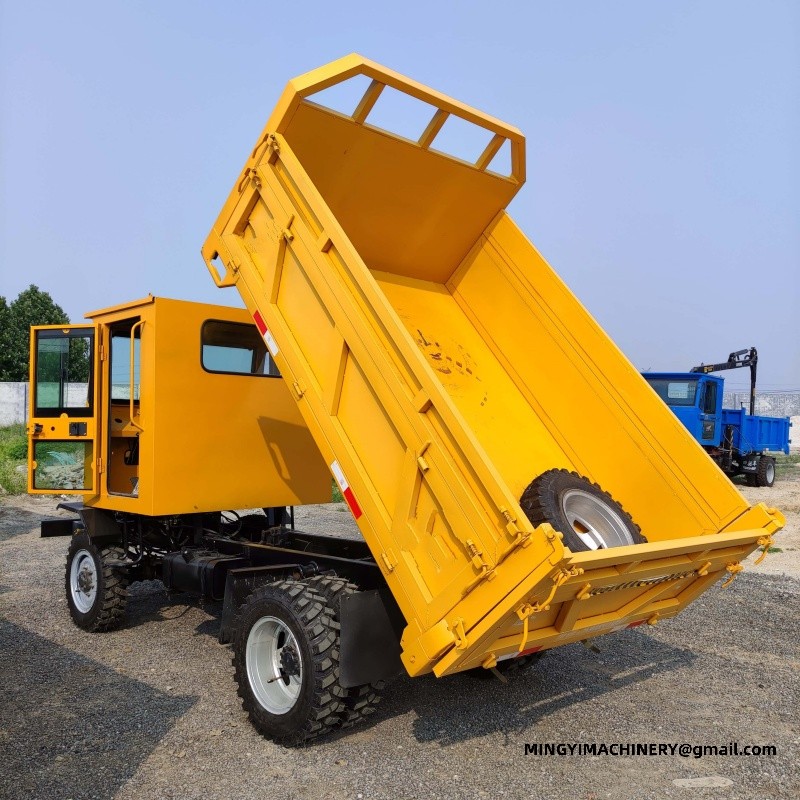
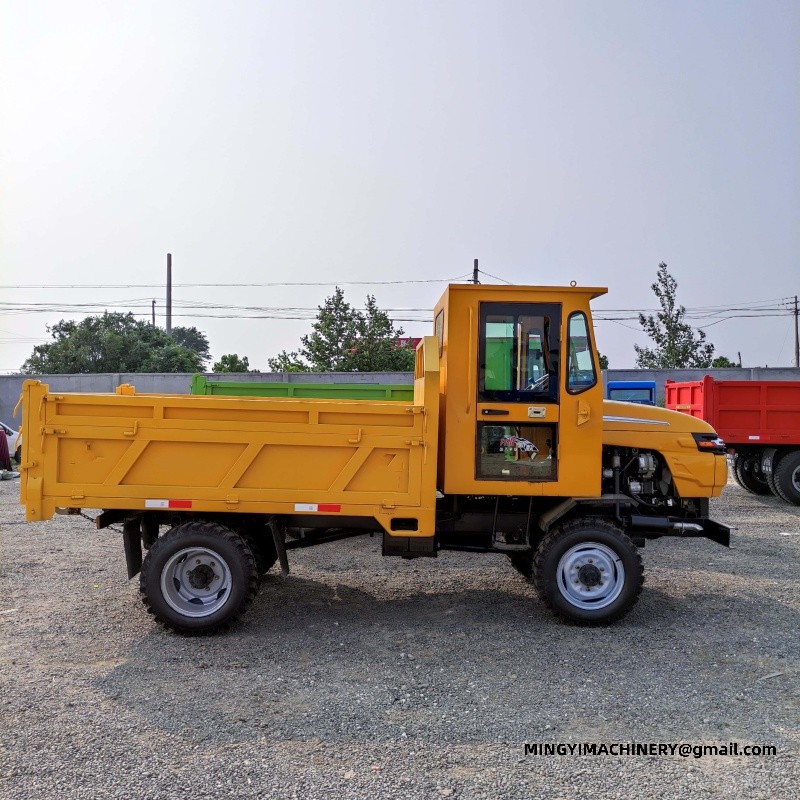
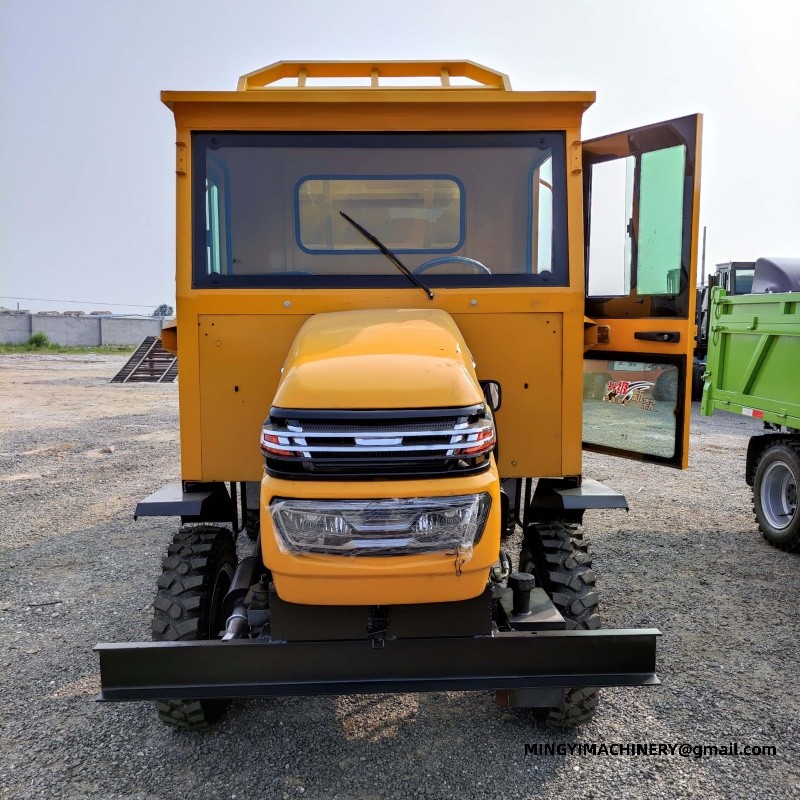
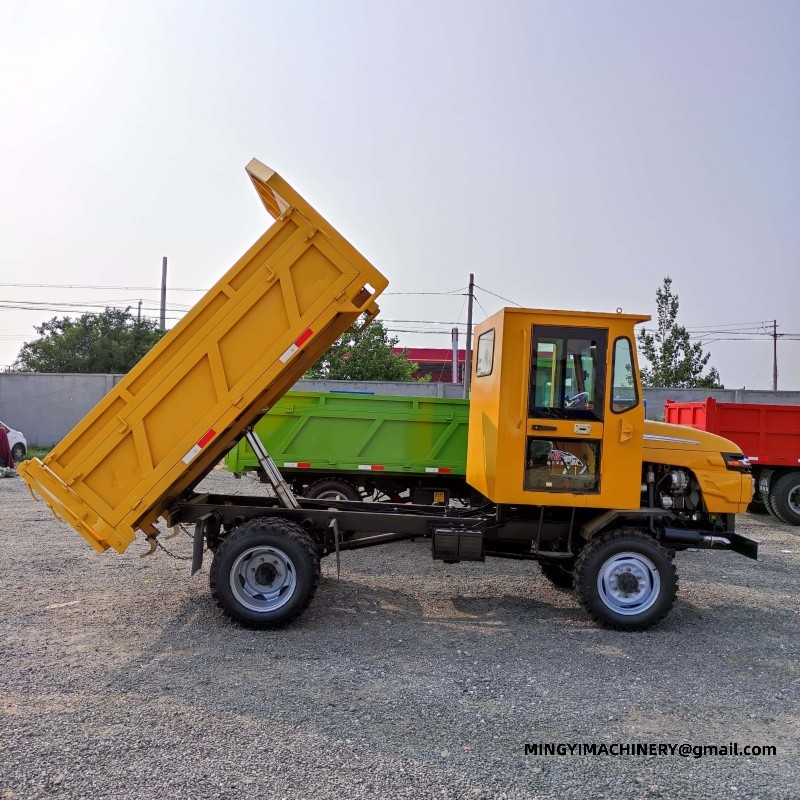
The configurations below are the build sheets most often matched to this class of machine. Engine, gearbox, axles, frame and body dimensions are confirmed together, because the body size and the axle rating have to suit the load before the engine rating matters.
| # | 12.Standard | 14.Luxury | 18.Standard | 22.Luxury |
|---|---|---|---|---|
| 1 | Two-cylinder diesel engine, 38 hp | Two-cylinder diesel engine, 38 hp | Four-cylinder 4102 turbocharged diesel engine | Four-cylinder 4105 turbocharged diesel engine |
| 2 | Full-time gearbox with four-wheel drive | Part-time gearbox, selectable 2WD/4WD | Model 140 part-time gearbox with four-wheel drive | Model 145 part-time gearbox with four-wheel drive |
| 3 | High/low range with crawler gear | High/low range with crawler gear | High/low range with crawler gear | High/low range with crawler gear |
| 4 | Simple cab | Enclosed cab | Simple cab | Fully enclosed cab |
| 5 | Oil brakes | Six 700-16 mountain tyres | Oil brakes | Six 825R16 steel-belted radial tyres |
| 6 | Four 700-16 mountain tyres | Model 212 front axle | Six 700-16 mountain tyres | Reinforced ISUZU-pattern front axle |
| 7 | Front axle 212 | Reinforced 130 rear axle | Reinforced ISUZU-pattern front axle | Reinforced 1080 rear axle |
| 8 | Rear axle 130 | Air cut-off brakes | Reinforced 1061 rear axle | Air cut-off brakes |
| 9 | Reinforced 60 x 140 mm square tube frame | Reinforced 60 x 140 mm square tube frame | Reinforced 80 x 180 mm square tube frame | Reinforced 80 x 180 mm square tube frame |
| 10 | Rear body 2.2 m long x 1.5 m wide x 0.45 m high | Rear body 2.2 m long x 1.5 m wide x 0.45 m high | Rear body 2.2 m long x 2.1 m wide x 0.45 m high | Rear body 3.0 m long x 2.2 m wide x 0.45 m high |
| 11 | Tailgate with self-dumping function | Tailgate with self-dumping function | Tailgate with self-dumping function | Tailgate with self-dumping function |
| 12 | Hydraulic power steering | Side-opening rear body tailgate | Hydraulic power steering | Side-opening rear body tailgate with cab ladder |
| 13 | Twin hydraulic rams | Hydraulic power steering | Twin hydraulic rams | Hydraulic power steering |
| 14 | Two-person comfort seat | Twin hydraulic rams | Two-person comfort seat | Twin hydraulic rams |
| 15 | Twin-battery electric start | Heavy-duty leaf springs | Twin-battery electric start | Two-person comfort seat |
| 16 | Round-nose bonnet | Two-person comfort seat | Square-nose bonnet | Heavy-duty leaf springs |
| 17 | — | Twin-battery electric start | — | Twin-battery electric start |
| 18 | — | Round-nose bonnet | — | Square-nose bonnet |
Keeping the documents together is part of ownership. The manual, the service record and the build sheet for a machine of this size belong in one folder, and the machine is easier to sell later when that folder is complete.
Tropical operation is a specification question as much as a maintenance one. The cooling capacity, the sealing and the corrosion protection fitted to the machine itself are what make the difference once the ambient temperature rises.
The first day with a new machine sets the pattern for the next five years. Handover for the machine in that duty covers the control layout, the daily check points and the limits the operator needs to know before the first real load is lifted or carried.
Patterns show up in the record before they show up in the machine. Rising oil consumption or a filter that keeps blocking on a machine built for the work is obvious on paper long before it becomes a failure on site.
Workload is rarely even across the year, and the machine should be specified for the busy weeks. The dumper sized only for the average month will be the limiting factor exactly when the work is worth the most.
Shared machines need shared habits. Two operators on the unit in daily use should do the same daily checks in the same order, because the check that one person skips is the check that eventually matters.
The symptom is usually not at the fault. A hydraulic function that has become sluggish on the equipment on site may point to a filter, a relief setting or a pump, and starting with the simple checks avoids the wrong guess.
Commissioning is where the specification meets the ground. The settings chosen for the model in question are confirmed against the actual site, and the working pattern is adjusted before the machine is asked for a full day.
Every line above is a build item rather than an optional extra, and the final sheet for the machine in that duty is confirmed against the destination, the ground and the load before production.
E-mail:sales@mingycn.com
LINE(ID):mingyicn









