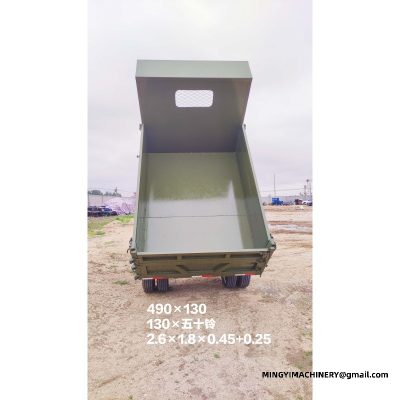
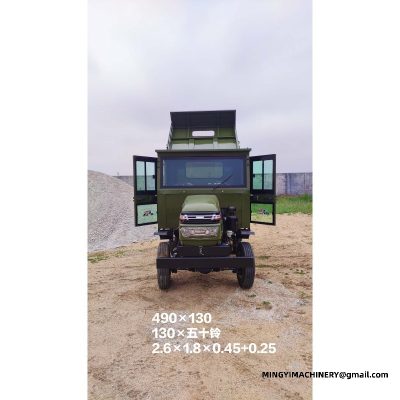
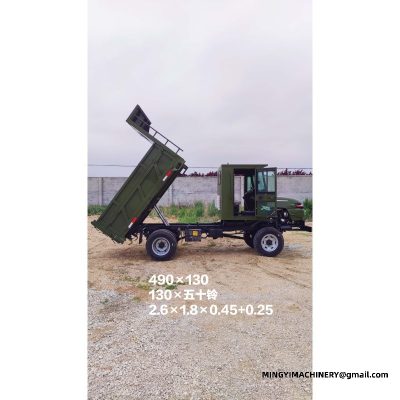
A site dumper earns its place by keeping the digger working, not by how much it carries in a day. The machine that sets the pace on a foundation or an earthmoving job is the one shuttling between the dig face and the fill, and if it is slow the whole site waits. Buying it well therefore means thinking about the cycle rather than the machine in isolation: the load, the distance, the ground and the speed of the turn at each end. This page works through the four configurations on the site dumper sheet and the choices that keep the cycle turning.
On a foundation or an earthmoving job the dumper is the machine that sets the pace, because everything waits on the material it moves. A slow dumper leaves the digger idle and the lorry standing, while a quick, well-matched one keeps the whole chain at full stretch. That is why a site dumper should be judged by its cycle, the load out, the tip and the return, rather than by any single figure in the sheet. The four configurations below are the four ways Mingyi builds that cycle, and each suits a different kind of site.
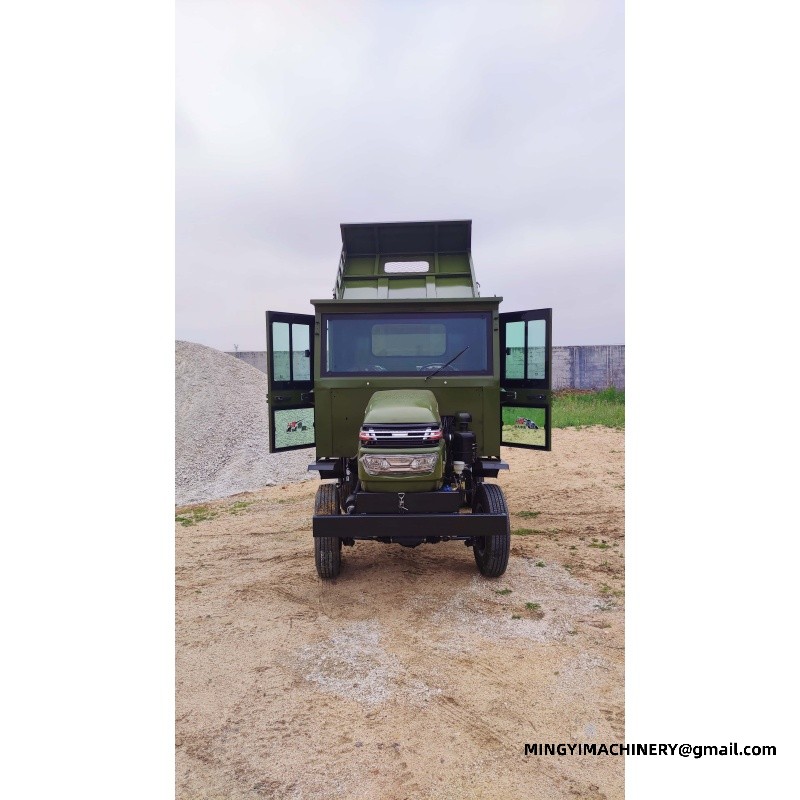
The first job a site dumper takes on is usually the foundation, and it is the hardest on the machine. Spoil comes out of the ground wet, heavy and full of whatever was buried, and it has to move from the dig face to a stockpile or a lorry over ground that is being churned all day. That is a very different duty from carrying dry fill on a finished haul road, and it is the one that should be used to size the machine. A dumper that holds up on the first dig will handle the rest of the job, because everything after the foundation is easier.
The cycle is made of four parts: load, travel out, tip and return, and the machine that shortens any one of them is worth more than one that is simply faster on the road. A body that matches the bucket fills quickly, a tailgate that self-dumps empties without delay, and a gearbox with a crawler gear lets the machine turn tightly at the face without hunting for a gear. All four configurations here carry high and low range with a crawler gear, which is the part of the box that a site actually uses, however the brochure reads.
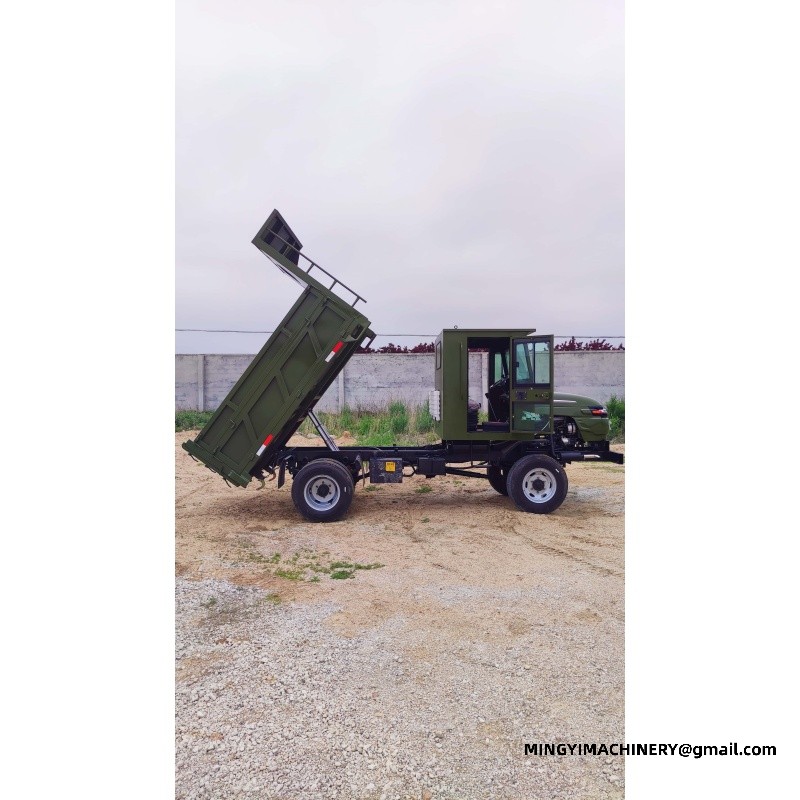
Engine choice runs from a single-cylinder 28 hp unit and a 32 hp unit through the four-cylinder 4102 turbocharged builds to the 4105 and 4108 turbocharged engines on the heavier sheet. The single-cylinder machines suit a short cycle with a 2.2 m body on firm ground, while the 4102 turbocharged builds move a 3.0 m body over longer hauls and up the ramps that a foundation job always seems to need. Size the engine for the heaviest cycle of the day, not the average, because it is the heaviest cycle that sets the pace the whole site follows.
The two turbocharged builds use the Model 140 part-time gearbox with four-wheel drive, which is the right arrangement for a site that has a firm haul road between the face and the fill. The front is dropped on the road and engaged again where the ground is loose, which saves the tyres and the surface. The 28 hp build uses a part-time selectable box and the 32 hp standard a full-time box, for machines that work on softer ground all day. The choice is about where the cycle is soft and where it is firm, and a buyer should be able to say which is which.
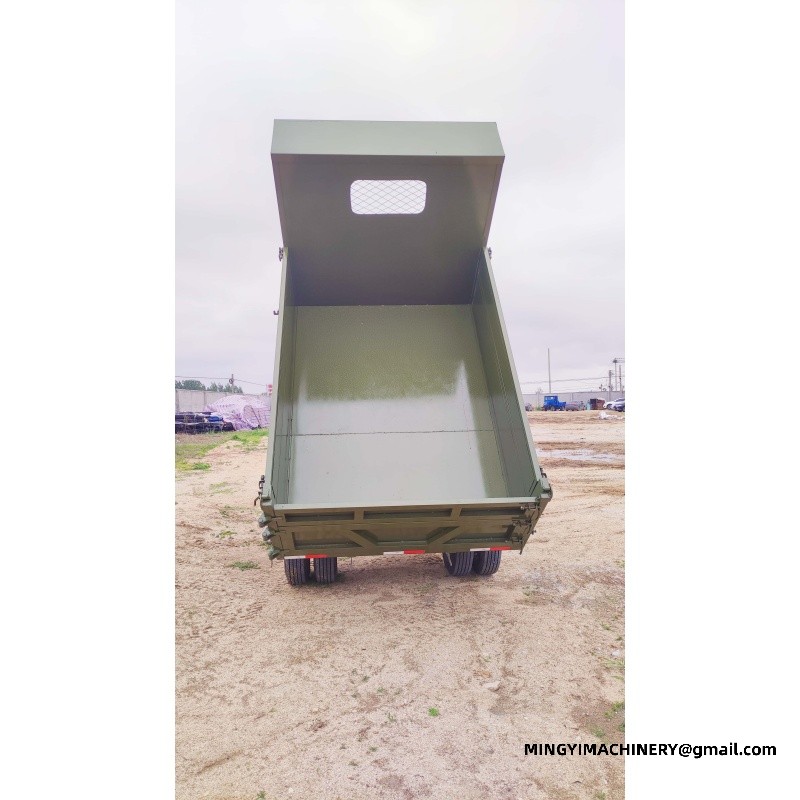
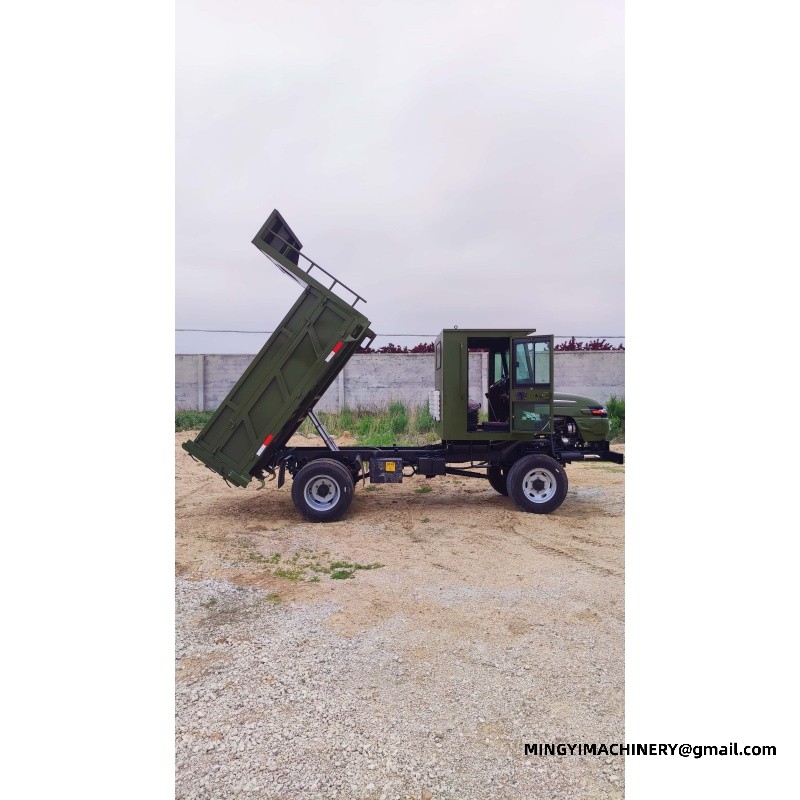
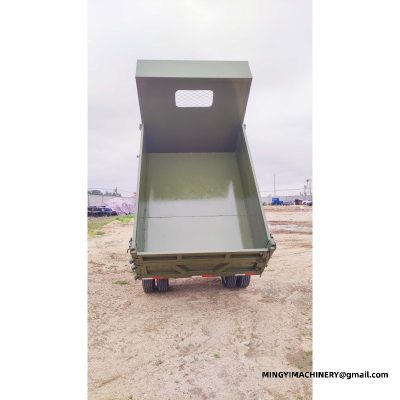
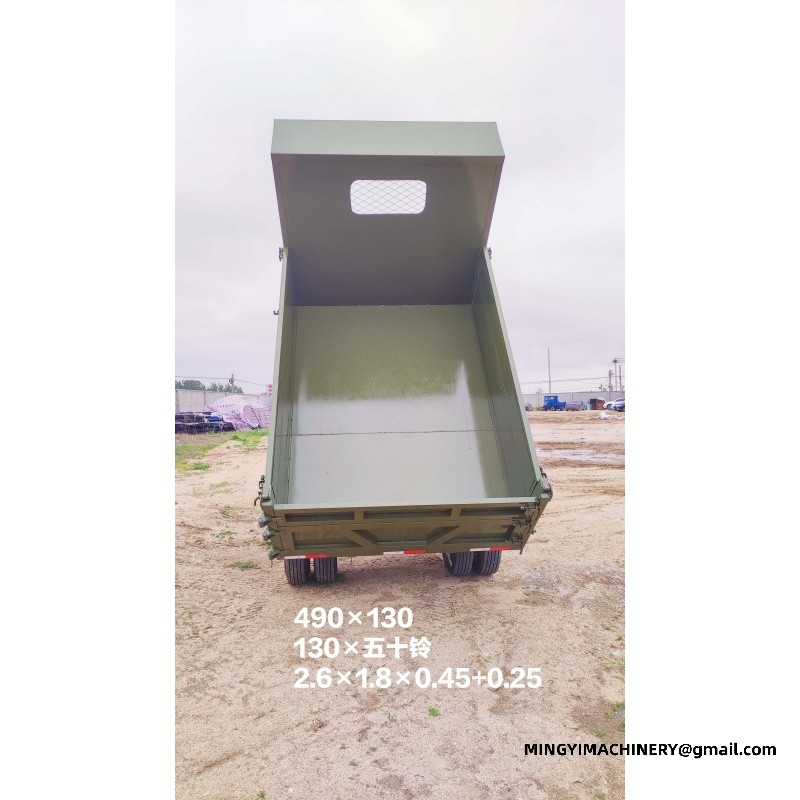
Body size should be settled against the excavator that feeds it, because the two machines are one unit on the clock. A body that takes many buckets to fill keeps the digger waiting, and one filled in a single pass is carrying less than it could. The 2.2 m by 1.5 m body suits a small bucket and a tight face, while the 3.0 m bodies, at 2.1 m and 2.2 m wide, suit a larger machine that wants the dumper to take a real load and go. Tell the factory which excavator will load the dumper, and the body size follows from that fact alone.
Tyres on a site are chosen for the ground under the machine, and that ground is rarely kind. The 32 hp standard runs four 700-16 mountain tyres, a pattern that clears mud and finds the firm beneath a wet face. The 28 hp build carries six 700-16 mountain tyres, and the two turbocharged builds six 750R16 or six 825R16 steel-belted radial tyres, whose footprint spreads the weight of a loaded 3.0 m body over a churned haul road. A site that is cut up by rain by mid-morning wants the mountain pattern; a graded road wants the radial.
Brakes matter most on the loaded return, when a full body is coming down a ramp or into the tipping point with the digger and a lorry both in the way. The three heavier builds use air cut-off brakes, which hold a full body on a grade and stop it cleanly at the face. The 32 hp standard stops on oil brakes, enough for its 2.2 m body on a gentle site. A buyer whose cycle ends downhill should say so plainly, because it is the fact that moves a machine from oil brakes to air cut-off before it is ever ordered.
The frame and axles take the worst of a site, because the machine runs loaded over ground that is being broken up under it. The two lighter builds use the reinforced 60 x 140 mm square tube frame with a 212 front axle and a 130 rear, and the two turbocharged builds the reinforced 80 x 180 mm frame with a reinforced ISUZU-pattern front axle and a reinforced 1061 or 1080 rear. The heavier pairing exists for the 3.0 m body and the hours a foundation job puts on it, and it is the part of the machine that should never be undersized.
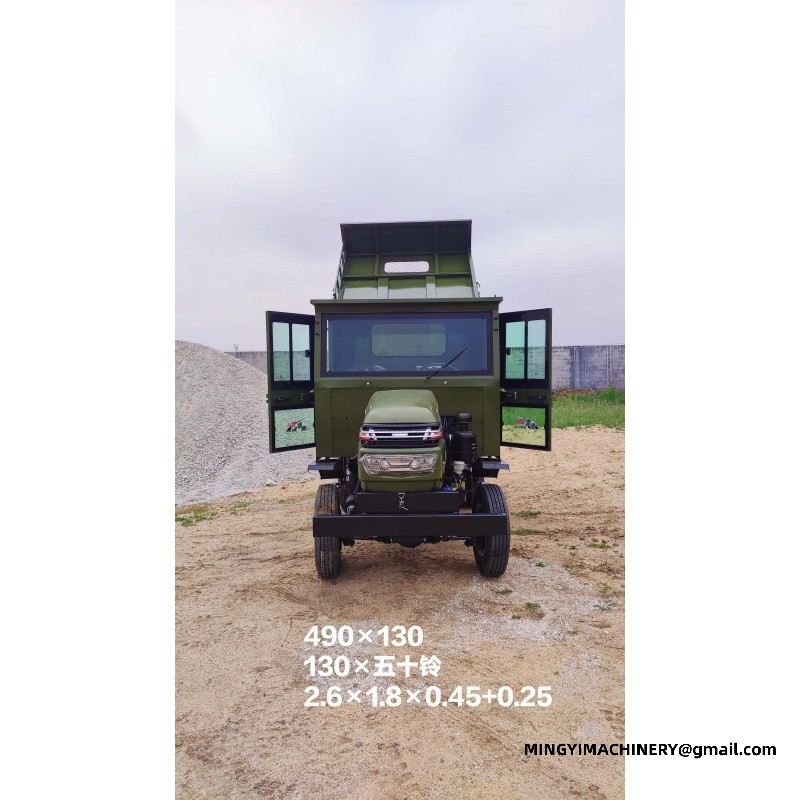
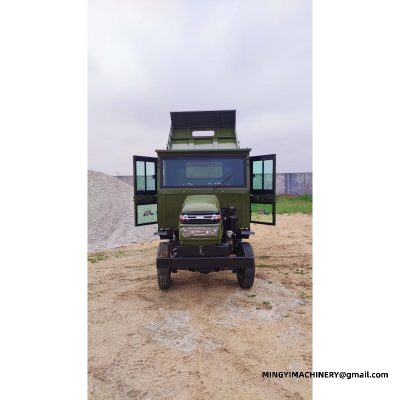
The cab is where a driver spends a shift that is long, dusty and noisy, and it has to be a place the person can work. The range runs from a simple cab on the 32 hp standard through an enclosed cab on the 28 hp build to a fully enclosed cab on the two turbocharged builds, all with a two-person comfort seat. On a site the fully enclosed cab keeps dust and weather out and the driver in the seat, which is what keeps the cycle turning through the afternoon. The cab is not comfort for its own sake; it is uptime.
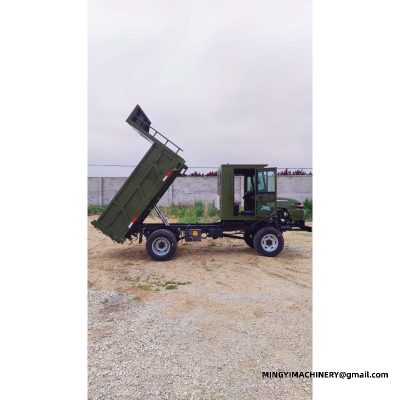
Every build tips through a tailgate with a self-dumping function, and the three heavier builds add a side-opening rear body tailgate, with a cab ladder on the two turbocharged machines. The self-dumping function starts the load leaving before the body reaches full height, so a wet spoil load does not have to be rocked out and the machine is back on the road sooner. The side-opening tailgate lets the driver place material along a footing or into a trench rather than in a heap, which on a foundation job is the difference between one pass and a labourer with a shovel.
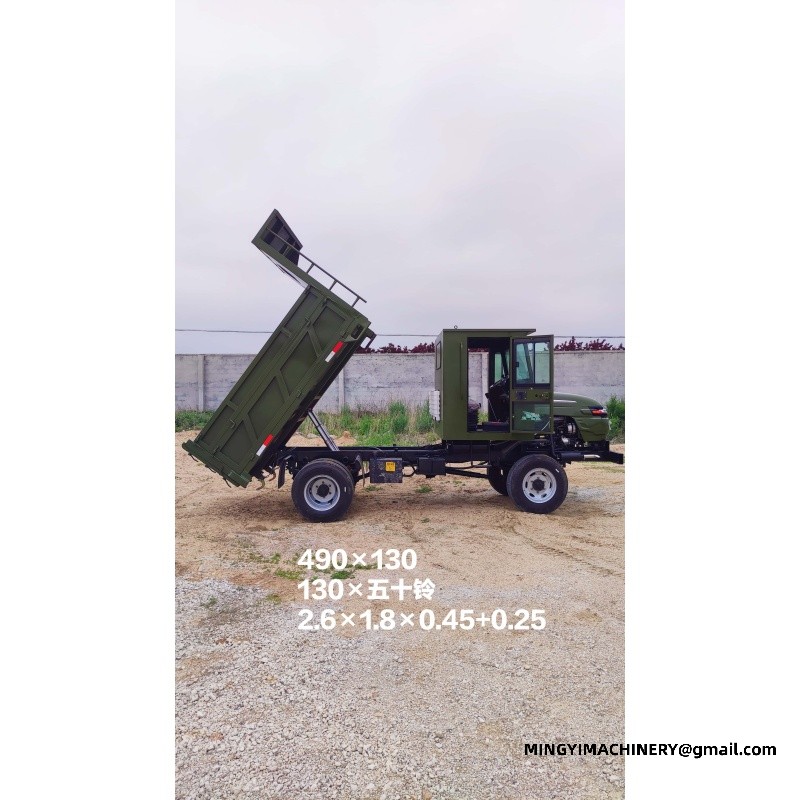
Twin hydraulic rams lift the body on every build, and on a site they are doing it with a load that is never level. Spoil comes out of a bucket wet and lopsided, and by the time the body is raised it has settled to one side, so the two rams are spreading an uneven mass rather than lifting a tidy heap. That is what keeps the body square and the hinges straight after months of hard cycles. A fast, controlled tip is the last quarter of the cycle, and it is the one that lets the machine get back to the face while the digger is still digging.
The parts that wear first on a site dumper are known, and the time to order them is with the machine. Body and ram mounting bushes, hydraulic hoses, brake linings, filters and a spare tyre are the list, and a buyer should learn which of them the local dealer keeps before the machine ships. Clean hydraulic oil and a greasing of the ram mounts and the tailgate hinges on schedule keep the tipping circuit working through a full season, and a small weep found at the morning check is a hose rather than a machine standing idle with a lorry queuing behind it.
The right way to order a site dumper is to describe the cycle, not the machine. Say what the excavator is, what the material is, how far it moves and what the ground does to the haul road in the rain, and the body size, the tyres, the brakes and the engine fall out almost by themselves. A Mingyi site dumper is built to that description, and the buyer who sends it gets a machine that keeps the digger working instead of one that merely fits the site on paper. What remains is the cab and the tailgate, settled in the same conversation.
| # | 19.Upgraded | 20.Luxury | 8.Luxury | 9.Standard |
|---|---|---|---|---|
| 1 | Four-cylinder 4102 turbocharged diesel engine | Four-cylinder 4102 turbocharged diesel engine | Single-cylinder diesel engine, 28 hp | Single-cylinder diesel engine, 32 hp |
| 2 | Model 140 part-time gearbox with four-wheel drive | Model 140 part-time gearbox with four-wheel drive | Part-time gearbox, selectable 2WD/4WD | Full-time gearbox with four-wheel drive |
| 3 | High/low range with crawler gear | High/low range with crawler gear | High/low range with crawler gear | High/low range with crawler gear |
| 4 | Fully enclosed cab | Fully enclosed cab | Enclosed cab | Simple cab |
| 5 | Six 750R16 steel-belted radial tyres | Six 825R16 steel-belted radial tyres | Six 700-16 mountain tyres | Oil brakes |
| 6 | Reinforced ISUZU-pattern front axle | Reinforced ISUZU-pattern front axle | Model 212 front axle | Four 700-16 mountain tyres |
| 7 | Reinforced 1061 rear axle | Reinforced 1080 rear axle | Model 130 rear axle | Front axle 212 |
| 8 | Air cut-off brakes | Air cut-off brakes | Air cut-off brakes | Rear axle 130 |
| 9 | Reinforced 80 x 180 mm square tube frame | Reinforced 80 x 180 mm square tube frame | Reinforced 60 x 140 mm square tube frame | Reinforced 60 x 140 mm square tube frame |
| 10 | Rear body 3.0 m long x 2.1 m wide x 0.45 m high | Rear body 3.0 m long x 2.2 m wide x 0.45 m high | Rear body 2.2 m long x 1.5 m wide x 0.45 m high | Rear body 2.2 m long x 1.5 m wide x 0.45 m high |
| 11 | Tailgate with self-dumping function | Tailgate with self-dumping function | Tailgate with self-dumping function | Tailgate with self-dumping function |
| 12 | Side-opening rear body tailgate with cab ladder | Side-opening rear body tailgate with cab ladder | Side-opening rear body tailgate | Hydraulic power steering |
| 13 | Hydraulic power steering | Hydraulic power steering | Hydraulic power steering | Twin hydraulic rams |
| 14 | Twin hydraulic rams | Twin hydraulic rams | Twin hydraulic rams | Two-person comfort seat |
| 15 | Two-person comfort seat | Two-person comfort seat | Two-person comfort seat | Twin-battery electric start |
| 16 | Thickened heavy-duty leaf springs | Heavy-duty thickened leaf springs | Heavy-duty leaf springs | Square-nose bonnet |
| 17 | Twin-battery electric start | Twin-battery electric start | Twin-battery electric start | — |
| 18 | Square-nose bonnet | Square-nose bonnet | Square-nose bonnet | — |
| 19 | — | Four-cylinder 4105 turbocharged | — | — |
| 20 | — | Four-cylinder 4108 turbocharged | — | — |
| 21 | — | Single-cylinder engine, 25 hp | — | — |
| 22 | — | Single-cylinder engine, 28 hp | — | — |
| 23 | — | Single-cylinder engine, 32 hp | — | — |
| 24 | — | Two-cylinder engine, 38 hp | — | — |
| 25 | — | Four-cylinder 490 engine | — | — |
| 26 | — | Four-cylinder 4102 turbocharged engine | — | — |
For a specification discussion or a build sheet for this 4x4 site dumper, contact mingyimachinery@gmail.com or reach us on LINE (ID: mingyicn).









