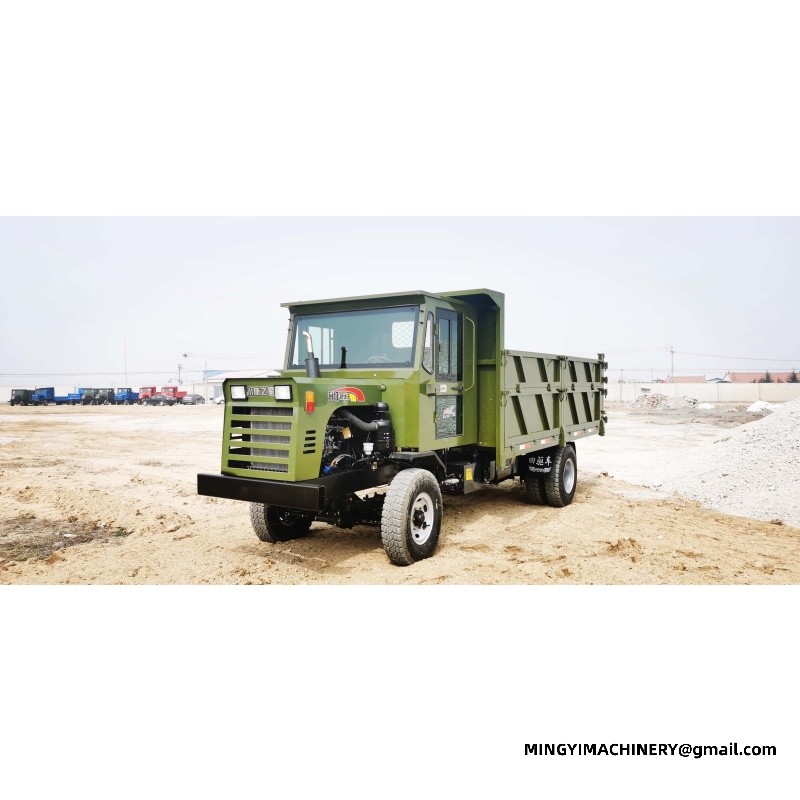
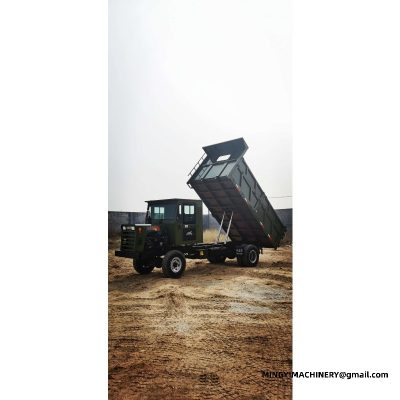
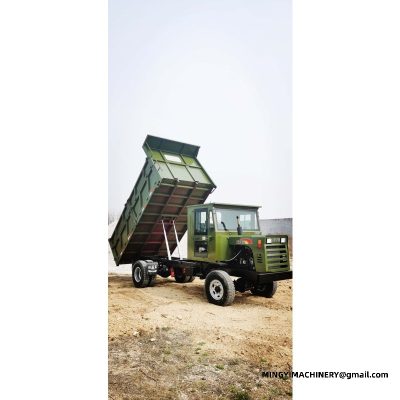
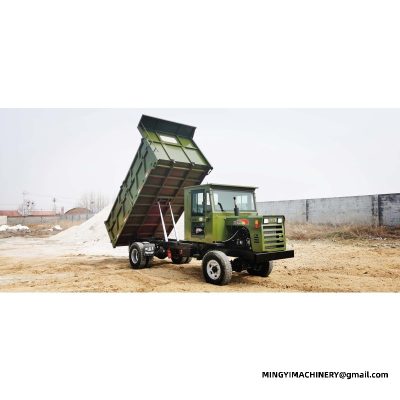
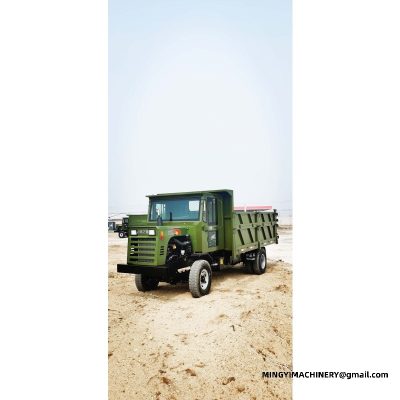
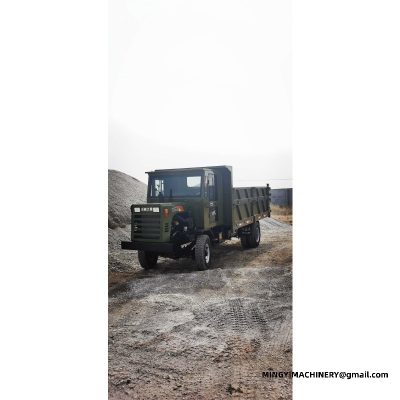
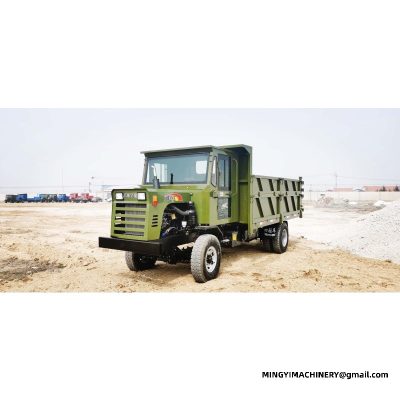
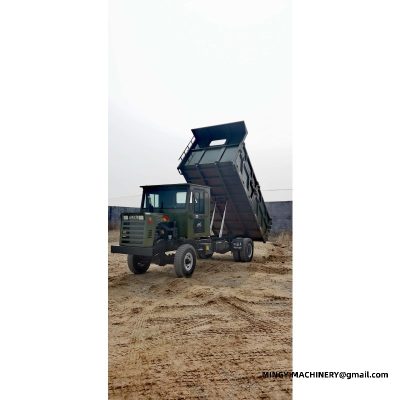
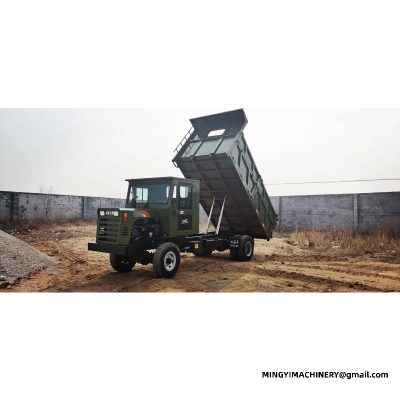
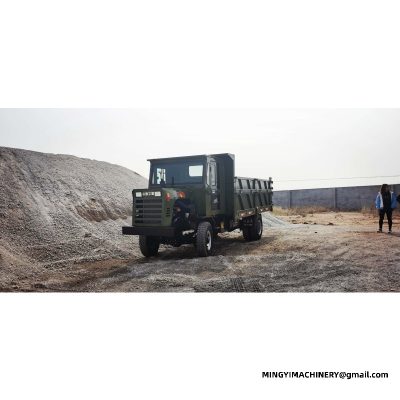
Model MY-4x4-8T
Every the dumper leaves the shop configured for a particular buyer. This page explains the choices that configuration involves, covering frame, power, running gear, cab and attachments, and what each one means once the machine is on site.
A short familiarisation session prevents the early faults. Most first-month problems on this class of machine come from unfamiliarity with controls, limits or checks rather than from the machine itself. Keeping the manuals where they can be reached matters. The unit in daily use whose documents stay with the machine gets serviced on schedule; one whose paperwork was filed elsewhere tends to run on memory instead.
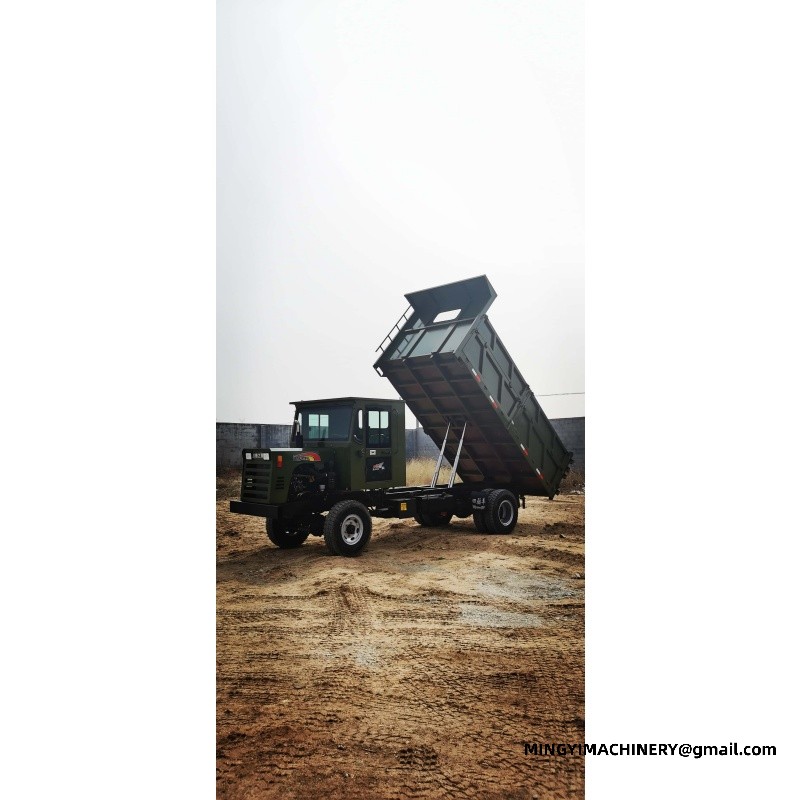
Build options are where a standard machine becomes the right machine. Colour, guarding, lighting, seating and hydraulic provisions can usually be set at build time on a machine of this size, and are far simpler then than as a retrofit. Fleet buyers often want consistency rather than variety. Specifying the equipment on site so that several units share controls, filters and service points reduces training time and keeps the parts shelf small.
Commissioning is the point where most avoidable issues are found. Checking levels, fasteners and function on the machine itself before it goes to work takes an hour and prevents a claim conversation later. Early faults are usually simple. The model in question that behaves differently in its first few hours is more often mis-set than defective, and a call to the supplier at that point usually resolves it the same day.
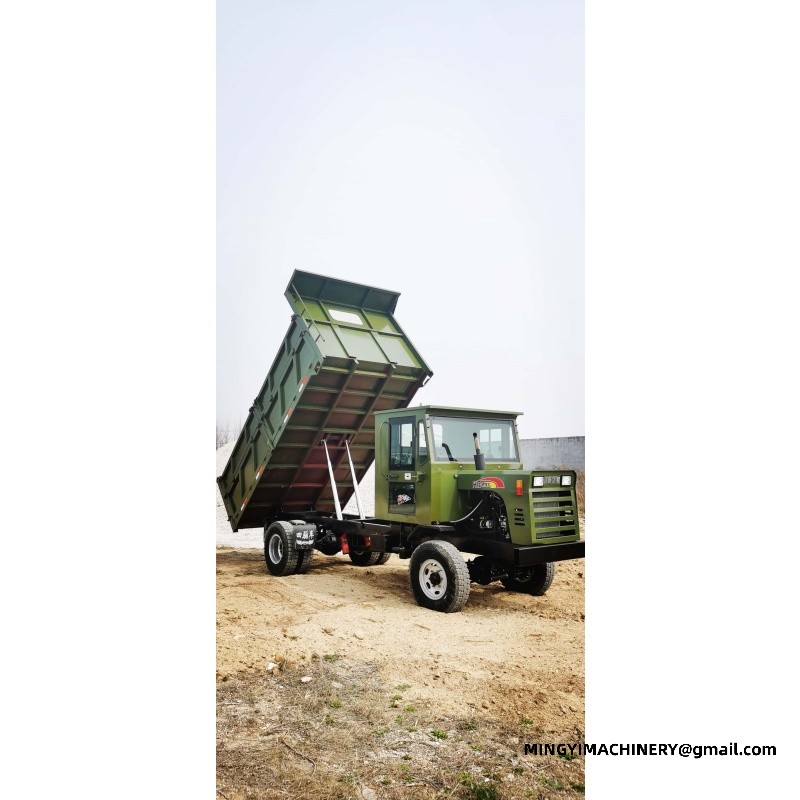
Gradient is where a haul vehicle earns its keep. The machine in that duty with a crawler gear and a low range climbs loaded where a road vehicle would need a second attempt, and that difference decides whether a track is usable at all. Descending matters as much as climbing. A loaded the unit on the job on a steep gradient needs engine braking and brakes in good order, and the safe practice is to plan the descent before the load rather than during it.
Slopes and edges deserve a separate check. A machine built for the work that is stable on level ground behaves differently across a gradient, and the safe working angle is a number worth knowing rather than estimating.
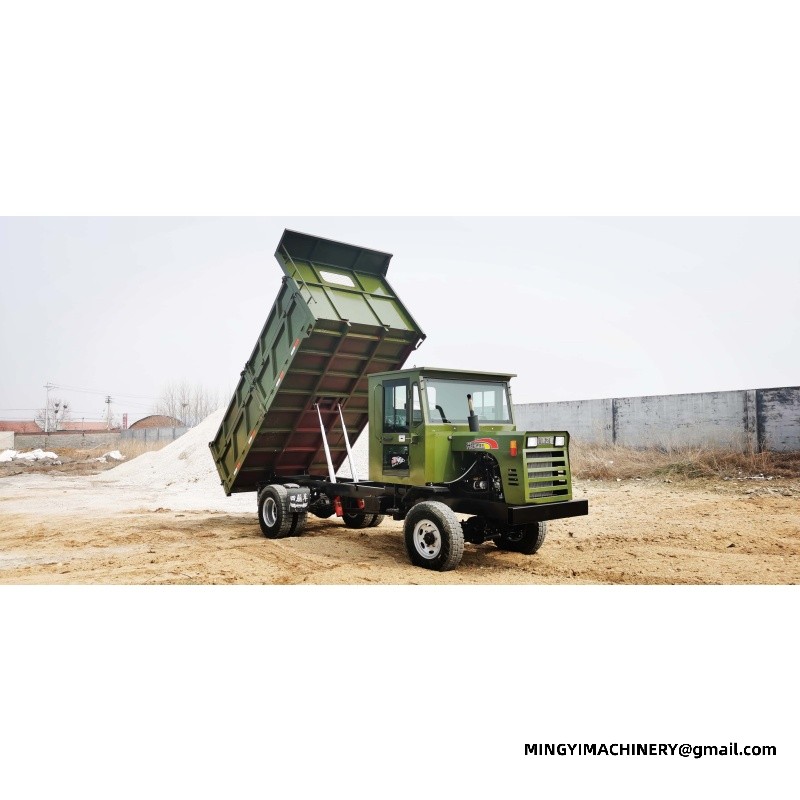
Upgrades should be checked against the base machine. Hydraulic capacity, mounting interface and stability all limit what can reasonably be added to the equipment in service, and confirming those limits avoids an unsatisfactory result.
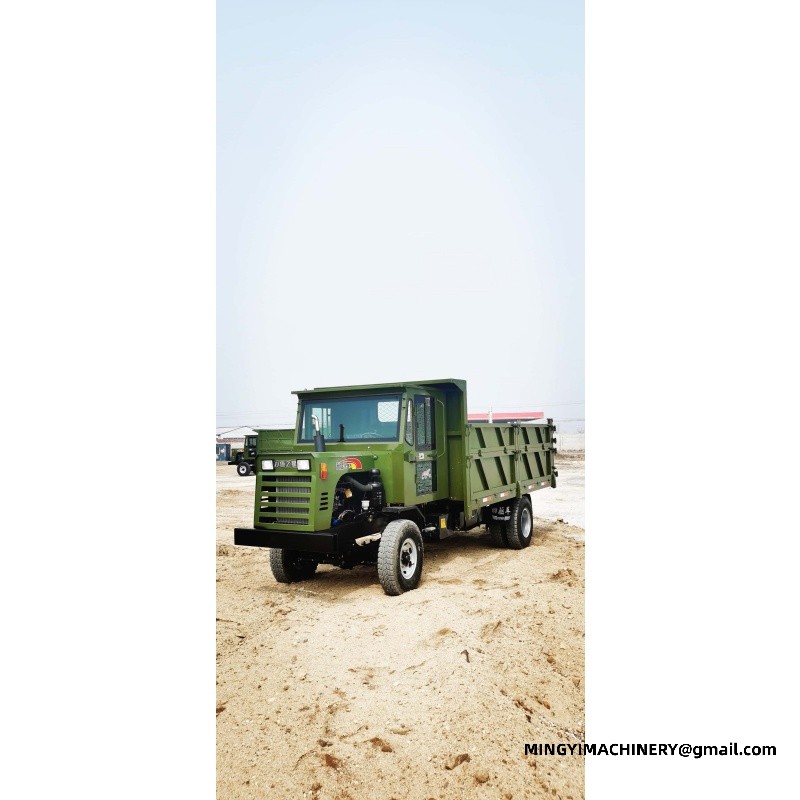
Timber work changes what the vehicle carries. The dumper fitted with a log grab loads and unloads without a second machine, which is usually the reason a forestry contractor specifies one over a conventional truck. Access tracks in forestry are narrow, soft and often steep. This class of machine chosen for that work is chosen for the track, and the body, cab and tyre specification follow from the route rather than from the load alone. Protection matters in timber work. Guarding, lighting and a cab that keeps branches out are the items that keep the unit in daily use working through a season rather than being repaired through it.
Fleet value comes from interchangeability. Operators who can step between machines without retraining, and a workshop that stocks one set of filters, keep utilisation higher than a fleet of individually optimised units. Standardising where possible simplifies everything downstream. When several units of a machine of this size share a service schedule and a parts list, the fleet becomes easier to plan and easier to sell on at replacement time.
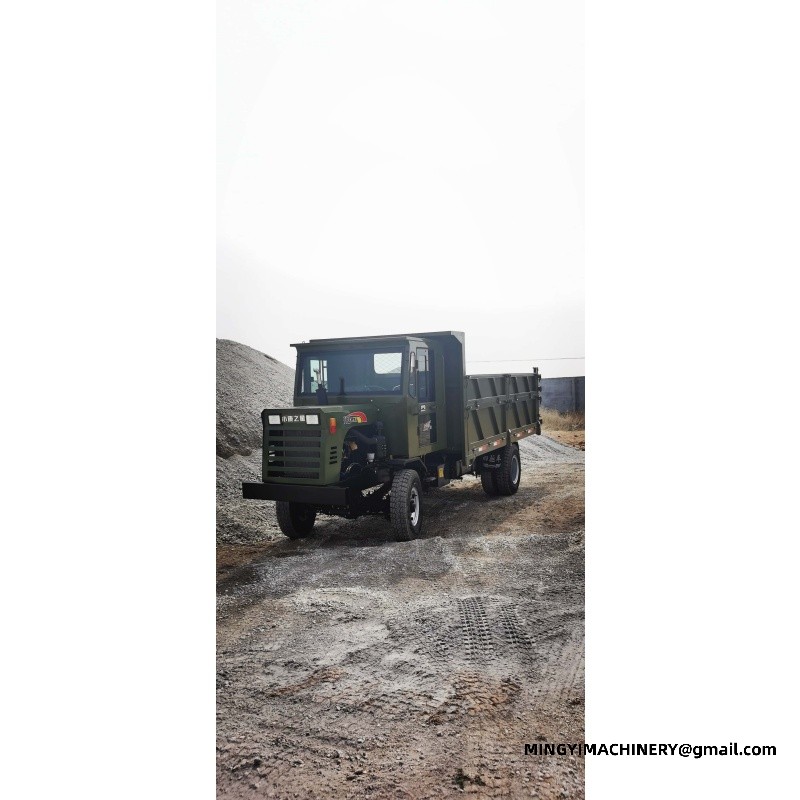
Ground on farms is often soft and often shared with livestock. The machine itself working there needs to cross pasture without rutting it badly, and tyre and weight choices follow from that.
Replacement timing is a planning decision. Knowing the intended working life of the model in question lets an owner sell while the machine still has value rather than after a major repair becomes due. Records are part of the asset. Keeping the service history and the hour records with the machine in that duty makes it easier to sell, easier to insure and easier to justify the replacement machine internally.
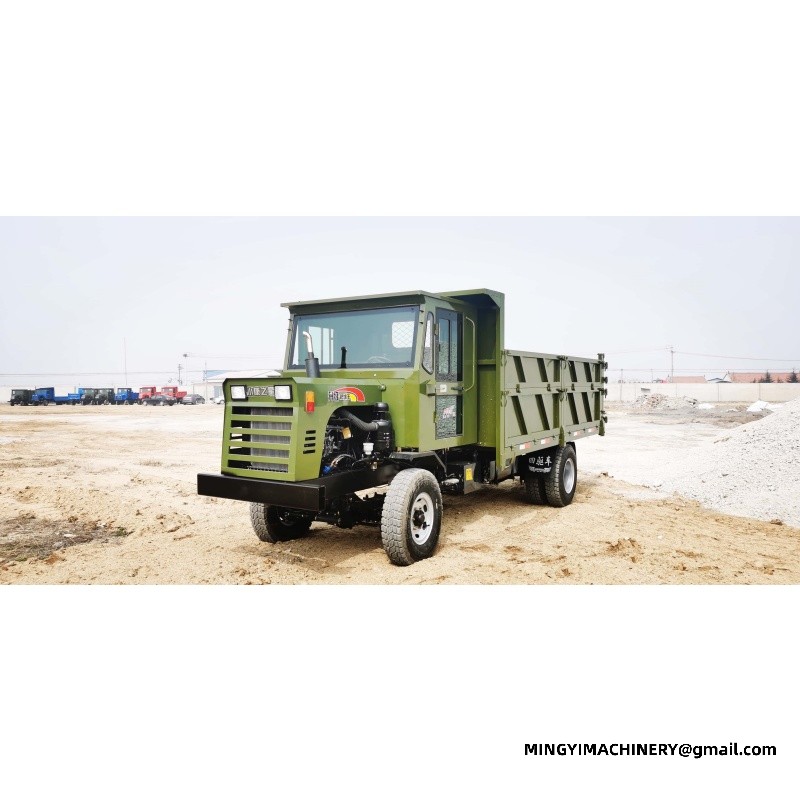
Batteries and fluids are the parts that notice the cold first. A machine built for the work kept on a maintainer through a freezing spell starts on the first turn, while one left standing is the usual cause of a lost morning. Low temperatures also make materials behave differently. Ground that is frozen hard in the morning can be soft by midday, and planning the sequence around that is easier than fighting it with the equipment in service.
Unloading method should follow the material. Wet spoil, aggregate and green timber behave differently in the body, and matching the body and tailgate arrangement to the load is what keeps this class of machine cycling rather than being hand-cleared.
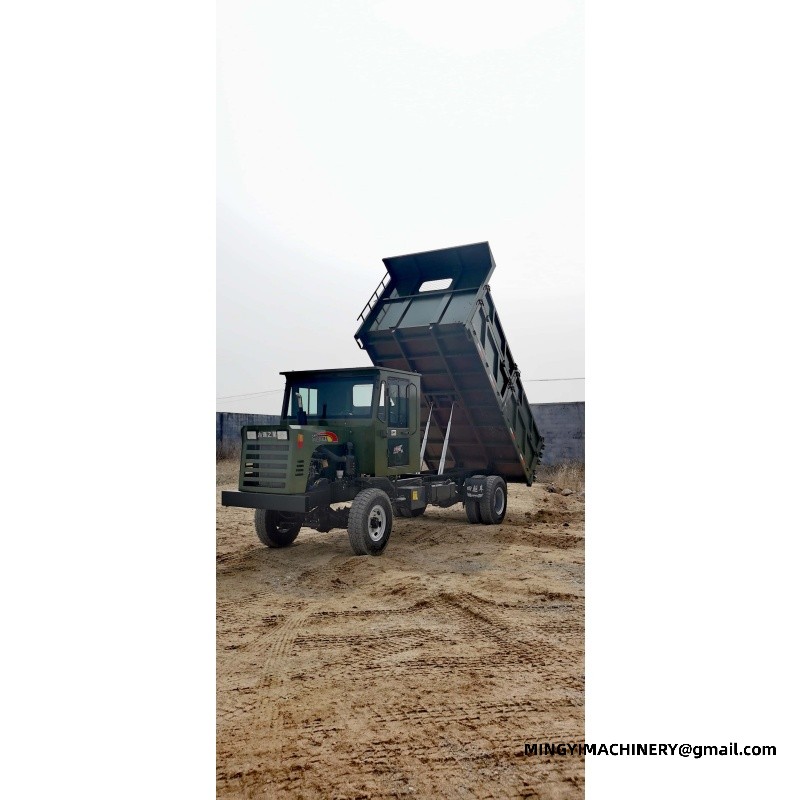
Matching the engine to the duty matters more than the peak rating. A machine of this size that spends its day at part load benefits from a different setup than one that works at full output, and the difference shows in fuel use over a season.
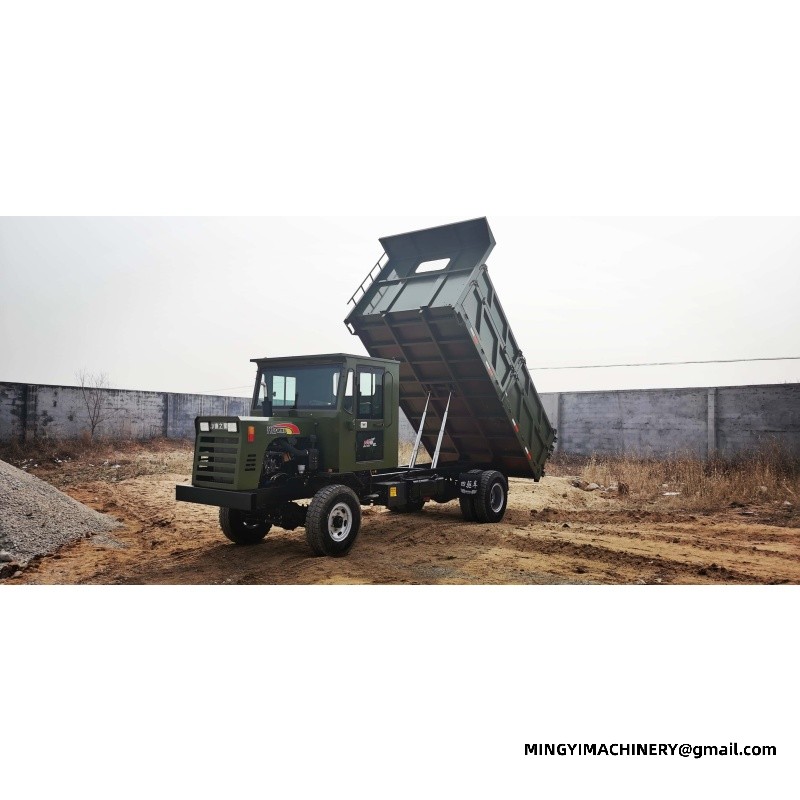
Soft ground punishes the wrong tyre. Mountain pattern tyres on the machine itself clear mud that a road pattern would pack with, and the difference is measured in whether the machine finishes the day.
Dust control work is repetitive and time-critical. The machine in that duty with the right tank and spray arrangement covers more ground per shift, which is usually the point of the exercise.
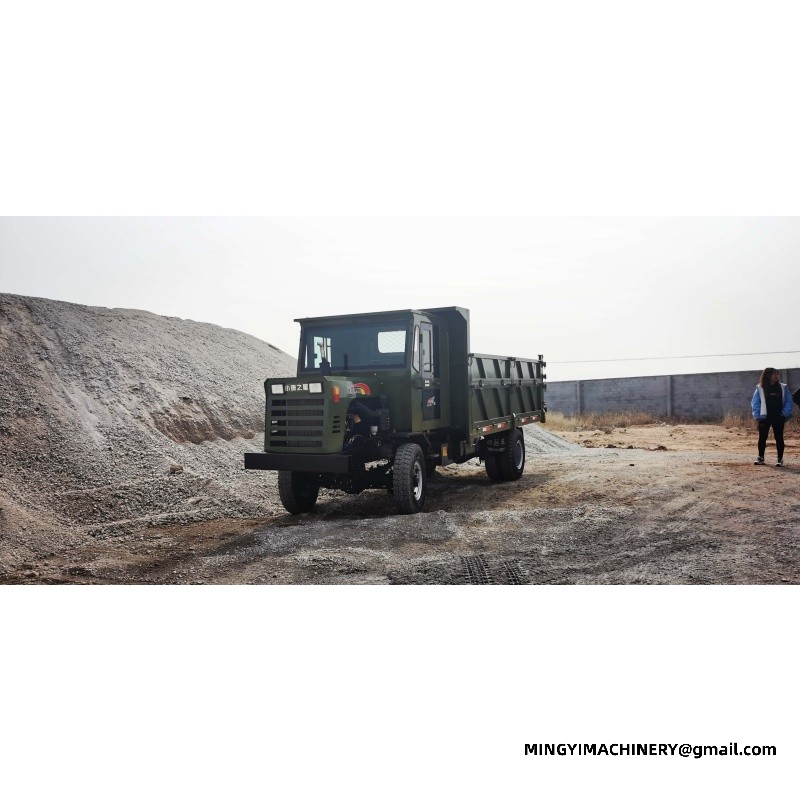
Service intervals exist because wear is predictable. Following the maker schedule on a machine built for the work takes far less time than repairing the damage that follows a missed oil change or a filter left in place past its life.
Consumption is best measured over a full week rather than judged per hour. Idle time, repositioning and waiting for other trades are often the largest share of the fuel the dumper burns on a site. Planning the work to reduce empty movement is free. Fewer repositioning cycles on this class of machine means less fuel, less wear on the undercarriage or tyres and more of the shift spent on productive work.
Stability governs what the crane can do. Outriggers, ground condition and load radius decide the safe figure on a machine of this size, and those are checked before the lift rather than discovered during it.
The configurations below are the build sheets most often matched to the machine itself. Engine, gearbox, axles, frame and body dimensions are confirmed together, because the body size and the axle rating have to suit the load before the engine rating matters.
| # | 15.Standard | 22.Luxury | 6.Standard | 9.Standard |
|---|---|---|---|---|
| 1 | Four-cylinder 490 diesel engine | Four-cylinder 4105 turbocharged diesel engine | Single-cylinder diesel engine, 28 hp | Single-cylinder diesel engine, 32 hp |
| 2 | Full-time gearbox with four-wheel drive | Model 145 part-time gearbox with four-wheel drive | Full-time gearbox with four-wheel drive | Full-time gearbox with four-wheel drive |
| 3 | High/low range with crawler gear | High/low range with crawler gear | High/low range with crawler gear | High/low range with crawler gear |
| 4 | Simple cab | Fully enclosed cab | Simple cab | Simple cab |
| 5 | Oil brakes | Six 825R16 steel-belted radial tyres | Oil brakes | Oil brakes |
| 6 | Four 700-16 mountain tyres | Reinforced ISUZU-pattern front axle | Four 700-16 mountain tyres | Four 700-16 mountain tyres |
| 7 | Front axle 212 | Reinforced 1080 rear axle | Front axle 212 | Front axle 212 |
| 8 | Rear axle 130 | Air cut-off brakes | Rear axle 130 | Rear axle 130 |
| 9 | Reinforced 60 x 140 mm square tube frame | Reinforced 80 x 180 mm square tube frame | Reinforced 60 x 140 mm square tube frame | Reinforced 60 x 140 mm square tube frame |
| 10 | Rear body 2.2 m long x 1.5 m wide x 0.45 m high | Rear body 3.0 m long x 2.2 m wide x 0.45 m high | Rear body 2.2 m long x 1.5 m wide x 0.45 m high | Rear body 2.2 m long x 1.5 m wide x 0.45 m high |
| 11 | Tailgate with self-dumping function | Tailgate with self-dumping function | Tailgate with self-dumping function | Tailgate with self-dumping function |
| 12 | Hydraulic power steering | Side-opening rear body tailgate with cab ladder | Hydraulic power steering | Hydraulic power steering |
| 13 | Twin hydraulic rams | Hydraulic power steering | Twin hydraulic rams | Twin hydraulic rams |
| 14 | Two-person comfort seat | Twin hydraulic rams | Two-person comfort seat | Two-person comfort seat |
| 15 | Twin-battery electric start | Two-person comfort seat | Twin-battery electric start | Twin-battery electric start |
| 16 | Round-nose bonnet | Heavy-duty leaf springs | Square-nose bonnet | Square-nose bonnet |
| 17 | — | Twin-battery electric start | — | — |
| 18 | — | Square-nose bonnet | — | — |
Most additions are easier to plan than to add. Hydraulic services, mounting brackets and electrical capacity on the machine in that duty are build items, and deciding them at the specification stage is far easier than doing it later.
Seasonal work rewards a machine that can change duty. Through the year a machine built for the work may move from one task to another, and the attachment list should be chosen for the whole year rather than for the first job.
Service history also protects the warranty position. Evidence that the dumper was maintained at the specified intervals and with the specified fluids settles questions that would otherwise be argued.
The parts that stop a machine are rarely the parts that are hardest to find. Filters, belts, seals and the ground engaging tools on the unit in daily use are easy to hold and slow to replace, which is why they belong on the shelf rather than on an order.
Machines rarely fail without warning. A change in sound, a slower function or a new leak on the equipment on site is the machine saying something early, and listening then takes a fraction of the time that waiting does.
Familiarisation is not the same as reading the manual. Sitting on the model in question, working through the controls at low speed and learning where the machine balances takes an hour, and that hour is what keeps the first week uneventful.
The paperwork matters as much as the packing. Serial numbers, dimensions and weights recorded for the unit on the job at loading are the same figures the destination needs, and a mismatch here loses more days than the voyage itself.
A clear parts book saves more time than any other document. When the equipment in service needs a replacement, the illustration and the part number are what turn a phone call into a shipment instead of a description.
Starting is only the first problem. Until this class of machine reaches working temperature the hydraulic response is slower and the seals are stiffer, and warming the machine before asking for full output avoids unnecessary strain.
A stored machine should be brought back carefully. Before a machine of this size returns to work the fluids, the brakes and the controls are checked, because months of standing change more than a weekend does.
Every line above is a build item rather than an optional extra, and the final sheet for the equipment on site is confirmed against the destination, the ground and the load before production.
E-mail:sales@mingycn.com
LINE(ID):mingyicn









