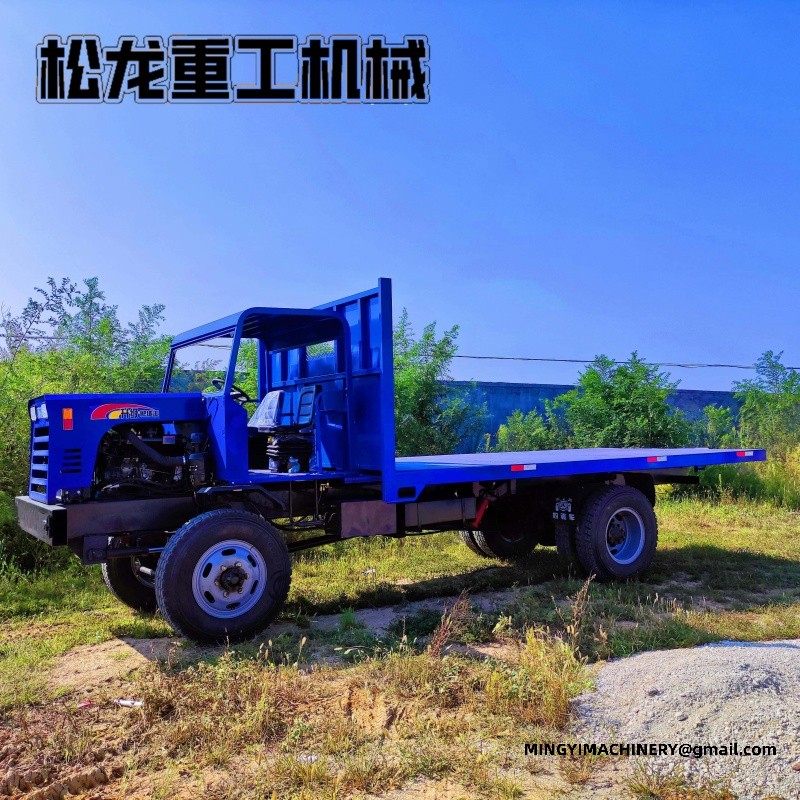
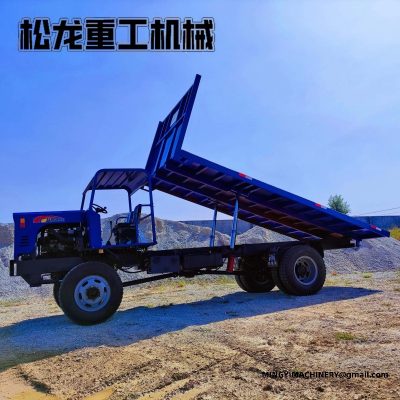
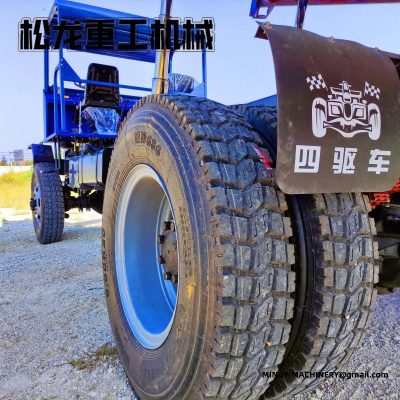
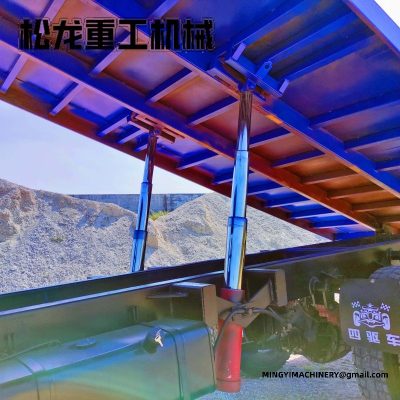
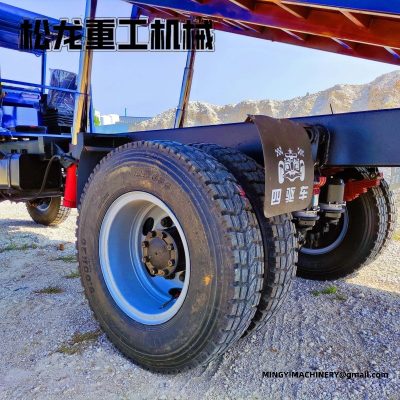
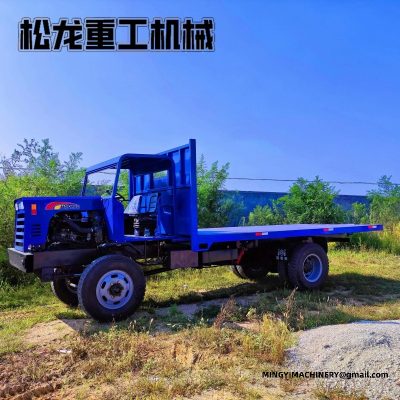
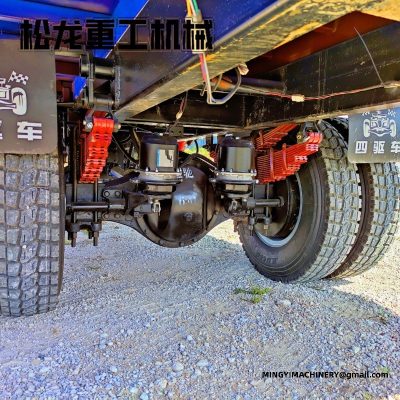
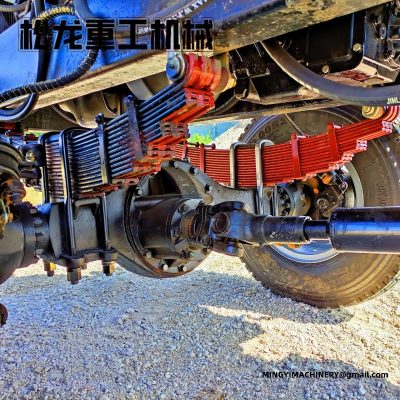
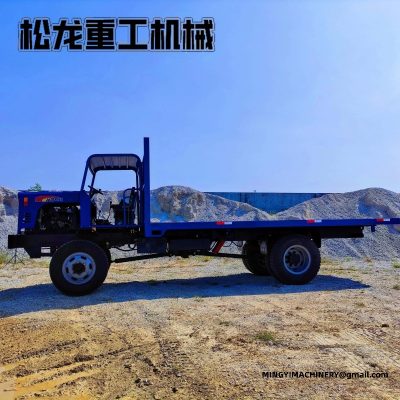
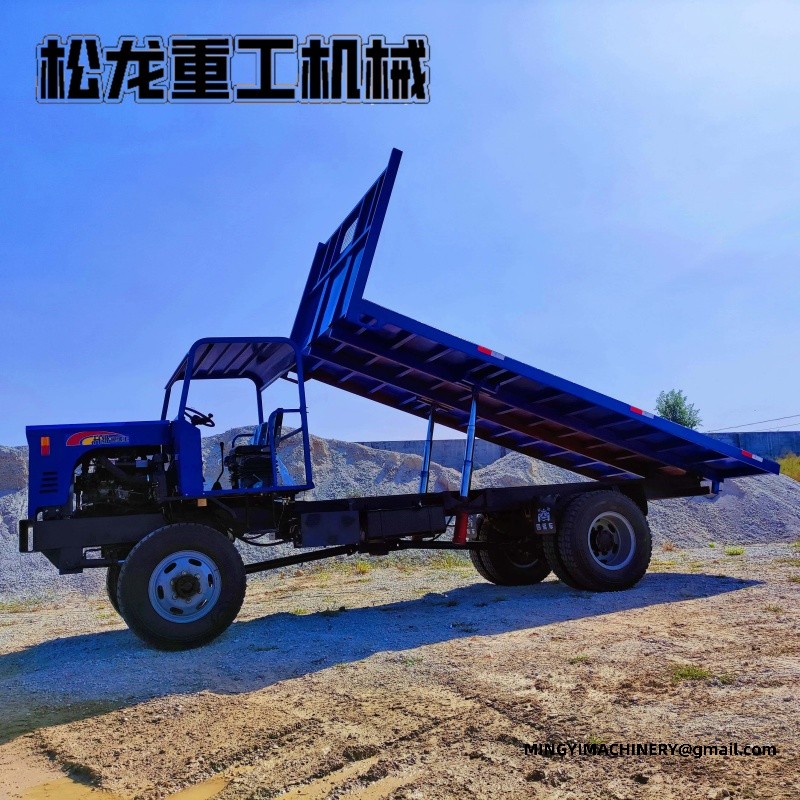
Several forms of the dumper appear in this range, and the right one depends on the ground more than on the brochure. Below, the practical differences are set out alongside the figures so the two can be read together.
A water tank turns the vehicle into a different machine. This class of machine carrying water for dust control or irrigation is specified around tank size, baffles and the route, because a part-filled tank behaves very differently on a slope. Water is heavy and it moves. Baffles and sensible speeds matter on the unit in daily use with a tank body, and the specification should reflect the ground the vehicle will cross rather than only the volume needed. Dust control work is repetitive and time-critical. A machine of this size with the right tank and spray arrangement covers more ground per shift, which is usually the point of the exercise.
Carrying concrete changes the duty entirely. The equipment on site with a mixer drum is working against the clock, and the specification follows the delivery distance and the site access rather than the load alone. Drum bodies need power and stability. The machine itself set up for concrete has to carry the drum, the load and the water, and the frame and brakes should be specified for that combined weight.
The base machine is only as useful as the tool on the end of it. Matching the attachment to the task - rather than to what arrived with the machine - is what lets one the model in question cover several jobs across a week. Attachment decisions are best made before delivery. Specifying hydraulics and couplers at build time is simpler than adding them later, and it avoids the downtime of a workshop visit in the first month.
Most incidents around machinery come from the space rather than the machine. Exclusion zones, a clear signal person and a check on what is behind the machine built for the work before it moves cover the large majority of the risk on a working site. Slopes and edges deserve a separate check. The machine in that duty that is stable on level ground behaves differently across a gradient, and the safe working angle is a number worth knowing rather than estimating. Personal protective equipment and a stop rule are simple controls. Agreeing before work starts that anyone can stop the job is the single measure that most often prevents a serious incident near the unit on the job.
Owners who work across several sites should check the transport dimensions before ordering. The equipment in service that fits a standard trailer can be moved by any operator with a suitable vehicle, while an over-width machine narrows that choice and complicates every move. Shipping dimensions matter as much on export orders as they do locally. Confirming the packed size of the dumper before booking avoids re-booking freight after the machine is built.
Familiarisation should cover the limits as well as the controls. Knowing where this class of machine loses stability, how it behaves at full reach, and what the warning lights mean prevents the incidents that are put down to bad luck.
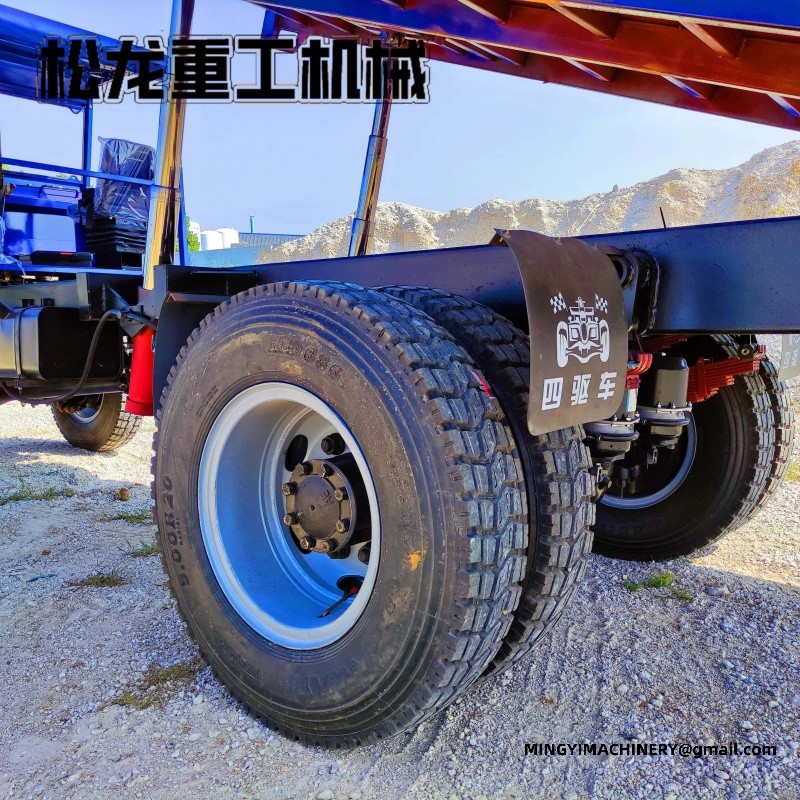
Access tracks in forestry are narrow, soft and often steep. The unit in daily use chosen for that work is chosen for the track, and the body, cab and tyre specification follow from the route rather than from the load alone.
Stability follows the load and its position. Knowing the rated capacity of a machine of this size at the working radius, rather than at its best case, is what keeps handling predictable and the machine upright. Carrying and travelling with a load needs its own plan. Speed, gradient and surface all matter more once the equipment on site is loaded, and the safe combination is the conservative one.
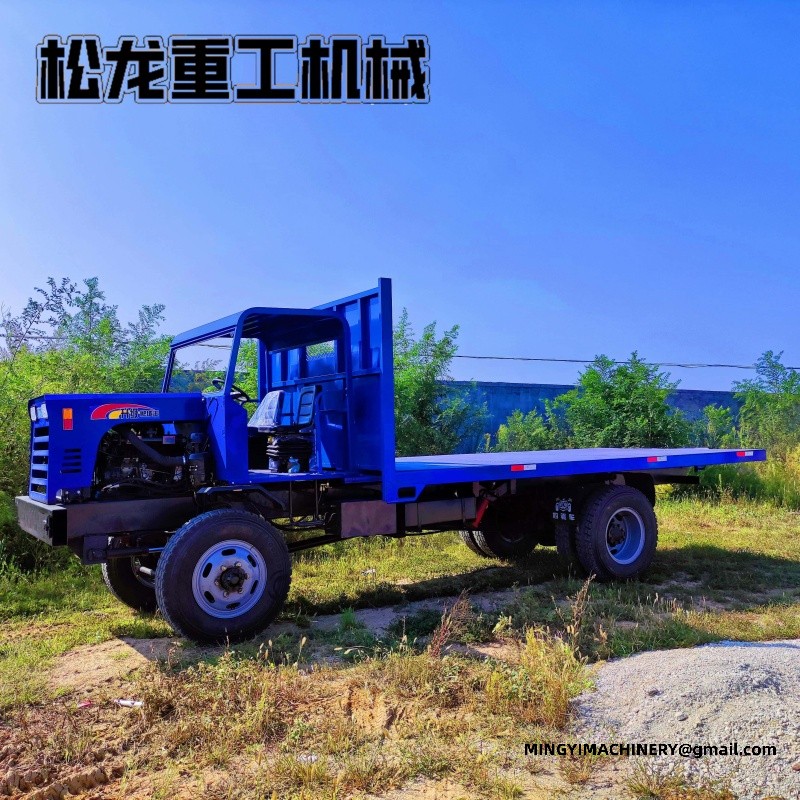
Parts availability usually decides the engine and the brand. A machine built around components the local network already carries is serviced from stock, which is the difference between a day lost and a week lost. Remote diagnosis shortens most faults. A walk-around on video with the panels open often identifies the cause on the model in question without waiting for a visit, and avoids shipping a part that turns out not to be needed.
Payload is limited by the axles and the frame before it is limited by the body volume. Specifying the unit on the job against the material density gives a realistic figure, because a body that looks half full can already be at its limit with rock. Loading method affects the machine as much as the load does. Material dropped from height into a machine built for the work shocks the frame and the body floor, while material placed evenly spreads the load and extends body life.
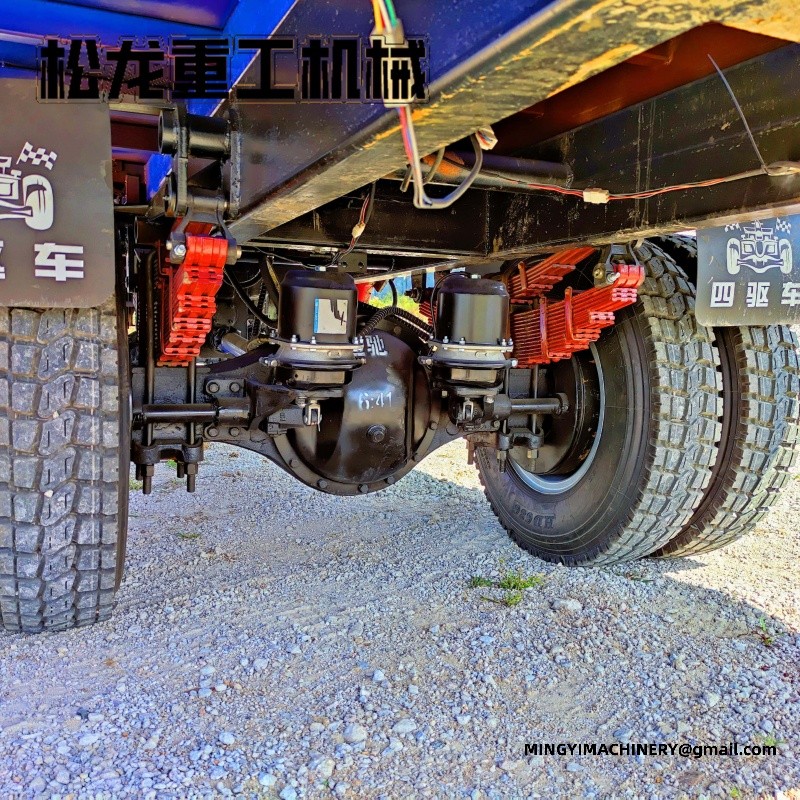
Descending matters as much as climbing. A loaded the dumper on a steep gradient needs engine braking and brakes in good order, and the safe practice is to plan the descent before the load rather than during it.
Customisation should still be limited to what the work needs. Each addition to the unit in daily use is another item to maintain, so the useful question is not what can be added but what the job list actually requires.
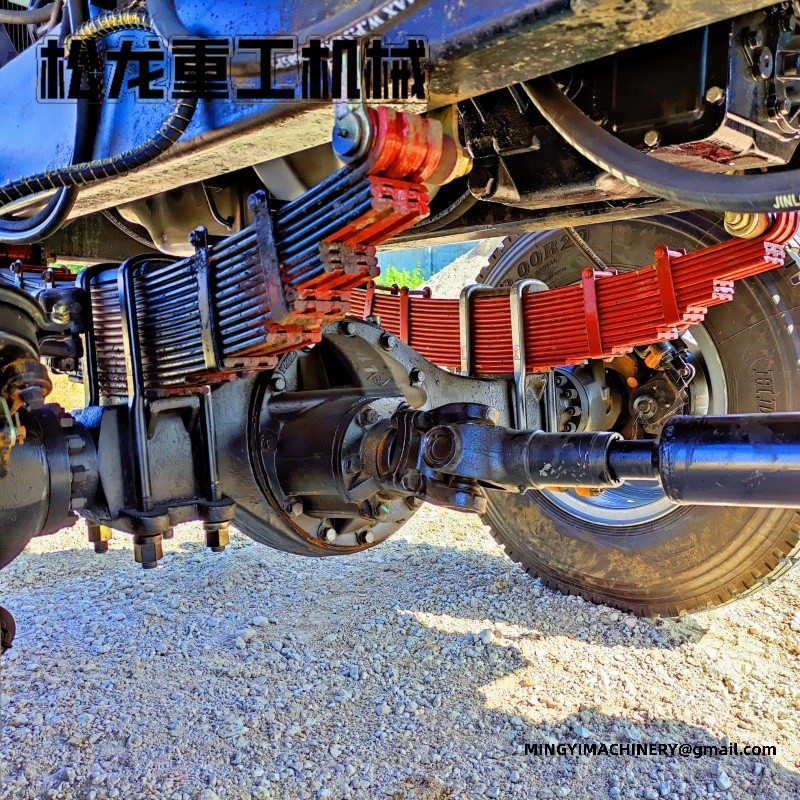
Machine productivity depends on what happens around it. Deliveries, other trades and the sequence of work decide how much of the shift the equipment on site spends actually working rather than waiting. Access and storage are worth settling early. Where the machine itself will be parked, refuelled and serviced on site affects the working day more than most specification details, and it takes nothing to plan.
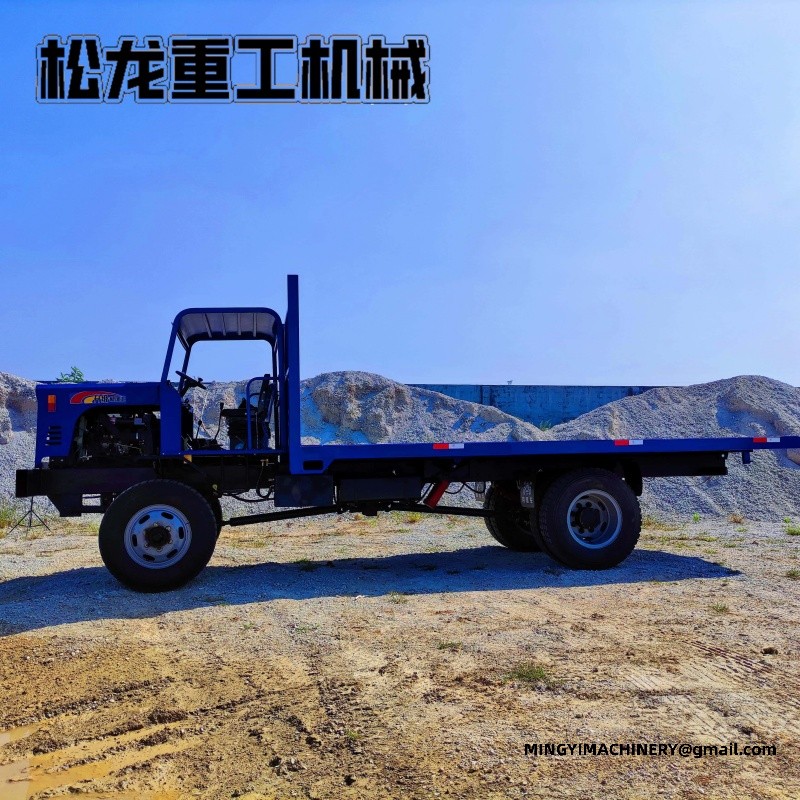
Fuel is usually the largest controllable running demand. Operating style, correct tyre or track condition and a clean air supply all move consumption on the machine in that duty by more than most buyers expect. Consumption is best measured over a full week rather than judged per hour. Idle time, repositioning and waiting for other trades are often the largest share of the fuel the unit on the job burns on a site.
The configurations below are the build sheets most often matched to the equipment in service. Engine, gearbox, axles, frame and body dimensions are confirmed together, because the body size and the axle rating have to suit the load before the engine rating matters.
| # | 14.Luxury | 16.Upgraded | 17.Luxury | 4.Upgraded |
|---|---|---|---|---|
| 1 | Two-cylinder diesel engine, 38 hp | Four-cylinder 490 diesel engine | Four-cylinder 490 diesel engine | Single-cylinder diesel engine, 25 hp |
| 2 | Part-time gearbox, selectable 2WD/4WD | Full-time gearbox with four-wheel drive | Part-time gearbox, selectable 2WD/4WD | Full-time gearbox with four-wheel drive |
| 3 | High/low range with crawler gear | High/low range with crawler gear | High/low range with crawler gear | High/low range with crawler gear |
| 4 | Enclosed cab | Fully enclosed cab | Fully enclosed cab | Front axle clutch |
| 5 | Six 700-16 mountain tyres | Oil brakes | Six 700-16 mountain tyres | Fully enclosed cab |
| 6 | Model 212 front axle | Six 700-16 mountain tyres | Reinforced 130 front axle | Oil brakes |
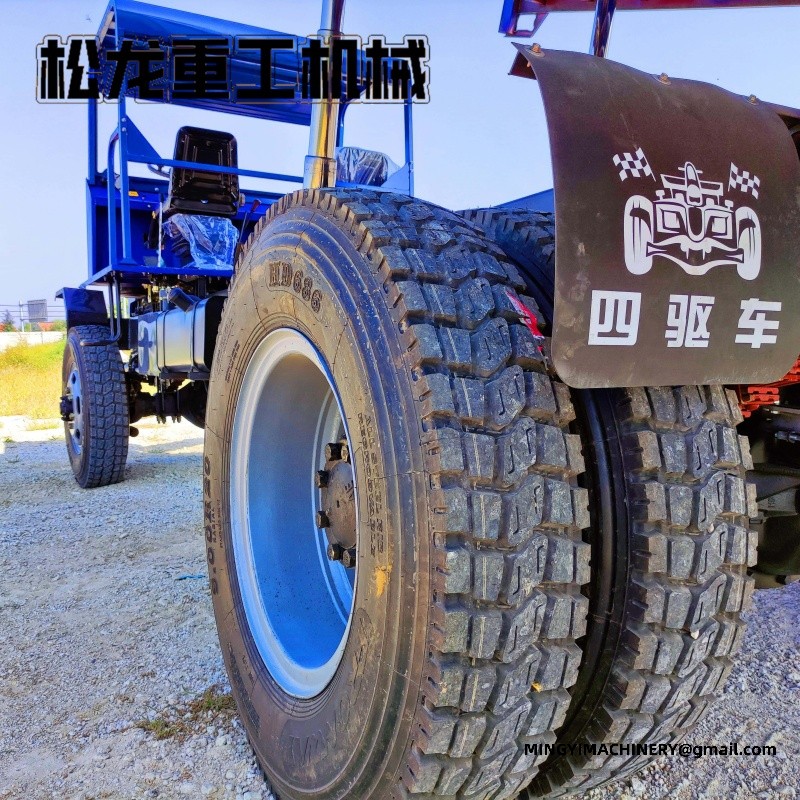
| 7 | Reinforced 130 rear axle | Front axle 212 | Reinforced ISUZU-pattern rear axle | Four 700-16 mountain tyres |
| 8 | Air cut-off brakes | Rear axle 130 | Air cut-off brakes | Front axle 212 |
| 9 | Reinforced 60 x 140 mm square tube frame | Reinforced 60 x 140 mm square tube frame | Reinforced 60 x 140 mm square tube frame | Rear axle 130 |
| 10 | Rear body 2.2 m long x 1.5 m wide x 0.45 m high | Rear body 2.2 m long x 1.5 m wide x 0.45 m high | Rear body 2.2 m long x 1.8 m wide x 0.45 m high | Reinforced 60 x 140 mm square tube frame |
| 11 | Tailgate with self-dumping function | Tailgate with self-dumping function | Tailgate with self-dumping function | Rear body 2.2 m long x 1.5 m wide x 0.45 m high |
| 12 | Side-opening rear body tailgate | Hydraulic power steering | Side-opening rear body tailgate | Tailgate with self-dumping function |
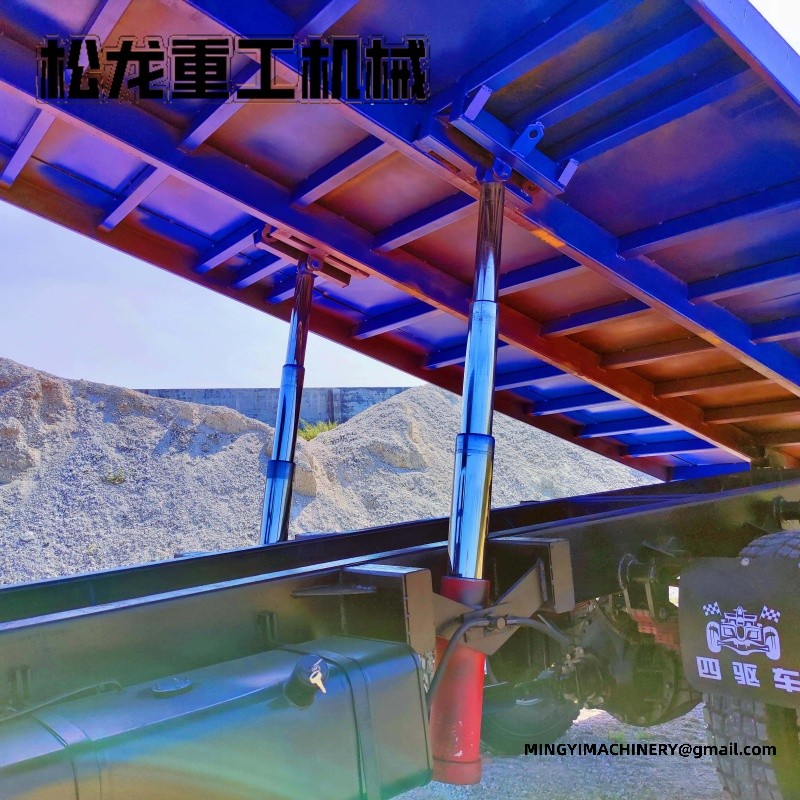
| 13 | Hydraulic power steering | Twin hydraulic rams | Hydraulic power steering | Hydraulic power steering |
| 14 | Twin hydraulic rams | Two-person comfort seat | Twin hydraulic rams | Twin hydraulic rams |
| 15 | Heavy-duty leaf springs | Twin-battery electric start | Two-person comfort seat | Two-person comfort seat |
| 16 | Two-person comfort seat | Round-nose bonnet | Heavy-duty leaf springs | Twin-battery electric start |
| 17 | Twin-battery electric start | — | Twin-battery electric start | Square-nose bonnet |
| 18 | Round-nose bonnet | — | Round-nose bonnet | — |
Tropical operation is a specification question as much as a maintenance one. The cooling capacity, the sealing and the corrosion protection fitted to this class of machine are what make the difference once the ambient temperature rises.
Contamination is easier to prevent than to cure. Keeping the filler caps sealed, the funnels clean and the containers closed around a machine of this size is unglamorous work that shows up as reliability later.
Machines rarely fail without warning. A change in sound, a slower function or a new leak on the machine itself is the machine saying something early, and listening then takes a fraction of the time that waiting does.
Loading is where most damage happens. Ramps, angle of approach and the condition of the ground under them matter more than the machine when the machine in that duty is being loaded, and a careful driver is worth more than a fast one.
Familiarisation is not the same as reading the manual. Sitting on a machine built for the work, working through the controls at low speed and learning where the machine balances takes an hour, and that hour is what keeps the first week uneventful.
Inspection is a list, not a glance. Before the dumper is released the fluid levels, belt tension, electrical connections and safety decals are each ticked off, and anything that fails stays in the shop rather than travelling with the machine.
Wear items are predictable once the machine has settled in. After the first service interval the pattern on the unit in daily use is visible, and the parts that were replaced become the parts that are kept.
Every line above is a build item rather than an optional extra, and the final sheet for a machine of this size is confirmed against the destination, the ground and the load before production.
E-mail:sales@mingycn.com
LINE(ID):mingyicn









