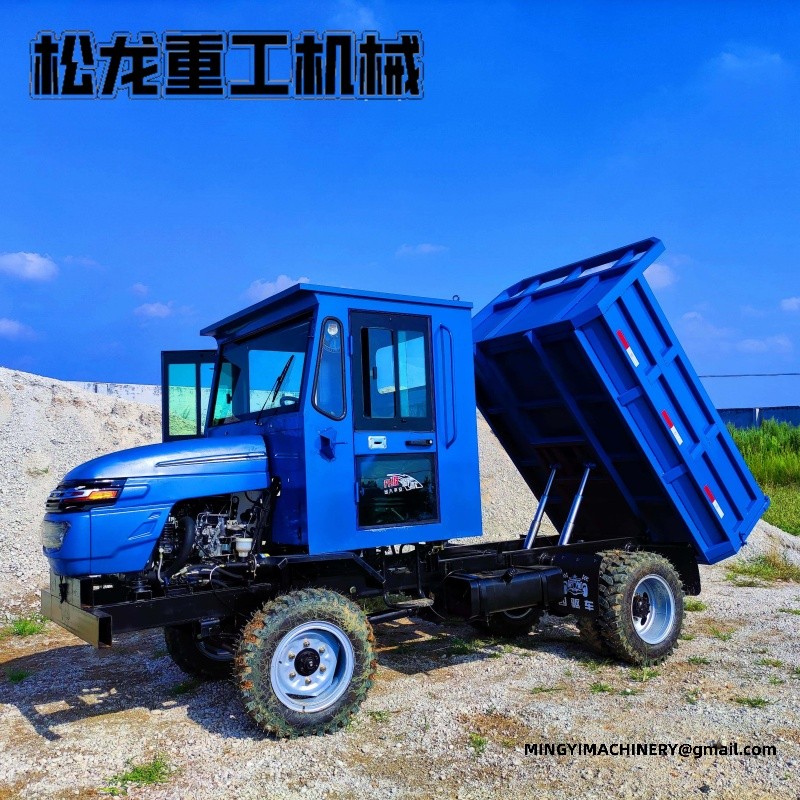
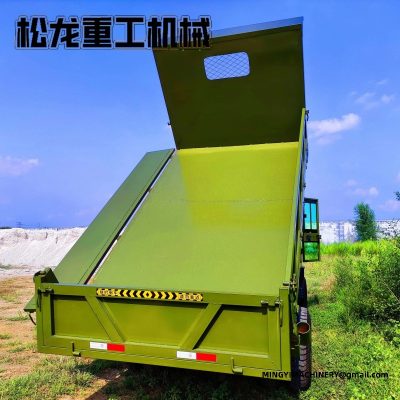
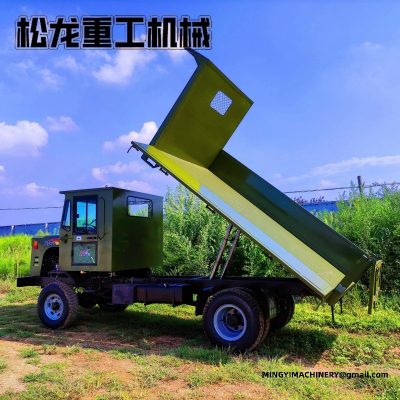
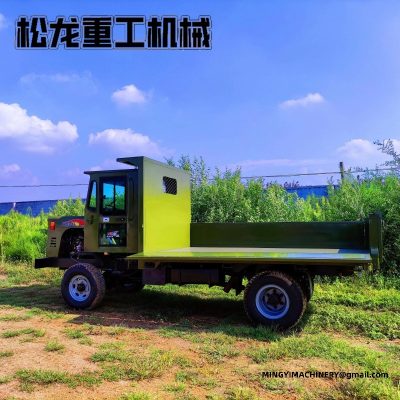
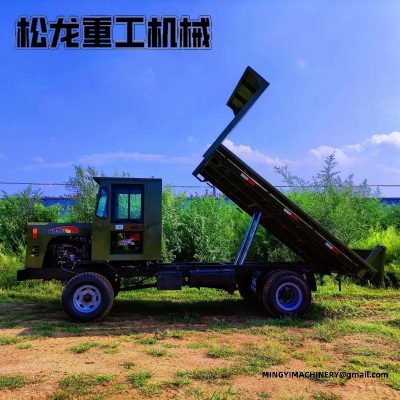
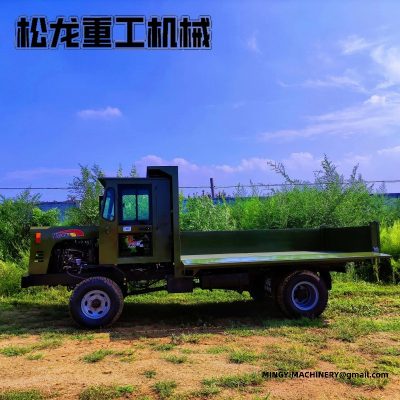
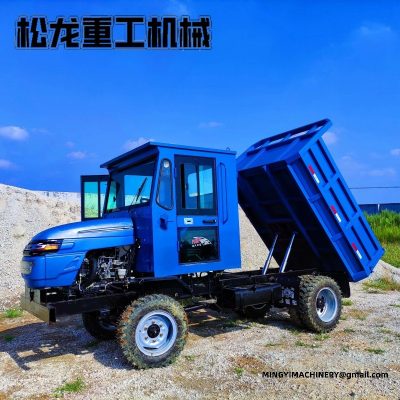
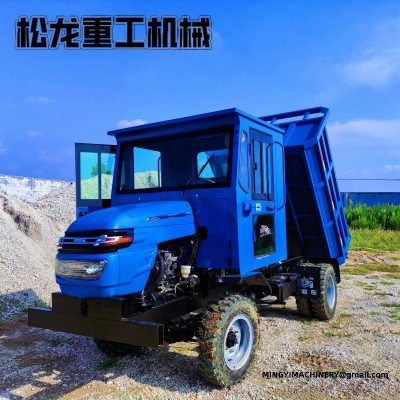
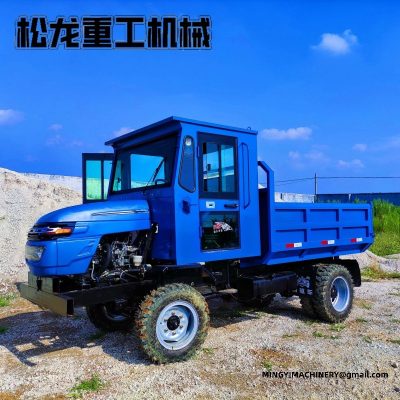
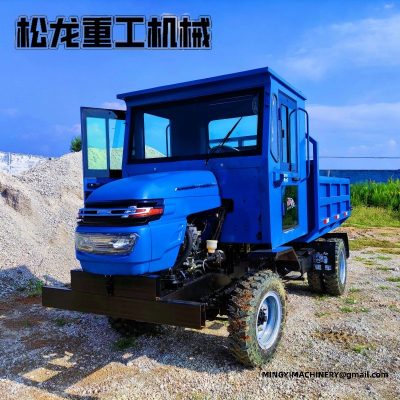
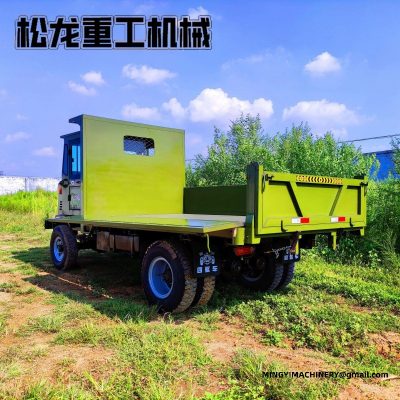
The range covered here includes the dumper in the configurations that are built and shipped. Rather than repeat a specification table on its own, the sections below explain what each figure means in use and where the trade-offs sit.
Carrying concrete changes the duty entirely. This class of machine with a mixer drum is working against the clock, and the specification follows the delivery distance and the site access rather than the load alone. Drum bodies need power and stability. The unit in daily use set up for concrete has to carry the drum, the load and the water, and the frame and brakes should be specified for that combined weight. Cleaning and discharge are part of the job. A machine of this size used for concrete is judged on how quickly it can discharge and wash out, because that turnaround is what the site is paying for.
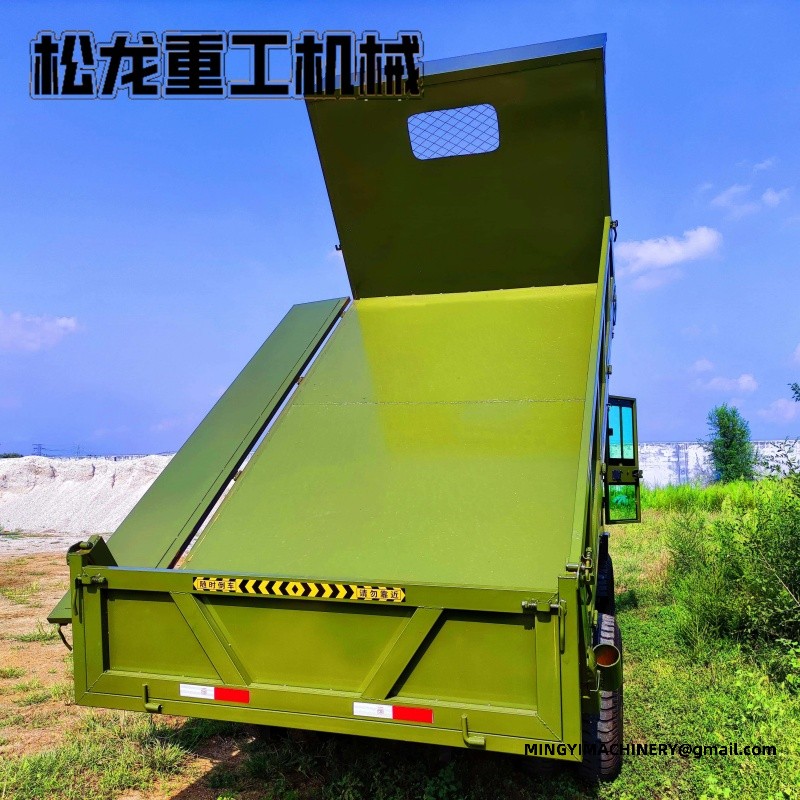
Payload is limited by the axles and the frame before it is limited by the body volume. Specifying the equipment on site against the material density gives a realistic figure, because a body that looks half full can already be at its limit with rock.
A written duty list is the simplest part of the purchase. It takes an hour to note the material, the distance, the gradient and the hours per week, and it is what turns the machine itself enquiry into a machine that fits.
Duty cycle is the honest measure of a machine. The model in question working a few hours a week has different needs from one working two shifts, and the cooling, filtration and service intervals should follow the hours rather than the calendar.
Fleet value comes from interchangeability. Operators who can step between machines without retraining, and a workshop that stocks one set of filters, keep utilisation higher than a fleet of individually optimised units. Standardising where possible simplifies everything downstream. When several units of the machine in that duty share a service schedule and a parts list, the fleet becomes easier to plan and easier to sell on at replacement time.
The order should state the configuration in writing. Engine, attachments, colour, documents and any market requirement are clearer on the build sheet for the unit on the job than in a conversation after delivery. Delivery planning includes the receiving end. Knowing whether a machine built for the work will be craned, driven or forked off, and whether the site can accept it, is settled before dispatch rather than on the day.
Matching the engine to the duty matters more than the peak rating. The equipment in service that spends its day at part load benefits from a different setup than one that works at full output, and the difference shows in fuel use over a season.
Ground on farms is often soft and often shared with livestock. The dumper working there needs to cross pasture without rutting it badly, and tyre and weight choices follow from that.
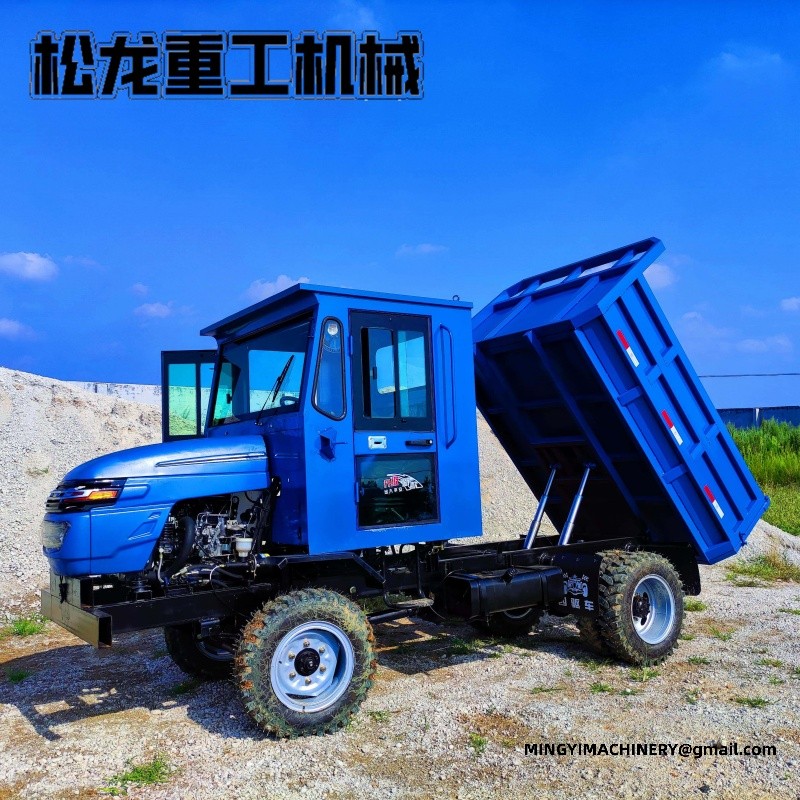
Moving the machine is part of owning it. Overall length, width and height decide which trailer or container the unit in daily use fits, and a machine that needs a permit or an abnormal load escort is a machine with a delivery delay built in.
Batteries and fluids are the parts that notice the cold first. The equipment on site kept on a maintainer through a freezing spell starts on the first turn, while one left standing is the usual cause of a lost morning. Low temperatures also make materials behave differently. Ground that is frozen hard in the morning can be soft by midday, and planning the sequence around that is easier than fighting it with the machine itself.
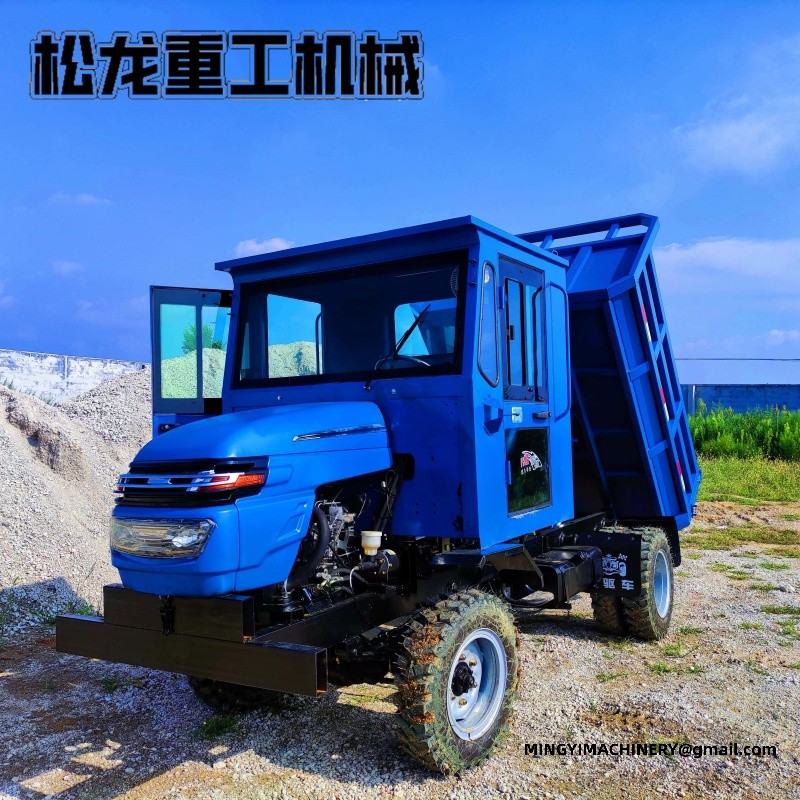
Reconfiguration can extend the useful life of a machine. The machine in that duty that no longer suits the current work may suit it again with a different attachment, guarding or control arrangement. Upgrades should be checked against the base machine. Hydraulic capacity, mounting interface and stability all limit what can reasonably be added to the unit on the job, and confirming those limits avoids an unsatisfactory result. The decision is economic as well as technical. Comparing the work of reconfiguring a machine built for the work against a different machine is a short calculation that usually gives a clear answer.
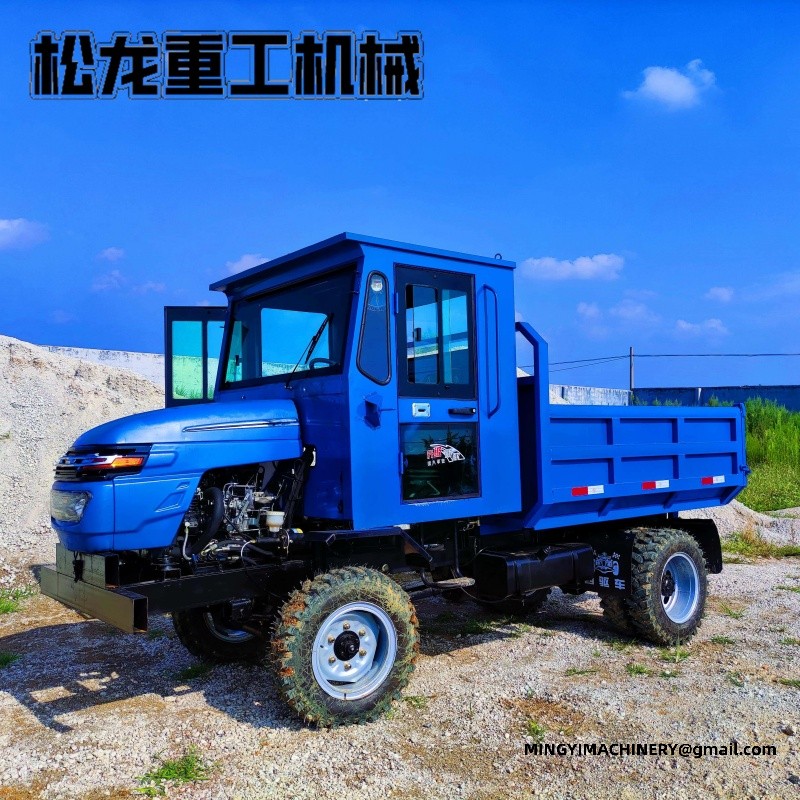
Four-wheel drive is only part of soft ground capability. Tyre choice, ground clearance and weight distribution decide whether the dumper keeps moving in a paddy field or a marsh, and all three are specified rather than assumed.
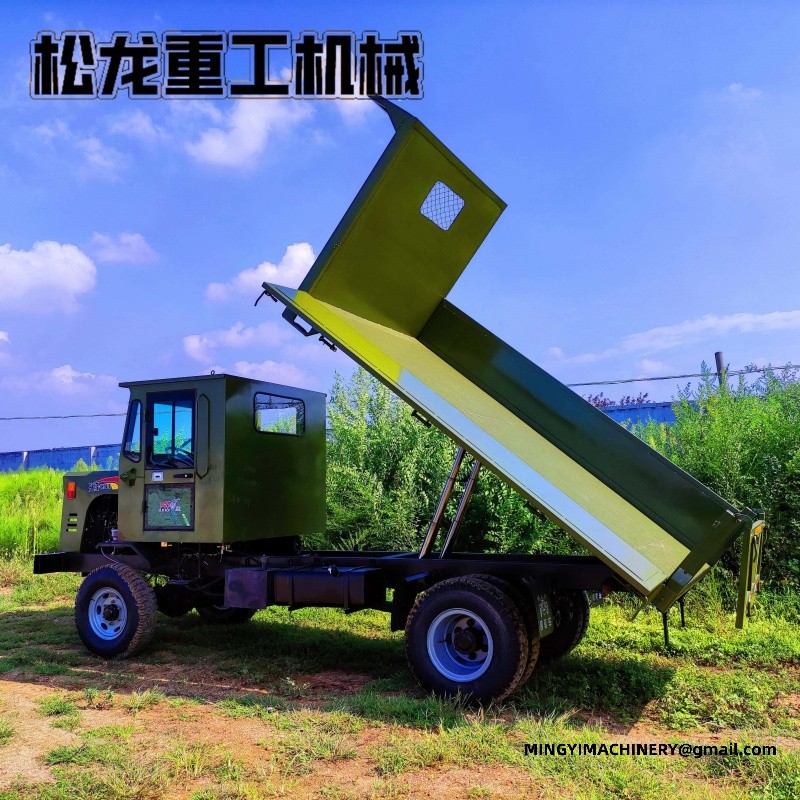
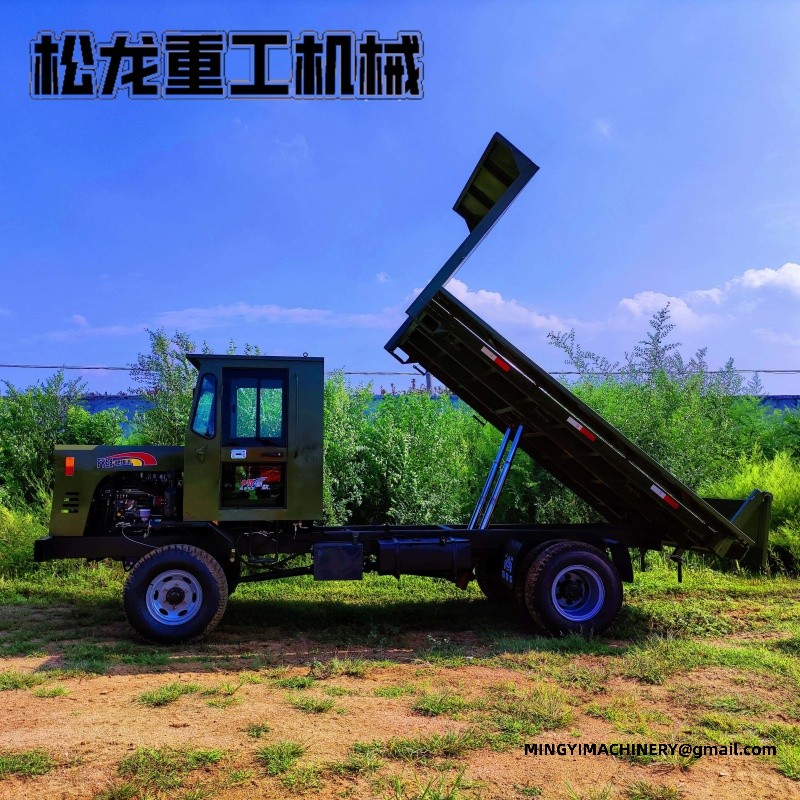
The tipping body is the part that does the work. The unit in daily use specified with twin hydraulic rams and a tailgate that opens under load unloads in one pass, which matters more on a short haul than top speed does. Unloading method should follow the material. Wet spoil, aggregate and green timber behave differently in the body, and matching the body and tailgate arrangement to the load is what keeps a machine of this size cycling rather than being hand-cleared. Body size is a compromise with access. A larger body on the equipment on site carries more per trip but needs more room to turn and tip, so the useful question is how many trips the route allows rather than how much it holds.
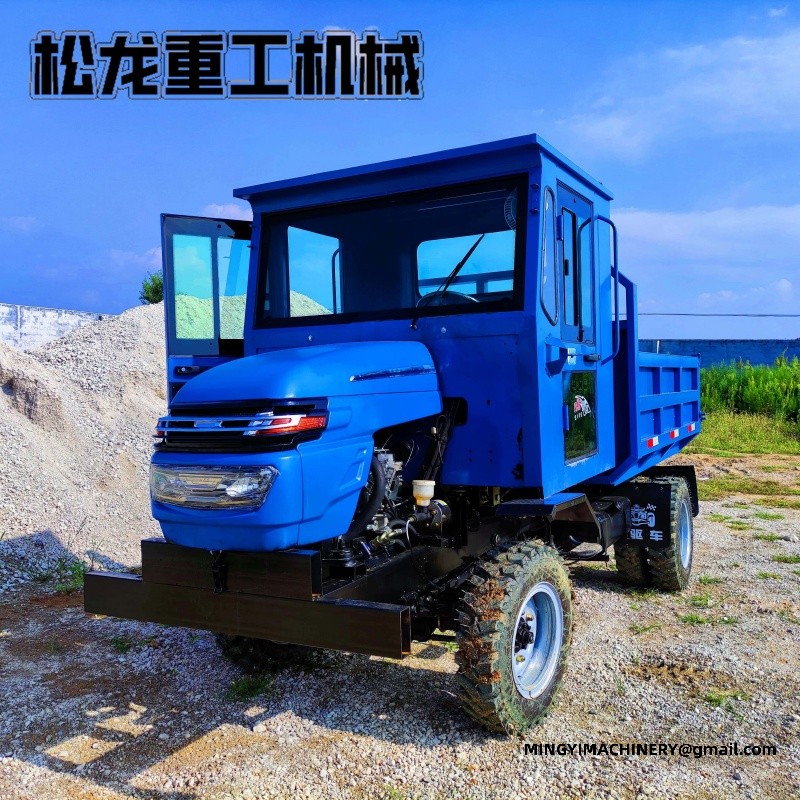
Dust control work is repetitive and time-critical. The model in question with the right tank and spray arrangement covers more ground per shift, which is usually the point of the exercise.
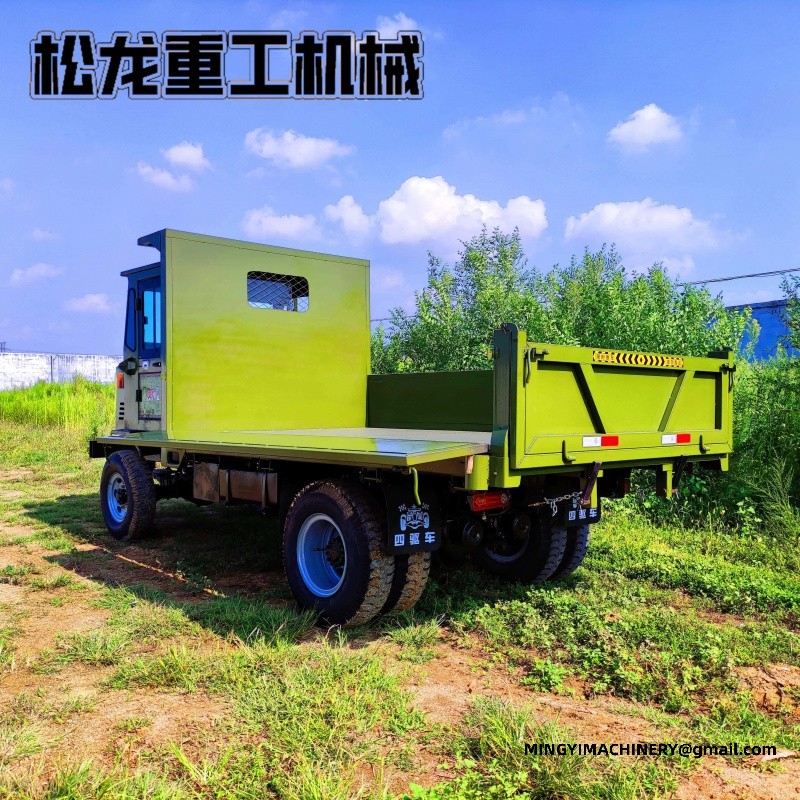
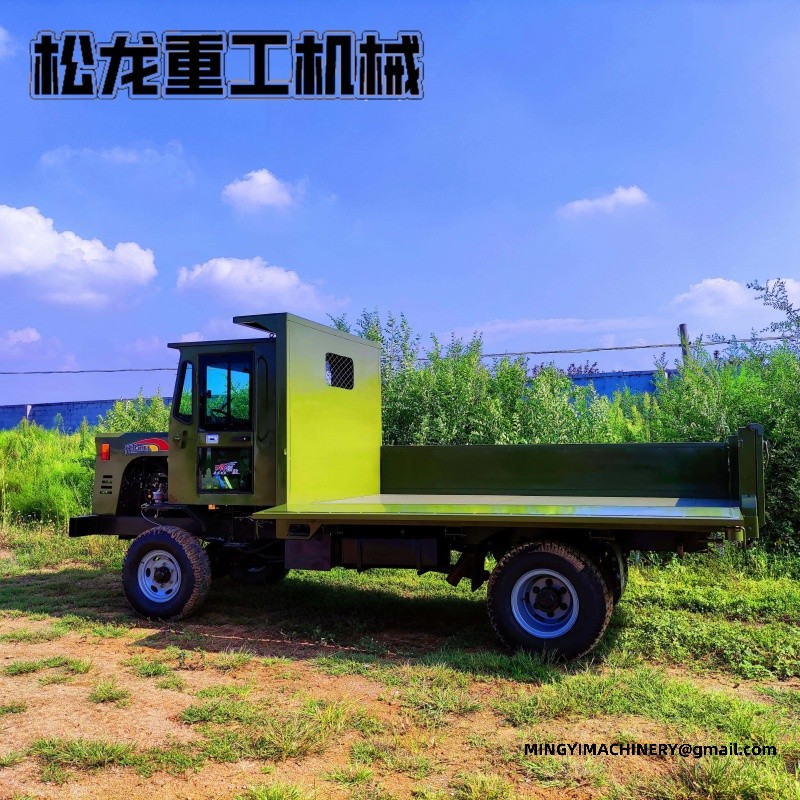
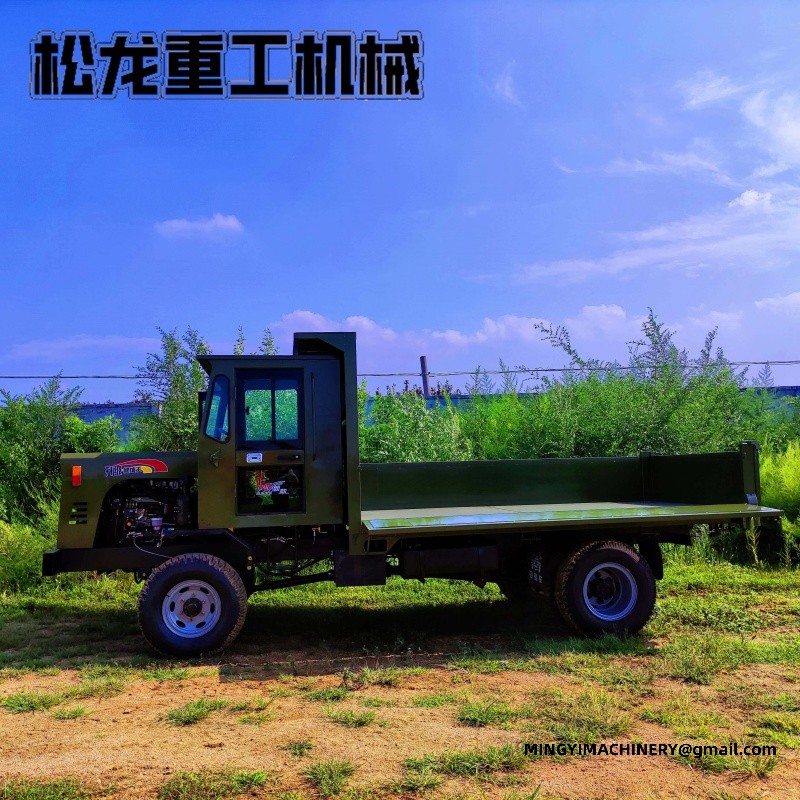
The configurations below are the build sheets most often matched to the unit on the job. Engine, gearbox, axles, frame and body dimensions are confirmed together, because the body size and the axle rating have to suit the load before the engine rating matters.
| # | 17.Luxury | 24.Luxury | 5.Luxury | 8.Luxury |
|---|---|---|---|---|
| 1 | Four-cylinder 490 diesel engine | Four-cylinder 4108 turbocharged diesel engine | Single-cylinder diesel engine, 25 hp | Single-cylinder diesel engine, 28 hp |
| 2 | Part-time gearbox, selectable 2WD/4WD | Model 145 part-time gearbox, selectable 2WD/4WD | Part-time gearbox with four-wheel drive | Part-time gearbox, selectable 2WD/4WD |
| 3 | High/low range with crawler gear | High/low range with crawler gear | High/low range with crawler gear | High/low range with crawler gear |
| 4 | Fully enclosed cab | Fully enclosed cab | Enclosed cab | Enclosed cab |
| 5 | Six 700-16 mountain tyres | Six 825R16 steel-belted radial tyres | Six 700-16 mountain tyres | Six 700-16 mountain tyres |
| 6 | Reinforced 130 front axle | Reinforced ISUZU-pattern front axle | Model 212 front axle | Model 212 front axle |
| 7 | Reinforced ISUZU-pattern rear axle | Reinforced 1080 rear axle | Model 130 rear axle | Model 130 rear axle |
| 8 | Air cut-off brakes | Air cut-off brakes | Air cut-off brakes | Air cut-off brakes |
| 9 | Reinforced 60 x 140 mm square tube frame | Reinforced 80 x 180 mm square tube frame | Reinforced 60 x 140 mm square tube frame | Reinforced 60 x 140 mm square tube frame |
| 10 | Rear body 2.2 m long x 1.8 m wide x 0.45 m high | Rear body 3.0 m long x 2.2 m wide x 0.45 m high | Rear body 2.2 m long x 1.5 m wide x 0.45 m high | Rear body 2.2 m long x 1.5 m wide x 0.45 m high |
| 11 | Tailgate with self-dumping function | Tailgate with self-dumping function | Tailgate with self-dumping function | Tailgate with self-dumping function |
| 12 | Side-opening rear body tailgate | Side-opening rear body tailgate with cab ladder | Side-opening rear body tailgate | Side-opening rear body tailgate |
| 13 | Hydraulic power steering | Hydraulic power steering | Hydraulic power steering | Hydraulic power steering |
| 14 | Twin hydraulic rams | Twin hydraulic rams | Twin hydraulic rams | Twin hydraulic rams |
| 15 | Two-person comfort seat | Two-person comfort seat | Two-person comfort seat | Two-person comfort seat |
| 16 | Heavy-duty leaf springs | Heavy-duty leaf springs | Heavy-duty leaf springs | Heavy-duty leaf springs |
| 17 | Twin-battery electric start | Twin-battery electric start | Twin-battery electric start | Twin-battery electric start |
| 18 | Round-nose bonnet | Square-nose bonnet | Square-nose bonnet | Square-nose bonnet |
Travel time is not working time, and it should be planned as its own item. The hours spent moving the equipment in service between jobs are hours not worked, and a trailer that matches the machine reduces them every single trip.
A cold start is easier when the machine is prepared the night before. The routine that keeps this class of machine working through winter is mostly a matter of fuel, battery and patience in the first ten minutes of the day.
Temperature and pressure are the two things worth watching. A machine of this size that runs hotter than it used to, or whose pressure has drifted, is reporting a problem that is still simple to fix.
Operators who come from a different machine need a short conversion. The controls on the machine itself follow the usual pattern, but the response, the sightlines and the stopping distance are learned by doing rather than by reading.
Contamination is easier to prevent than to cure. Keeping the filler caps sealed, the funnels clean and the containers closed around the machine in that duty is unglamorous work that shows up as reliability later.
The battery and the fuel are the first things to suffer in storage. Preparing a machine built for the work properly at the start of the idle period avoids the flat battery and the contaminated tank that greet an unprepared machine.
The machine should be introduced to the site as well as the operator. Walking the route the dumper will take, noting the soft spots and the turns, prevents the kind of first-day incident that has nothing to do with the machine.
The parts that stop a machine are rarely the parts that are hardest to find. Filters, belts, seals and the ground engaging tools on the unit in daily use are easy to hold and slow to replace, which is why they belong on the shelf rather than on an order.
Every line above is a build item rather than an optional extra, and the final sheet for a machine of this size is confirmed against the destination, the ground and the load before production.
E-mail:sales@mingycn.com
LINE(ID):mingyicn









