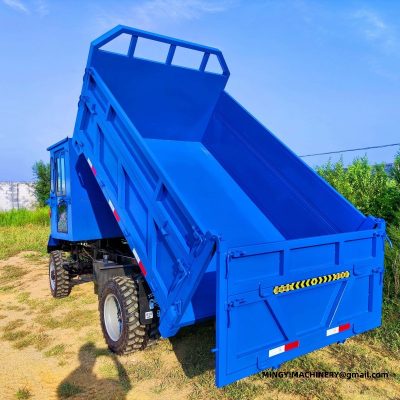
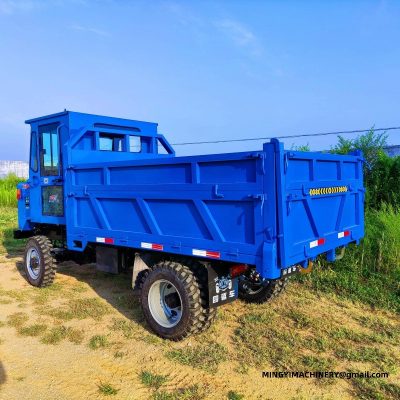
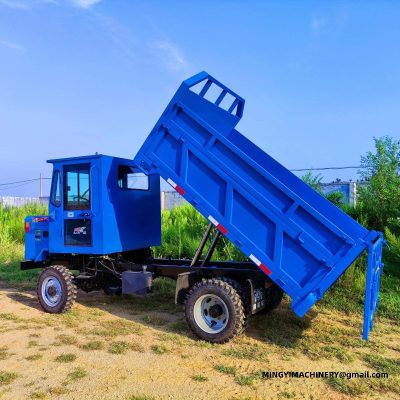
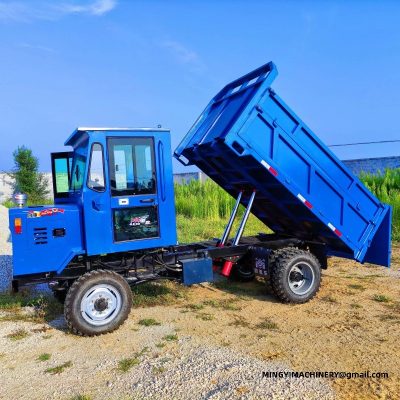
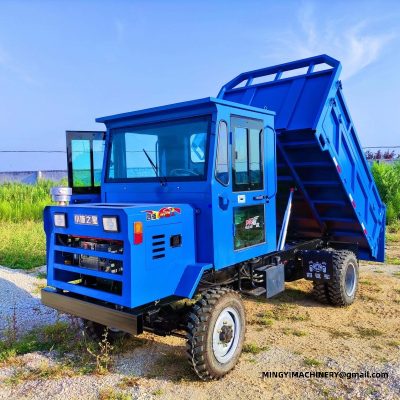
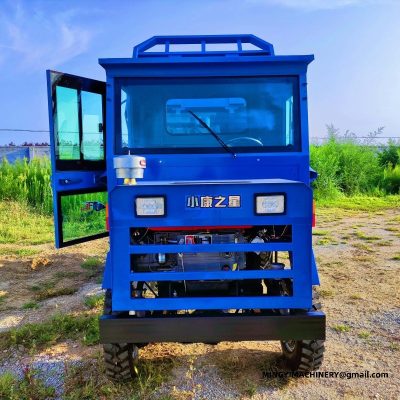
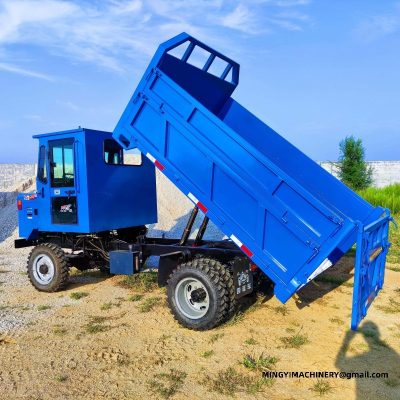
Most enquiries about the dumper start with a job rather than a machine. Someone has a site, a material and a deadline, and the specification follows from those three. This page works back from the job to the build sheet.
Fuel is usually the largest controllable running demand. Operating style, correct tyre or track condition and a clean air supply all move consumption on this class of machine by more than most buyers expect. Consumption is best measured over a full week rather than judged per hour. Idle time, repositioning and waiting for other trades are often the largest share of the fuel the unit in daily use burns on a site. Planning the work to reduce empty movement is free. Fewer repositioning cycles on a machine of this size means less fuel, less wear on the undercarriage or tyres and more of the shift spent on productive work.
Working after daylight changes the risk. Lighting coverage on the machine itself and across the working area, plus high-visibility clothing for anyone on foot, are the items that make low-light work practical. Visibility from the seat is different at night. Reflections, shadows and glare all hide detail, so the equipment on site used after dark benefits from clean lenses, working wipers and a slower working pace.
Certain parts are designed to be consumed. Knowing which items on the model in question are wearing parts, and roughly how long they last in the duty the machine sees, turns replacement into a plan rather than a breakdown. Wear rate follows conditions far more than hours. The machine in that duty working on abrasive ground or in mud will consume undercarriage or tyre life much faster than the same machine on clean ground. Replacing wear items early is usually simpler. Worn components on the unit on the job load the parts they run against, so a worn part left too long often becomes a major repair.
Owners who work across several sites should check the transport dimensions before ordering. A machine built for the work that fits a standard trailer can be moved by any operator with a suitable vehicle, while an over-width machine narrows that choice and complicates every move. Shipping dimensions matter as much on export orders as they do locally. Confirming the packed size of the equipment in service before booking avoids re-booking freight after the machine is built.
Export orders add steps that domestic buyers never see. Packed dimensions, securing points, documentation and any dismantling required are all settled before the dumper leaves the factory, and each one affects the freight booking. Container loading is a planning exercise. Confirming how this class of machine is packed and how many units fit a container is what turns a per-unit freight estimate into a delivered figure the buyer can actually plan against. Documentation should be agreed at order stage. The commercial invoice, packing list and any certificate required at destination are part of shipping the unit in daily use, and missing papers delay clearance longer than the voyage takes.
Cold changes how a machine starts and how it warms up. Allowing a machine of this size to reach operating temperature before loading it, and using the correct grade of oil and fuel for the season, prevents most cold-start problems. Batteries and fluids are the parts that notice the cold first. The equipment on site kept on a maintainer through a freezing spell starts on the first turn, while one left standing is the usual cause of a lost morning. Low temperatures also make materials behave differently. Ground that is frozen hard in the morning can be soft by midday, and planning the sequence around that is easier than fighting it with the machine itself.
Replacement timing is a planning decision. Knowing the intended working life of the model in question lets an owner sell while the machine still has value rather than after a major repair becomes due.
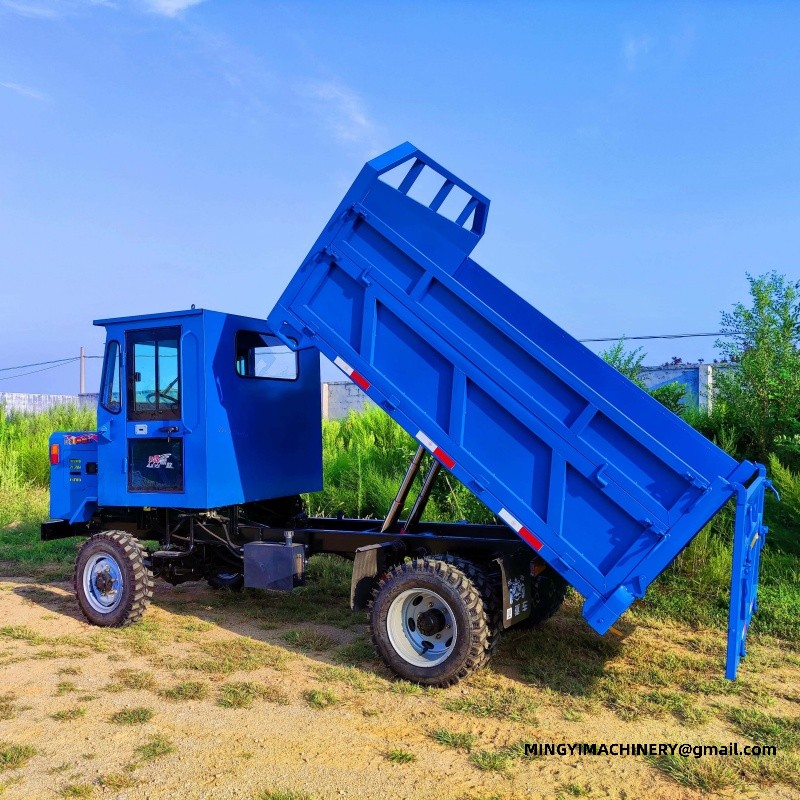
The honest payload figure comes from the duty. The machine in that duty working a smooth haul road carries differently from one crossing ruts and gradients, and the conservative number is the one that keeps the machine working.
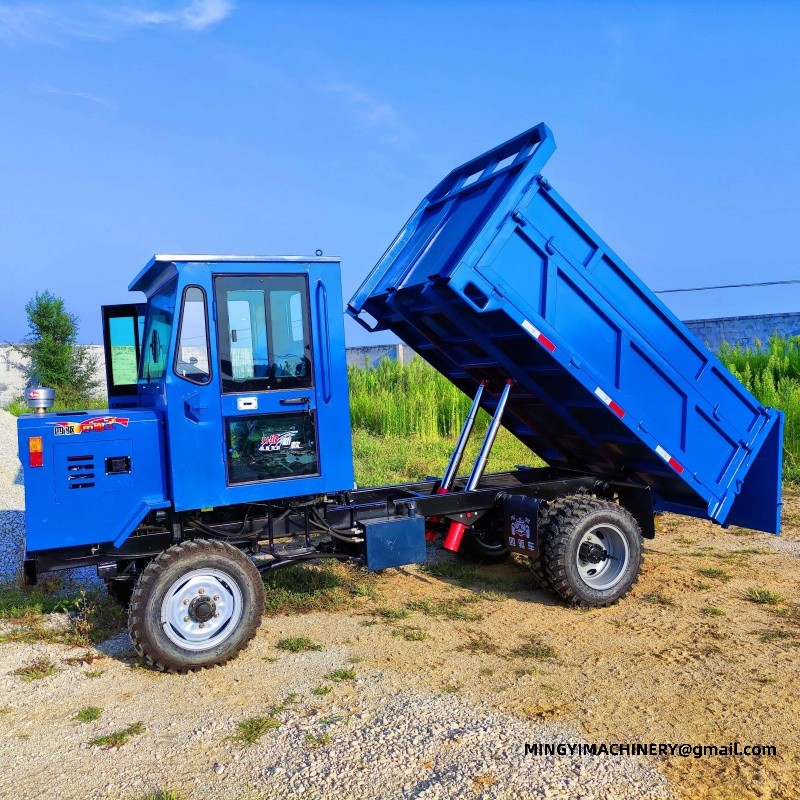
Sequencing avoids rework. Doing the work in the order that suits the ground and the following trades keeps a machine built for the work productive and prevents finishing a task that then has to be opened up again.
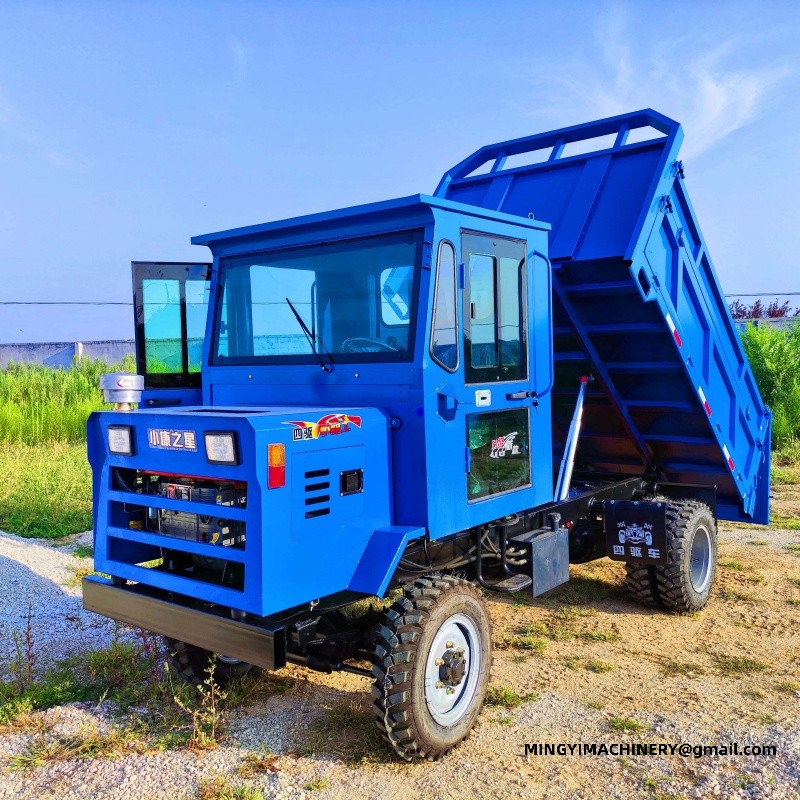
Ground decides more of the outcome than power does. Soft, wet or loose surfaces call for a wider footprint and lower ground pressure, while hard standing allows a narrower machine that turns in less space and travels faster between tasks. The working surface should be surveyed before this class of machine is specified. A machine that is stable on compacted gravel can be unusable on the same site after rain, and the difference shows up as lost days rather than as a fault. Traction and flotation are two separate questions. The dumper may have the power for a slope and still not have the grip, so the surface, not the engine rating, is usually what limits the working day.
Haul cycles in a quarry are short and repetitive. A machine of this size specified for that pattern benefits from a body that dumps cleanly and quickly, because the time saved per cycle is the whole allowance.
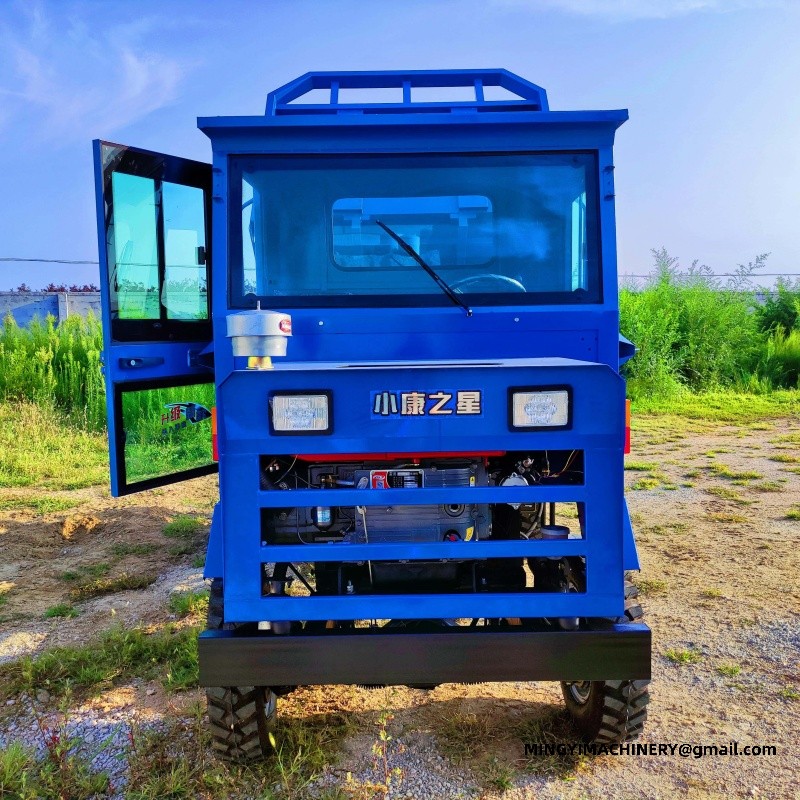
Standing still is hard on machinery. The machine itself left for weeks benefits from a clean, dry, covered space, a charged battery and a fuel system prepared for the layoff, and all three effort very little. Before-storage preparation prevents most return-to-work faults. Draining or treating fuel, protecting exposed rods and relieving pressure where the maker specifies it are the items worth an hour when the model in question is parked. A periodic start is better than none. Running the machine in that duty to operating temperature during a long layoff keeps seals and the charging system in better condition than leaving it untouched until the next job.
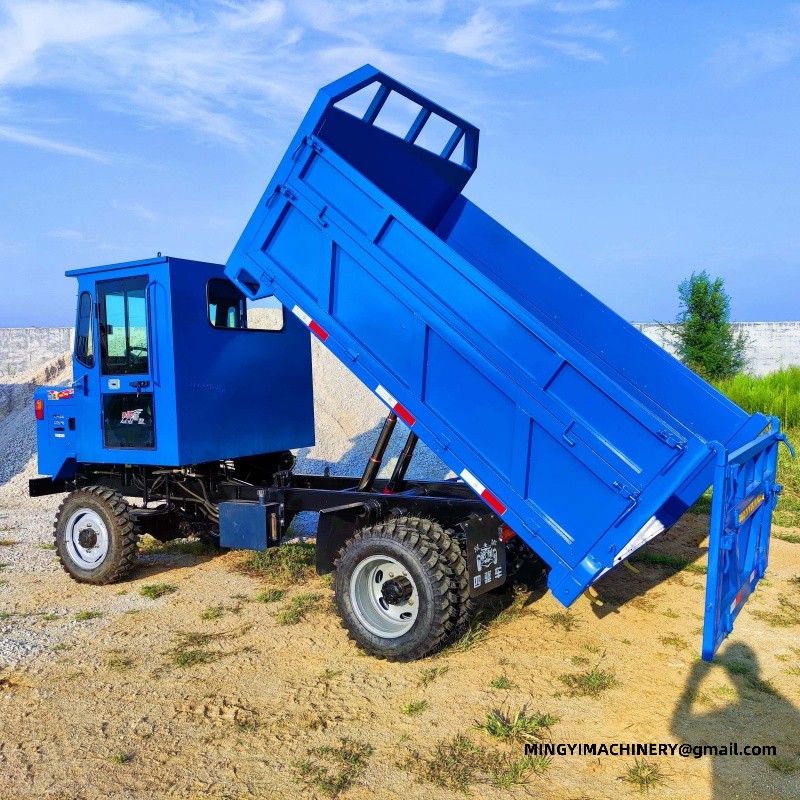
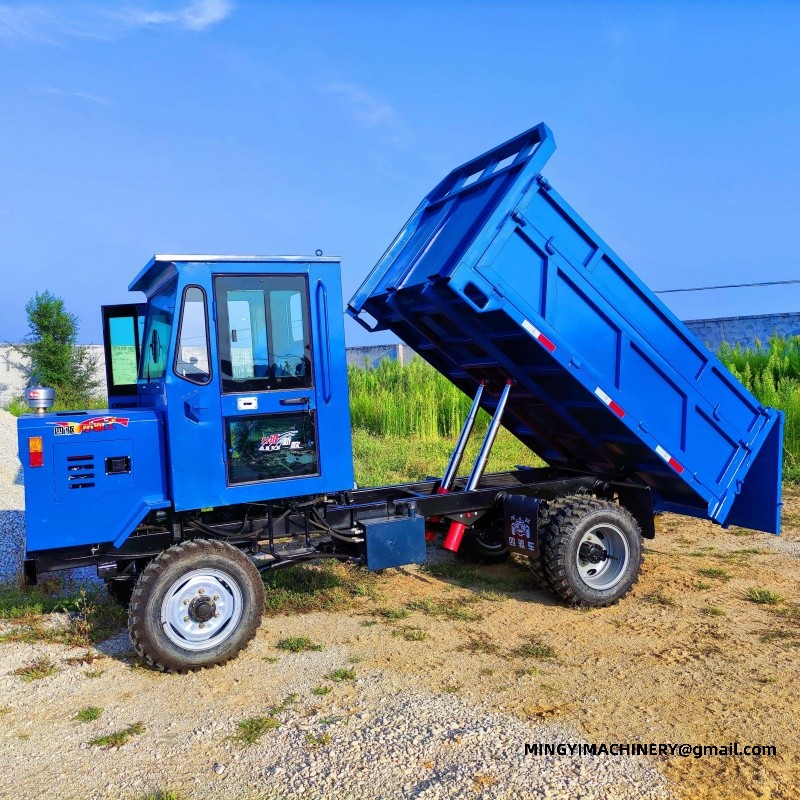
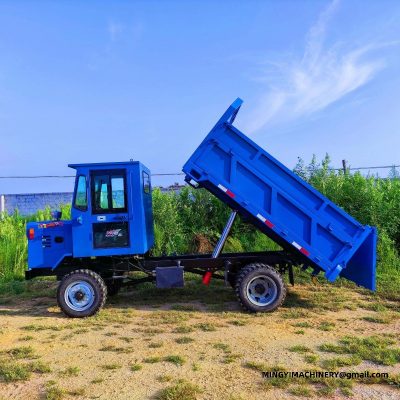
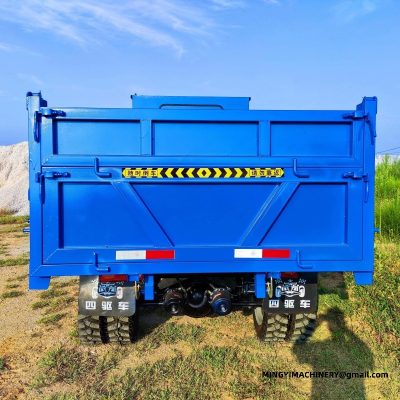
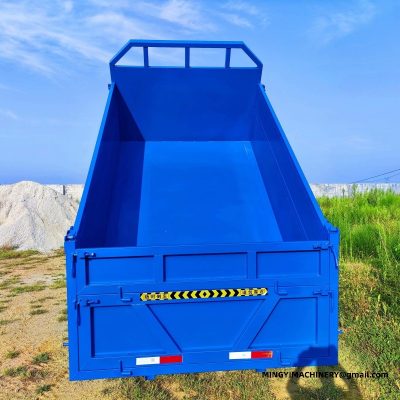
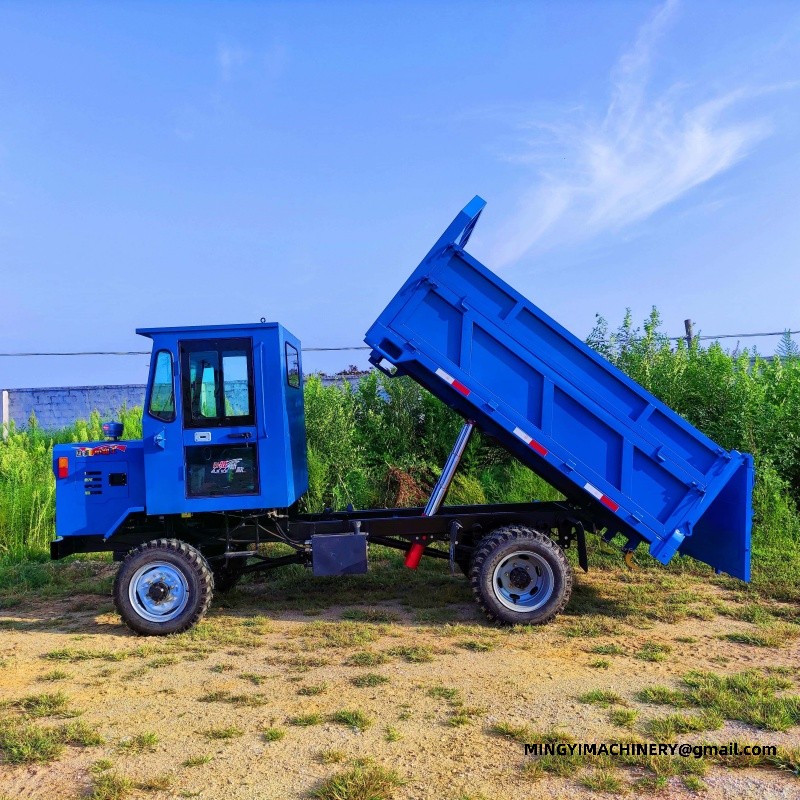
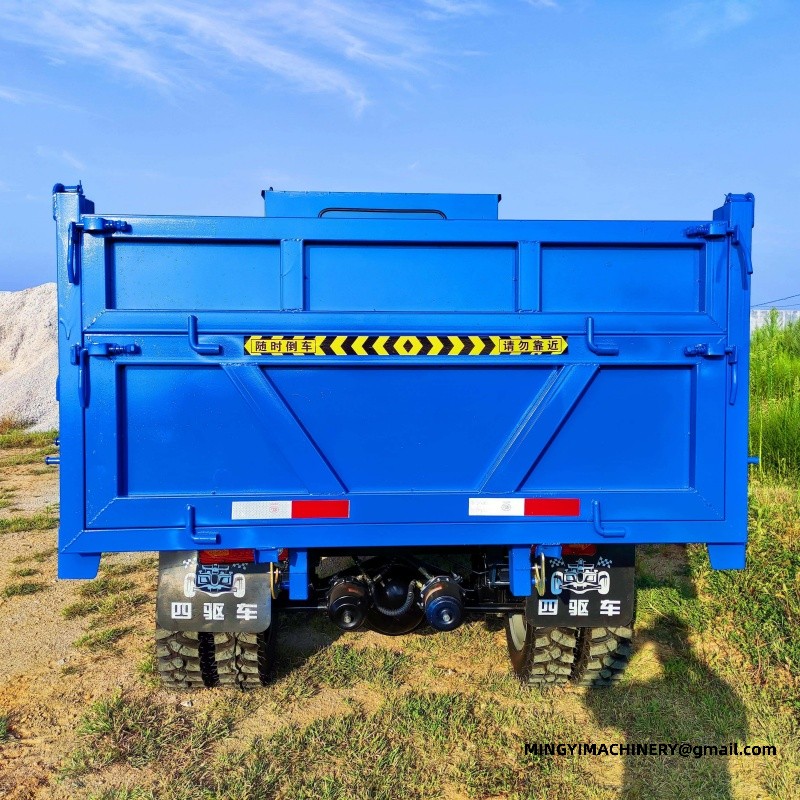
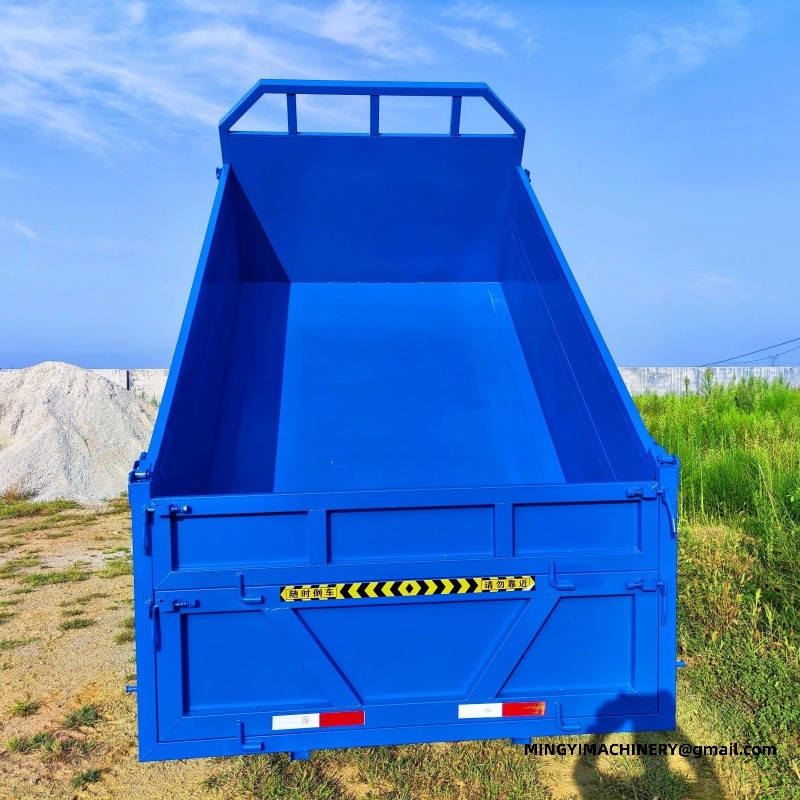
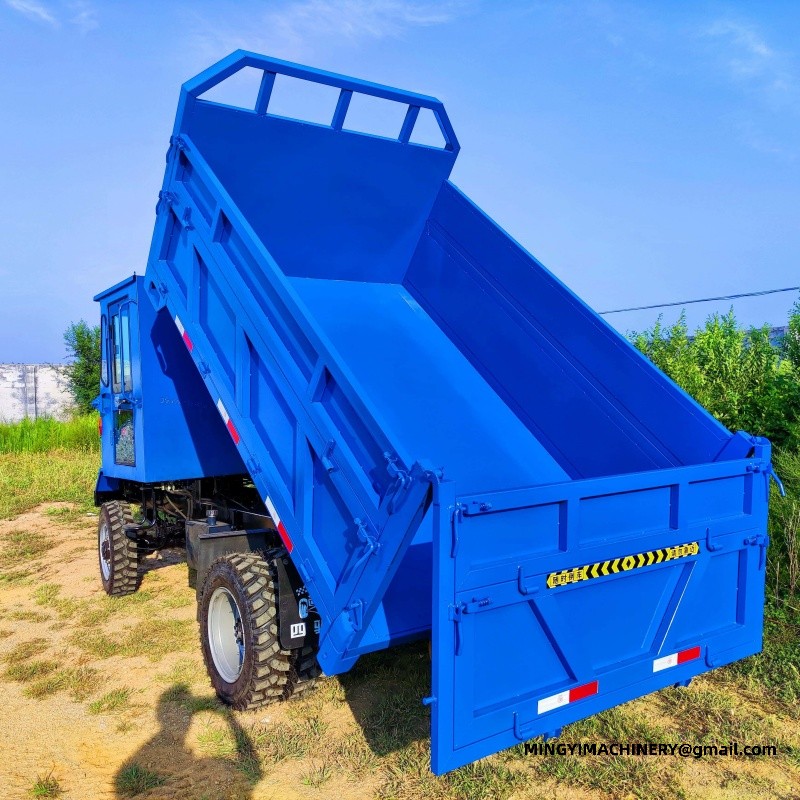
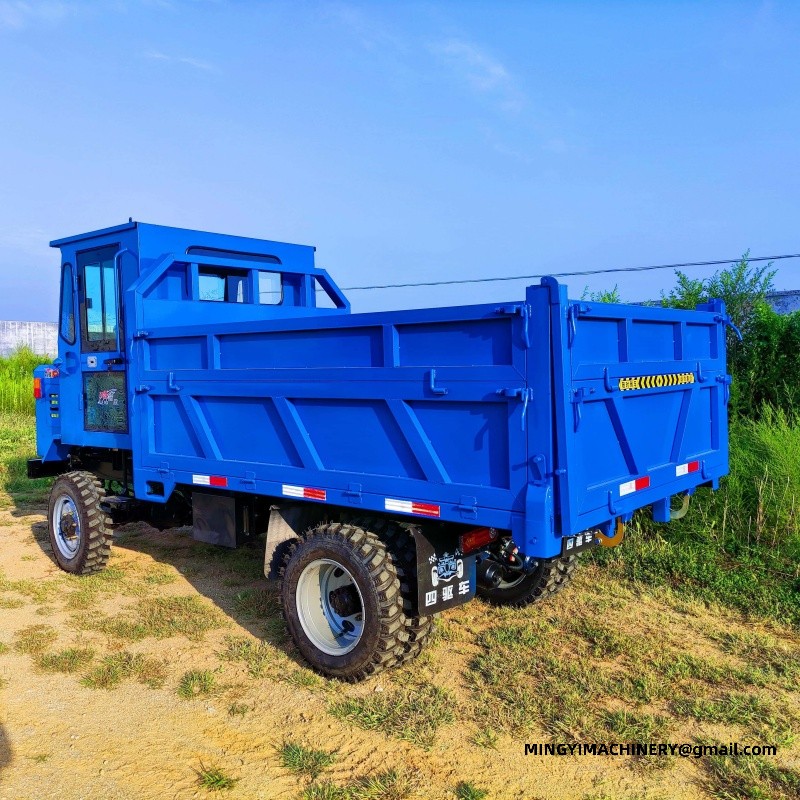
The configurations below are the build sheets most often matched to a machine built for the work. Engine, gearbox, axles, frame and body dimensions are confirmed together, because the body size and the axle rating have to suit the load before the engine rating matters.
| # | 17.Luxury | 18.Standard | 3.Standard | 8.Luxury |
|---|---|---|---|---|
| 1 | Four-cylinder 490 diesel engine | Four-cylinder 4102 turbocharged diesel engine | Single-cylinder diesel engine, 25 hp | Single-cylinder diesel engine, 28 hp |
| 2 | Part-time gearbox, selectable 2WD/4WD | Model 140 part-time gearbox with four-wheel drive | Full-time gearbox with four-wheel drive | Part-time gearbox, selectable 2WD/4WD |
| 3 | High/low range with crawler gear | High/low range with crawler gear | High/low range with crawler gear | High/low range with crawler gear |
| 4 | Fully enclosed cab | Simple cab | Simple cab | Enclosed cab |
| 5 | Six 700-16 mountain tyres | Oil brakes | Oil brakes | Six 700-16 mountain tyres |
| 6 | Reinforced 130 front axle | Six 700-16 mountain tyres | Four 700-16 mountain tyres | Model 212 front axle |
| 7 | Reinforced ISUZU-pattern rear axle | Reinforced ISUZU-pattern front axle | Front axle 212 | Model 130 rear axle |
| 8 | Air cut-off brakes | Reinforced 1061 rear axle | Rear axle 130 | Air cut-off brakes |
| 9 | Reinforced 60 x 140 mm square tube frame | Reinforced 80 x 180 mm square tube frame | Reinforced 60 x 140 mm square tube frame | Reinforced 60 x 140 mm square tube frame |
| 10 | Rear body 2.2 m long x 1.8 m wide x 0.45 m high | Rear body 2.2 m long x 2.1 m wide x 0.45 m high | Rear body 2.2 m long x 1.5 m wide x 0.45 m high | Rear body 2.2 m long x 1.5 m wide x 0.45 m high |
| 11 | Tailgate with self-dumping function | Tailgate with self-dumping function | Tailgate with self-dumping function | Tailgate with self-dumping function |
| 12 | Side-opening rear body tailgate | Hydraulic power steering | Hydraulic power steering | Side-opening rear body tailgate |
| 13 | Hydraulic power steering | Twin hydraulic rams | Twin hydraulic rams | Hydraulic power steering |
| 14 | Twin hydraulic rams | Two-person comfort seat | Two-person comfort seat | Twin hydraulic rams |
| 15 | Two-person comfort seat | Twin-battery electric start | Twin-battery electric start | Two-person comfort seat |
| 16 | Heavy-duty leaf springs | Square-nose bonnet | Square-nose bonnet | Heavy-duty leaf springs |
| 17 | Twin-battery electric start | — | — | Twin-battery electric start |
| 18 | Round-nose bonnet | — | — | Square-nose bonnet |
Tropical operation is a specification question as much as a maintenance one. The cooling capacity, the sealing and the corrosion protection fitted to the dumper are what make the difference once the ambient temperature rises.
Service history also protects the warranty position. Evidence that the unit in daily use was maintained at the specified intervals and with the specified fluids settles questions that would otherwise be argued.
Retrofitting is limited by the base machine. Before anything is added to the equipment on site the hydraulic flow, the mounting interface and the stability allowance have to be checked, because those limits are what decide what is sensible.
Workload is rarely even across the year, and the machine should be specified for the busy weeks. The model in question sized only for the average month will be the limiting factor exactly when the work is worth the most.
Different operators suit different work. The person who is quickest with the unit on the job on open ground is not always the one who is safest in a confined space, and having both available is a genuine advantage.
What the customer sees on arrival is decided before departure. The walk-around given to the equipment in service covers the same points the operator will check on day one, so there are no surprises when the crate is opened at the destination.
Every line above is a build item rather than an optional extra, and the final sheet for the dumper is confirmed against the destination, the ground and the load before production.
E-mail:sales@mingycn.com
LINE(ID):mingyicn









