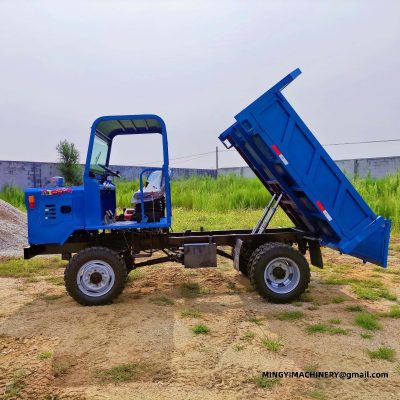
Nothing about the dumper is complicated, but the details are easy to overlook. This page gathers them in one place, from the build and the daily checks through to transport, documents and the support that comes after delivery.
Seasonal work changes the maintenance calendar. Machines that work hard for two months and stand for ten need preparation before storage and a check before returning to work, and both are simpler than the repairs they prevent. Hour planning helps at resale as well. This class of machine with a recorded service history and a sensible hour count is easier to sell than one with the same hours and no records, whatever its condition.
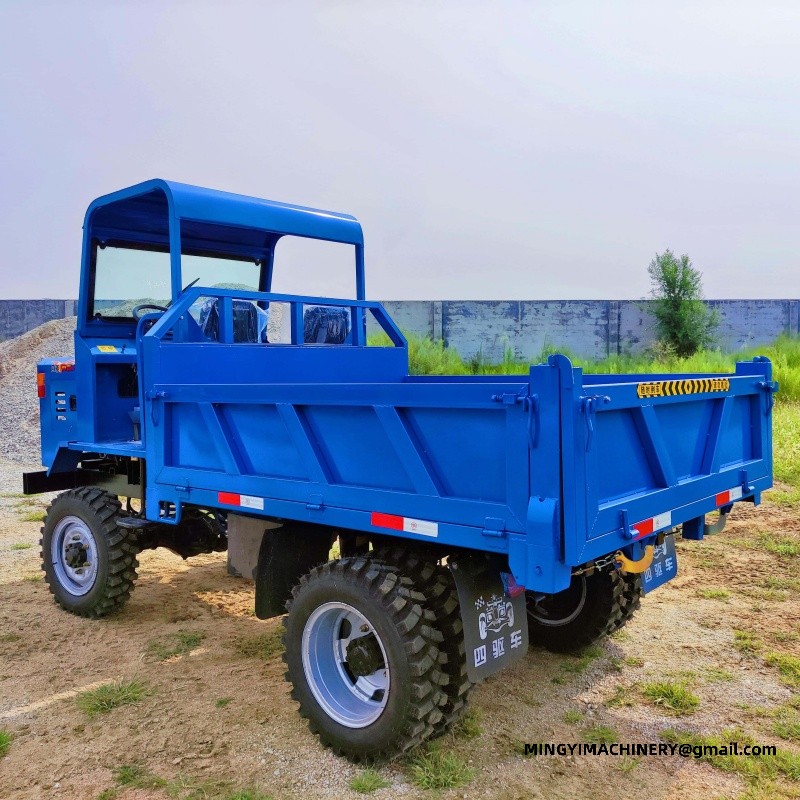
Soft ground punishes the wrong tyre. Mountain pattern tyres on the unit in daily use clear mud that a road pattern would pack with, and the difference is measured in whether the machine finishes the day. Recovering a stuck vehicle takes longer than preventing it. Planning the route, avoiding the worst ground and knowing where the a machine of this size will turn is what keeps a soft-ground job productive.
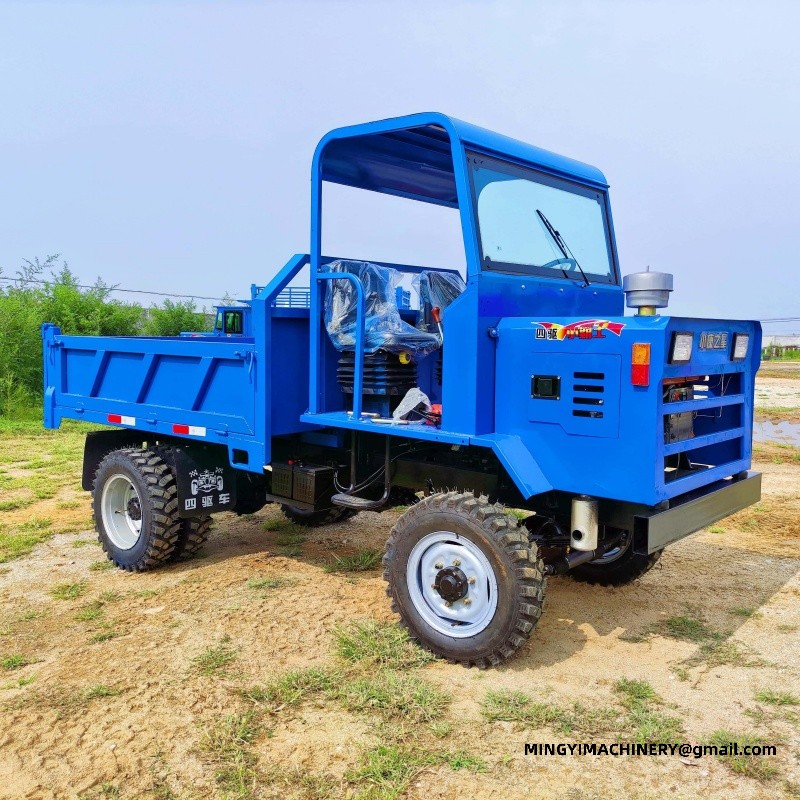
Fuel is usually the largest controllable running demand. Operating style, correct tyre or track condition and a clean air supply all move consumption on the equipment on site by more than most buyers expect. Consumption is best measured over a full week rather than judged per hour. Idle time, repositioning and waiting for other trades are often the largest share of the fuel the machine itself burns on a site. Planning the work to reduce empty movement is free. Fewer repositioning cycles on the model in question means less fuel, less wear on the undercarriage or tyres and more of the shift spent on productive work.
Service intervals exist because wear is predictable. Following the maker schedule on the machine in that duty takes far less time than repairing the damage that follows a missed oil change or a filter left in place past its life. A simple log helps. Recording hours, fuel and any adjustment made to the unit on the job gives the workshop a history, and that history is what turns an intermittent fault into a one-visit repair instead of three.
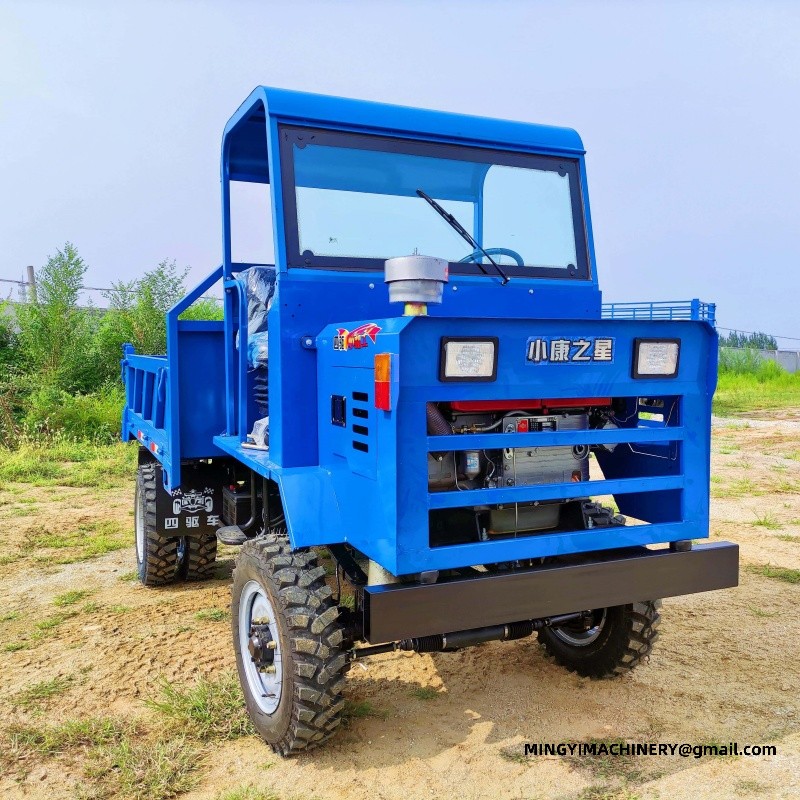
Early faults are usually simple. A machine built for the work that behaves differently in its first few hours is more often mis-set than defective, and a call to the supplier at that point usually resolves it the same day.
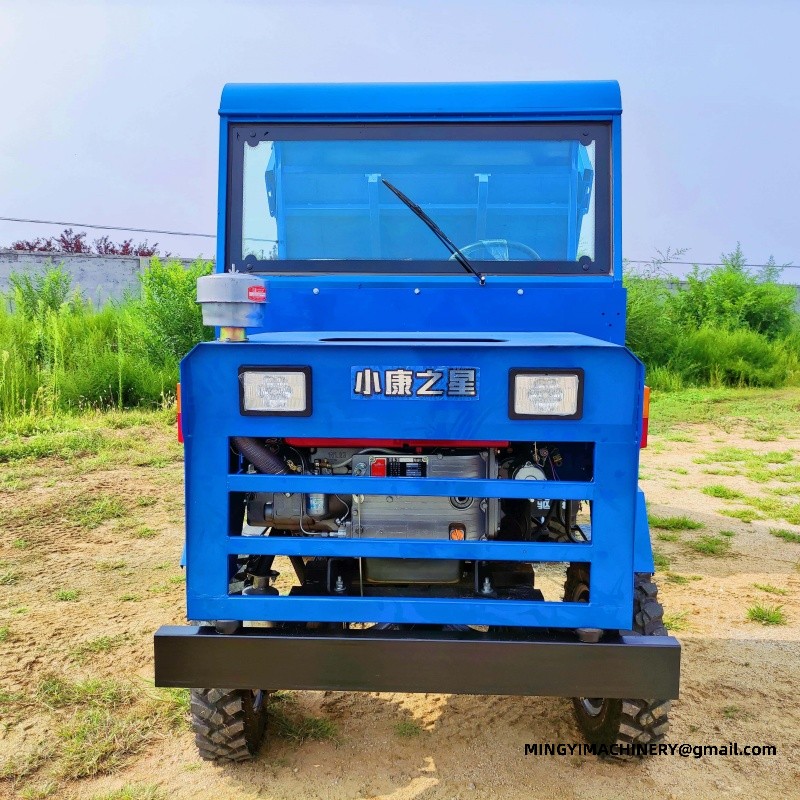
Machine output varies more between operators than between brands. Smooth, planned movements put less load on the structure and use less fuel, and that difference is visible on the hour meter and in the service bills for the equipment in service. Familiarisation should cover the limits as well as the controls. Knowing where the dumper loses stability, how it behaves at full reach, and what the warning lights mean prevents the incidents that are put down to bad luck.
Certain parts are designed to be consumed. Knowing which items on this class of machine are wearing parts, and roughly how long they last in the duty the machine sees, turns replacement into a plan rather than a breakdown. Wear rate follows conditions far more than hours. The unit in daily use working on abrasive ground or in mud will consume undercarriage or tyre life much faster than the same machine on clean ground. Replacing wear items early is usually simpler. Worn components on a machine of this size load the parts they run against, so a worn part left too long often becomes a major repair.
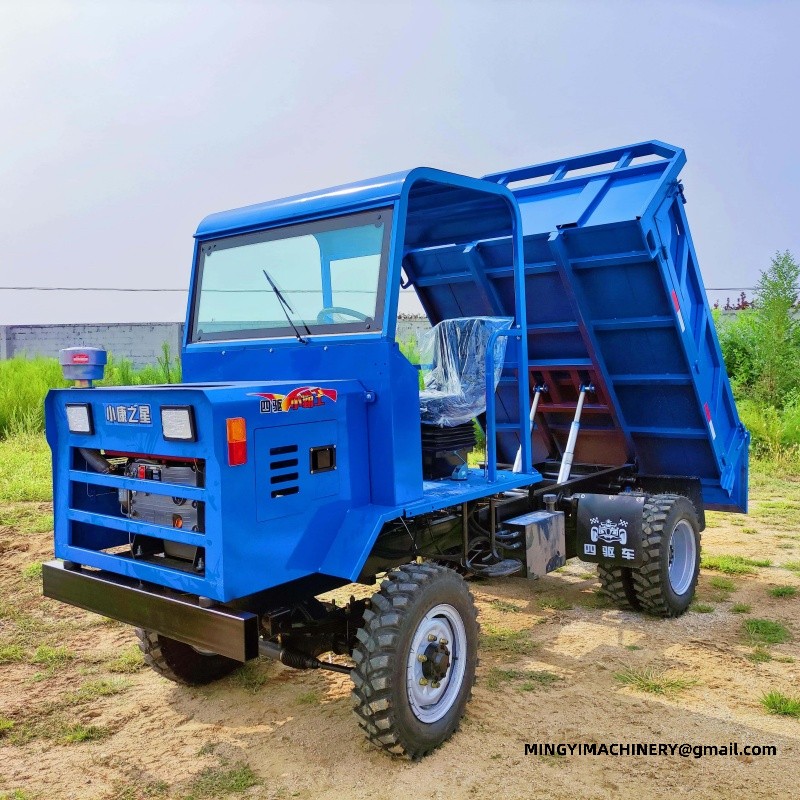
Support after delivery is a parts question. Filters, belts, hoses and the wearing items specific to the equipment on site are what a buyer should plan to hold before the first service interval rather than order after a failure. Parts availability usually decides the engine and the brand. A machine built around components the local network already carries is serviced from stock, which is the difference between a day lost and a week lost. Remote diagnosis shortens most faults. A walk-around on video with the panels open often identifies the cause on the machine itself without waiting for a visit, and avoids shipping a part that turns out not to be needed.
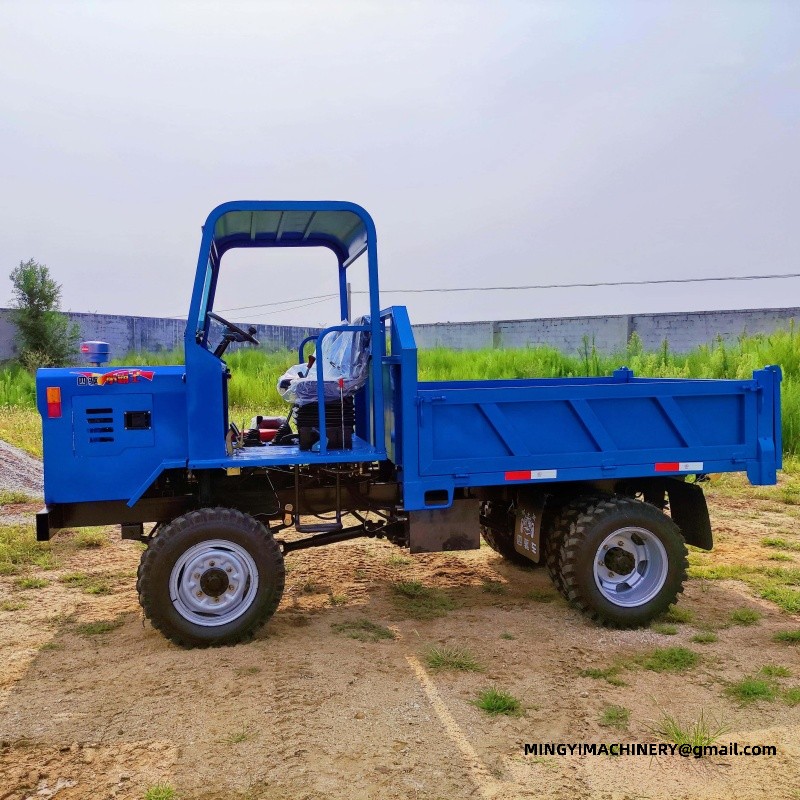
Cold changes how a machine starts and how it warms up. Allowing the machine in that duty to reach operating temperature before loading it, and using the correct grade of oil and fuel for the season, prevents most cold-start problems. Batteries and fluids are the parts that notice the cold first. The unit on the job kept on a maintainer through a freezing spell starts on the first turn, while one left standing is the usual cause of a lost morning. Low temperatures also make materials behave differently. Ground that is frozen hard in the morning can be soft by midday, and planning the sequence around that is easier than fighting it with a machine built for the work.
Haul cycles in a quarry are short and repetitive. The dumper specified for that pattern benefits from a body that dumps cleanly and quickly, because the time saved per cycle is the whole allowance.
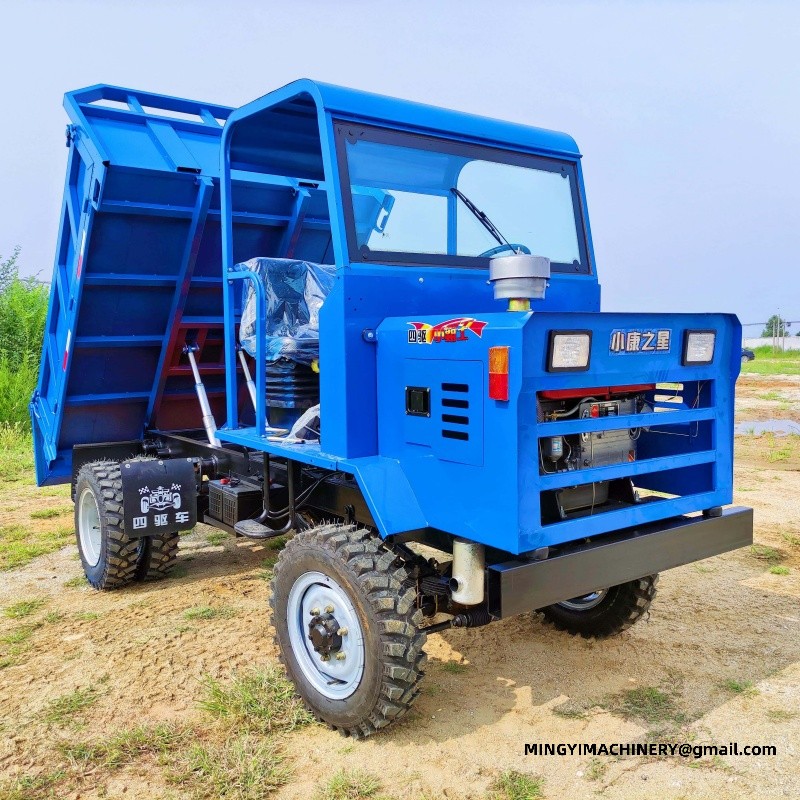
Standing still is hard on machinery. The unit in daily use left for weeks benefits from a clean, dry, covered space, a charged battery and a fuel system prepared for the layoff, and all three effort very little. Before-storage preparation prevents most return-to-work faults. Draining or treating fuel, protecting exposed rods and relieving pressure where the maker specifies it are the items worth an hour when a machine of this size is parked. A periodic start is better than none. Running the equipment on site to operating temperature during a long layoff keeps seals and the charging system in better condition than leaving it untouched until the next job.
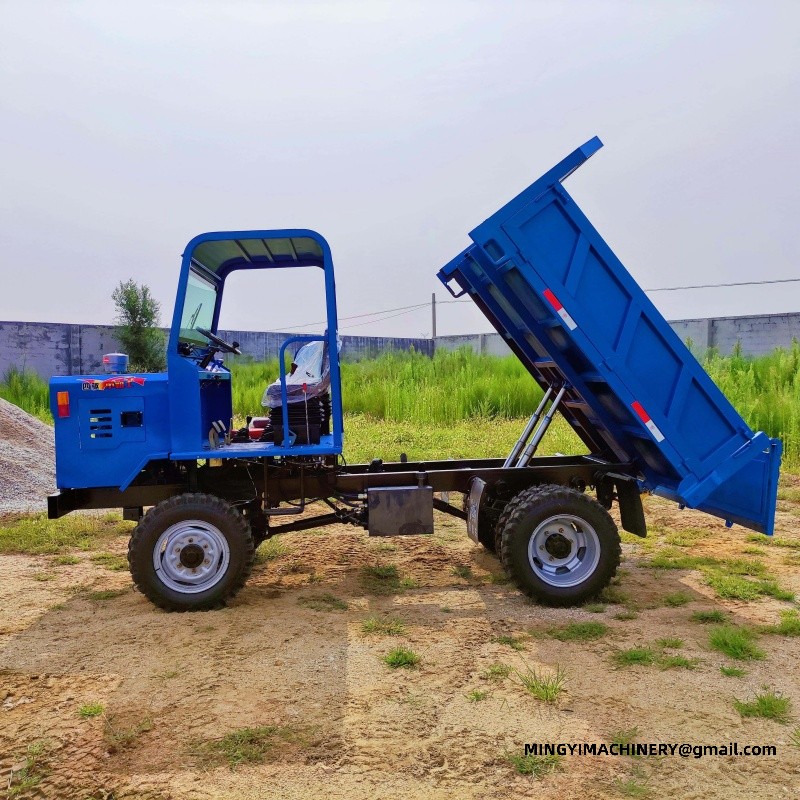
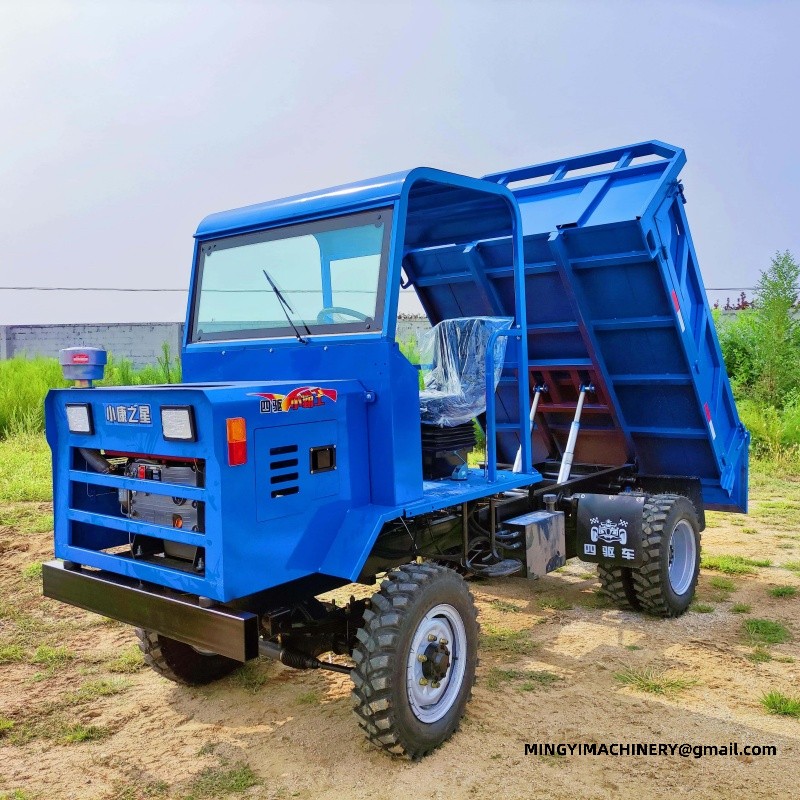
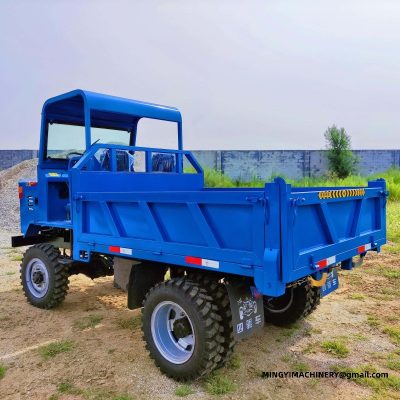
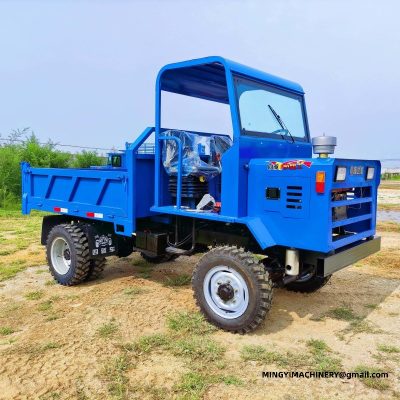
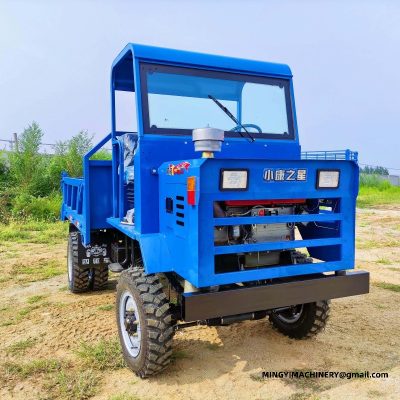
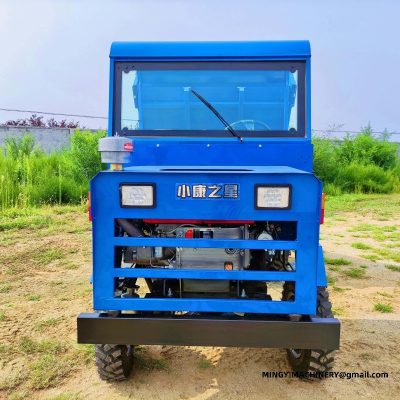
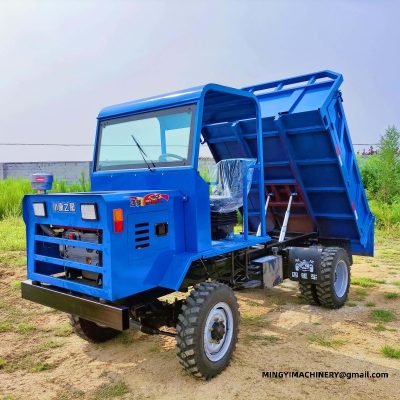
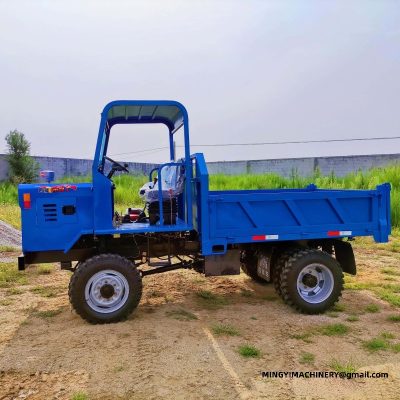
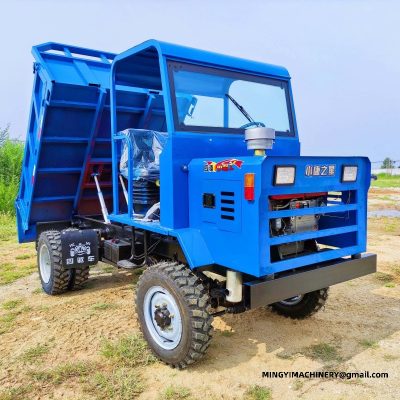
The configurations below are the build sheets most often matched to the model in question. Engine, gearbox, axles, frame and body dimensions are confirmed together, because the body size and the axle rating have to suit the load before the engine rating matters.
| # | 16.Upgraded | 20.Luxury | 7.Upgraded | 9.Standard |
|---|---|---|---|---|
| 1 | Four-cylinder 490 diesel engine | Four-cylinder 4102 turbocharged diesel engine | Single-cylinder diesel engine, 28 hp | Single-cylinder diesel engine, 32 hp |
| 2 | Full-time gearbox with four-wheel drive | Model 140 part-time gearbox with four-wheel drive | Full-time gearbox with four-wheel drive | Full-time gearbox with four-wheel drive |
| 3 | High/low range with crawler gear | High/low range with crawler gear | High/low range with crawler gear | High/low range with crawler gear |
| 4 | Fully enclosed cab | Fully enclosed cab | Front axle clutch | Simple cab |
| 5 | Oil brakes | Six 825R16 steel-belted radial tyres | Fully enclosed cab | Oil brakes |
| 6 | Six 700-16 mountain tyres | Reinforced ISUZU-pattern front axle | Oil brakes | Four 700-16 mountain tyres |
| 7 | Front axle 212 | Reinforced 1080 rear axle | Four 700-16 mountain tyres | Front axle 212 |
| 8 | Rear axle 130 | Air cut-off brakes | Front axle 212 | Rear axle 130 |
| 9 | Reinforced 60 x 140 mm square tube frame | Reinforced 80 x 180 mm square tube frame | Rear axle 130 | Reinforced 60 x 140 mm square tube frame |
| 10 | Rear body 2.2 m long x 1.5 m wide x 0.45 m high | Rear body 3.0 m long x 2.2 m wide x 0.45 m high | Reinforced 60 x 140 mm square tube frame | Rear body 2.2 m long x 1.5 m wide x 0.45 m high |
| 11 | Tailgate with self-dumping function | Tailgate with self-dumping function | Rear body 2.2 m long x 1.5 m wide x 0.45 m high | Tailgate with self-dumping function |
| 12 | Hydraulic power steering | Side-opening rear body tailgate with cab ladder | Tailgate with self-dumping function | Hydraulic power steering |
| 13 | Twin hydraulic rams | Hydraulic power steering | Hydraulic power steering | Twin hydraulic rams |
| 14 | Two-person comfort seat | Twin hydraulic rams | Twin hydraulic rams | Two-person comfort seat |
| 15 | Twin-battery electric start | Two-person comfort seat | Two-person comfort seat | Twin-battery electric start |
| 16 | Round-nose bonnet | Heavy-duty thickened leaf springs | Twin-battery electric start | Square-nose bonnet |
| 17 | — | Twin-battery electric start | Square-nose bonnet | — |
| 18 | — | Square-nose bonnet | — | — |
| 19 | — | Four-cylinder 4105 turbocharged | — | — |
| 20 | — | Four-cylinder 4108 turbocharged | — | — |
| 21 | — | Single-cylinder engine, 25 hp | — | — |
| 22 | — | Single-cylinder engine, 28 hp | — | — |
| 23 | — | Single-cylinder engine, 32 hp | — | — |
| 24 | — | Two-cylinder engine, 38 hp | — | — |
| 25 | — | Four-cylinder 490 engine | — | — |
| 26 | — | Four-cylinder 4102 turbocharged engine | — | — |
Contamination is easier to prevent than to cure. Keeping the filler caps sealed, the funnels clean and the containers closed around the unit on the job is unglamorous work that shows up as reliability later.
Commissioning is where the specification meets the ground. The settings chosen for the equipment in service are confirmed against the actual site, and the working pattern is adjusted before the machine is asked for a full day.
Shared machines need shared habits. Two operators on this class of machine should do the same daily checks in the same order, because the check that one person skips is the check that eventually matters.
Machines rarely fail without warning. A change in sound, a slower function or a new leak on a machine of this size is the machine saying something early, and listening then takes a fraction of the time that waiting does.
The paperwork matters as much as the packing. Serial numbers, dimensions and weights recorded for the machine itself at loading are the same figures the destination needs, and a mismatch here loses more days than the voyage itself.
The record should follow the machine, not the owner. When the machine in that duty changes hands the service history travels with it, and a complete folder is often the difference between a quick sale and a long one.
Winter is hard on rubber and on seals as much as on the engine. Parking a machine built for the work under cover, keeping the tracks or tyres off standing water and checking the hoses for cracking are all part of the season.
Every line above is a build item rather than an optional extra, and the final sheet for the equipment in service is confirmed against the destination, the ground and the load before production.
E-mail:sales@mingycn.com
LINE(ID):mingyicn









