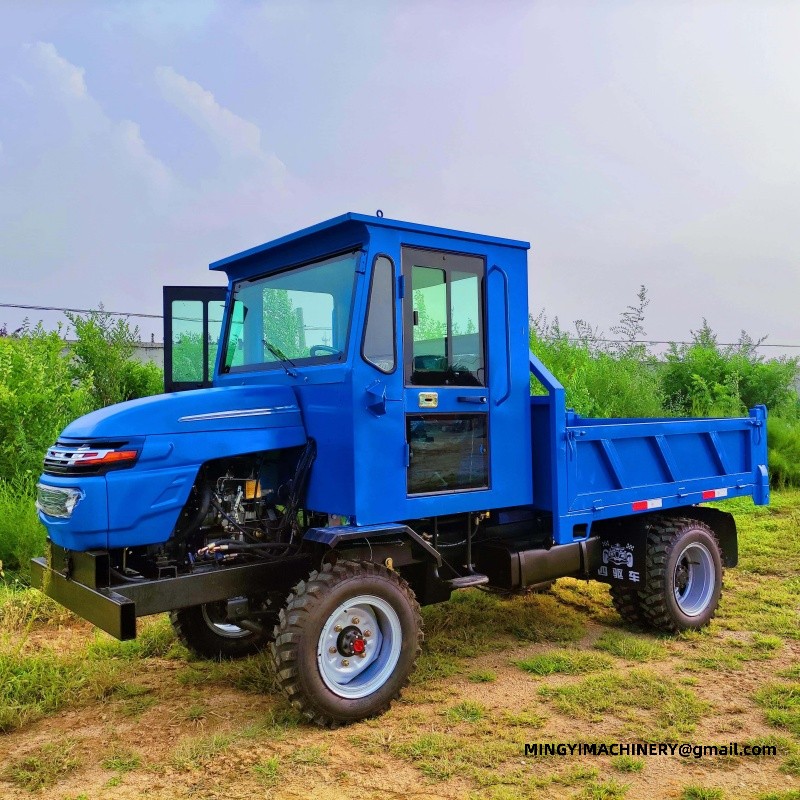
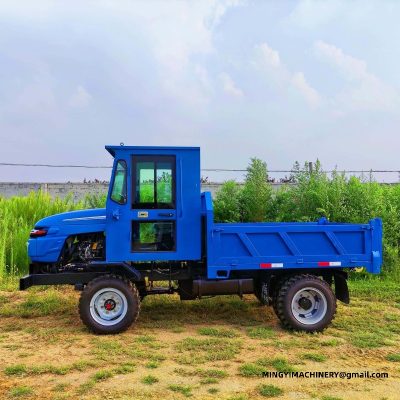
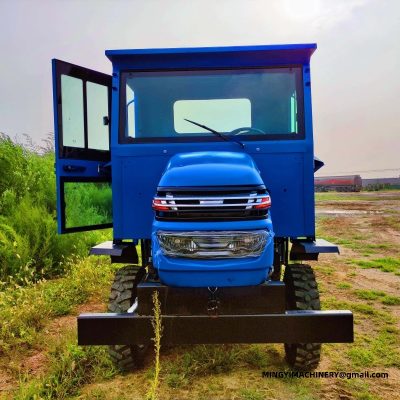
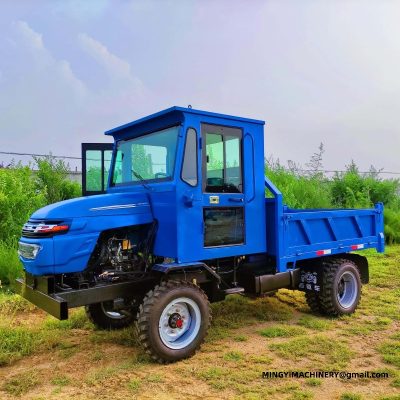
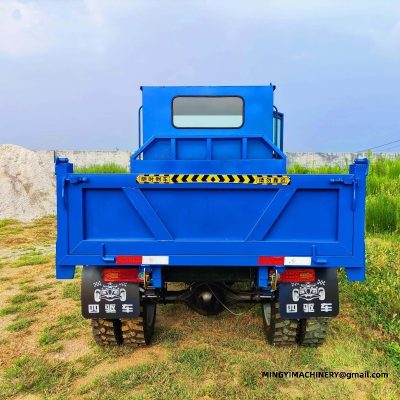
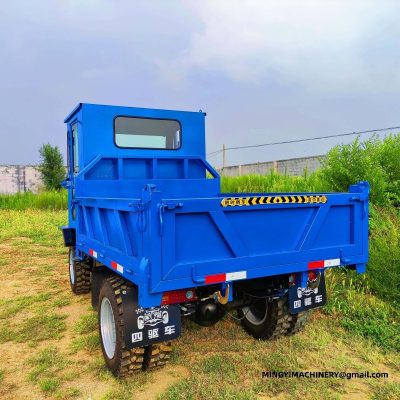
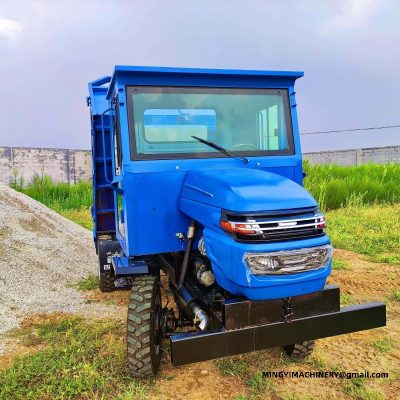
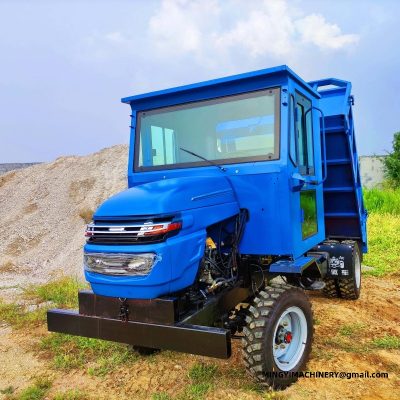
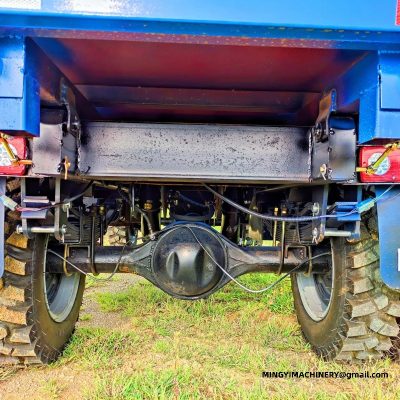
This page covers the dumper for buyers who already know the job and now need the machine. It sets out what the build includes, what can be changed, what the operator should expect in the first weeks and what the service schedule looks like.
Build options are where a standard machine becomes the right machine. Colour, guarding, lighting, seating and hydraulic provisions can usually be set at build time on this class of machine, and are far simpler then than as a retrofit. Fleet buyers often want consistency rather than variety. Specifying the unit in daily use so that several units share controls, filters and service points reduces training time and keeps the parts shelf small.
Ground on farms is often soft and often shared with livestock. A machine of this size working there needs to cross pasture without rutting it badly, and tyre and weight choices follow from that.
Machine productivity depends on what happens around it. Deliveries, other trades and the sequence of work decide how much of the shift the equipment on site spends actually working rather than waiting.
A written duty list is the simplest part of the purchase. It takes an hour to note the material, the distance, the gradient and the hours per week, and it is what turns the machine itself enquiry into a machine that fits.
Slopes and edges deserve a separate check. The model in question that is stable on level ground behaves differently across a gradient, and the safe working angle is a number worth knowing rather than estimating.
Support after delivery is a parts question. Filters, belts, hoses and the wearing items specific to the machine in that duty are what a buyer should plan to hold before the first service interval rather than order after a failure. Remote diagnosis shortens most faults. A walk-around on video with the panels open often identifies the cause on the unit on the job without waiting for a visit, and avoids shipping a part that turns out not to be needed.
Dust control work is repetitive and time-critical. A machine built for the work with the right tank and spray arrangement covers more ground per shift, which is usually the point of the exercise.
Payload is limited by the axles and the frame before it is limited by the body volume. Specifying the equipment in service against the material density gives a realistic figure, because a body that looks half full can already be at its limit with rock. Loading method affects the machine as much as the load does. Material dropped from height into the dumper shocks the frame and the body floor, while material placed evenly spreads the load and extends body life. The honest payload figure comes from the duty. This class of machine working a smooth haul road carries differently from one crossing ruts and gradients, and the conservative number is the one that keeps the machine working.
Carrying concrete changes the duty entirely. A machine of this size with a mixer drum is working against the clock, and the specification follows the delivery distance and the site access rather than the load alone.
Container loading is a planning exercise. Confirming how the machine itself is packed and how many units fit a container is what turns a per-unit freight estimate into a delivered figure the buyer can actually plan against. Documentation should be agreed at order stage. The commercial invoice, packing list and any certificate required at destination are part of shipping the model in question, and missing papers delay clearance longer than the voyage takes.
A periodic start is better than none. Running the unit on the job to operating temperature during a long layoff keeps seals and the charging system in better condition than leaving it untouched until the next job.
Gradient is where a haul vehicle earns its keep. The equipment in service with a crawler gear and a low range climbs loaded where a road vehicle would need a second attempt, and that difference decides whether a track is usable at all.
Duty cycle is the honest measure of a machine. This class of machine working a few hours a week has different needs from one working two shifts, and the cooling, filtration and service intervals should follow the hours rather than the calendar. Hour planning helps at resale as well. The unit in daily use with a recorded service history and a sensible hour count is easier to sell than one with the same hours and no records, whatever its condition.
Timber work changes what the vehicle carries. The equipment on site fitted with a log grab loads and unloads without a second machine, which is usually the reason a forestry contractor specifies one over a conventional truck. Access tracks in forestry are narrow, soft and often steep. The machine itself chosen for that work is chosen for the track, and the body, cab and tyre specification follow from the route rather than from the load alone. Protection matters in timber work. Guarding, lighting and a cab that keeps branches out are the items that keep the model in question working through a season rather than being repaired through it.
Size matters underground. Overall height and width decide whether the unit on the job can work in a tunnel at all, and those dimensions are the first thing to confirm rather than the last. Haul cycles in a quarry are short and repetitive. A machine built for the work specified for that pattern benefits from a body that dumps cleanly and quickly, because the time saved per cycle is the whole allowance.
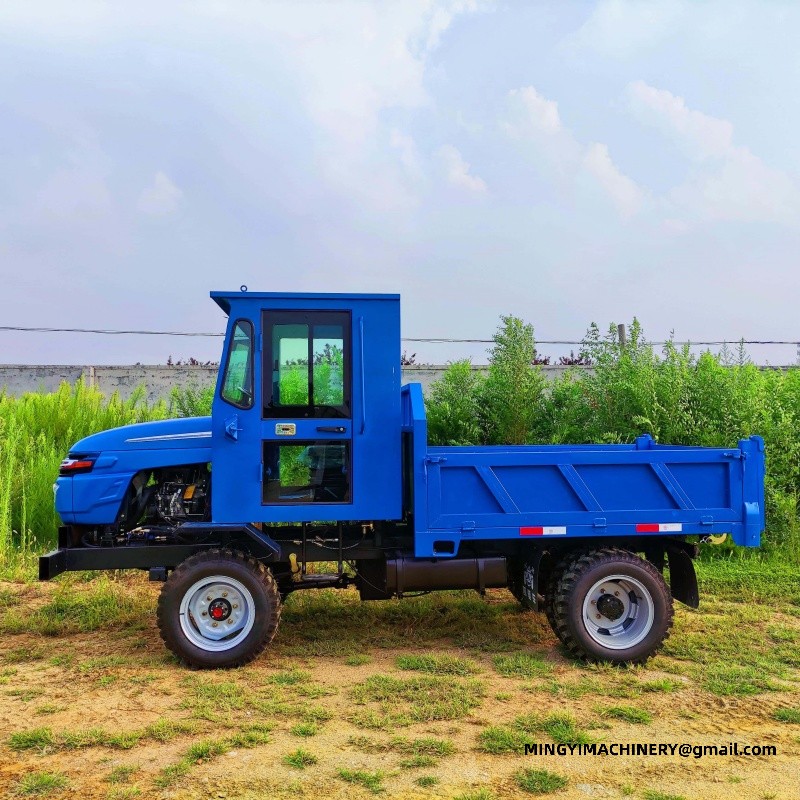
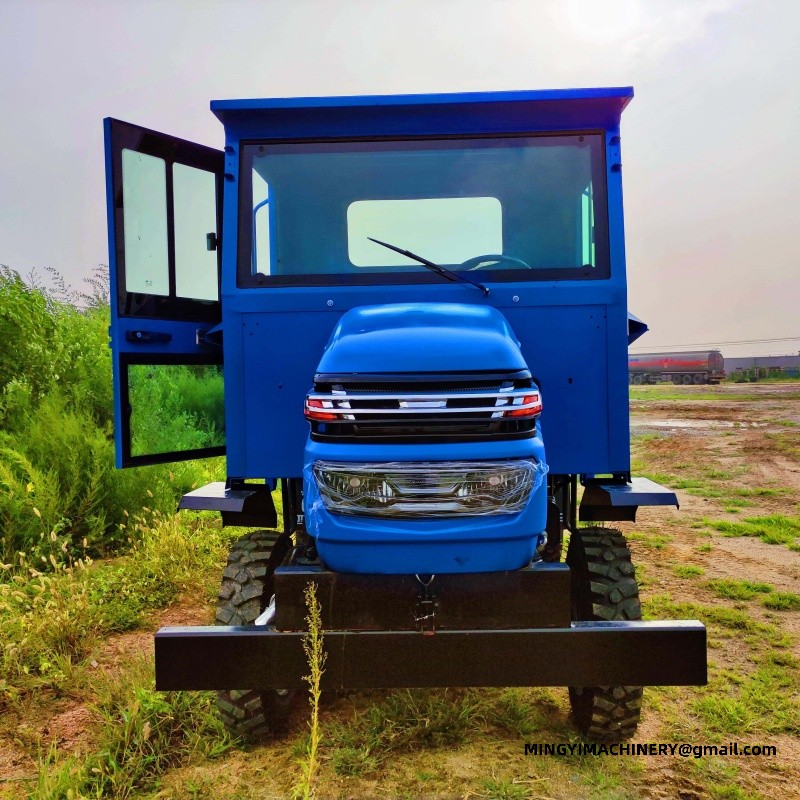
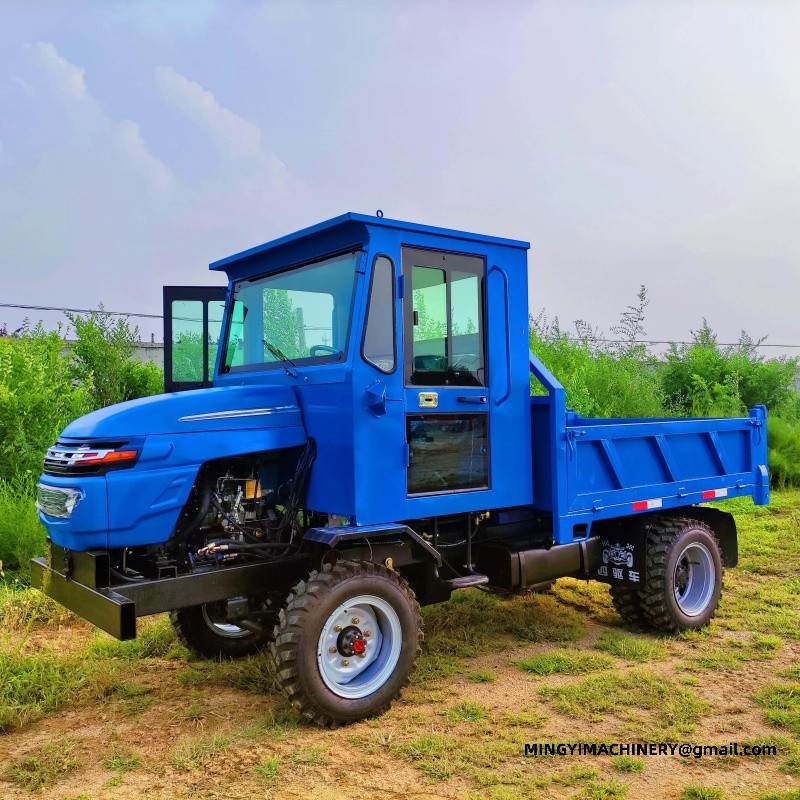
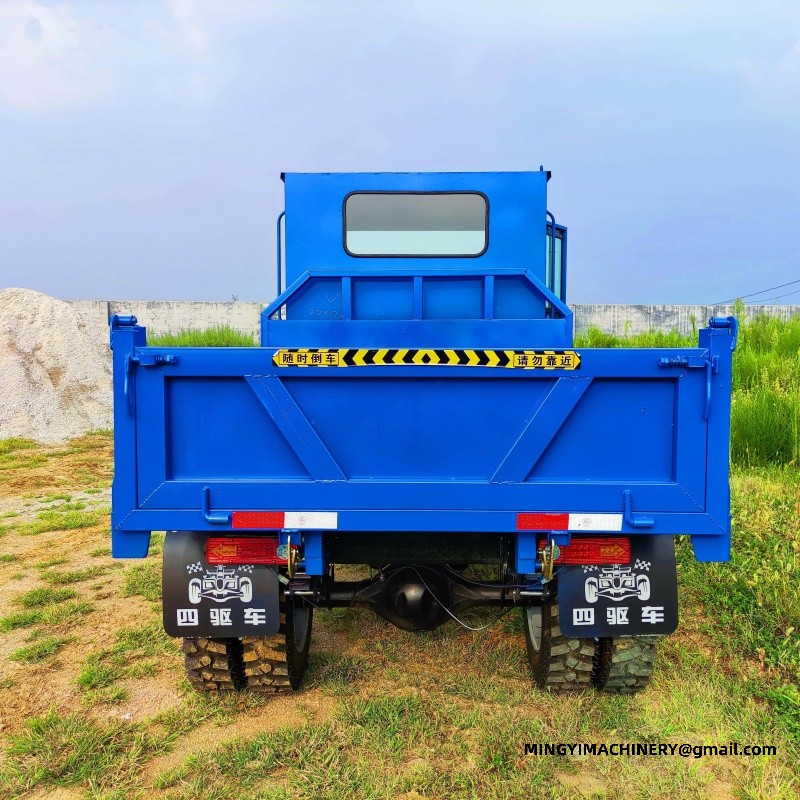
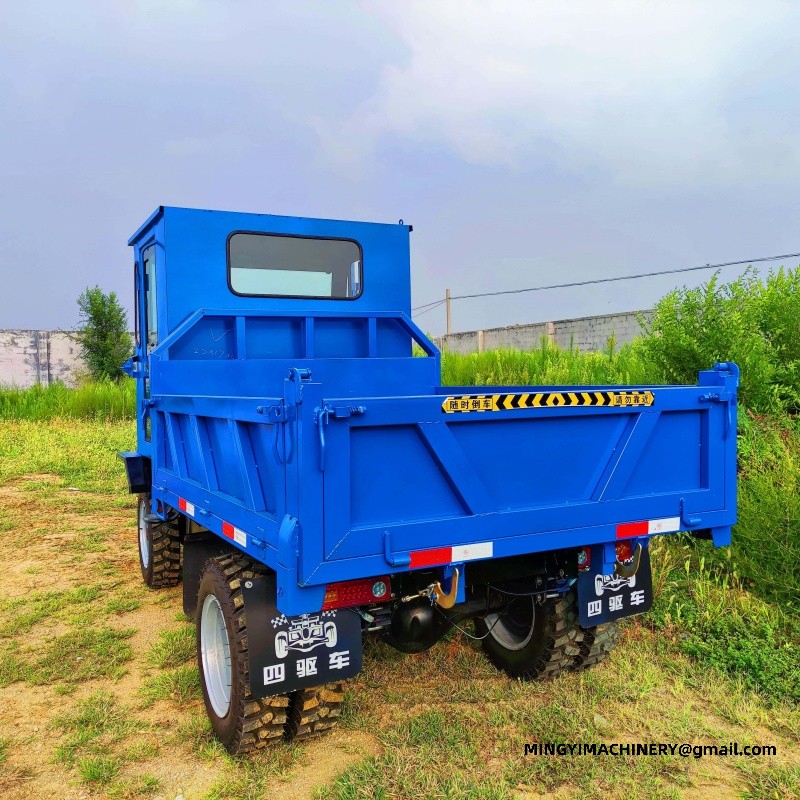
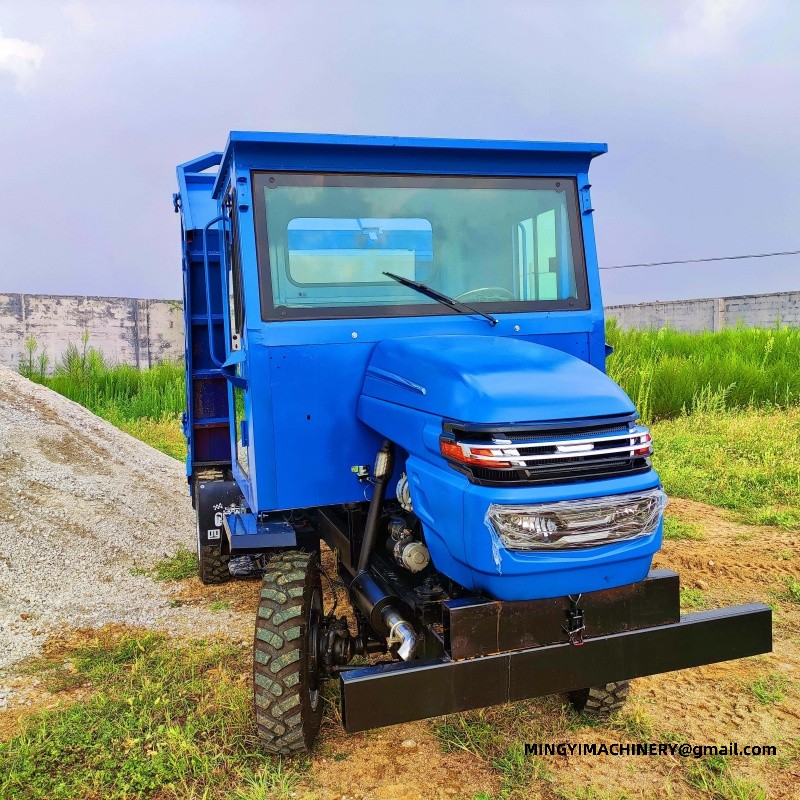
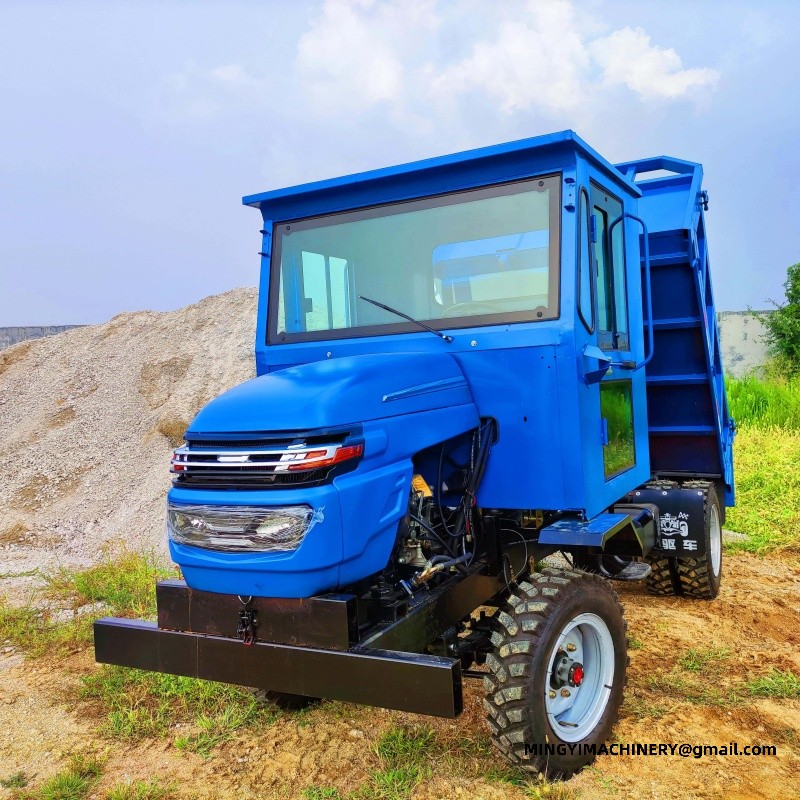
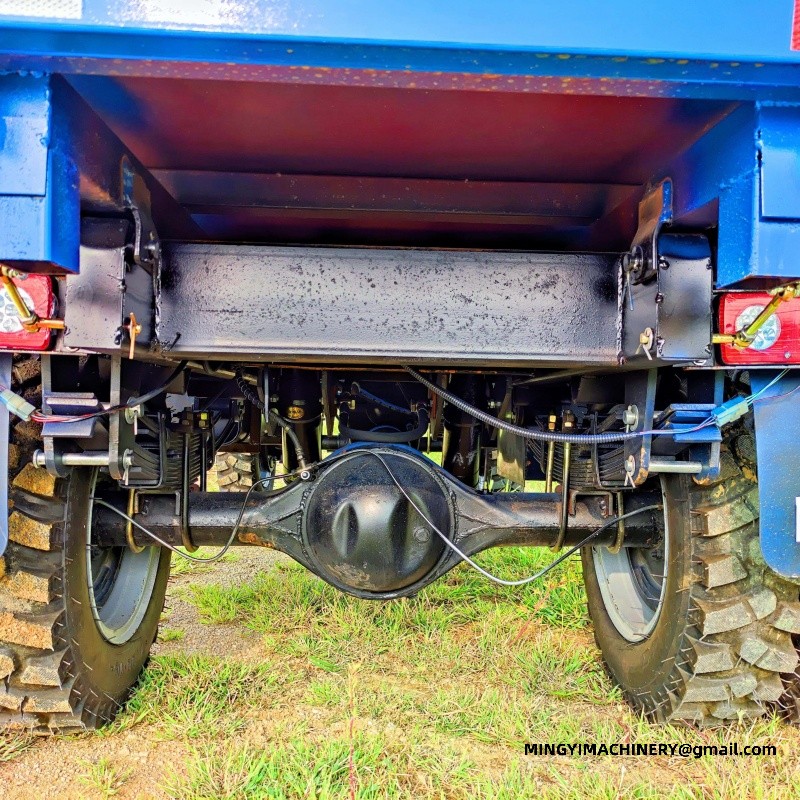
The configurations below are the build sheets most often matched to the dumper. Engine, gearbox, axles, frame and body dimensions are confirmed together, because the body size and the axle rating have to suit the load before the engine rating matters.
| # | 12.Standard | 15.Standard | 16.Upgraded | 9.Standard |
|---|---|---|---|---|
| 1 | Two-cylinder diesel engine, 38 hp | Four-cylinder 490 diesel engine | Four-cylinder 490 diesel engine | Single-cylinder diesel engine, 32 hp |
| 2 | Full-time gearbox with four-wheel drive | Full-time gearbox with four-wheel drive | Full-time gearbox with four-wheel drive | Full-time gearbox with four-wheel drive |
| 3 | High/low range with crawler gear | High/low range with crawler gear | High/low range with crawler gear | High/low range with crawler gear |
| 4 | Simple cab | Simple cab | Fully enclosed cab | Simple cab |
| 5 | Oil brakes | Oil brakes | Oil brakes | Oil brakes |
| 6 | Four 700-16 mountain tyres | Four 700-16 mountain tyres | Six 700-16 mountain tyres | Four 700-16 mountain tyres |
| 7 | Front axle 212 | Front axle 212 | Front axle 212 | Front axle 212 |
| 8 | Rear axle 130 | Rear axle 130 | Rear axle 130 | Rear axle 130 |
| 9 | Reinforced 60 x 140 mm square tube frame | Reinforced 60 x 140 mm square tube frame | Reinforced 60 x 140 mm square tube frame | Reinforced 60 x 140 mm square tube frame |
| 10 | Rear body 2.2 m long x 1.5 m wide x 0.45 m high | Rear body 2.2 m long x 1.5 m wide x 0.45 m high | Rear body 2.2 m long x 1.5 m wide x 0.45 m high | Rear body 2.2 m long x 1.5 m wide x 0.45 m high |
| 11 | Tailgate with self-dumping function | Tailgate with self-dumping function | Tailgate with self-dumping function | Tailgate with self-dumping function |
| 12 | Hydraulic power steering | Hydraulic power steering | Hydraulic power steering | Hydraulic power steering |
| 13 | Twin hydraulic rams | Twin hydraulic rams | Twin hydraulic rams | Twin hydraulic rams |
| 14 | Two-person comfort seat | Two-person comfort seat | Two-person comfort seat | Two-person comfort seat |
| 15 | Twin-battery electric start | Twin-battery electric start | Twin-battery electric start | Twin-battery electric start |
| 16 | Round-nose bonnet | Round-nose bonnet | Round-nose bonnet | Square-nose bonnet |
Temperature and pressure are the two things worth watching. The unit in daily use that runs hotter than it used to, or whose pressure has drifted, is reporting a problem that is still simple to fix.
How a machine travels decides how it starts on arrival. Securing the equipment on site against movement, protecting the exposed cylinders and keeping the battery and fluids in the right state for the voyage all belong to the packing list.
Different operators suit different work. The person who is quickest with the model in question on open ground is not always the one who is safest in a confined space, and having both available is a genuine advantage.
The first hour on site should be slow. Before the unit on the job is put to work the fluid levels are rechecked after transport, the fasteners are gone over and the machine is run light so that anything loosened in transit shows up early.
Downtime is simplest when it is planned. Booking the service for the equipment in service in the quiet part of the season takes nothing from the schedule, while the same work in the busy weeks gives up a day of output every time.
Retrofitting is limited by the base machine. Before anything is added to this class of machine the hydraulic flow, the mounting interface and the stability allowance have to be checked, because those limits are what decide what is sensible.
A good handover covers the awkward cases, not just the easy ones. Starting a machine of this size on a slope, turning in a confined space and recovering from soft ground are the situations an operator should meet first with someone beside them.
Every line above is a build item rather than an optional extra, and the final sheet for the equipment on site is confirmed against the destination, the ground and the load before production.
E-mail:sales@mingycn.com
LINE(ID):mingyicn









