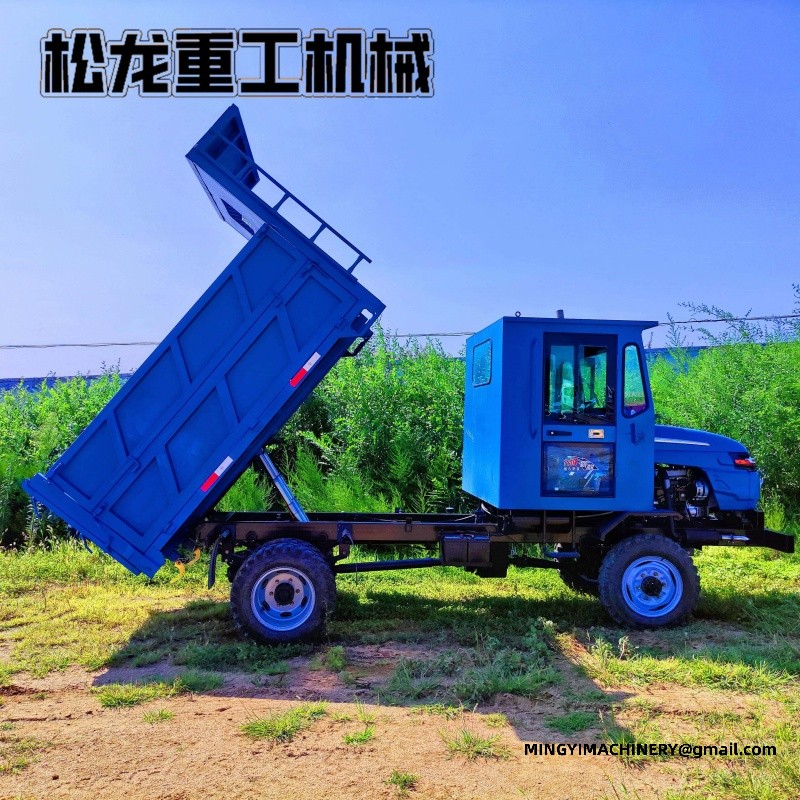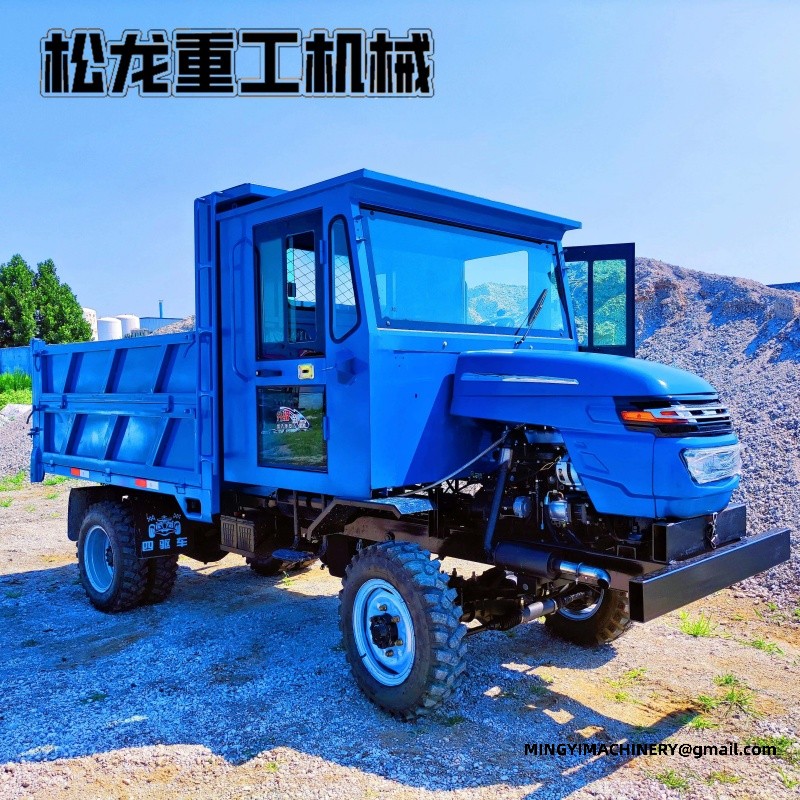
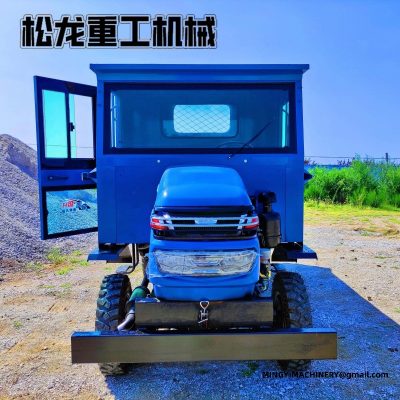
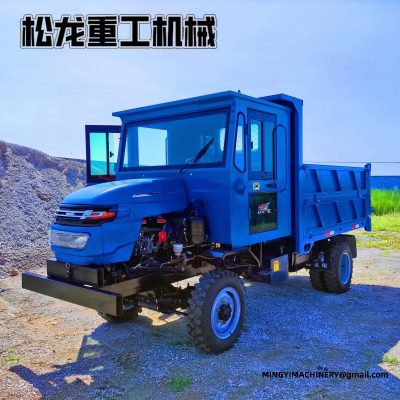
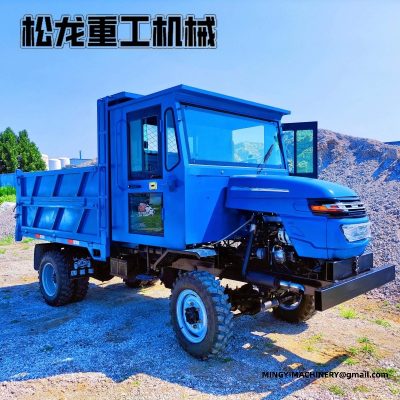
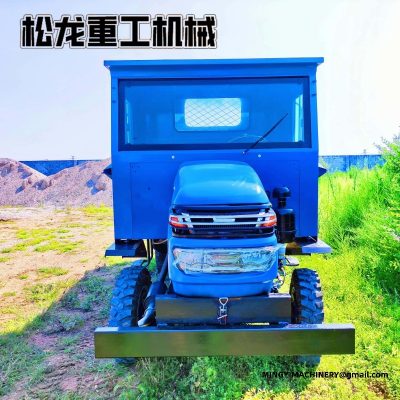
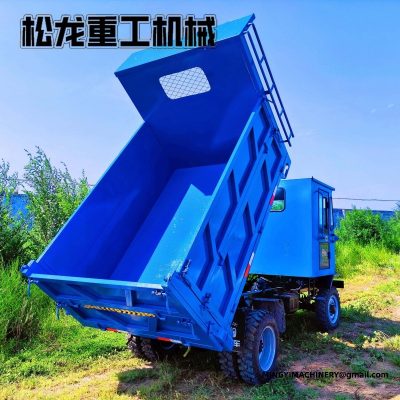
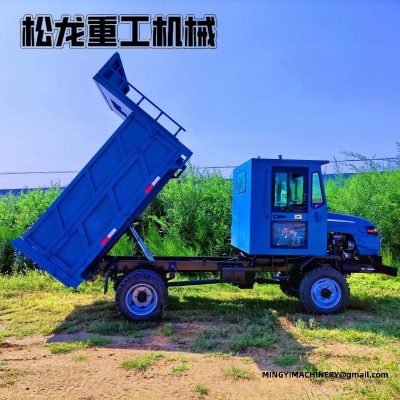
The value of a four-wheel-drive tipper lies first in its chassis, and only second in the body that sits on it. The frame, the axles, the gearbox and the engine are the reusable part, and the self-dumping body is the first of several duties that platform can take. Buy it as a complete tipper and it does the tipping job from day one; understand the chassis underneath and the machine becomes a platform that can be re-tasked as the work changes. This page works through the four configurations on the sheet and the choices that make the platform itself the asset.
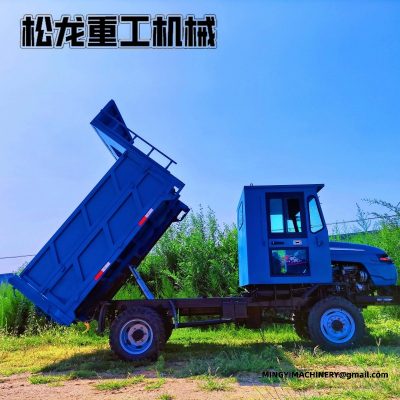
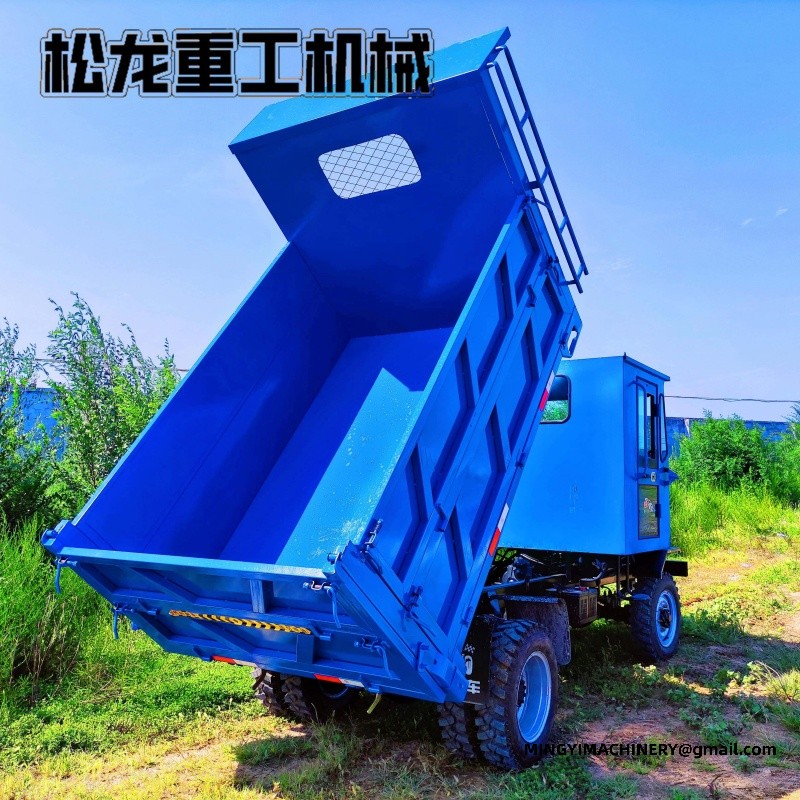
The four builds here all carry a self-dumping tipper body, and that body is where the platform proves itself. It takes spoil, fill, manure or any bulk material that has to be collected, moved a short way and left in a controlled place. The body tips on twin hydraulic rams and discharges through a tailgate, so a load can be placed rather than simply dumped. The point of the page is that the same frame and driveline underneath could equally be ordered for another duty later, because the chassis is the investment and the body is the first attachment to it.
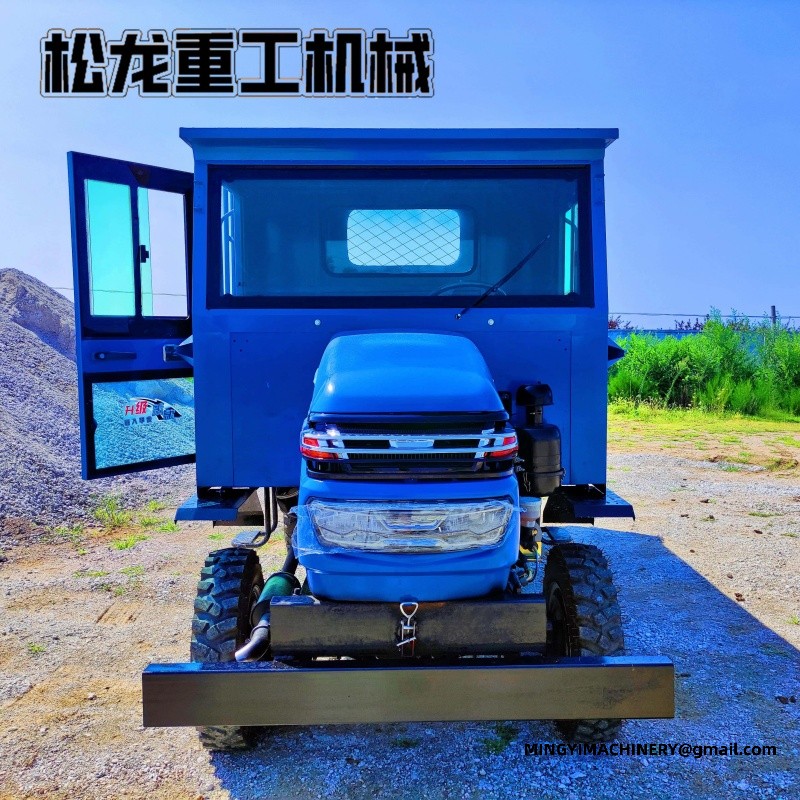
Everything on the platform hangs off the driveline, so it is worth understanding before any other choice. The four builds run two kinds of gearbox: a part-time selectable 2WD/4WD box on the 32 hp luxury build, a Model 140 part-time four-wheel-drive box on the 4102 turbocharged build, and a full-time four-wheel-drive box on the two standard builds. All four carry high and low range with a crawler gear. That spread means the same basic platform can be had set up for a firm haul road or for ground that needs both ends pulling all day.
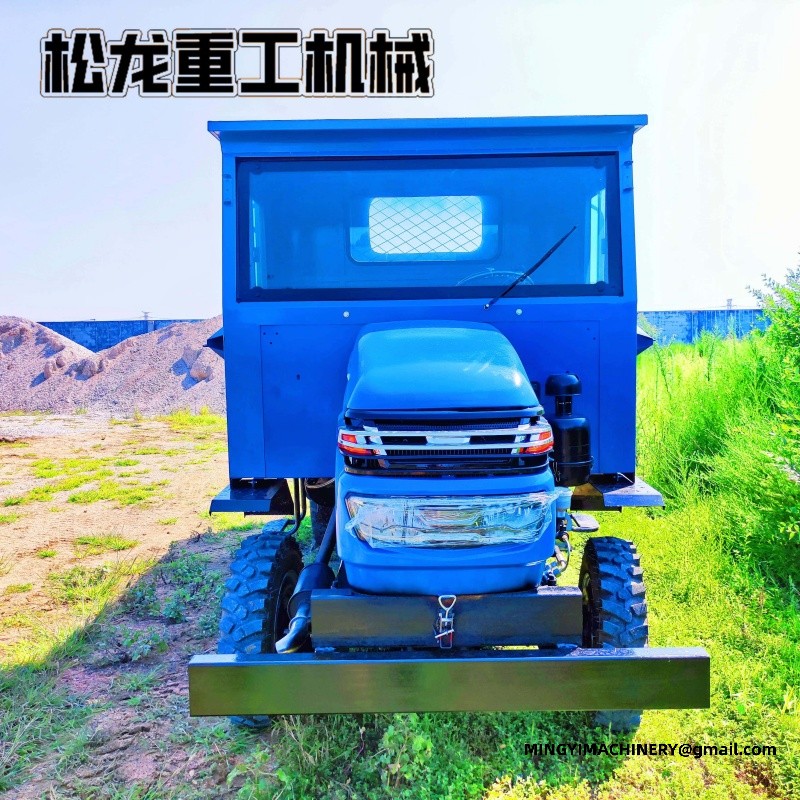
Engine choice runs from a single-cylinder 28 hp unit and a 32 hp unit through to the four-cylinder 4102 turbocharged, and the decision is about the load and the ground rather than the machine's dignity. The two single-cylinder builds suit short runs, firm ground and a 2.2 m body, while the 4102 turbocharged build moves a wider 2.2 m body on the reinforced 80 x 180 mm frame and copes with a real gradient. A buyer should size the engine for the heaviest week the platform will see, because an engine bought for the easy days is the first thing to be found wanting.
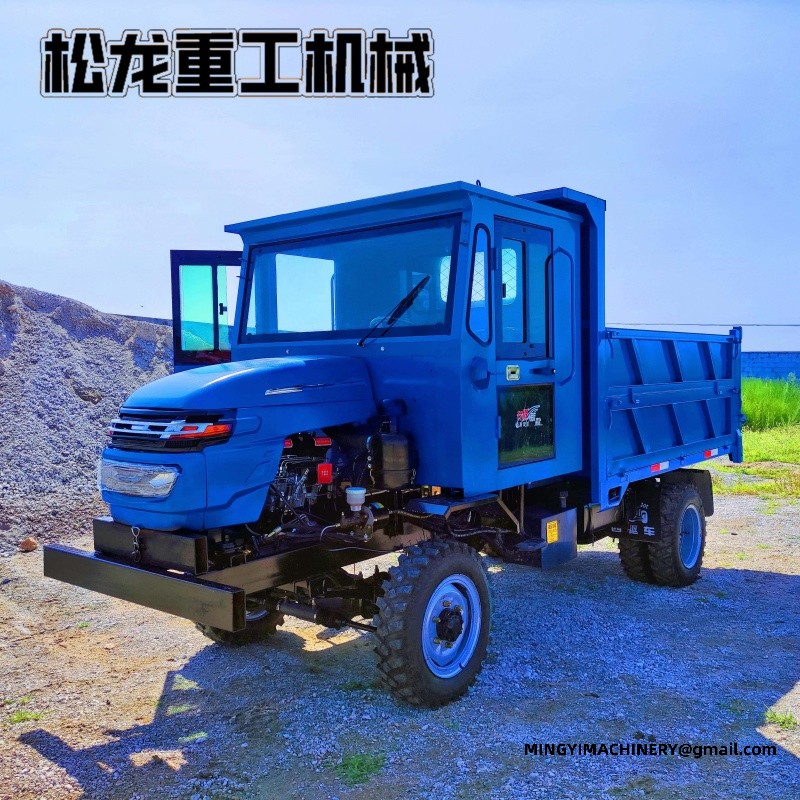
The drive arrangement is the one choice that changes how the machine is used every single day. Full-time four-wheel drive keeps both ends pulling without any input from the driver, which suits a platform that works on soft, loose or uneven ground all day. The part-time selectable box on the 32 hp luxury build and the Model 140 on the 4102 build let the front be dropped on a firm road and engaged again for the work area. A platform that crosses both surfaces in one run should be specified for the harder of the two, because traction that is missing is noticed before traction that is spare.
The frame and axles are the part of the platform that nothing else can be substituted for later. The lighter builds sit on the reinforced 60 x 140 mm square tube frame with a Model 212 front axle and a Model 130 rear, while the 4102 build uses the reinforced 80 x 180 mm frame with a reinforced ISUZU-pattern front axle and a reinforced 1061 rear. That heavier pairing is what lets a wide 2.2 m body work hard without the frame flexing under it. A buyer who expects the platform to be re-tasked later should buy the heavier chassis now, because it is far easier than retrofitting one.
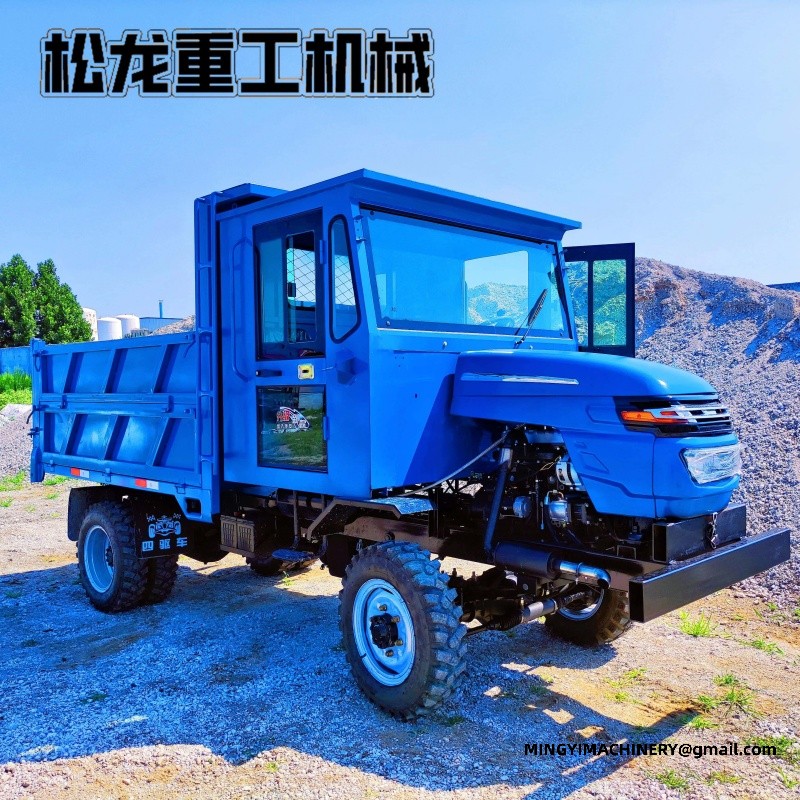
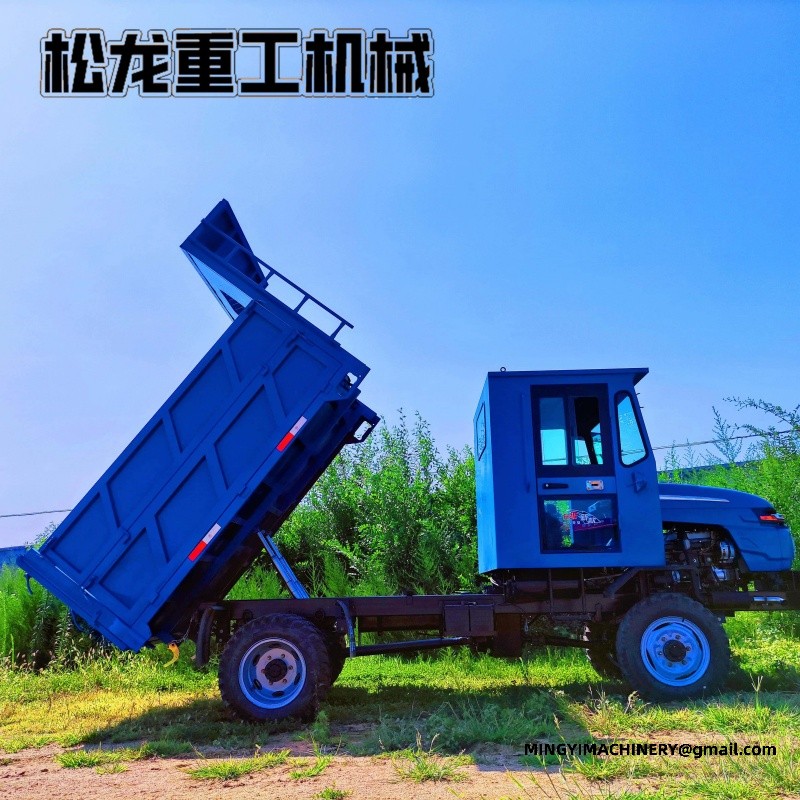
The body fitted here is a self-dumping tipper of 0.45 m depth, at 2.2 m long by 1.5 m wide on the three lighter builds and 2.2 m by 2.1 m on the 4102 build. That depth keeps the centre of gravity low, which matters on a platform that works across slopes. The body tips on twin hydraulic rams, and the discharge is controlled through the tailgate so a load can be laid in a line or into a trench rather than dropped in one place. It is the standard first body for the platform, and it is the one the machine is specified and inspected with.
Tyre choice is decided by the surface the platform works on most of the time. The two standard builds run four 700-16 mountain tyres, a narrow, mud-clearing pattern that finds the firm ground under a wet surface. The 32 hp luxury build and the 4102 build carry six 700-16 mountain tyres, which spread the load over more ground and suit a platform that runs loaded all day. There is no radial on this sheet, which tells its own story: this is a machine for loose and soft going, not for covering distance on a graded road.
Braking follows the load and the slope. The two standard builds and the 4102 build stop on oil brakes, adequate for their 2.2 m bodies on gentle ground. The 32 hp luxury build uses air cut-off brakes, the arrangement to have when a full body has to be held on a downhill run or brought to a stand in a gateway. A platform that is going to work downhill with a full body should say so at the enquiry stage, because it is the one fact that reliably moves the build from the oil-braked column to the air-braked one.
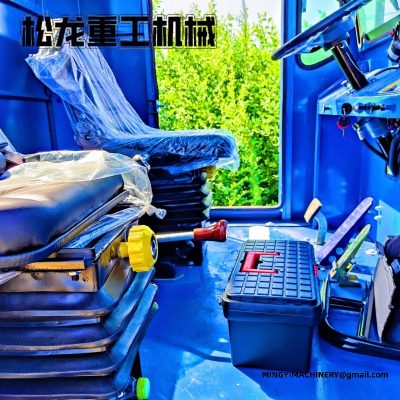
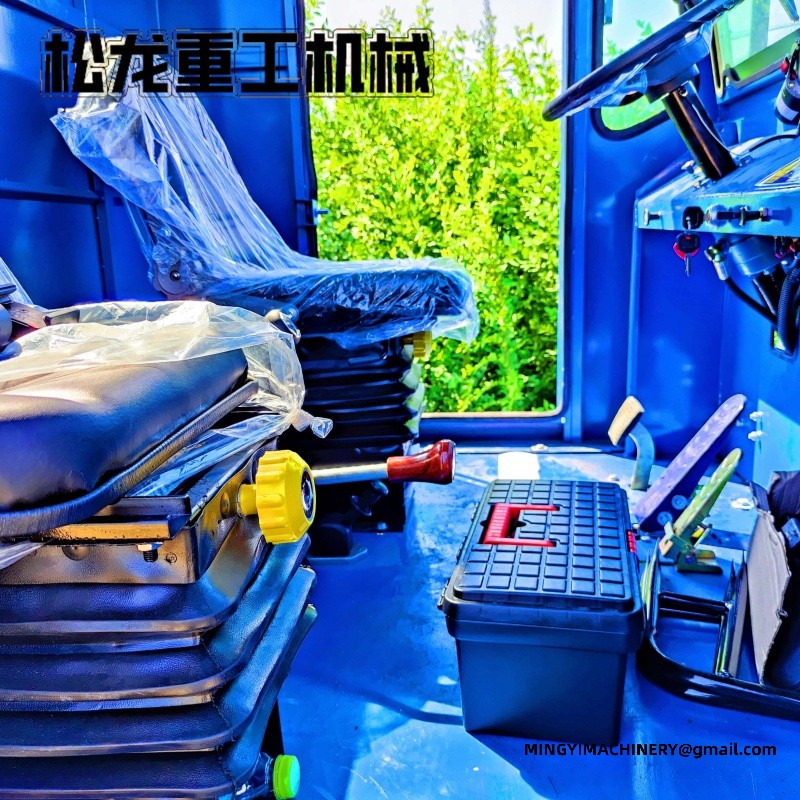
The cab is the operator's position, and on this sheet it runs from a simple cab on the three standard builds to an enclosed cab on the 32 hp luxury build. A simple cab keeps the platform light and straightforward where the climate is mild and the shifts are short, while the enclosed cab keeps dust and weather off a driver who sits in the machine all day. Both sit over the same two-person comfort seat, so the cab is about shelter rather than posture. A buyer should choose the cab for the weather the platform will actually work in, not for the way it looks.
Every build tips through a tailgate with a self-dumping function, and the 32 hp luxury build adds a side-opening rear body tailgate. The self-dumping function starts the load leaving before the body reaches full height, so a wet or sticky load does not have to be rocked out. The side-opening tailgate lets the driver place material along an edge or into a narrow run rather than always in a heap. For a platform that is going to be re-tasked later, that side discharge is worth specifying now, because it is the tailgate arrangement most other body duties also want.
The body is lifted by twin hydraulic rams, and on a working platform they are doing more than lifting a neat heap. A load of spoil or fill never sits level by the time the body is raised, so the two rams are spreading an uneven mass instead of twisting the body through a single point. That is what keeps the hinges straight and the body square after a season of hard use. The hydraulic power steering fitted throughout, and the heavy-duty leaf springs on the 32 hp luxury build, are part of the same idea: the platform should take the load without the frame taking the punishment.
The way a loaded platform rides over rough ground decides how long the frame and the body stay straight, and on this sheet the ride is carried on leaf springs. The 32 hp luxury build runs heavy-duty leaf springs, and the rest of the range standard leaf springs, which are what absorb the blows of a rough track before they reach the frame rails and the ram mounts. A platform that works over broken ground every day puts a real load into its springs, and the heavier spring set is worth taking where the going is rough rather than where it is smooth.
The parts that wear on a tipper platform are known, and the time to order them is with the machine. Body and ram mounting bushes, hydraulic hoses, brake linings, filters and a spare tyre are the list, and a buyer should learn which of them the local dealer keeps. Clean hydraulic oil and a greasing of the ram mounts and the tailgate hinges on schedule keep the tipping circuit working for years, and a small weep found early is a hose rather than a platform standing idle. The twin-battery electric start is there to make sure the machine starts first time, every time.
The right way to order this platform is to describe the work it will do, not to ask for a figure. Say what will be carried, how heavy it is, what the ground is like in the worst month, and whether the chassis is likely to be re-tasked later. From those facts the frame, the axles, the engine and the gearbox fall out almost by themselves, and the body and tailgate are settled in the same conversation. A Mingyi chassis is built to that description, and the buyer who sends it gets a platform that fits the job now and leaves room for the next one.
| # | 11.Luxury | 18.Standard | 6.Standard | 9.Standard |
|---|---|---|---|---|
| 1 | Single-cylinder diesel engine, 32 hp | Four-cylinder 4102 turbocharged diesel engine | Single-cylinder diesel engine, 28 hp | Single-cylinder diesel engine, 32 hp |
| 2 | Part-time gearbox, selectable 2WD/4WD | Model 140 part-time gearbox with four-wheel drive | Full-time gearbox with four-wheel drive | Full-time gearbox with four-wheel drive |
| 3 | High/low range with crawler gear | High/low range with crawler gear | High/low range with crawler gear | High/low range with crawler gear |
| 4 | Enclosed cab | Simple cab | Simple cab | Simple cab |
| 5 | Six 700-16 mountain tyres | Oil brakes | Oil brakes | Oil brakes |
| 6 | Model 212 front axle | Six 700-16 mountain tyres | Four 700-16 mountain tyres | Four 700-16 mountain tyres |
| 7 | Model 130 rear axle | Reinforced ISUZU-pattern front axle | Front axle 212 | Front axle 212 |
| 8 | Air cut-off brakes | Reinforced 1061 rear axle | Rear axle 130 | Rear axle 130 |
| 9 | Reinforced 60 x 140 mm square tube frame | Reinforced 80 x 180 mm square tube frame | Reinforced 60 x 140 mm square tube frame | Reinforced 60 x 140 mm square tube frame |
| 10 | Rear body 2.2 m long x 1.5 m wide x 0.45 m high | Rear body 2.2 m long x 2.1 m wide x 0.45 m high | Rear body 2.2 m long x 1.5 m wide x 0.45 m high | Rear body 2.2 m long x 1.5 m wide x 0.45 m high |
| 11 | Tailgate with self-dumping function | Tailgate with self-dumping function | Tailgate with self-dumping function | Tailgate with self-dumping function |
| 12 | Side-opening rear body tailgate | Hydraulic power steering | Hydraulic power steering | Hydraulic power steering |
| 13 | Hydraulic power steering | Twin hydraulic rams | Twin hydraulic rams | Twin hydraulic rams |
| 14 | Twin hydraulic rams | Two-person comfort seat | Two-person comfort seat | Two-person comfort seat |
| 15 | Two-person comfort seat | Twin-battery electric start | Twin-battery electric start | Twin-battery electric start |
| 16 | Heavy-duty leaf springs | Square-nose bonnet | Square-nose bonnet | Square-nose bonnet |
| 17 | Twin-battery electric start | — | — | — |
| 18 | Square-nose bonnet | — | — | — |
For a specification discussion or a build sheet for this 4WD self-dumping platform, contact mingyimachinery@gmail.com or reach us on LINE (ID: mingyicn).