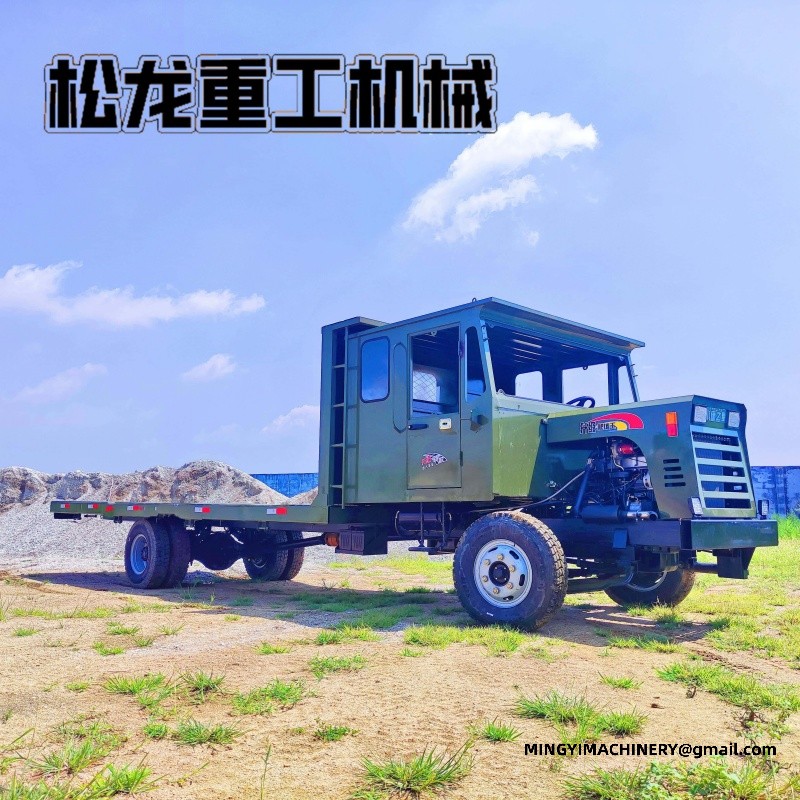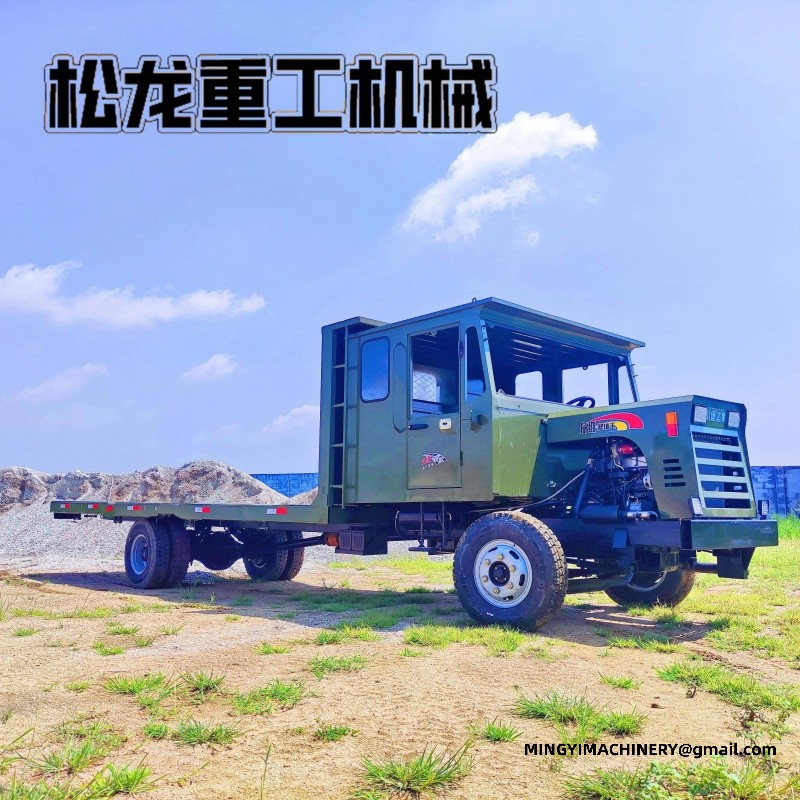
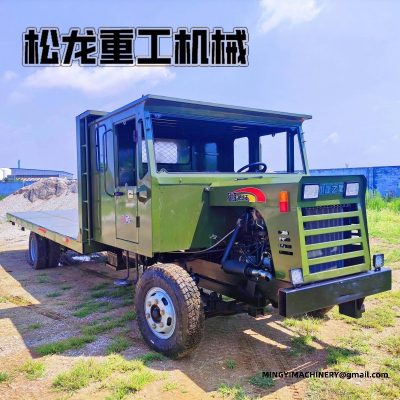
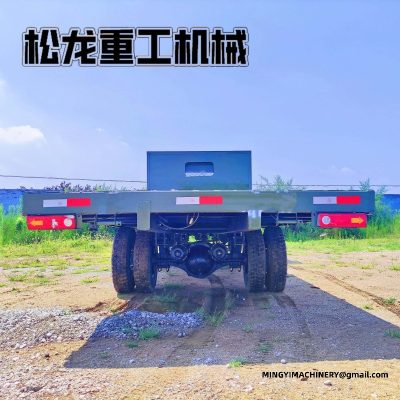
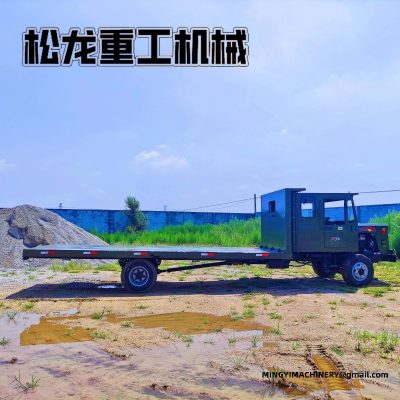
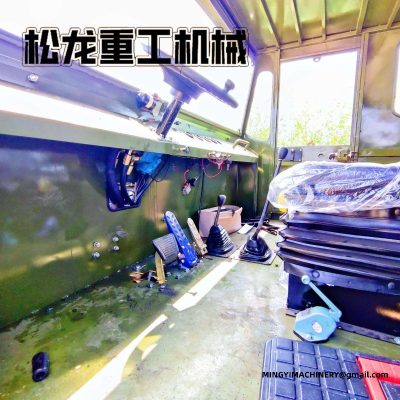
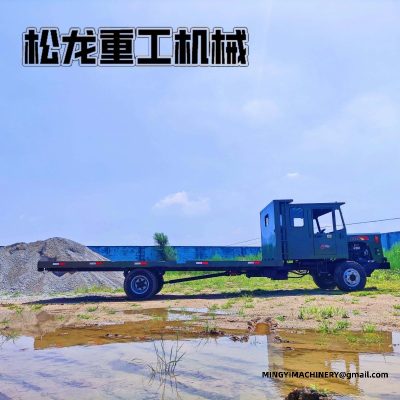
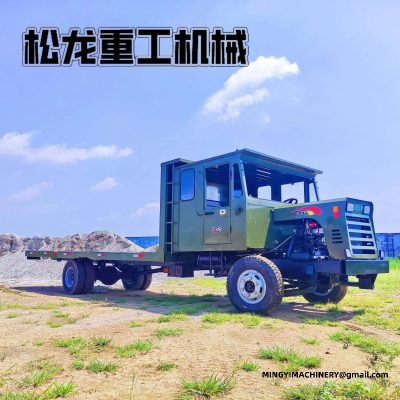
A farm dumper is bought for weight, not for distance. The runs are short, the loads are dense and the ground is often soft, and a machine that is fast on a haul road is usually the wrong answer to all three. What matters instead is that the body holds a real load of soil, manure or grain, that the tyres carry it without sinking, and that the whole machine will do it again tomorrow and the day after. This page works through the four configurations on the farm dumper sheet and the choices that keep one of them moving all year.
The three loads a farm dumper carries behave nothing like each other. Soil is heavy and shifts as it travels, manure is wet and settles into a solid mass that needs the body to tip steep, and grain flows and spreads until the body is full corner to corner. A machine that tips well for one of them does not automatically tip well for the other two, which is why the tailgate, the ram pair and the body shape deserve as much attention as the engine. Say in the enquiry which of the three the machine will mostly carry, and the recommendation changes accordingly.
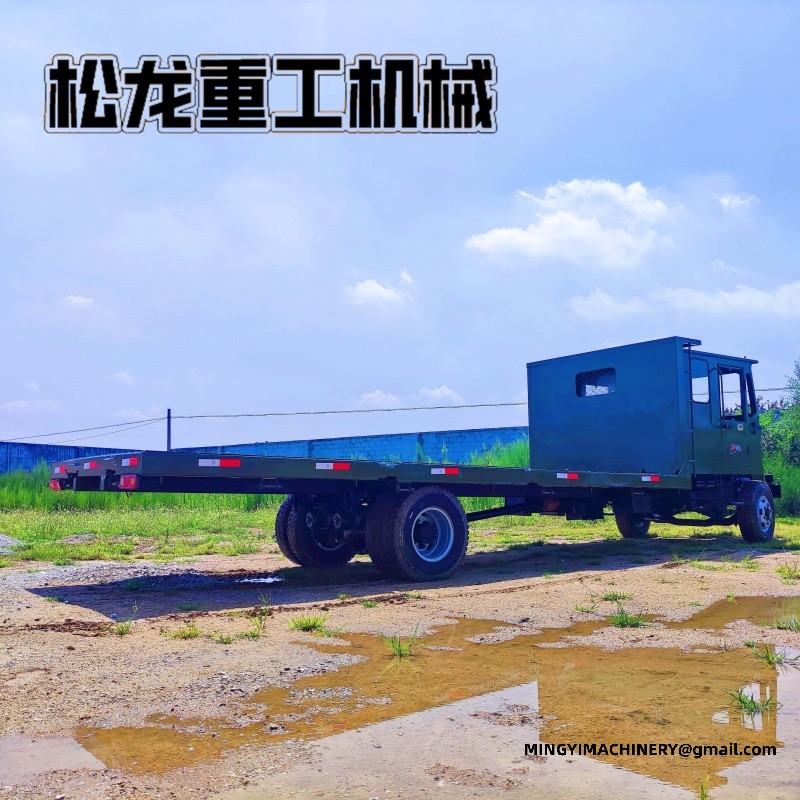
The reason a four-wheel-drive dumper suits farm hauling is that its virtue is grip at walking pace rather than speed on a road. A heavy load of muck out of a yard in the wet needs both ends pulling and a low crawler gear, not horsepower that arrives in a rush. All four configurations carry high and low range with a crawler gear, so the machine can inch through a gateway with a full body and still move at a working speed on the track between fields. That is the whole job, and everything else on the sheet exists to support it.
Engine choice on this sheet runs from a single-cylinder 25 hp unit to a four-cylinder 4105 turbocharged engine, and the decision is really about how full and how far. A single-cylinder 25 hp or 28 hp machine carries a 2.2 m body well on short, soft runs, while the 4105 turbocharged build moves a 3.0 m body over longer ground and up real grades without the engine labouring. A buyer whose busiest week is harvest should size the engine for that week, not for the quiet months, because a dumper that struggles in harvest loses the whole season.
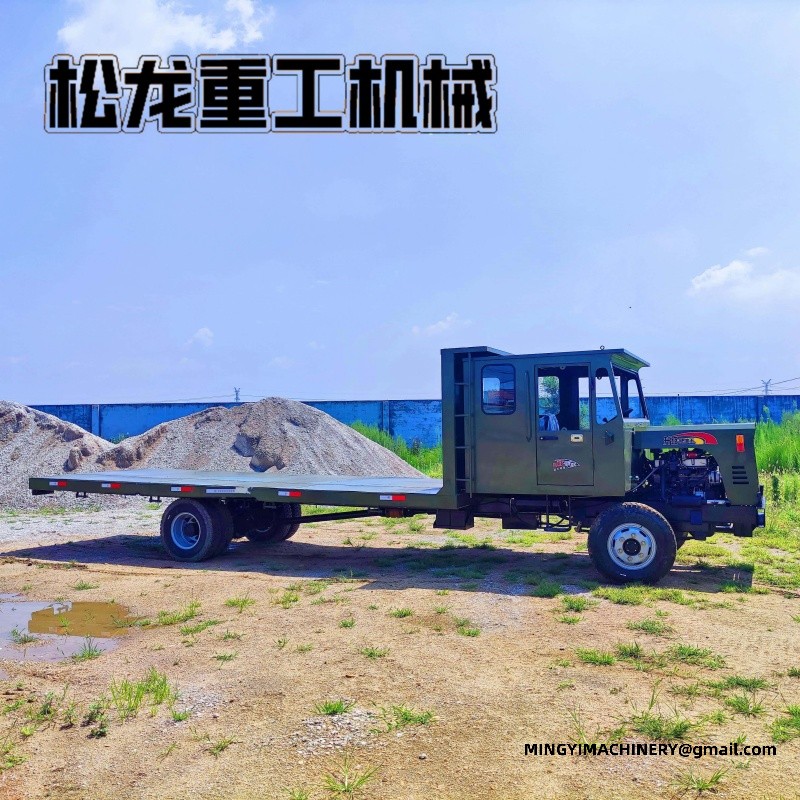
How the drive is engaged splits the four builds into two camps. The full-time four-wheel-drive machines keep both ends pulling all day, which is the arrangement for a yard or a field that never dries out and where asking the driver to decide is just another thing to get wrong. The 4105 build uses the Model 140 part-time gearbox with four-wheel drive and the 25 hp luxury build a part-time box, so the front can be dropped on a firm track and engaged again for the field. On a farm that crosses both surfaces in a single run, the selectable box earns its keep.
Body size has to follow the density of what is carried, not the other way round. A 2.2 m long by 1.5 m wide body, fitted to the three lighter builds, is the right vessel for wet manure and heavy spoil, where a larger body would simply overload the frame. The 3.0 m by 2.2 m body on the 4105 build suits grain and lighter fill, where volume rather than weight is the limit. The 0.45 m depth is common to both, keeping the centre of gravity low and the machine settled on ground that is rarely level, which is a real consideration on a farm slope.
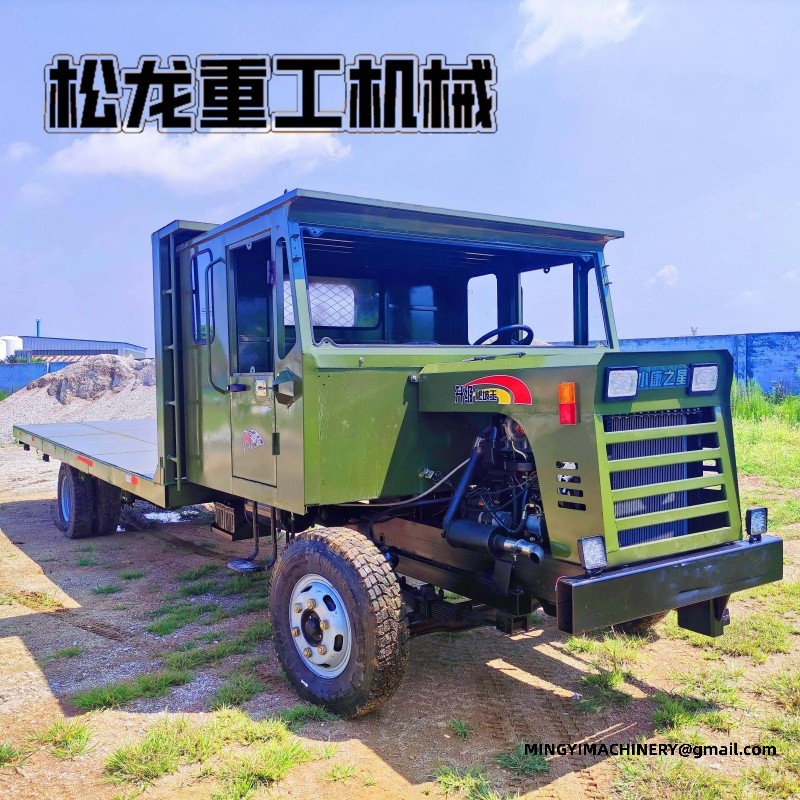
Tyres on a farm dumper are the difference between working and being pulled out. The four 700-16 mountain tyres on the lighter builds and the six 700-16 on the luxury build use a pattern that clears mud and finds the firm ground beneath it, which is what a wet yard needs. The six 825R16 steel-belted radial tyres on the 4105 build spread the weight of a loaded 3.0 m body over a wider footprint, so a field is cut up less and the machine stays on top of the surface instead of working through it. The ground in its worst month decides between the two.
Braking follows the load, and a farm dumper spends its life starting and stopping with a full body. The two full-time single-cylinder builds stop on oil brakes, adequate for a 2.2 m body on gentle ground. The 25 hp luxury build and the 4105 build use air cut-off brakes, the arrangement to have when a full body has to be held on a slope or brought to a stand in a gateway with the front wheels on a rut. Any buyer whose run ends downhill should say so, because it is the fact that moves a machine from the oil-braked column to the air-braked one.
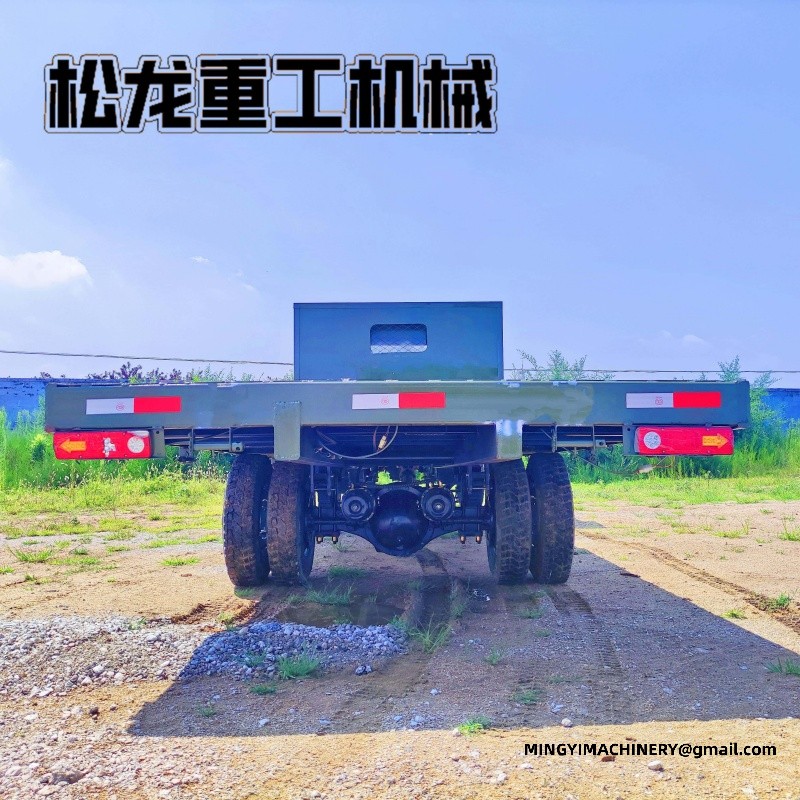
The frame and axle are where a heavy farm machine shows its age first. The lighter builds sit on the reinforced 60 x 140 mm square tube frame with a 212 front axle and a 130 rear, while the 4105 build runs the reinforced 80 x 180 mm frame with a reinforced ISUZU-pattern front axle and a reinforced 1080 rear axle with an air cut-off brake. Repeated cycles of a full body over rough ground flex a frame, and a frame that flexes passes the movement into the hinges and the ram mounts. The heavier build exists for the farm that hauls full and hauls often.
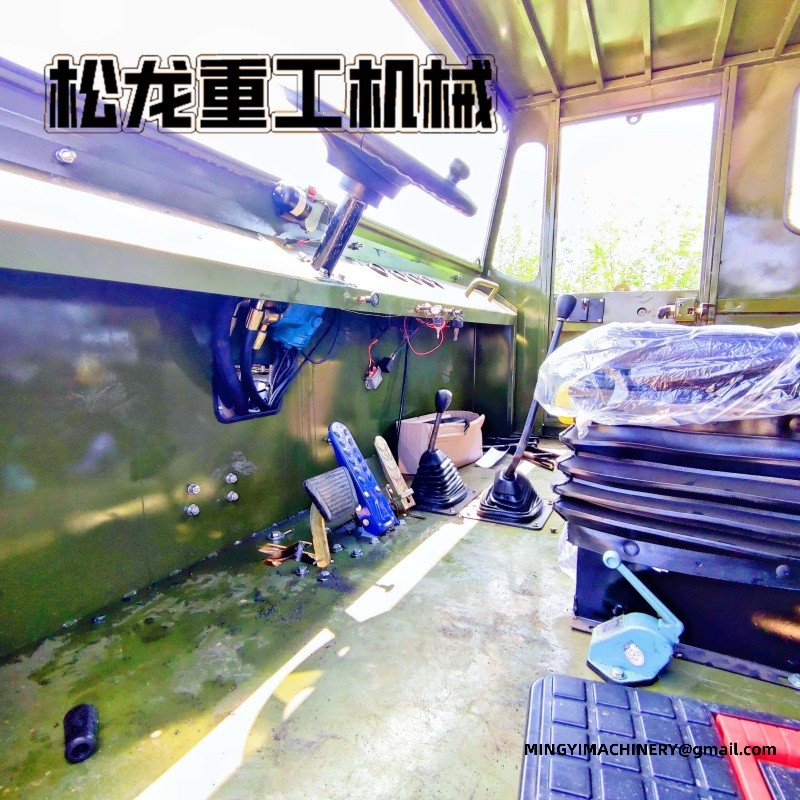
Cab specification follows the length and the weather of the shift, not fashion. The range offers a simple cab, an enclosed cab and a fully enclosed cab across the four builds, with a front axle clutch on one and a two-person comfort seat throughout. A farm driver sits in the machine for the hours the job takes, through dust in the dry season and cold in the wet, and the enclosed cabs keep that driver working instead of enduring. Where the machine is run by several hands in all weathers, the enclosed cab is not a luxury but the difference between a machine that is used and one that is parked.
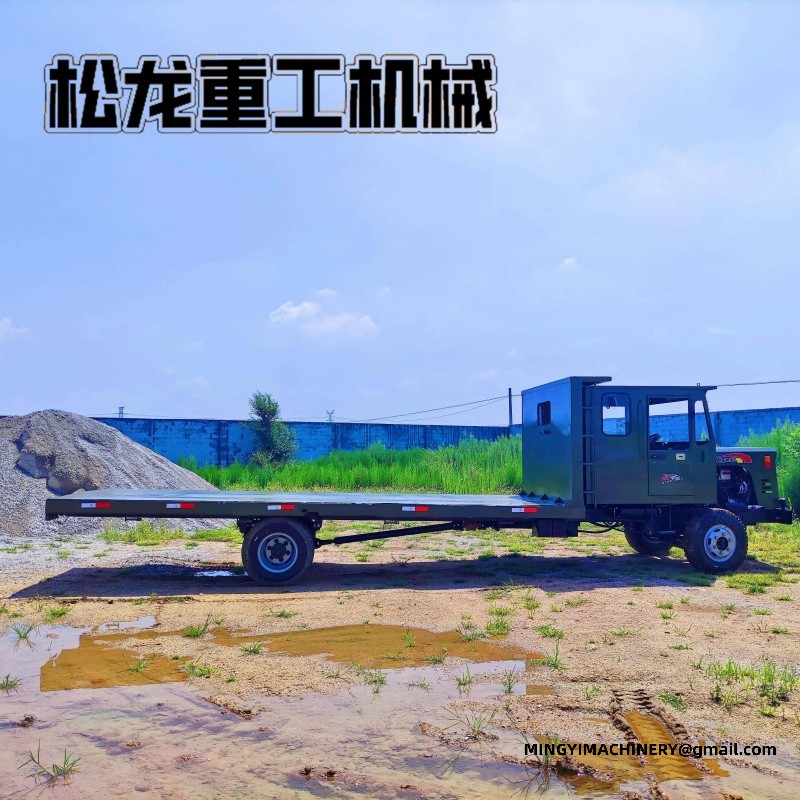
Every build tips through a tailgate with a self-dumping function, and the 25 hp luxury build adds a side-opening rear body tailgate. The side-opening arrangement lets a driver lay material along a fence line or into a narrow run rather than always in a heap, which on a farm means one pass with the dumper instead of a second with a bucket or a fork. For muck spread along a row or grain directed into a hopper, that ability to place rather than dump is what turns a dumper into a tool instead of just a carrier.
Twin hydraulic rams lift the body on every configuration, and they are the reason an uneven farm load tips without twisting the body out of square. A load of manure or spoil never sits level by the time the body is raised, so the two rams are spreading a lopsided mass rather than lifting a neat heap. The heavy-duty leaf springs on the 4105 build, and the standard leaf springs on the lighter machines, are what carry that weight on the return run over a rough track without the frame taking every blow. Both details are about surviving the load, not just moving it.
The dumper is only the moving half of a pair, and the pair is only as quick as its slower member. On a farm that other half is usually a tractor bucket or a small loader, and the body should be sized so the two finish together. A body that swallows too many bucketfuls keeps the loading tractor standing, while one that is full after a single scoop leaves the dumper running light. Where the buyer knows what will fill the machine, that fact belongs in the enquiry, because it settles the 2.2 m body against the 3.0 m body more reliably than any guess.
The parts that wear on a farm dumper are known, and the right time to buy them is with the machine. Body and ram mounting bushes, hydraulic hoses, brake linings, filters and a spare tyre are the list, and a buyer should learn which of them the local dealer stocks before the machine leaves the factory. Clean hydraulic oil and a greasing of the ram mounts and tailgate hinges on schedule keep the tipping circuit working for years, and a small weep found in the morning is a hose rather than a machine standing idle on the day the silage has to move.
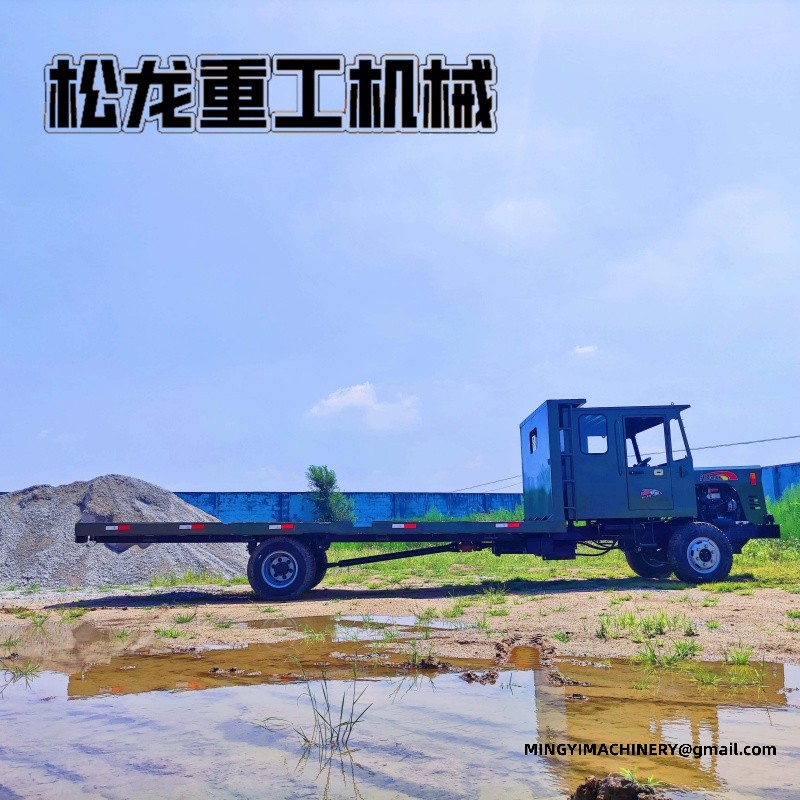
A farm enquiry is best answered when it gives three facts with the first message. Say what will be carried and how heavy it is, say what the ground is like in the worst month, and say how far and how often the machine will run. From those three the body size, the tyre pattern and the engine fall out almost by themselves, and the remaining choice is a matter of the cab and the tailgate. A Mingyi farm dumper is built to the farm, and the buyer who describes the farm gets the machine that fits it rather than one that merely arrives.
| # | 21.Upgraded | 3.Standard | 5.Luxury | 7.Upgraded |
|---|---|---|---|---|
| 1 | Four-cylinder 4105 turbocharged diesel engine | Single-cylinder diesel engine, 25 hp | Single-cylinder diesel engine, 25 hp | Single-cylinder diesel engine, 28 hp |
| 2 | Model 140 part-time gearbox with four-wheel drive | Full-time gearbox with four-wheel drive | Part-time gearbox with four-wheel drive | Full-time gearbox with four-wheel drive |
| 3 | High/low range with crawler gear | High/low range with crawler gear | High/low range with crawler gear | High/low range with crawler gear |
| 4 | Simple cab | Simple cab | Enclosed cab | Front axle clutch |
| 5 | Six 825R16 steel-belted radial tyres | Oil brakes | Six 700-16 mountain tyres | Fully enclosed cab |
| 6 | Reinforced ISUZU-pattern front axle | Four 700-16 mountain tyres | Model 212 front axle | Oil brakes |
| 7 | Reinforced 1080 rear axle with air cut-off brake | Front axle 212 | Model 130 rear axle | Four 700-16 mountain tyres |
| 8 | Air cut-off brakes | Rear axle 130 | Air cut-off brakes | Front axle 212 |
| 9 | Reinforced 80 x 180 mm square tube frame | Reinforced 60 x 140 mm square tube frame | Reinforced 60 x 140 mm square tube frame | Rear axle 130 |
| 10 | Rear body 3.0 m long x 2.2 m wide x 0.45 m high | Rear body 2.2 m long x 1.5 m wide x 0.45 m high | Rear body 2.2 m long x 1.5 m wide x 0.45 m high | Reinforced 60 x 140 mm square tube frame |
| 11 | Tailgate with self-dumping function | Tailgate with self-dumping function | Tailgate with self-dumping function | Rear body 2.2 m long x 1.5 m wide x 0.45 m high |
| 12 | Hydraulic power steering | Hydraulic power steering | Side-opening rear body tailgate | Tailgate with self-dumping function |
| 13 | Twin hydraulic rams | Twin hydraulic rams | Hydraulic power steering | Hydraulic power steering |
| 14 | Two-person comfort seat | Two-person comfort seat | Twin hydraulic rams | Twin hydraulic rams |
| 15 | Heavy-duty leaf springs | Twin-battery electric start | Two-person comfort seat | Two-person comfort seat |
| 16 | Twin-battery electric start | Square-nose bonnet | Heavy-duty leaf springs | Twin-battery electric start |
| 17 | Square-nose bonnet | — | Twin-battery electric start | Square-nose bonnet |
| 18 | — | — | Square-nose bonnet | — |
For a specification discussion or a build sheet for this farm 4x4 dumper, contact mingyimachinery@gmail.com or reach us on LINE (ID: mingyicn).