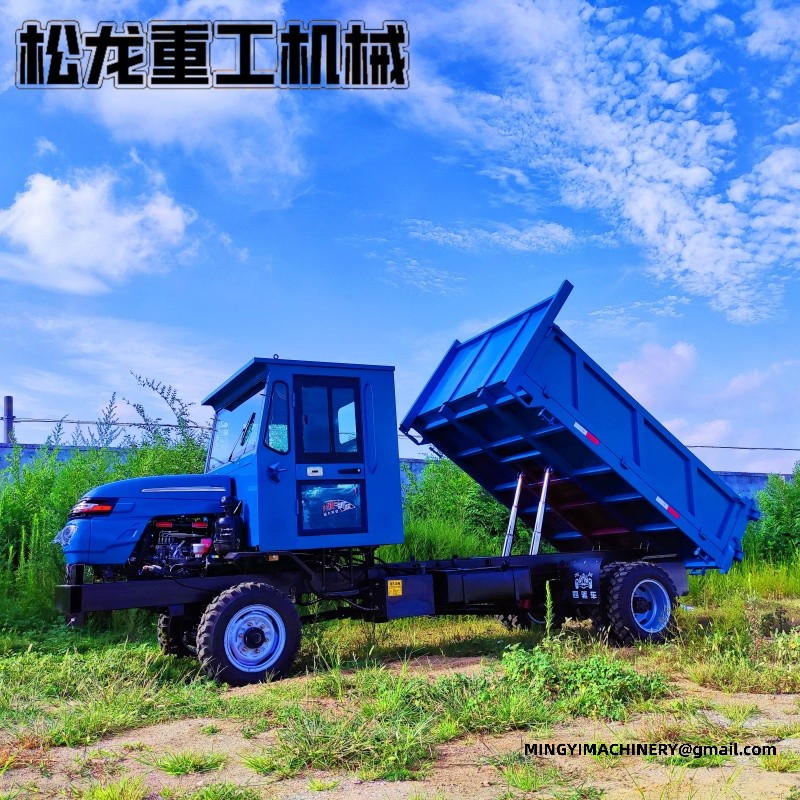
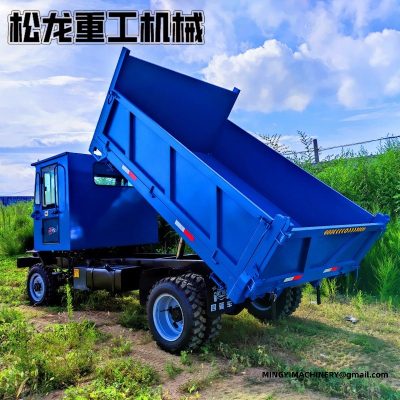
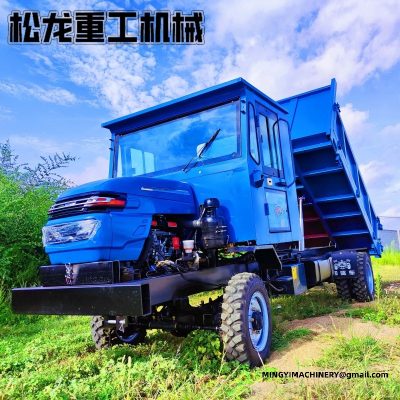
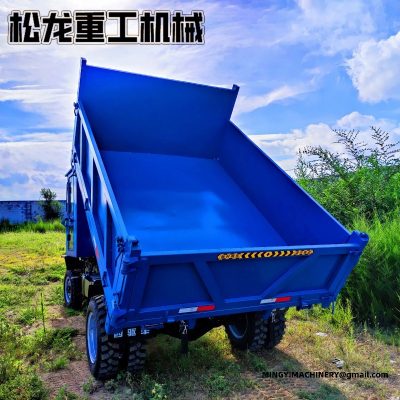
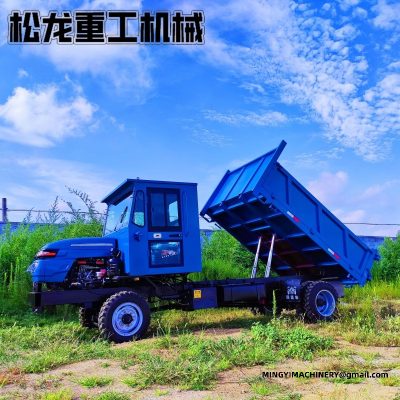
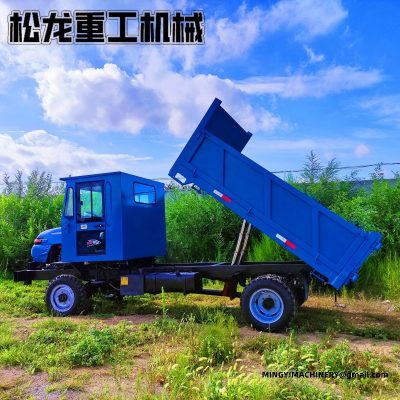
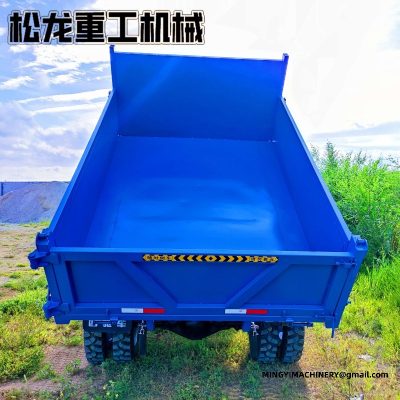
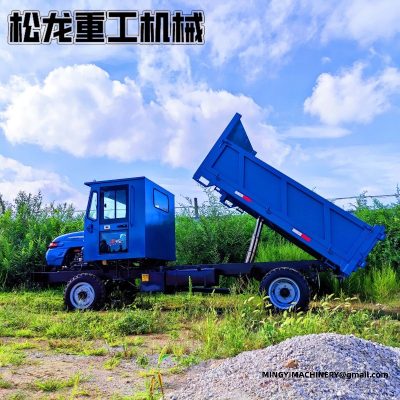
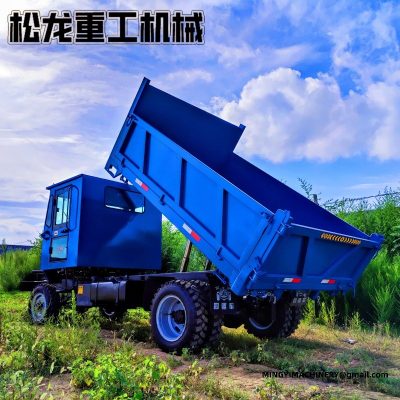
A heavy-load dumper is judged not by what it can lift once but by what it can lift every trip, day after day, without the frame twisting or an axle giving way. The load does not sit neatly in the centre of the body; it lands where the bucket dropped it and shifts as the machine moves, so the running gear has to carry an uneven weight over rough ground. That is a problem of load distribution, and it is solved only when the frame, the axles and the springs are chosen to work together. This page runs through the four configurations with that in mind.
A heavy machine is stressed in a way a light one never is, because every bump loads the frame, the axles and the springs to their design limit and any imbalance in the body is carried unevenly through the whole structure. Over months that uneven load is what bends a frame rail, cracks an axle mounting or flattens a spring, long before the machine actually breaks. Buying for heavy duty means choosing the frame, the axles and the springs as a matched set rather than as separate items on a list, and treating the heaviest point of the cycle as the normal case.
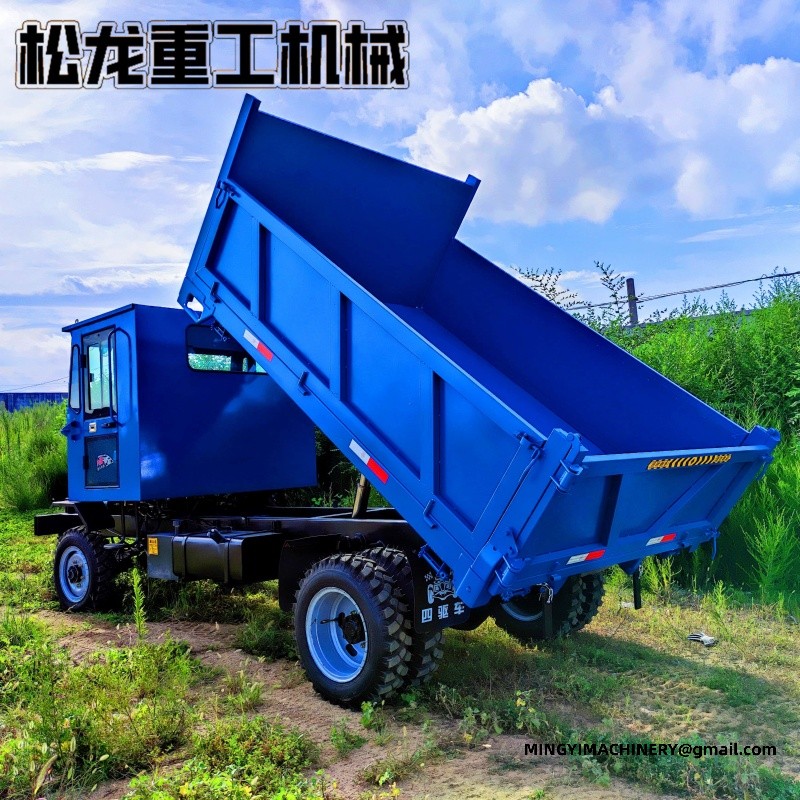
The weight of a load is never shared evenly between the front and rear axles, because the material sits behind the driver and the body tips to the rear, so the rear axle and its springs do more of the work. How that weight is divided decides which axle works hardest and which spring set needs to be heavier. A buyer who knows what is being carried and roughly where it sits can give the factory the one fact that matters most, and the running gear can be specified to carry it rather than guessed at. Uneven distribution is the normal case, not the exception.
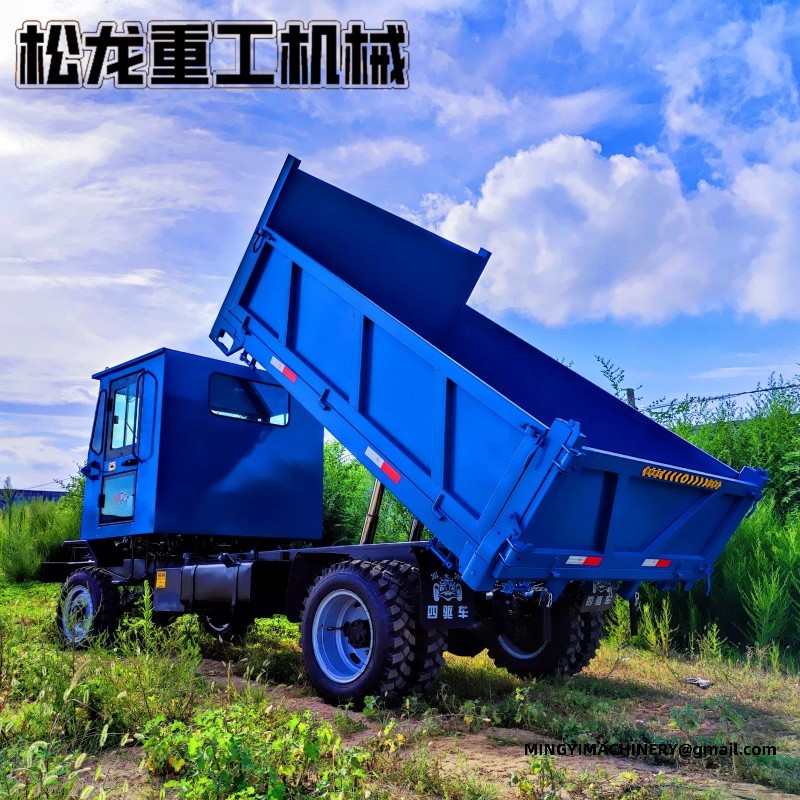
The frame is the spine that everything else hangs from, and its section size decides how much uneven weight the machine tolerates before it twists. The 23.Upgraded uses the reinforced 80 x 180 mm square tube frame, while the 13.Upgraded, the 17.Luxury and the 3.Standard sit on the reinforced 60 x 140 mm square tube frame. The larger rail is the one for a full 3.0 m body and a long loaded haul, because it resists the twist that a heavy off-centre load applies at every bump on the track, and that resistance is what keeps a heavy hauler straight season after season.
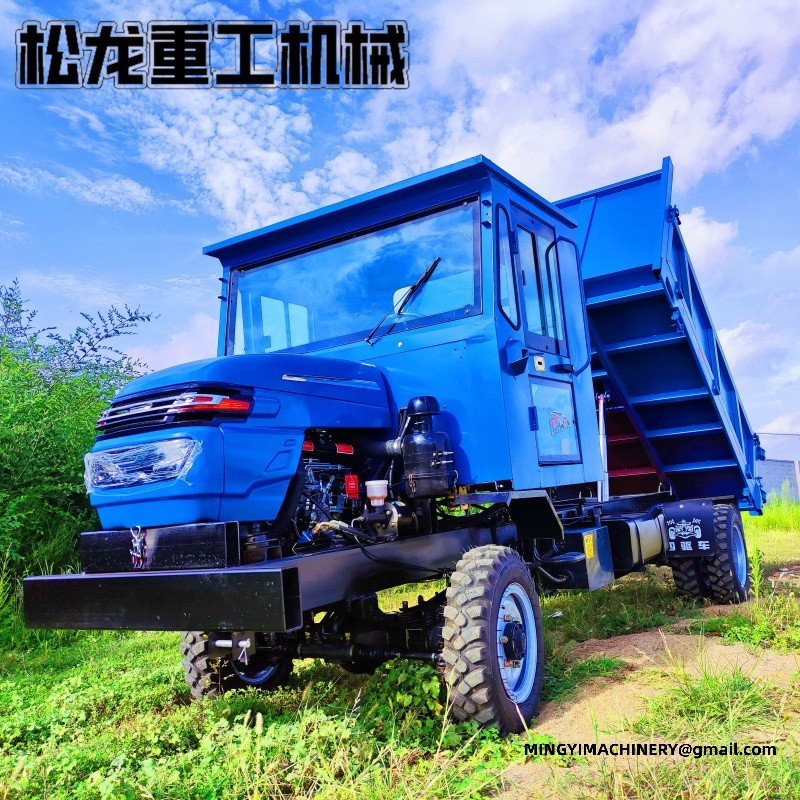
The axle line-up shows the range in one place. The 13.Upgraded and the 3.Standard pair a front axle 212 with a rear axle 130, while the 17.Luxury moves to a reinforced 130 front axle and a reinforced ISUZU-pattern rear axle, and the 23.Upgraded to a reinforced ISUZU-pattern front axle and a reinforced 1080 rear axle. The heavier rear axle is the part that carries the body and most of the load, so it is the first place to over-specify when the material is dense and the road is rough, and it is where a heavy buyer should spend the margin first.
The springs are where the weight is actually absorbed, and they decide how much of each bump reaches the frame and the axles. The 17.Luxury and the 23.Upgraded carry heavy-duty leaf springs, which is the correct pairing for a machine that runs loaded over broken ground, and it stops a full body from bottoming out on the worst part of the track. On a heavy hauler the springs are one of the few places where over-specifying is the safer choice, because a bottomed-out spring delivers a shock straight into the frame, and that shock is what cracks a frame over time.
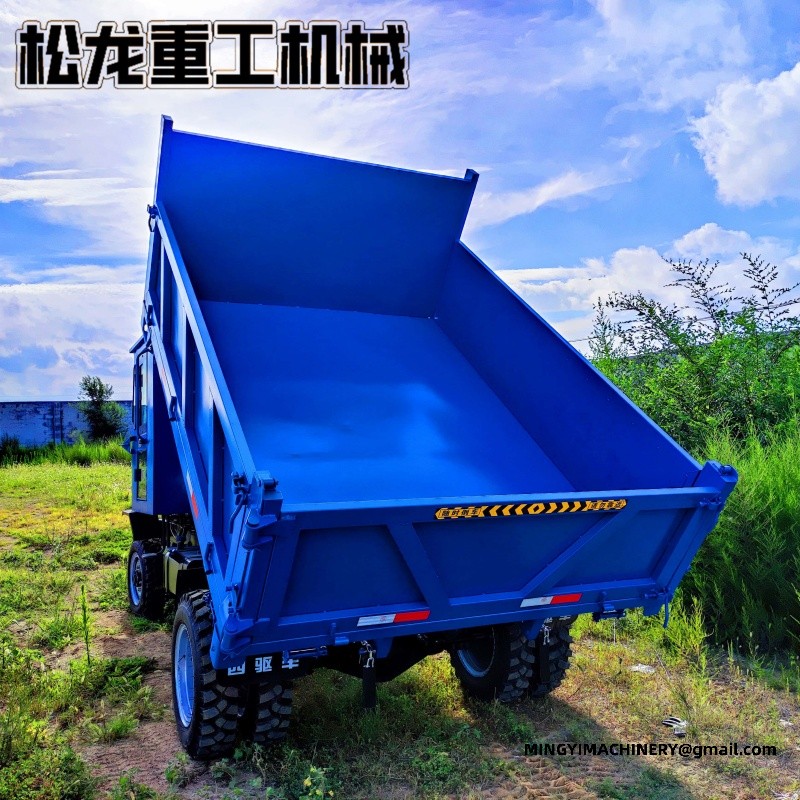
Four configurations sit on the sheet, and they are separated by the running gear as much as by the engine. The 13.Upgraded uses a two-cylinder 38 hp engine, the 17.Luxury a four-cylinder 490 diesel engine, the 23.Upgraded a four-cylinder 4108 turbocharged diesel engine, and the 3.Standard a single-cylinder 25 hp. The 23.Upgraded carries the reinforced 80 x 180 mm frame and the 3.0 m by 2.2 m body, while the other three use the 60 x 140 mm frame. The split is between a lighter mixed duty and a genuinely heavy haul, and the heavier end is the one this page is about.
Engine choice follows the length and gradient of the haul. The 25 hp single and the 38 hp twin suit short runs, firm ground and a lighter body, while the 490 four-cylinder suits a steady mixed duty and the 4108 turbocharged unit is the one for a long haul, a real climb or a machine that runs loaded most of the shift. Drive is split between full-time and selectable: the 13.Upgraded and the 3.Standard use a full-time gearbox with four-wheel drive, and the 17.Luxury and the 23.Upgraded a part-time gearbox selectable between two- and four-wheel drive.
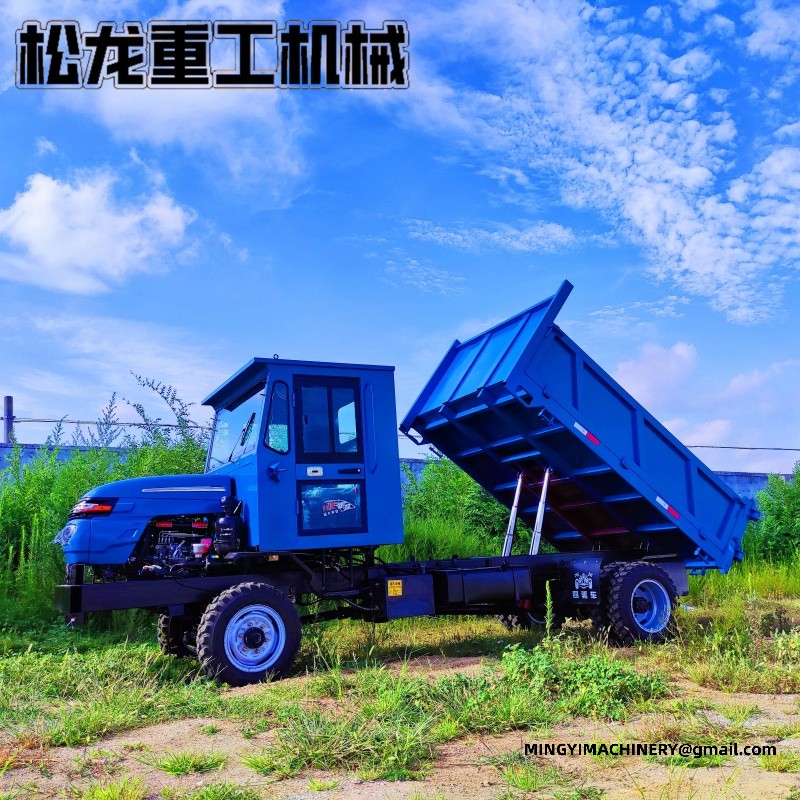
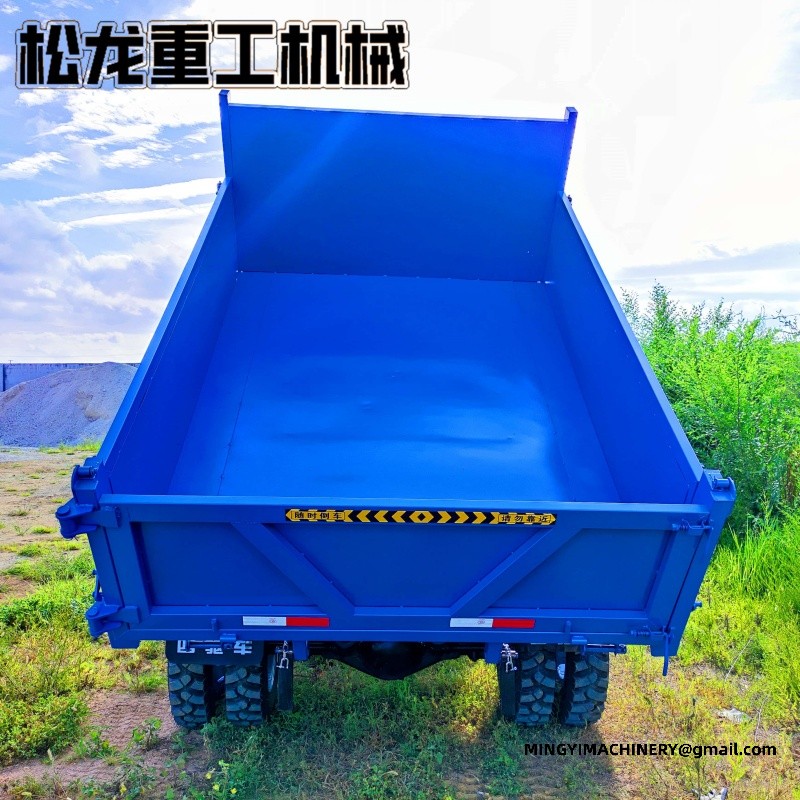
Three body sizes appear, and they are matched to the duty rather than to the engine alone. The 17.Luxury carries a rear body 2.2 m long by 1.8 m wide and 0.45 m high, the 23.Upgraded a 3.0 m by 2.2 m body of the same depth, and the 13.Upgraded and the 3.Standard the smaller 2.2 m by 1.5 m body. Every configuration has a tailgate with a self-dumping function, and the 17.Luxury adds a side-opening rear body tailgate for placing material along an edge rather than in a heap. The wider 1.8 m body on the 17.Luxury sits between the two ends for a mid-size duty.
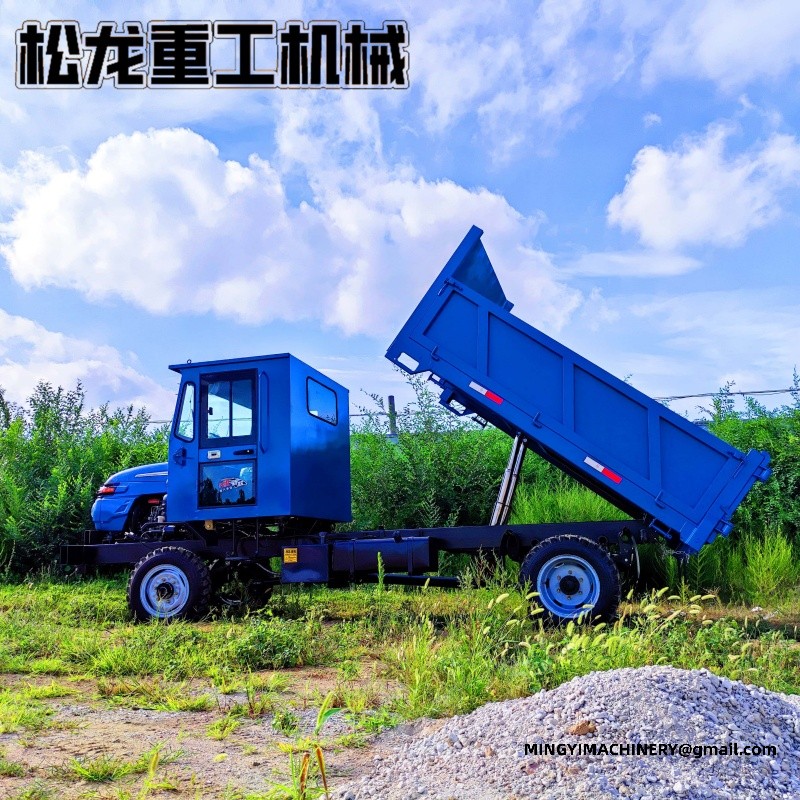
The tipping circuit is where a strong machine can still fall short if it is undersized, because a dense load has to rise smoothly even after it has shifted to one side. Every configuration lifts the body with twin hydraulic rams, which is what allows an uneven load to rise without twisting the body, and the self-dumping function starts the load leaving before the body reaches full height so a heavy, sticky load does not hang at the top of the lift. Clean hydraulic oil and greasing on schedule are most of what keeps that circuit working through a long day.
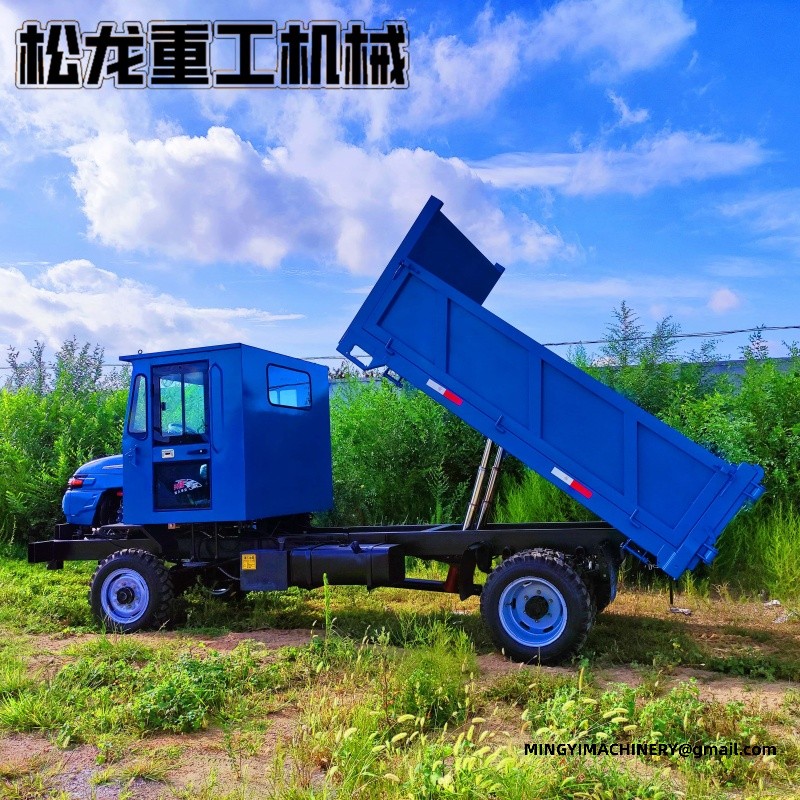
Tyres on a heavy hauler are a running expense, and they have to match the surface as well as the load, because a tyre that carries the weight but cannot grip the ground is no use on a grade. The 13.Upgraded and the 3.Standard run four 700-16 mountain tyres, the 17.Luxury six 700-16 mountain tyres, and the 23.Upgraded six 825R16 steel-belted radial tyres. The mountain pattern clears mud and loose fill, and the radial suits a graded, drained road where the machine covers distance. A photograph of the route settles this faster than any description.
Stopping a full machine on a grade is where the specification earns its keep, because the surface offers little grip and the gradient never lets up. The 13.Upgraded and the 3.Standard run oil brakes, while the 17.Luxury and the 23.Upgraded are fitted with air cut-off brakes, and on a loaded descent the air cut-off arrangement gives a firmer, more predictable hold. A heavy machine that cannot be stopped reliably is not a working asset, and the brakes are the last place to save weight on the specification, which is exactly why a heavy hauler wants the air cut-off system.
A full body changes how a machine steers, because the weight sits high and to the rear, and a sharp turn at speed can unsettle the load. Hydraulic power steering is fitted to every configuration, which keeps the wheel light even when the machine is heavy, and the driver can hold a line on a rough track without fighting the wheel. A heavy hauler wants a driver who keeps the speed down in the corners and lets the load settle before the turn, and the steering specification is what makes that discipline easy to keep.
A heavy machine survives on a routine rather than on repairs. The walk-around at the start of each shift should cover the frame for cracks, the axle and spring mountings, the body and ram mounting bushes, the hoses, tyre condition and pressures, brake response and fluid levels. On a heavy hauler the frame and spring mounts deserve a close look, because a small crack found early is a repair and the same crack found late is a machine off the road. The build sheet records what was delivered, which is what a workshop needs years later.
The one fact that improves a heavy-duty order more than any other is the actual load, stated as material and volume rather than a vague description. Dense material, a long haul and broken ground all push the specification toward the reinforced frame, the heavier rear axle and the heavy-duty springs, and they are the three places where cutting back shows up first. A buyer who states the material, the route and the hours gets a machine that is built for the job instead of one that is merely strong enough on paper, and that single sentence is worth more than a page of general talk.
Where two configurations look equally suitable, the material and the road usually break the tie. A dense material on broken ground wants the reinforced frame, the heavier rear axle and the heavy-duty springs, even at a smaller body, while a lighter material on a firm road wants the larger body and the radial tyres that move more per cycle. Describe what is being carried and how far it travels, and the recommendation that comes back can be checked against those facts rather than taken on trust. For a first heavy-duty order, the reinforced frame and the heavier rear axle are the two items worth specifying up front.
| # | 13.Upgraded | 17.Luxury | 23.Upgraded | 3.Standard |
|---|---|---|---|---|
| 1 | Two-cylinder diesel engine, 38 hp | Four-cylinder 490 diesel engine | Four-cylinder 4108 turbocharged diesel engine | Single-cylinder diesel engine, 25 hp |
| 2 | Full-time gearbox with four-wheel drive | Part-time gearbox, selectable 2WD/4WD | Model 140 part-time gearbox, selectable 2WD/4WD | Full-time gearbox with four-wheel drive |
| 3 | High/low range with crawler gear | High/low range with crawler gear | High/low range with crawler gear | High/low range with crawler gear |
| 4 | Front axle clutch | Fully enclosed cab | Simple cab | Simple cab |
| 5 | Fully enclosed cab | Six 700-16 mountain tyres | Six 825R16 steel-belted radial tyres | Oil brakes |
| 6 | Oil brakes | Reinforced 130 front axle | Reinforced ISUZU-pattern front axle | Four 700-16 mountain tyres |
| 7 | Four 700-16 mountain tyres | Reinforced ISUZU-pattern rear axle | Reinforced 1080 rear axle | Front axle 212 |
| 8 | Front axle 212 | Air cut-off brakes | Air cut-off brakes | Rear axle 130 |
| 9 | Rear axle 130 | Reinforced 60 x 140 mm square tube frame | Reinforced 80 x 180 mm square tube frame | Reinforced 60 x 140 mm square tube frame |
| 10 | Reinforced 60 x 140 mm square tube frame | Rear body 2.2 m long x 1.8 m wide x 0.45 m high | Rear body 3.0 m long x 2.2 m wide x 0.45 m high | Rear body 2.2 m long x 1.5 m wide x 0.45 m high |
| 11 | Rear body 2.2 m long x 1.5 m wide x 0.45 m high | Tailgate with self-dumping function | Tailgate with self-dumping function | Tailgate with self-dumping function |
| 12 | Tailgate with self-dumping function | Side-opening rear body tailgate | Hydraulic power steering | Hydraulic power steering |
| 13 | Hydraulic power steering | Hydraulic power steering | Twin hydraulic rams | Twin hydraulic rams |
| 14 | Twin hydraulic rams | Twin hydraulic rams | Two-person comfort seat | Two-person comfort seat |
| 15 | Two-person comfort seat | Two-person comfort seat | Heavy-duty leaf springs | Twin-battery electric start |
| 16 | Twin-battery electric start | Heavy-duty leaf springs | Twin-battery electric start | Square-nose bonnet |
| 17 | Round-nose bonnet | Twin-battery electric start | Square-nose bonnet | — |
| 18 | — | Round-nose bonnet | — | — |
For a specification discussion or a build sheet for this heavy-load off-road dumper, contact mingyimachinery@gmail.com or reach us on LINE (ID: mingyicn).









