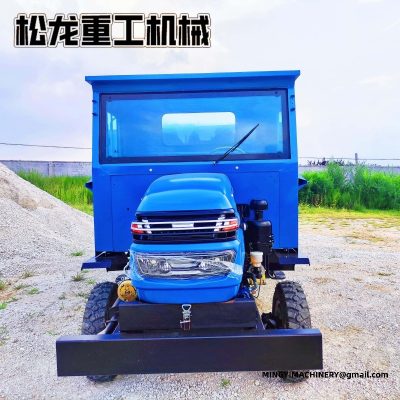
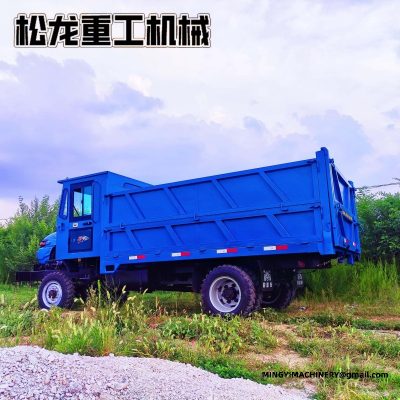
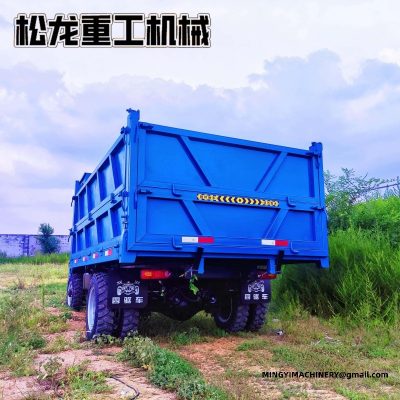
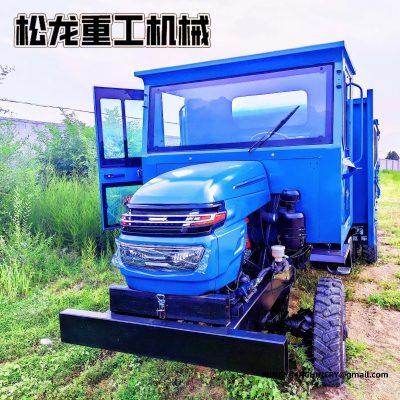
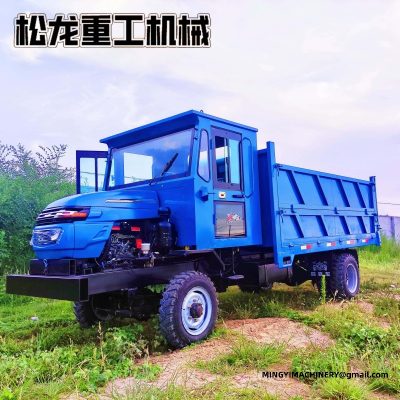
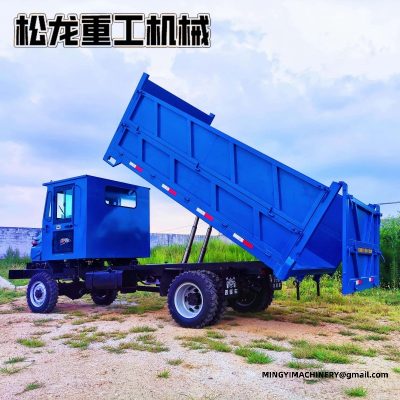
Buying an articulated dumper from the factory that builds it is a different transaction from buying one that is already standing in a yard. The specification is decided with the people who weld the frame and fit the axles, so the machine can be matched to the job instead of chosen from whatever happens to be available. It also puts two responsibilities on the buyer that a domestic purchase never involves: knowing what to ask before ordering, and knowing what to check before the machine leaves the factory floor. This page walks through both, and it lists the four configurations that are built and shipped.
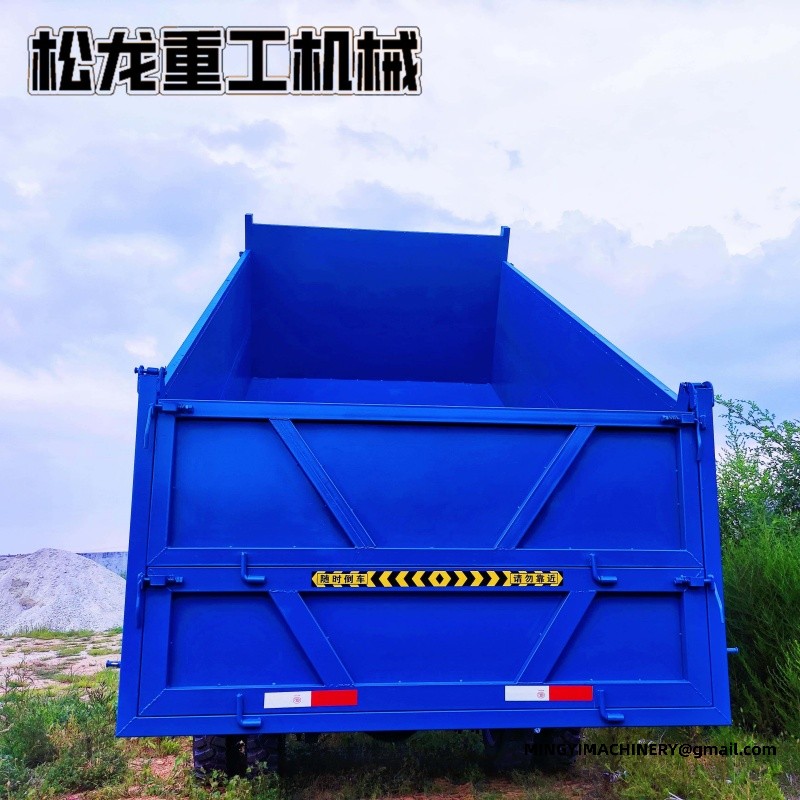
The real advantage of dealing direct is that the build sheet becomes a conversation rather than a fixed menu. Ground condition, haul length, material and hours can be given once and answered with a configuration, and details such as the bonnet shape or the tailgate arrangement can be settled before production rather than accepted afterwards. The obligation that comes with it is to be specific: a factory can build exactly what is described, but it cannot guess what was meant, and a buyer who sends three facts gets a better machine than one who sends none.
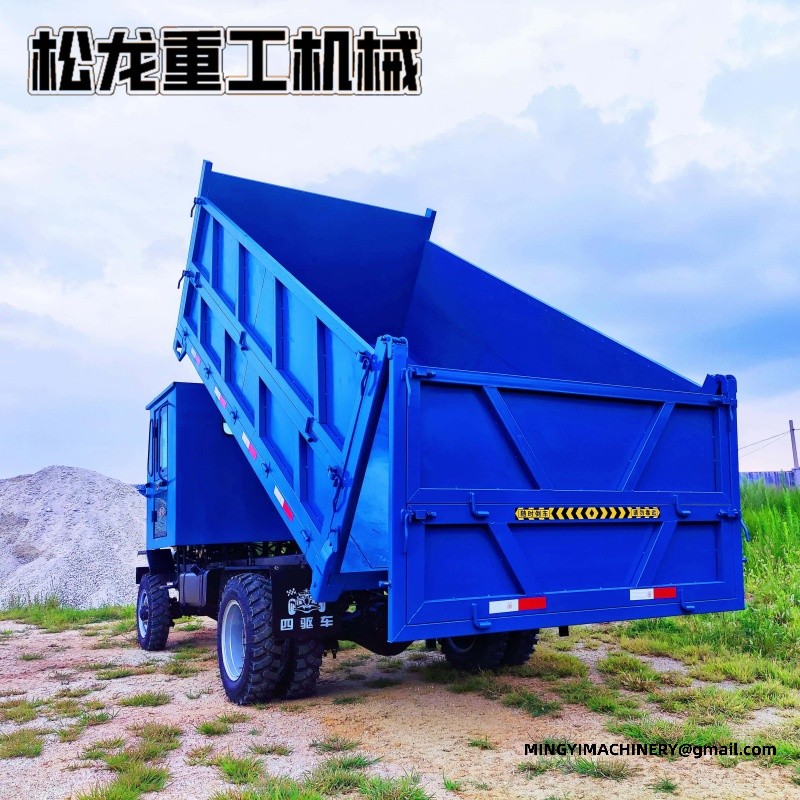
Four questions decide most of a build sheet, and a buyer who sends them with the first enquiry gets a useful answer with the first reply. What is the ground like for most of the year: soft, rocky, graded or none of those. How far does the material move, and is the route uphill, downhill or flat. What is being carried, and does it discharge freely or stick in the body. How many hours will the machine run in its busiest week. Engine, tyres, body and brakes all follow from those four rather than the other way round.
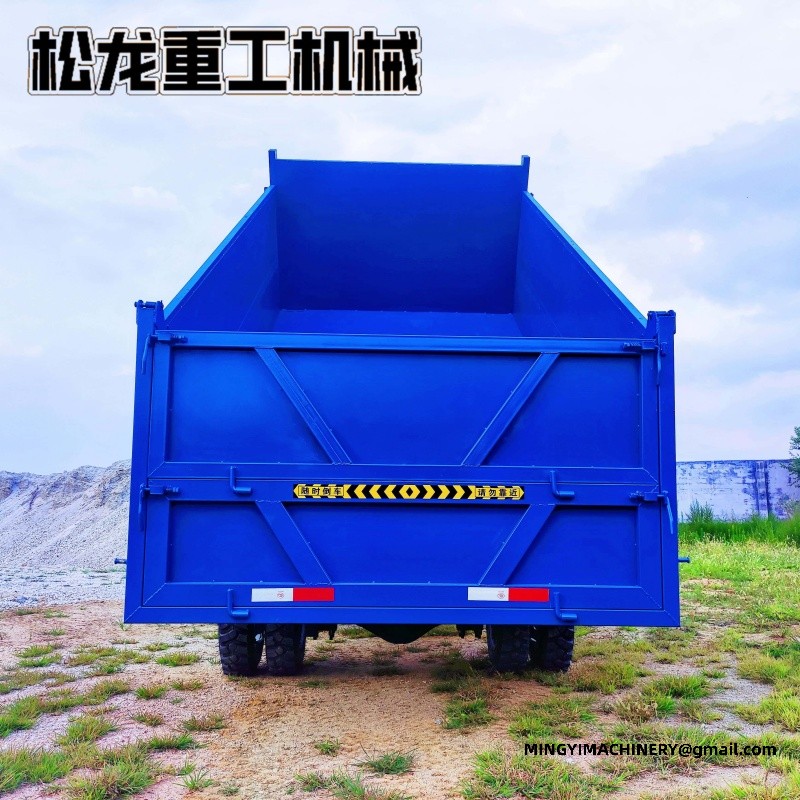
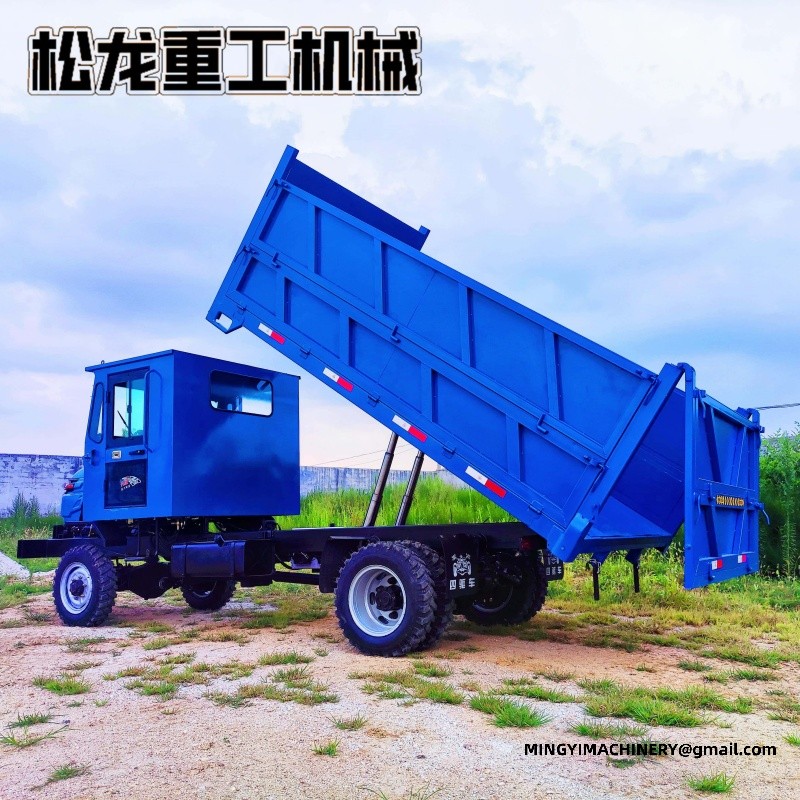
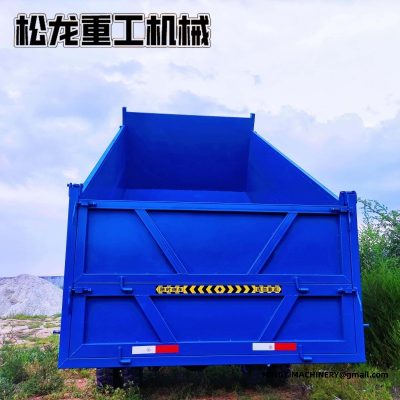
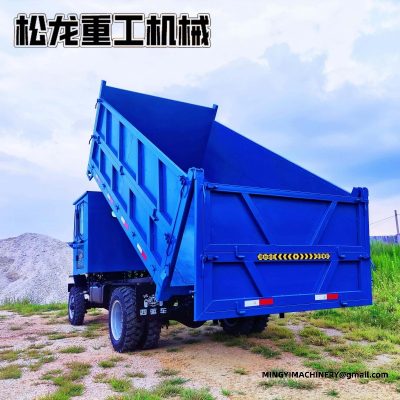
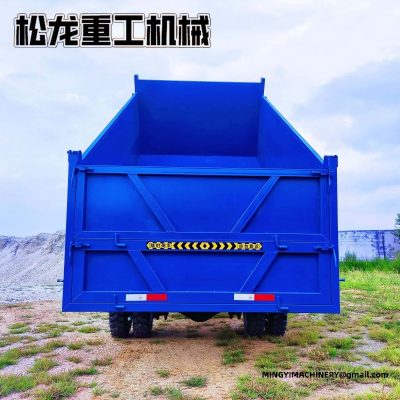
The range runs from a single-cylinder 25 hp machine to a four-cylinder 4108 turbocharged engine. The 12.Standard uses a two-cylinder 38 hp engine, the 23.Upgraded and the 24.Luxury both carry the 4108 turbocharged four-cylinder, and the 4.Upgraded the single-cylinder 25 hp. The two larger machines sit on the reinforced 80 x 180 mm frame with a 3.0 m by 2.2 m body, while the 12.Standard and the 4.Upgraded use the reinforced 60 x 140 mm frame with the 2.2 m by 1.5 m body of the same 0.45 m depth. The 24.Luxury is the fully equipped end of the range, and the 12.Standard the economical start.
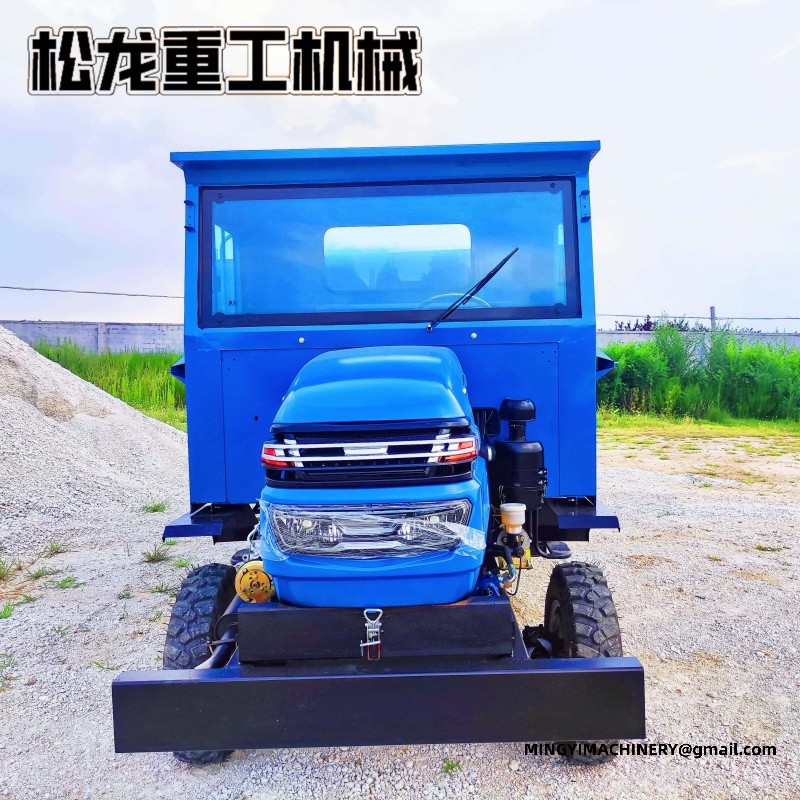
Drive is split between full-time and selectable. The 12.Standard and the 4.Upgraded use a full-time gearbox with four-wheel drive, which is the choice for a machine on soft or loose ground all day. The 23.Upgraded uses a Model 140 part-time gearbox selectable between two- and four-wheel drive, and the 24.Luxury a Model 145 with the same choice, which suits a machine that travels a firm haul road and needs drive at both ends only in the work area. All four carry high and low range with a crawler gear, which lets a loaded machine start on a grade without stalling.
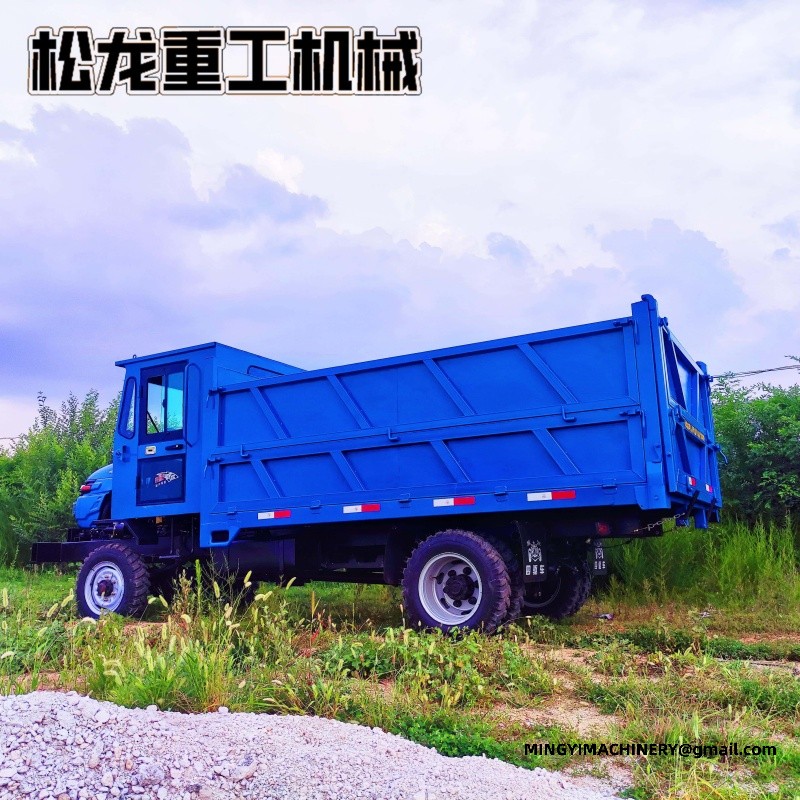
The axle and frame split follows the engine rather than the body alone. The 12.Standard and the 4.Upgraded pair a front axle 212 with a rear axle 130 on the reinforced 60 x 140 mm square tube frame. The 23.Upgraded and the 24.Luxury step up to a reinforced ISUZU-pattern front axle and a reinforced 1080 rear axle on the reinforced 80 x 180 mm frame. The heavier axles and the larger frame are what let a machine carry a full 3.0 m body over rough ground without twisting, which is the point of specifying them in the first place.
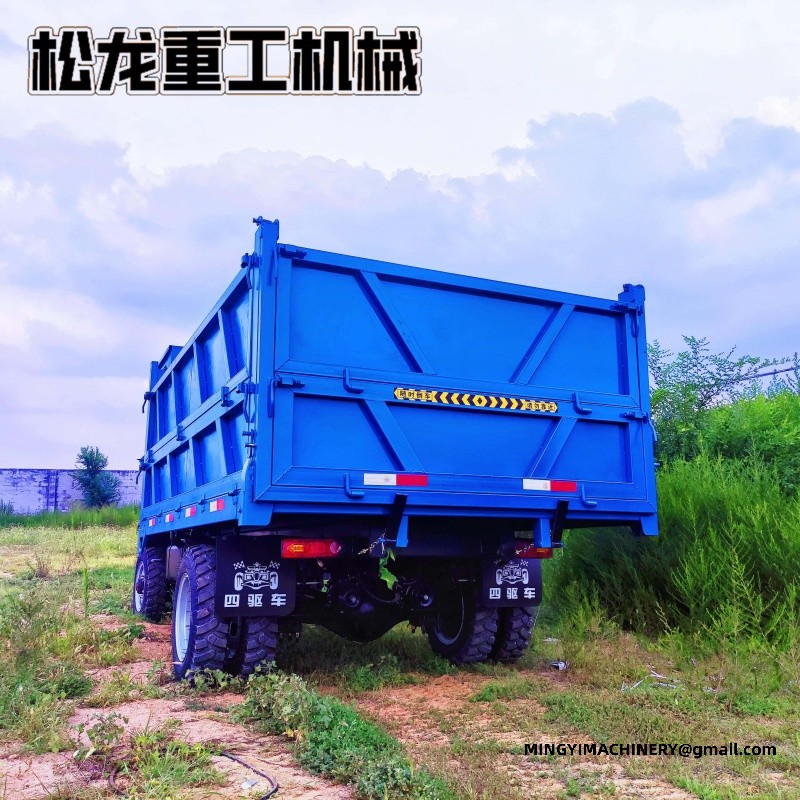
Every configuration has a tailgate with a self-dumping function, so the load starts to leave before the body reaches full height. The 24.Luxury adds a side-opening rear body tailgate with a cab ladder, which lets the driver place material along an edge or into a trench instead of in a single heap, and the ladder makes the daily look at the body and the ram mountings a job that gets done rather than skipped. The body is lifted by twin hydraulic rams on all four machines, so an uneven load lifts without twisting the body.
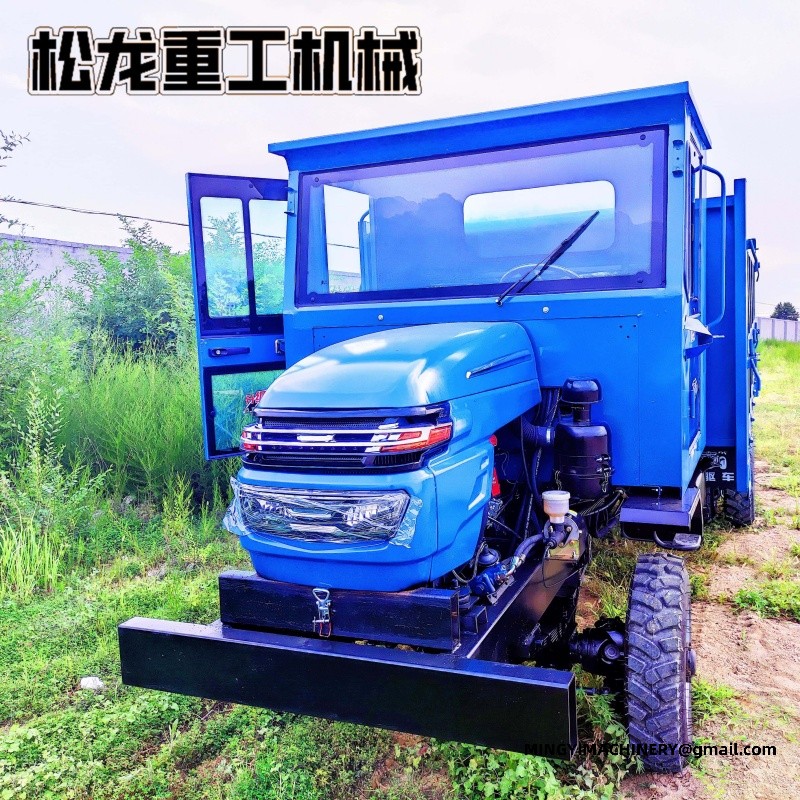
Tyre and brake specification is where a direct order is most often got wrong, because both are chosen from habit rather than from the ground. The 12.Standard and the 4.Upgraded run oil brakes with four 700-16 mountain tyres, and the 23.Upgraded and the 24.Luxury run air cut-off brakes with six 825R16 steel-belted radial tyres. The mountain pattern clears mud and loose fill, and the radial suits a graded, drained road where the machine covers distance. Sending a photograph of the route with the enquiry settles this faster than any written description of the ground, and a buyer who sends it once never has to explain the surface again.
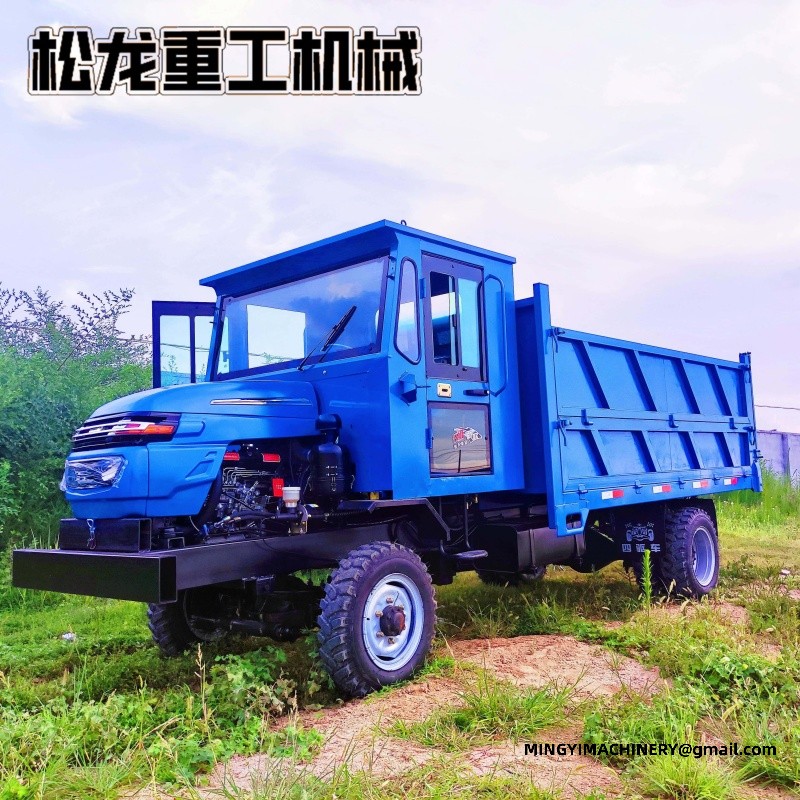
Cab specification follows the hours in the seat. The 24.Luxury has a fully enclosed cab, the 12.Standard and the 23.Upgraded a simple cab, and the 4.Upgraded a front axle clutch arrangement with a fully enclosed cab on the sheet. Every machine carries hydraulic power steering, a two-person comfort seat and twin-battery electric start, and the bonnet is round-nosed on the 12.Standard and square-nosed on the other three. The cab choice matters more than it first appears, because it decides whether a long shift is tolerable or not. It is worth settling before production rather than leaving it to default.
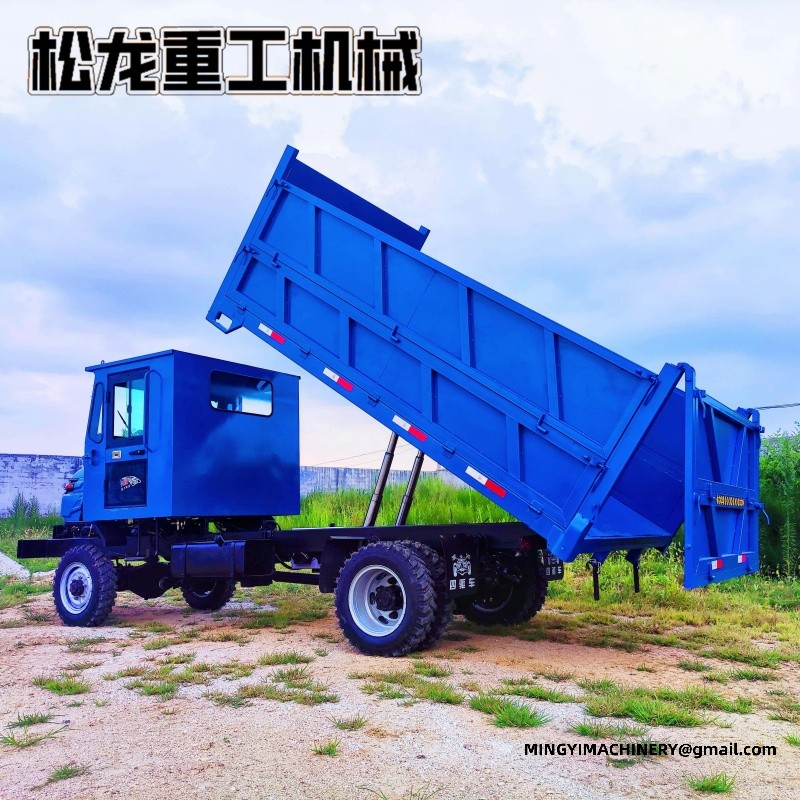
A factory should be able to show what happens before a machine leaves, and a buyer should ask for it rather than assume it. On our floor the engine is run to temperature, the tipping circuit is cycled through its full travel under load, the brakes are tested with a load, and each function is checked against the build sheet. That inspection can be recorded and sent before shipment, which is the practical answer to the distance involved: watching the machine work is worth more than a photograph of it standing still. Ask for the recording and keep it with the paperwork.
The tipping system is the part that most deserves a loaded test before shipment, because a body that raises empty tells a buyer nothing about the rams under a real load. Watch the twin hydraulic rams lift the body to full height and hold it there, check that the self-dumping tailgate opens cleanly and closes flush, and look for any weep at the hoses and ram mountings while the circuit is hot. A small leak found on the factory floor is a hose; the same leak found on site is a machine standing idle. That single loaded test does more than any checklist on paper.
Export orders add steps a domestic buyer never sees. Packed dimensions, securing points and any dismantling required are settled before the machine leaves the factory, and where several machines ship together, confirming how many fit a container is part of the planning rather than a detail discovered at the port. The commercial invoice, the packing list and any certificate the destination requires are agreed at order stage, because papers that arrive incomplete delay clearance longer than the voyage itself takes. A buyer who settles the papers early clears the port on the first day instead of waiting, and that head start is worth more than the paperwork itself.
The wear items on this class of machine are known, and the sensible time to order spares is with the machine rather than after the first failure. Body and ram mounting bushes, hydraulic hoses, brake linings, filters and tyres are the list, and which of them the local network stocks is worth establishing before the machine ships. Clean hydraulic oil and greasing on schedule keep the tipping system working, and a driver who checks the tailgate latch at the start of each shift catches most problems before they stop a shift. Establish what the local network stocks before the machine ships rather than during the first breakdown.
The objection to buying at a distance is usually support rather than the machine. In practice most faults are found rather than fixed: a walk-around on video with the panels open usually identifies the cause without waiting for a visit, and avoids shipping a part that turns out not to be needed. What a buyer should settle before ordering is which wear items travel with the machine and how a non-stocked item is sent afterwards. The answer to that second question is what separates a supplier worth using from one that is convenient only once.
Buyers who expect to order more than one machine should settle the driveline on the first order. Keeping the same engine brand, the same axle pattern and the same cab across a fleet means one parts shelf, one service routine and a driver who can move between machines without relearning the controls. Where duties differ enough to justify two configurations, the useful split is one machine set up for the long haul and one for the tight work, rather than two sitting in the middle of the range and sharing nothing. A common driveline is what turns a collection of machines into a fleet.
Where two configurations look equally suitable, the tie is usually broken by the ground. Soft or loose ground wants the full-time drive, the mountain tyres and a body that does not overload the frame. Firm ground with a long haul wants the radial tyres, the selectable gearbox and the larger body that moves more per cycle. Say which of those describes the route, and the recommendation that comes back can be checked against it rather than taken on trust. For a first order, the smaller machine is the safer place to start and the easier one to sell on.
| # | 12.Standard | 23.Upgraded | 24.Luxury | 4.Upgraded |
|---|---|---|---|---|
| 1 | Two-cylinder diesel engine, 38 hp | Four-cylinder 4108 turbocharged diesel engine | Four-cylinder 4108 turbocharged diesel engine | Single-cylinder diesel engine, 25 hp |
| 2 | Full-time gearbox with four-wheel drive | Model 140 part-time gearbox, selectable 2WD/4WD | Model 145 part-time gearbox, selectable 2WD/4WD | Full-time gearbox with four-wheel drive |
| 3 | High/low range with crawler gear | High/low range with crawler gear | High/low range with crawler gear | High/low range with crawler gear |
| 4 | Simple cab | Simple cab | Fully enclosed cab | Front axle clutch |
| 5 | Oil brakes | Six 825R16 steel-belted radial tyres | Six 825R16 steel-belted radial tyres | Fully enclosed cab |
| 6 | Four 700-16 mountain tyres | Reinforced ISUZU-pattern front axle | Reinforced ISUZU-pattern front axle | Oil brakes |
| 7 | Front axle 212 | Reinforced 1080 rear axle | Reinforced 1080 rear axle | Four 700-16 mountain tyres |
| 8 | Rear axle 130 | Air cut-off brakes | Air cut-off brakes | Front axle 212 |
| 9 | Reinforced 60 x 140 mm square tube frame | Reinforced 80 x 180 mm square tube frame | Reinforced 80 x 180 mm square tube frame | Rear axle 130 |
| 10 | Rear body 2.2 m long x 1.5 m wide x 0.45 m high | Rear body 3.0 m long x 2.2 m wide x 0.45 m high | Rear body 3.0 m long x 2.2 m wide x 0.45 m high | Reinforced 60 x 140 mm square tube frame |
| 11 | Tailgate with self-dumping function | Tailgate with self-dumping function | Tailgate with self-dumping function | Rear body 2.2 m long x 1.5 m wide x 0.45 m high |
| 12 | Hydraulic power steering | Hydraulic power steering | Side-opening rear body tailgate with cab ladder | Tailgate with self-dumping function |
| 13 | Twin hydraulic rams | Twin hydraulic rams | Hydraulic power steering | Hydraulic power steering |
| 14 | Two-person comfort seat | Two-person comfort seat | Twin hydraulic rams | Twin hydraulic rams |
| 15 | Twin-battery electric start | Heavy-duty leaf springs | Two-person comfort seat | Two-person comfort seat |
| 16 | Round-nose bonnet | Twin-battery electric start | Heavy-duty leaf springs | Twin-battery electric start |
| 17 | — | Square-nose bonnet | Twin-battery electric start | Square-nose bonnet |
| 18 | — | — | Square-nose bonnet | — |
For a specification discussion or a build sheet for this articulated dumper, contact mingyimachinery@gmail.com or reach us on LINE (ID: mingyicn).









