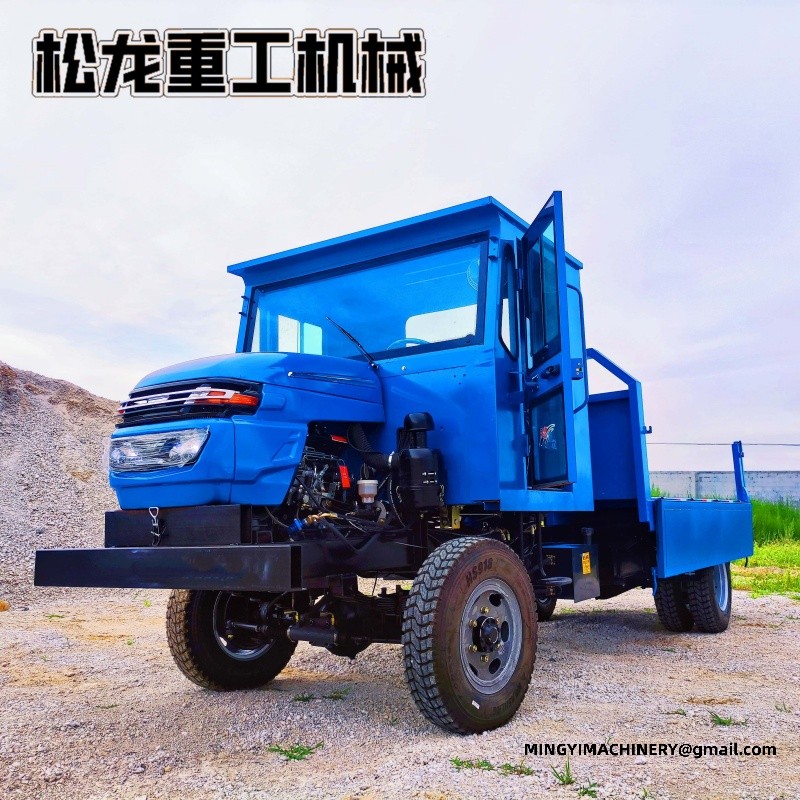
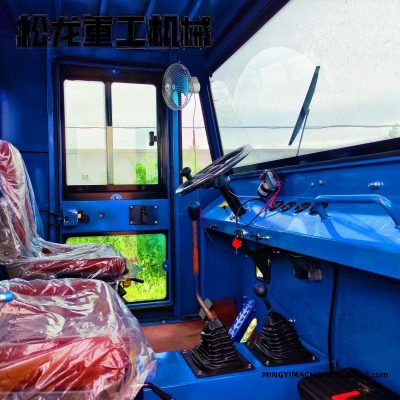
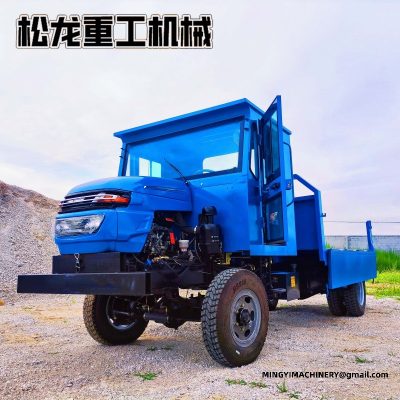
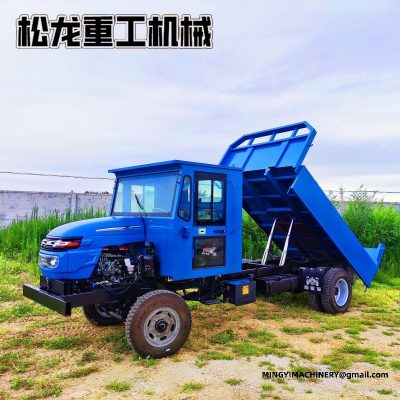
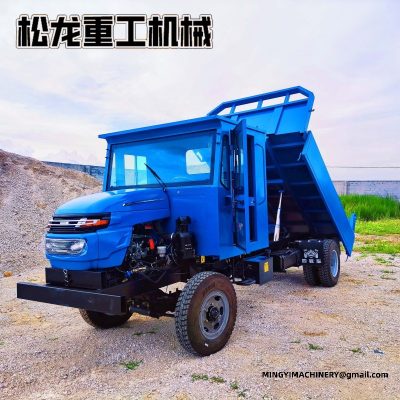
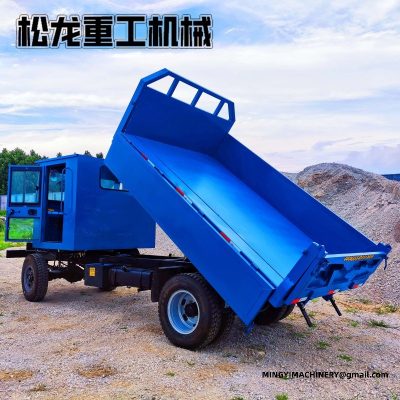
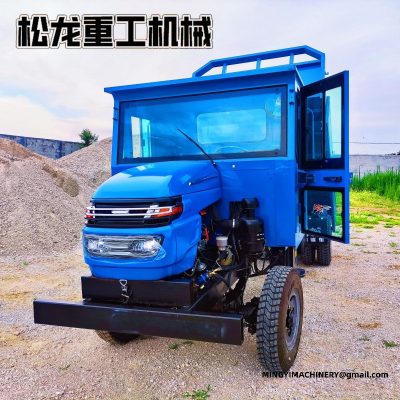
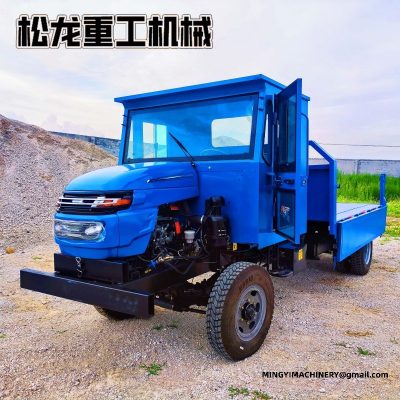
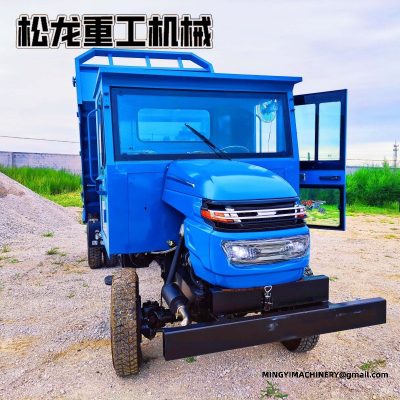
The specification of the dumper is only half the picture. The other half is how it behaves on a working day: how it starts cold, how it copes with dust, how long a service takes and how it travels between sites. Both halves are covered below.
Body size is a compromise with access. A larger body on this class of machine carries more per trip but needs more room to turn and tip, so the useful question is how many trips the route allows rather than how much it holds.
The honest payload figure comes from the duty. The unit in daily use working a smooth haul road carries differently from one crossing ruts and gradients, and the conservative number is the one that keeps the machine working.
Ground and gradient together set the limit. Loose surface on a slope reduces what a machine of this size can pull regardless of engine power, so the surface survey belongs before the specification.
A crane or grab turns a haul vehicle into a loading machine. The equipment on site fitted with a hydraulic crane loads itself, which removes a second machine from the job and is often the whole reason for specifying one. Stability governs what the crane can do. Outriggers, ground condition and load radius decide the safe figure on the machine itself, and those are checked before the lift rather than discovered during it.
Customisation should still be limited to what the work needs. Each addition to the model in question is another item to maintain, so the useful question is not what can be added but what the job list actually requires.
Stability follows the load and its position. Knowing the rated capacity of the machine in that duty at the working radius, rather than at its best case, is what keeps handling predictable and the machine upright. Carrying and travelling with a load needs its own plan. Speed, gradient and surface all matter more once the unit on the job is loaded, and the safe combination is the conservative one.
Carrying concrete changes the duty entirely. A machine built for the work with a mixer drum is working against the clock, and the specification follows the delivery distance and the site access rather than the load alone. Drum bodies need power and stability. The equipment in service set up for concrete has to carry the drum, the load and the water, and the frame and brakes should be specified for that combined weight.
Farm work is seasonal and varied. The dumper that hauls feed in one month and muck or aggregate in the next earns its place by being usable across the year rather than by being optimised for one task. Farm users also value simplicity. This class of machine that can be serviced in the yard with common tools and common parts suits a farm better than one that needs a dealer visit for routine work.
Ground decides more of the outcome than power does. Soft, wet or loose surfaces call for a wider footprint and lower ground pressure, while hard standing allows a narrower machine that turns in less space and travels faster between tasks. The working surface should be surveyed before the equipment on site is specified. A machine that is stable on compacted gravel can be unusable on the same site after rain, and the difference shows up as lost days rather than as a fault. Traction and flotation are two separate questions. A machine of this size may have the power for a slope and still not have the grip, so the surface, not the engine rating, is usually what limits the working day.
Water is heavy and it moves. Baffles and sensible speeds matter on the model in question with a tank body, and the specification should reflect the ground the vehicle will cross rather than only the volume needed. Dust control work is repetitive and time-critical. The machine in that duty with the right tank and spray arrangement covers more ground per shift, which is usually the point of the exercise.
A short familiarisation session prevents the early faults. Most first-month problems on a machine built for the work come from unfamiliarity with controls, limits or checks rather than from the machine itself.
Soft ground punishes the wrong tyre. Mountain pattern tyres on the dumper clear mud that a road pattern would pack with, and the difference is measured in whether the machine finishes the day. Recovering a stuck vehicle takes longer than preventing it. Planning the route, avoiding the worst ground and knowing where the this class of machine will turn is what keeps a soft-ground job productive.
Duty cycle is the honest measure of a machine. A machine of this size working a few hours a week has different needs from one working two shifts, and the cooling, filtration and service intervals should follow the hours rather than the calendar. Seasonal work changes the maintenance calendar. Machines that work hard for two months and stand for ten need preparation before storage and a check before returning to work, and both are simpler than the repairs they prevent. Hour planning helps at resale as well. The equipment on site with a recorded service history and a sensible hour count is easier to sell than one with the same hours and no records, whatever its condition.
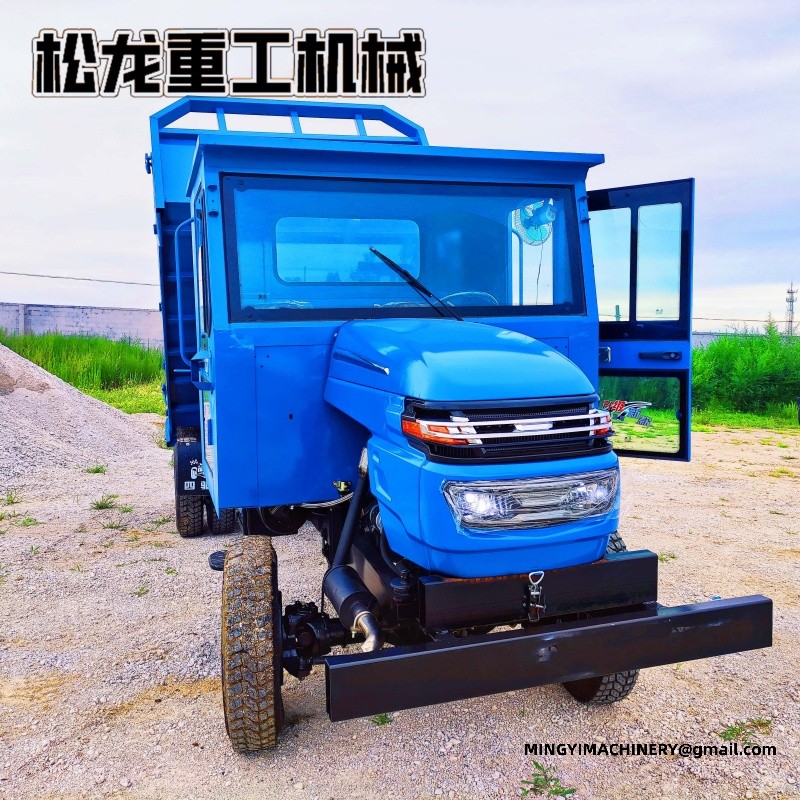
Upgrades should be checked against the base machine. Hydraulic capacity, mounting interface and stability all limit what can reasonably be added to the model in question, and confirming those limits avoids an unsatisfactory result. The decision is economic as well as technical. Comparing the work of reconfiguring the machine in that duty against a different machine is a short calculation that usually gives a clear answer.
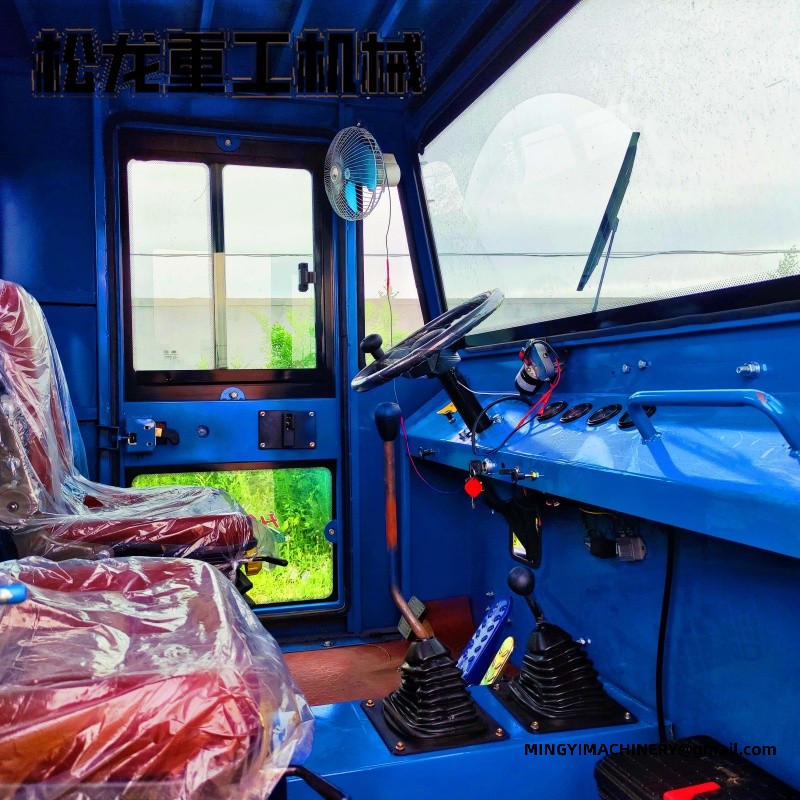
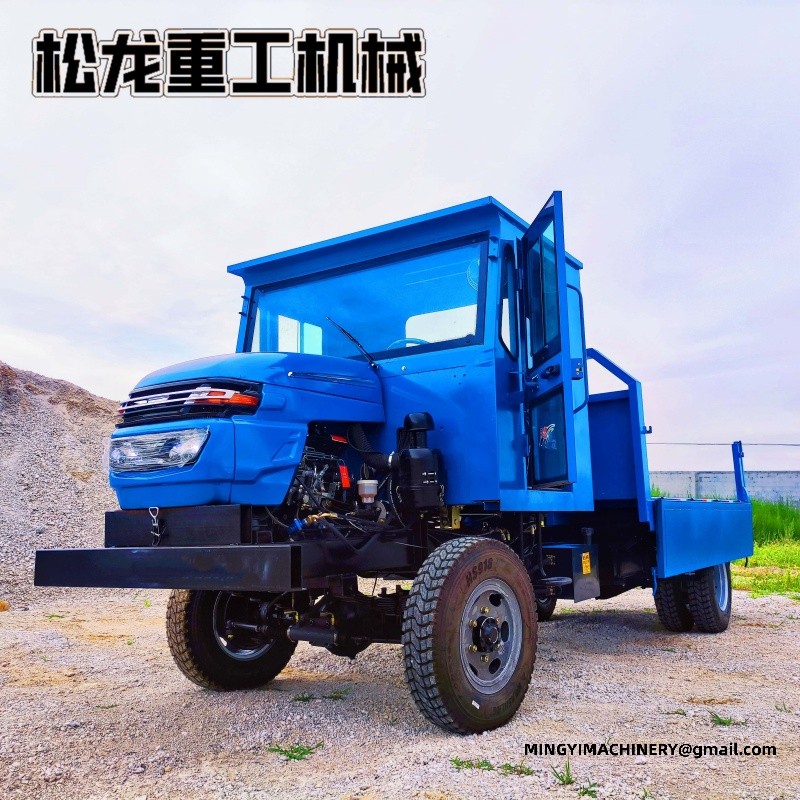
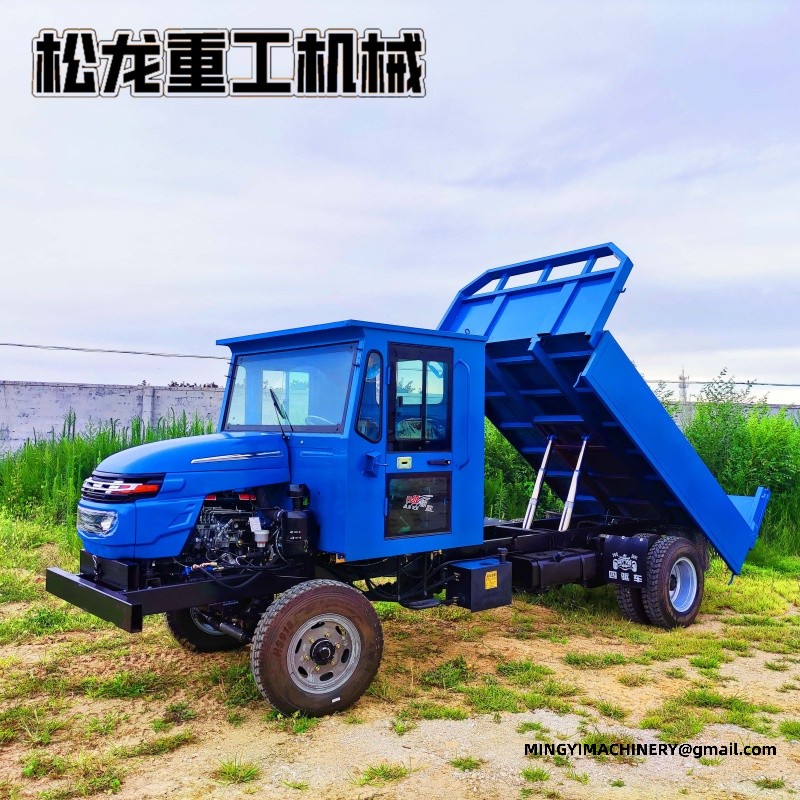
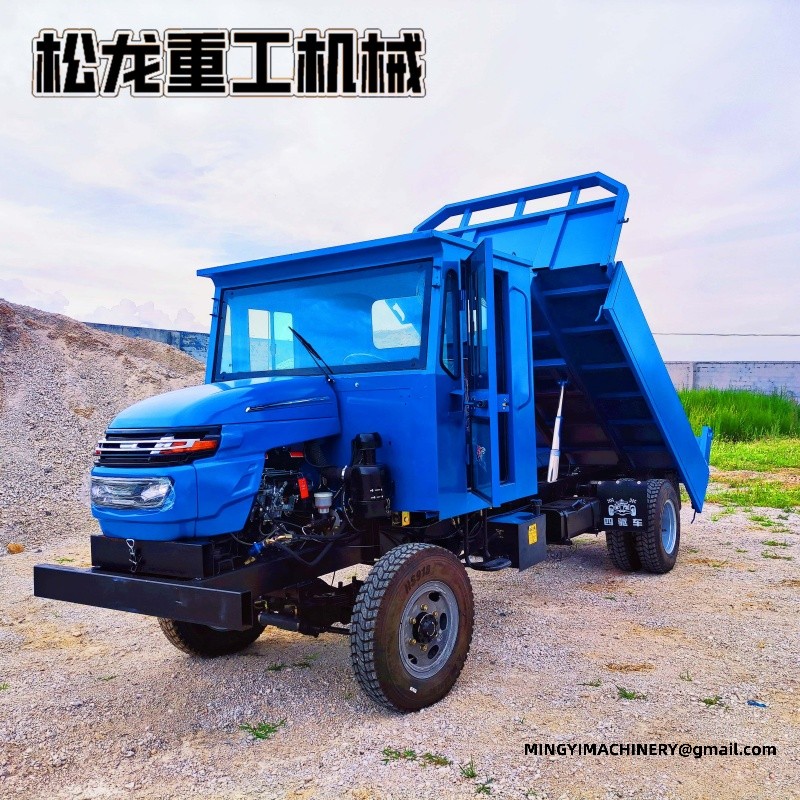
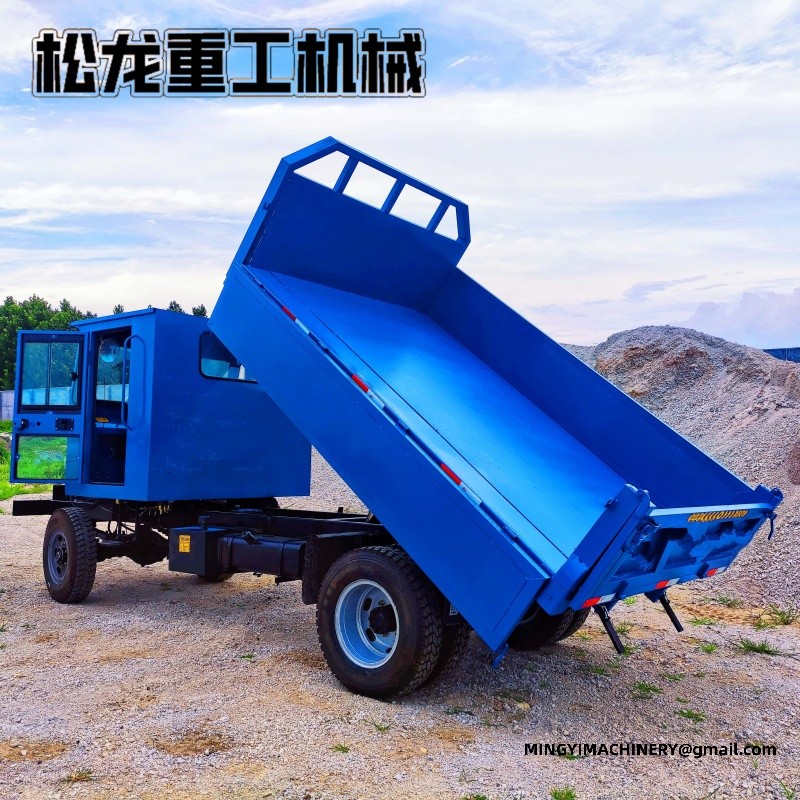
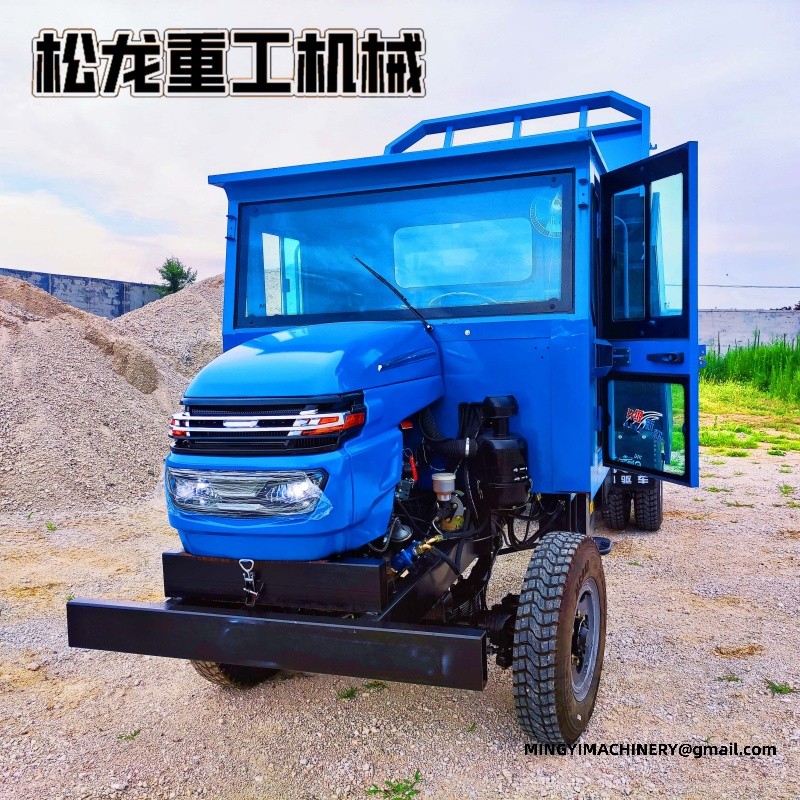
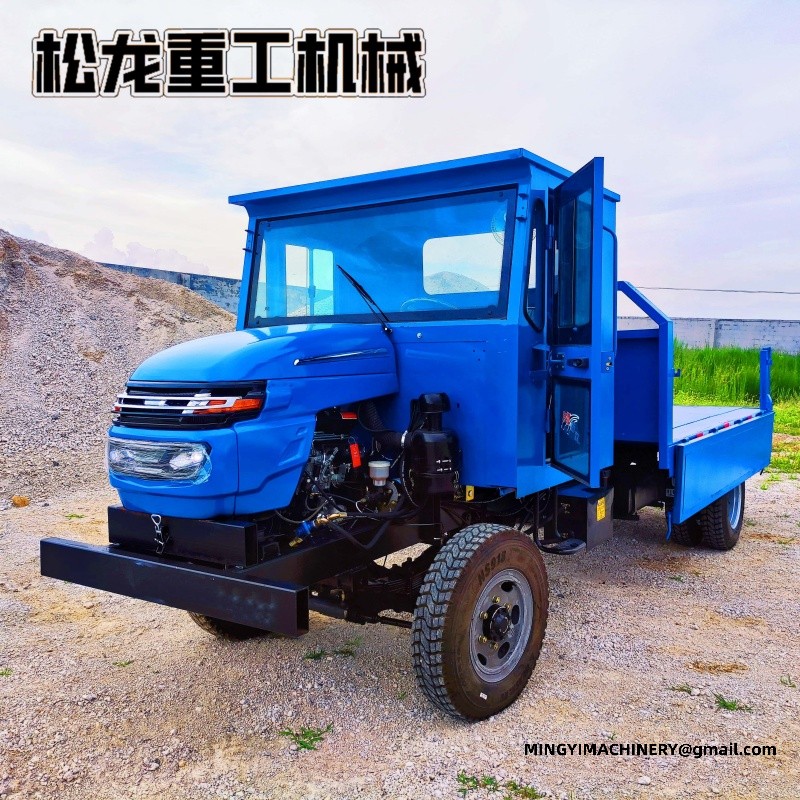
The configurations below are the build sheets most often matched to a machine built for the work. Engine, gearbox, axles, frame and body dimensions are confirmed together, because the body size and the axle rating have to suit the load before the engine rating matters.
| # | 18.Standard | 19.Upgraded | 21.Upgraded | 5.Luxury |
|---|---|---|---|---|
| 1 | Four-cylinder 4102 turbocharged diesel engine | Four-cylinder 4102 turbocharged diesel engine | Four-cylinder 4105 turbocharged diesel engine | Single-cylinder diesel engine, 25 hp |
| 2 | Model 140 part-time gearbox with four-wheel drive | Model 140 part-time gearbox with four-wheel drive | Model 140 part-time gearbox with four-wheel drive | Part-time gearbox with four-wheel drive |
| 3 | High/low range with crawler gear | High/low range with crawler gear | High/low range with crawler gear | High/low range with crawler gear |
| 4 | Simple cab | Fully enclosed cab | Simple cab | Enclosed cab |
| 5 | Oil brakes | Six 750R16 steel-belted radial tyres | Six 825R16 steel-belted radial tyres | Six 700-16 mountain tyres |
| 6 | Six 700-16 mountain tyres | Reinforced ISUZU-pattern front axle | Reinforced ISUZU-pattern front axle | Model 212 front axle |
| 7 | Reinforced ISUZU-pattern front axle | Reinforced 1061 rear axle | Reinforced 1080 rear axle with air cut-off brake | Model 130 rear axle |
| 8 | Reinforced 1061 rear axle | Air cut-off brakes | Air cut-off brakes | Air cut-off brakes |
| 9 | Reinforced 80 x 180 mm square tube frame | Reinforced 80 x 180 mm square tube frame | Reinforced 80 x 180 mm square tube frame | Reinforced 60 x 140 mm square tube frame |
| 10 | Rear body 2.2 m long x 2.1 m wide x 0.45 m high | Rear body 3.0 m long x 2.1 m wide x 0.45 m high | Rear body 3.0 m long x 2.2 m wide x 0.45 m high | Rear body 2.2 m long x 1.5 m wide x 0.45 m high |
| 11 | Tailgate with self-dumping function | Tailgate with self-dumping function | Tailgate with self-dumping function | Tailgate with self-dumping function |
| 12 | Hydraulic power steering | Side-opening rear body tailgate with cab ladder | Hydraulic power steering | Side-opening rear body tailgate |
| 13 | Twin hydraulic rams | Hydraulic power steering | Twin hydraulic rams | Hydraulic power steering |
| 14 | Two-person comfort seat | Twin hydraulic rams | Two-person comfort seat | Twin hydraulic rams |
| 15 | Twin-battery electric start | Two-person comfort seat | Heavy-duty leaf springs | Two-person comfort seat |
| 16 | Square-nose bonnet | Thickened heavy-duty leaf springs | Twin-battery electric start | Heavy-duty leaf springs |
| 17 | — | Twin-battery electric start | Square-nose bonnet | Twin-battery electric start |
| 18 | — | Square-nose bonnet | — | Square-nose bonnet |
Export packing is part of the machine, not an afterthought. The dumper is blocked and braced inside the container so that it arrives in the same condition it left, and the load plan is decided by the dimensions rather than by what fits loosely.
Heat and dust shorten service intervals rather than machine life. In these conditions the filters on the unit in daily use need attention more often, and the cooling surfaces need to be kept clear to hold the working temperature.
Training is simpler than repair. An hour spent with a new operator on the equipment on site, covering the limits and the awkward cases, is the least lengthy hour in the whole ownership.
Travel time is not working time, and it should be planned as its own item. The hours spent moving the model in question between jobs are hours not worked, and a trailer that matches the machine reduces them every single trip.
A cold start is easier when the machine is prepared the night before. The routine that keeps the unit on the job working through winter is mostly a matter of fuel, battery and patience in the first ten minutes of the day.
Workload is rarely even across the year, and the machine should be specified for the busy weeks. The equipment in service sized only for the average month will be the limiting factor exactly when the work is worth the most.
Machines rarely fail without warning. A change in sound, a slower function or a new leak on this class of machine is the machine saying something early, and listening then takes a fraction of the time that waiting does.
Every line above is a build item rather than an optional extra, and the final sheet for the unit in daily use is confirmed against the destination, the ground and the load before production.
E-mail:sales@mingycn.com
LINE(ID):mingyicn









