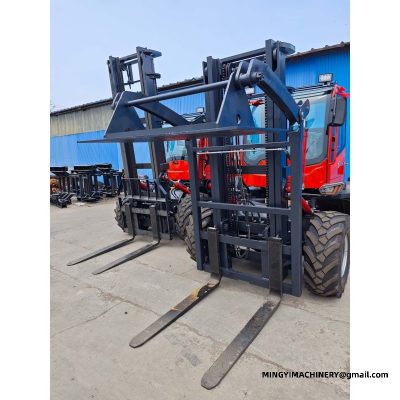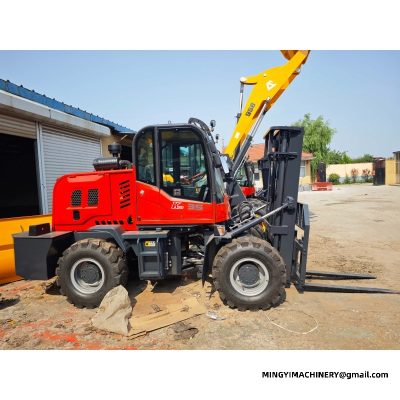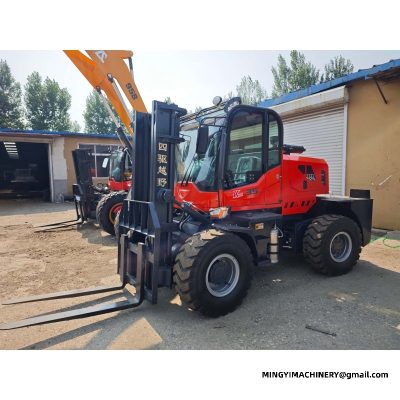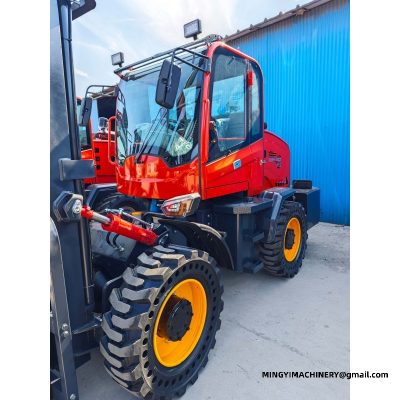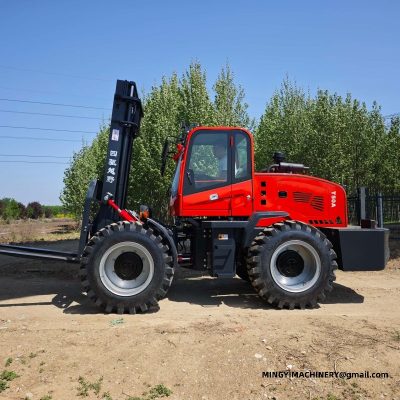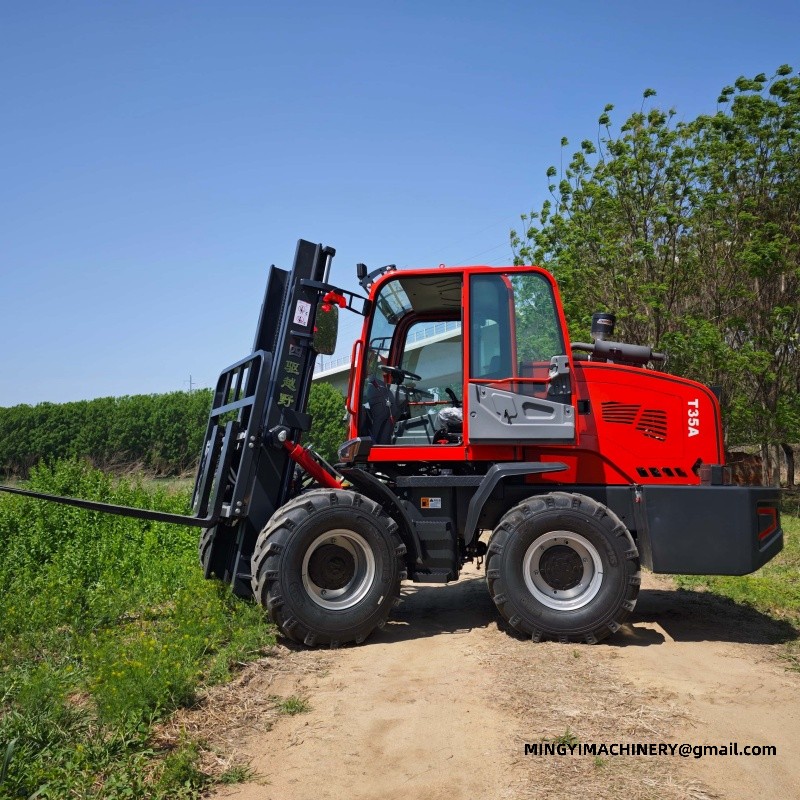
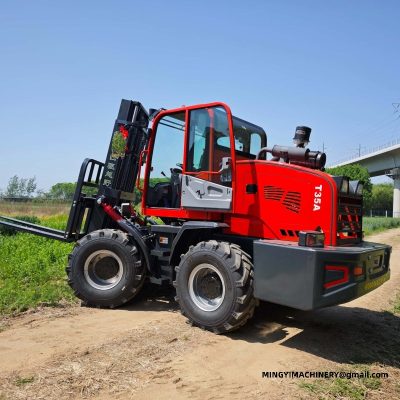
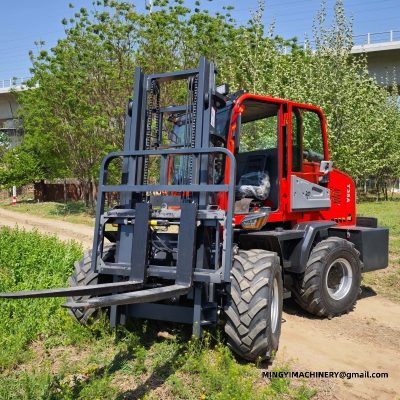
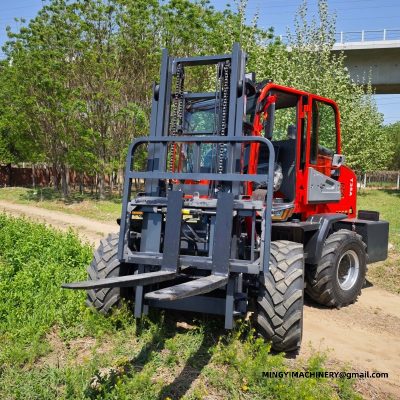
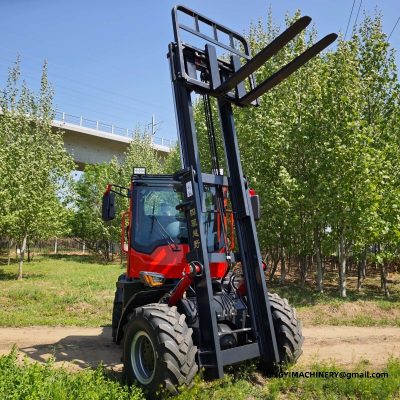
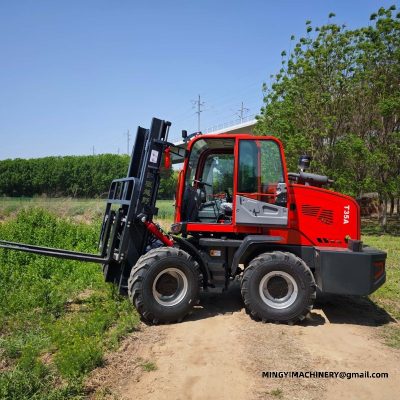
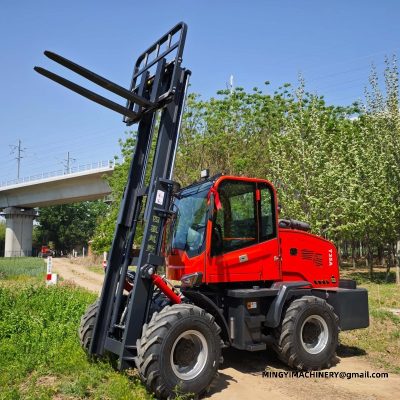
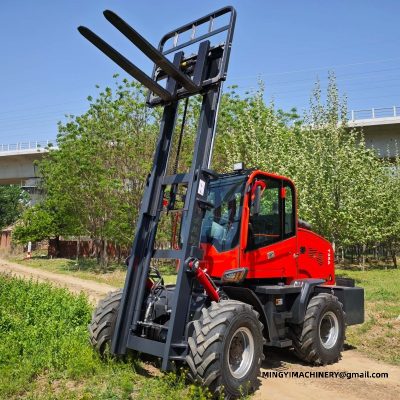
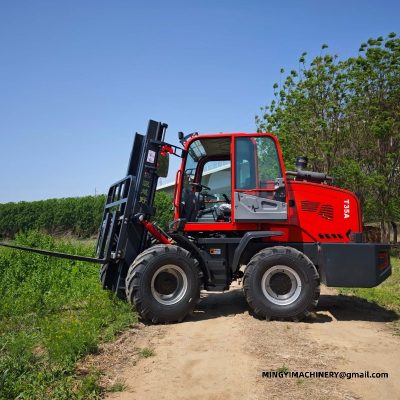
There is a version of the forklift for almost every site, and the differences are practical rather than cosmetic. What follows is organised the way a specification is actually settled: the job first, then the ground, then the machine, then the paperwork.
Resale starts at purchase. Specification choices, service records and the condition of wearing parts are what a buyer looks at, and this class of machine that has been maintained on schedule is worth more than one that merely looks clean. Replacement timing is a planning decision. Knowing the intended working life of the unit in daily use lets an owner sell while the machine still has value rather than after a major repair becomes due. Records are part of the asset. Keeping the service history and the hour records with a machine of this size makes it easier to sell, easier to insure and easier to justify the replacement machine internally.
Abrasive conditions shorten service intervals. Air filters, seals and any exposed sliding surface on the equipment on site need attention more often in dusty or muddy work, and the extra checks prevent far more wear than the time they take. Cleaning is maintenance, not appearance. Washing the cooling surfaces and clearing packed material from the machine itself keeps temperatures where they should be and makes the next inspection quicker and more useful.
Cold changes how a machine starts and how it warms up. Allowing the model in question to reach operating temperature before loading it, and using the correct grade of oil and fuel for the season, prevents most cold-start problems. Batteries and fluids are the parts that notice the cold first. The machine in that duty kept on a maintainer through a freezing spell starts on the first turn, while one left standing is the usual cause of a lost morning.
Stability is the first limit, not the last. Load, reach, ground and gradient together decide what the unit on the job can safely carry, and the conservative figure is the one that keeps the machine upright. People on foot are the real hazard. A plan that separates pedestrians from the working area of a machine built for the work, with a banksman where visibility is poor, prevents the incidents that dominate site statistics.
Machine productivity depends on what happens around it. Deliveries, other trades and the sequence of work decide how much of the shift the equipment in service spends actually working rather than waiting.
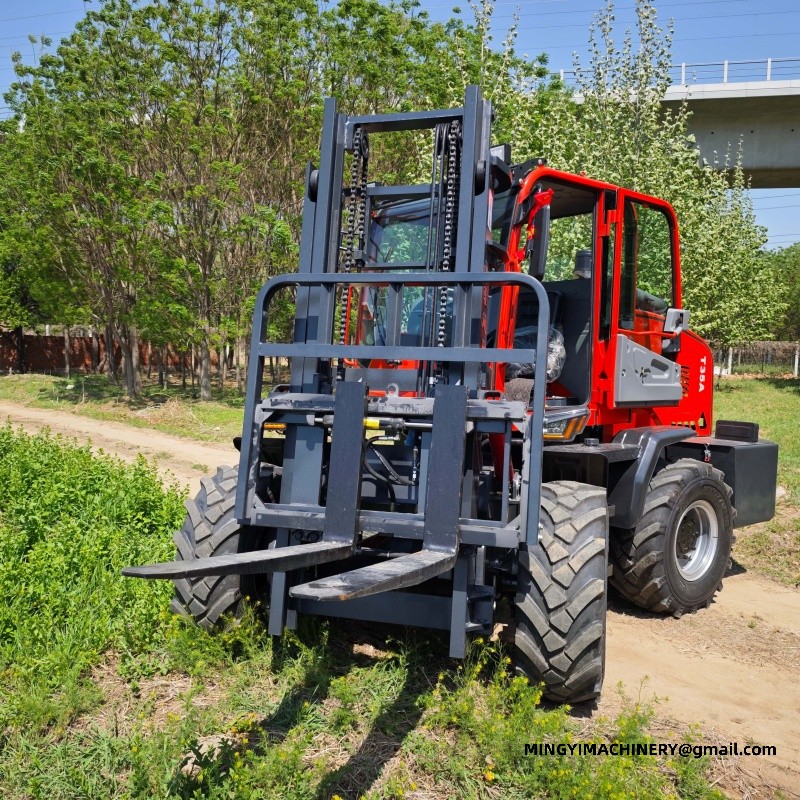
Every attachment changes the capacity. Adding weight and reach ahead of the carriage reduces what the forklift can lift, and the derated figure is the one that belongs in the working plan.
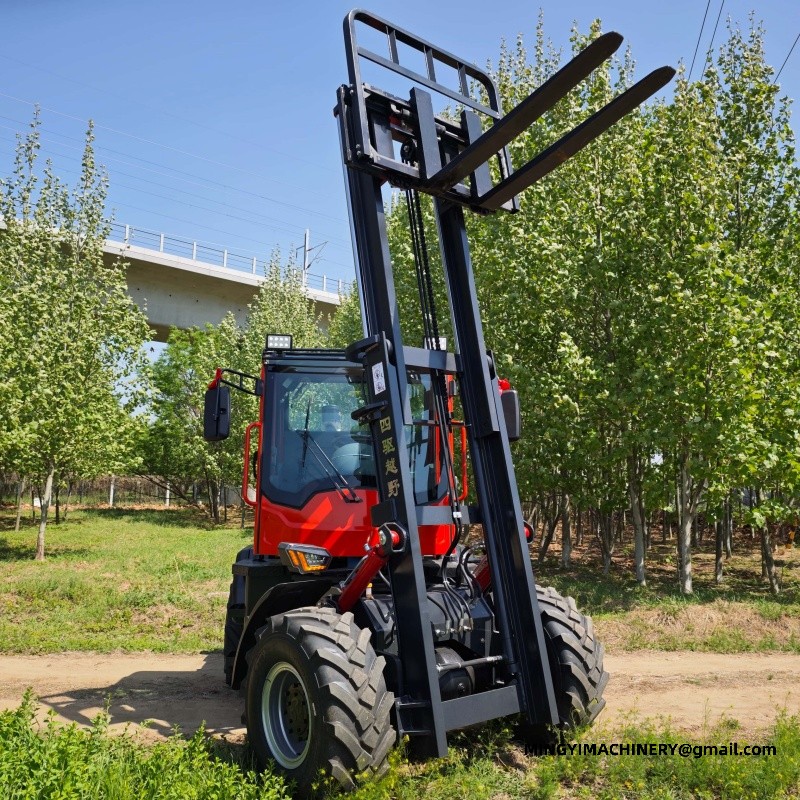
Ballast and attachment weight change the machine. Adding a heavy tool to this class of machine moves the centre of gravity, and the counterweight or configuration should be matched to the tool rather than assumed. Carrying and travelling with a load needs its own plan. Speed, gradient and surface all matter more once the unit in daily use is loaded, and the safe combination is the conservative one.
Support after delivery is a parts question. Filters, belts, hoses and the wearing items specific to a machine of this size are what a buyer should plan to hold before the first service interval rather than order after a failure. Remote diagnosis shortens most faults. A walk-around on video with the panels open often identifies the cause on the equipment on site without waiting for a visit, and avoids shipping a part that turns out not to be needed.
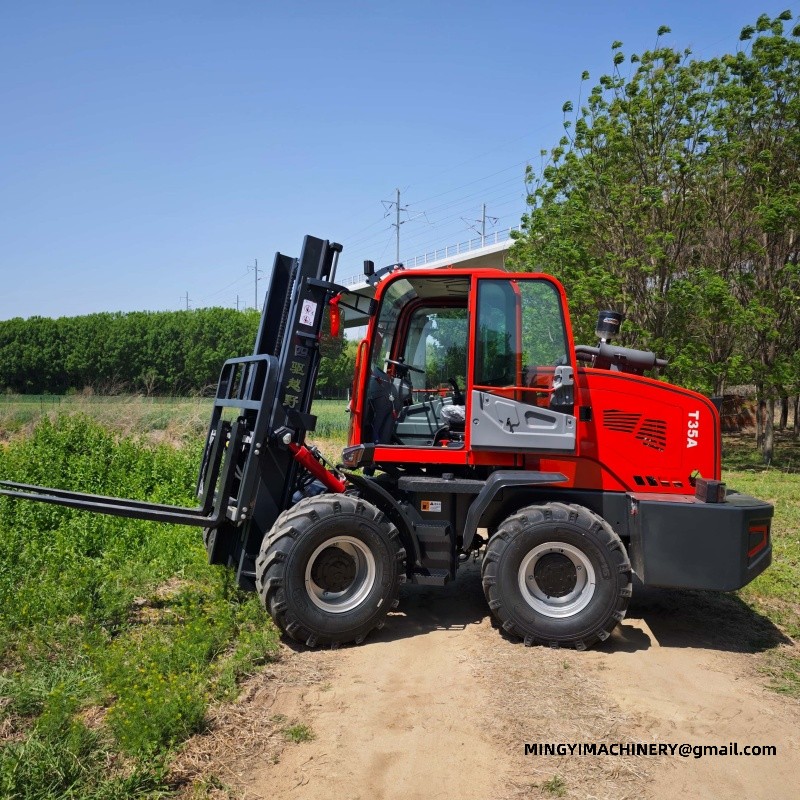
Duty cycle is the honest measure of a machine. The model in question working a few hours a week has different needs from one working two shifts, and the cooling, filtration and service intervals should follow the hours rather than the calendar. Hour planning helps at resale as well. The machine in that duty with a recorded service history and a sensible hour count is easier to sell than one with the same hours and no records, whatever its condition.
Customisation should still be limited to what the work needs. Each addition to a machine built for the work is another item to maintain, so the useful question is not what can be added but what the job list actually requires.
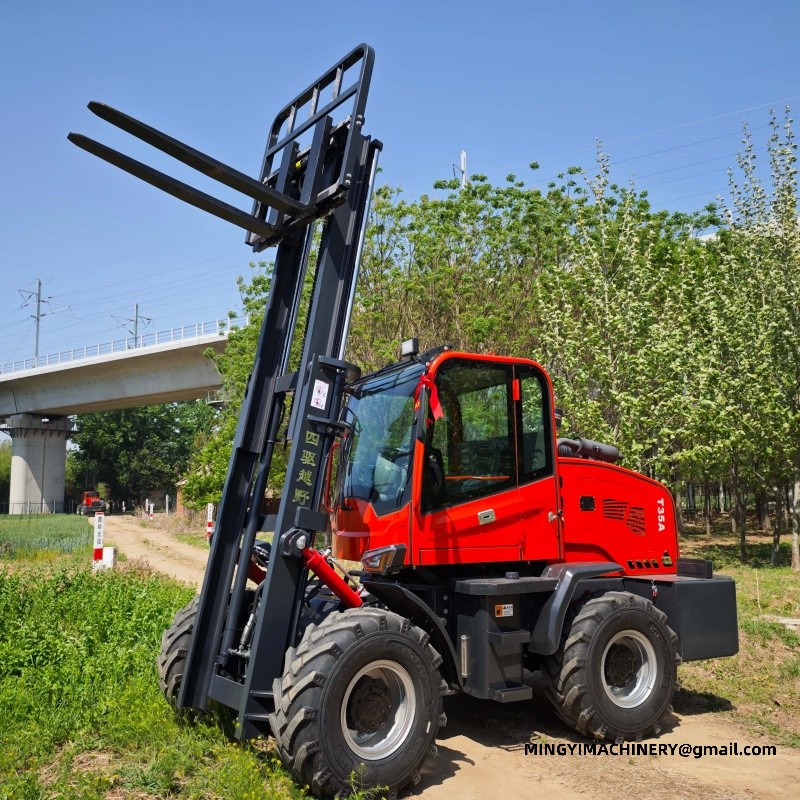
Brakes on a loaded machine travelling downhill are the critical system. Testing the service and parking brake on the forklift at the start of a shift is simple, and it is the check most often missed.
Documentation should be agreed at order stage. The commercial invoice, packing list and any certificate required at destination are part of shipping the unit in daily use, and missing papers delay clearance longer than the voyage takes.
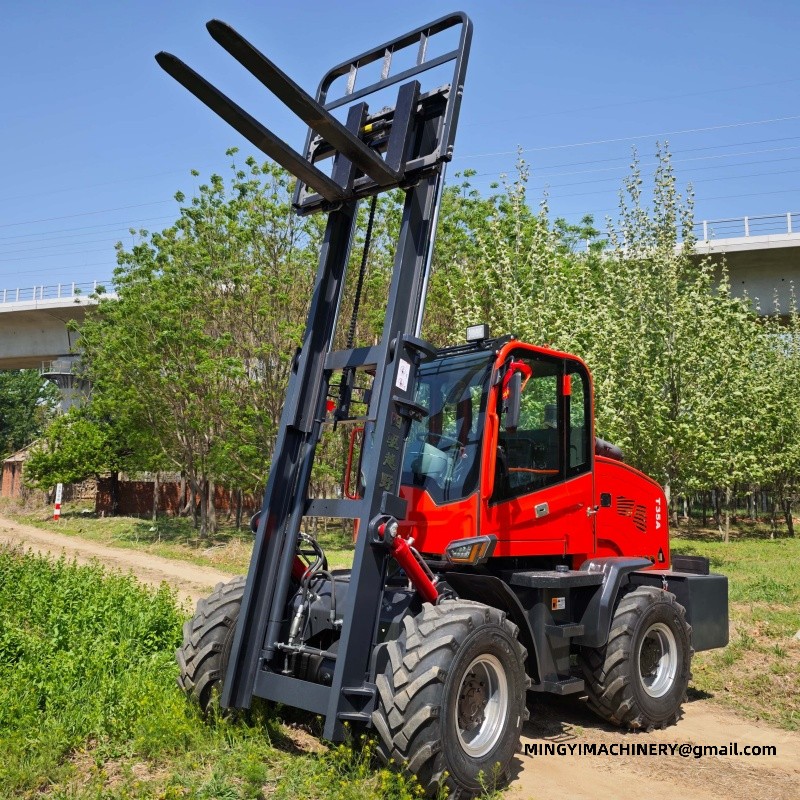
Power unit choice is usually a parts question, not a performance one. Two buyers can order the same the machine itself and sensibly choose different engines, because the right answer depends on which brand the local workshop already supports. Matching the engine to the duty matters more than the peak rating. The equipment on site that spends its day at part load benefits from a different setup than one that works at full output, and the difference shows in fuel use over a season.
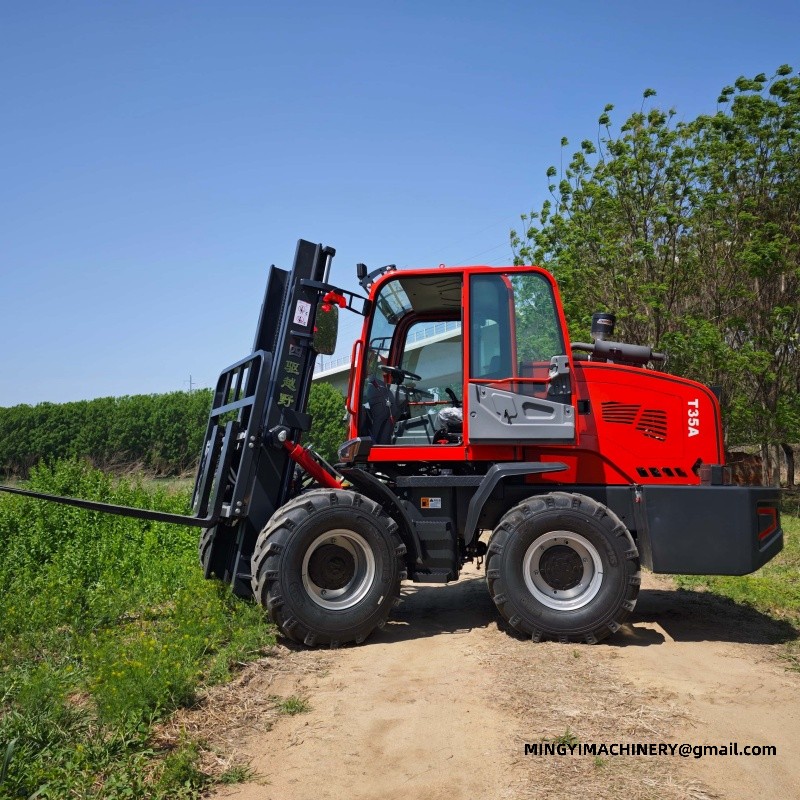
Capacity is a chart, not a number. The rating of the unit on the job applies at a stated load centre and height, and the honest way to compare machines is to read the chart at the height and reach the work actually needs. Mast choice follows the stacking height. The machine in that duty specified with a two-stage mast lifts lower and travels better under a doorway, while a three-stage mast reaches higher and gives up some residual capacity. Forks and carriage matter as much as the mast. Correct fork length and a carriage suited to the load on a machine built for the work make the difference between a stable lift and one that has to be repeated.
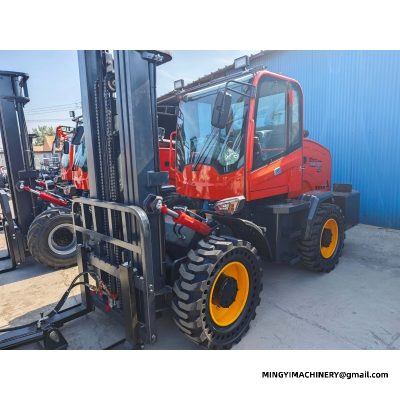
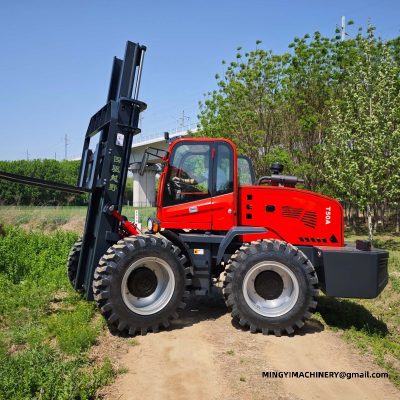
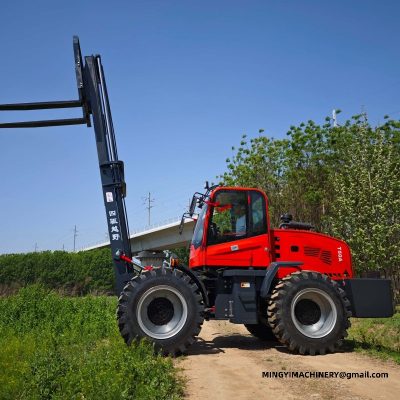
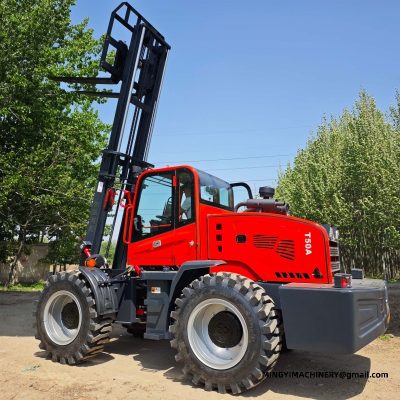
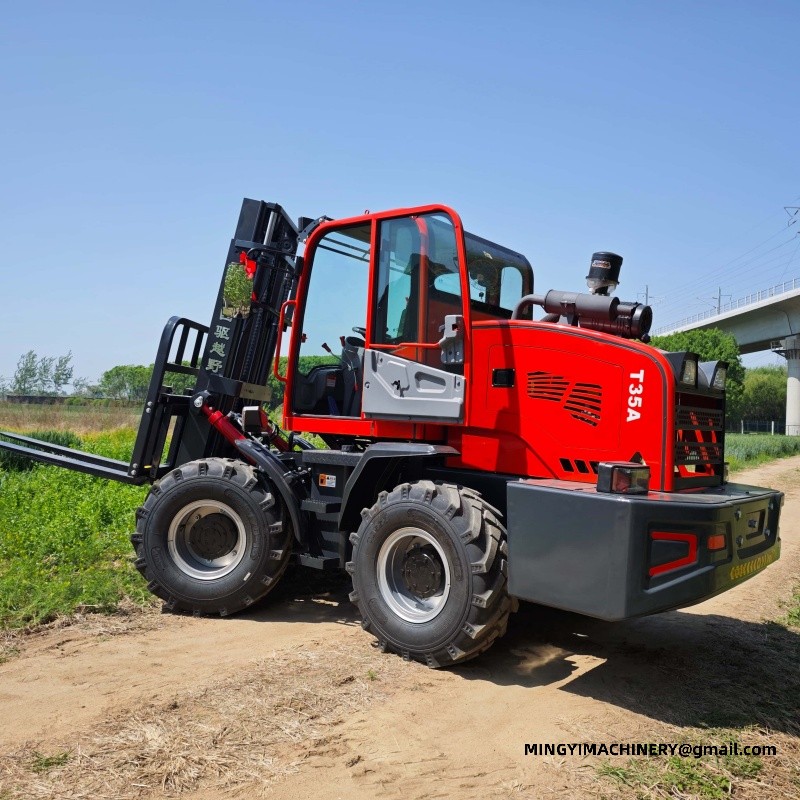
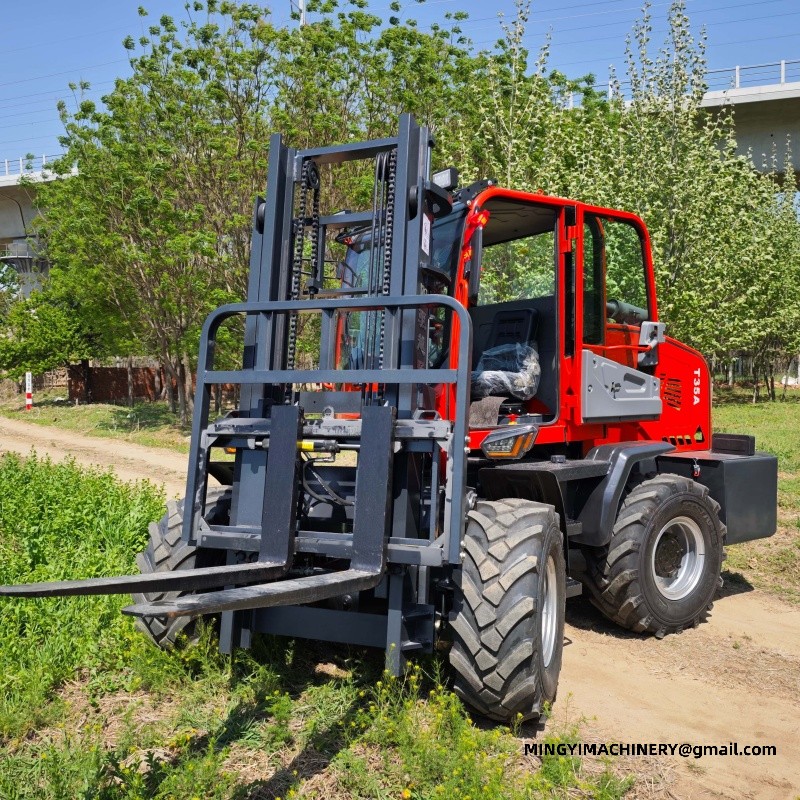
The models below are the four-wheel drive rough terrain forklifts in this range. Capacity, mast, axle and dimensional data are read together, because the load chart at the working height is what the job is actually limited by.
| Model | Wheelbase | Rated lift capacity | Engine | cab | Gradeability | Axle | Overall size | Lift height |
|---|---|---|---|---|---|---|---|---|
| 4 tfront articulated | 2060 mm | 4000 kg | 410265 kw*1.36=88.4 hp | new electrophoretic deluxe round canopy | 45 deg | heavy cast steel wheel-side reduction axle | 4050 x 1950 x 2470 mm | Lift height 3-6 m |
| 3.5 tfront articulated | 2060 mm | 3500 kg | 49036.8 kw | new electrophoretic deluxe round canopy | 45 deg | heavy cast steel wheel-side reduction axle | 3950 x 1850 x 2380 mm | Lift height 3-6 m |
| CPCD-50 short wheelbase | 2160 mm | 5000 kg | 4102 turbo 78 kw*1.36=106.8 hp | new electrophoretic deluxe round canopy | 45 deg | heavy cast steel wheel-side reduction axle | 4450 x 2150 x 2600 mm | Lift height 3-6 m |
| 3.5 trear articulated | 1875 mm | 3500 kg | 49036.8 kw | new electrophoretic deluxe round canopy | 45 deg | heavy cast steel wheel-side reduction axle | 3450 x 1850 x 2250 mm | Lift height 3-6 m |
| CPCD-35 short wheelbase | 1875 mm | 3500 kg | 49036.8 kw | new electrophoretic deluxe round canopy | 45 deg | heavy cast steel wheel-side reduction axle | 3730 x 1850 x 2380 mm | Lift height 3-6 m |
| Item | Note |
|---|---|
| Attachments | Side shift, fork positioner, drum clamp, bale clamp and load stabiliser are the attachments most often specified with this range. |
| Tyre options | Chevron pattern, semi-solid and solid tyres are available; solid tyres suit scrap and foundry work, semi-solid suits mixed ground. |
| Mast and fork options | Two-stage 3 m / 3.5 m / 4 m / 4.5 m masts and three-stage 4.5 m / 5 m / 6 m masts are matched to the load chart before the truck is built. |
Downtime is simplest when it is planned. Booking the service for the unit in daily use in the quiet part of the season takes nothing from the schedule, while the same work in the busy weeks gives up a day of output every time.
A machine should be inspected while it is still on our floor rather than after it lands. For the equipment on site that means the engine is run to temperature, the hydraulics are cycled through full travel, and every function is checked against the build sheet before the crate is closed.
A machine that only one person can use is a single point of failure. Training a second operator on the model in question takes a day and removes the dependency that otherwise governs holidays, illness and busy weeks.
Rubber, seals and hoses age whether the machine works or not. Keeping the unit on the job out of direct sun and off damp ground slows that, and running it briefly at intervals keeps everything moving.
Holding spares is about downtime rather than the shelf itself. The question for the equipment in service is not how large the part is but how long the machine sits while it is found, and a small shelf answers that better than a fast courier.
Retrofitting is limited by the base machine. Before anything is added to this class of machine the hydraulic flow, the mounting interface and the stability allowance have to be checked, because those limits are what decide what is sensible.
Documentation should match the machine that was actually built. The sheet supplied with a machine of this size records the configuration as delivered, because the generic catalogue description is not what the customer needs when ordering a part.
Every line above comes from the build sheet for the equipment on site, and the final configuration is confirmed against the working conditions and the destination before production.
E-mail:sales@mingycn.com
LINE(ID):mingyicn