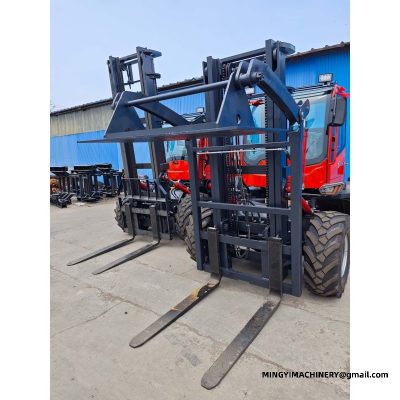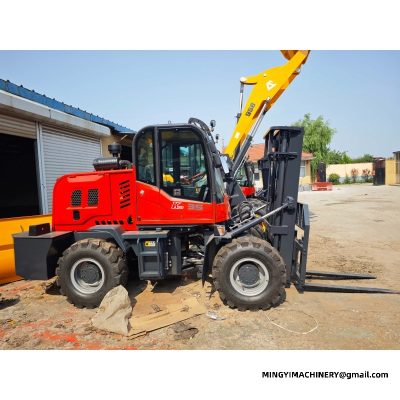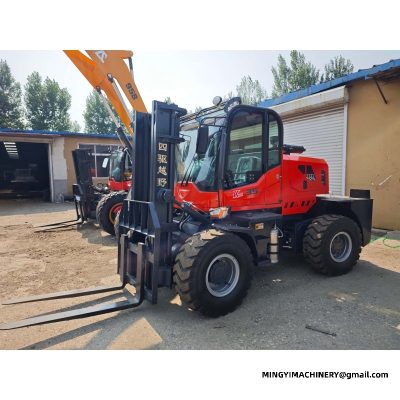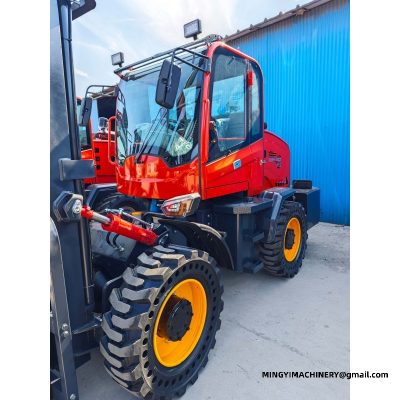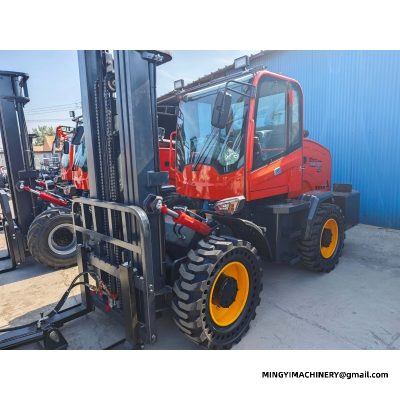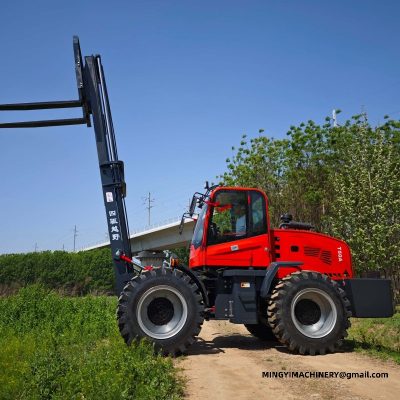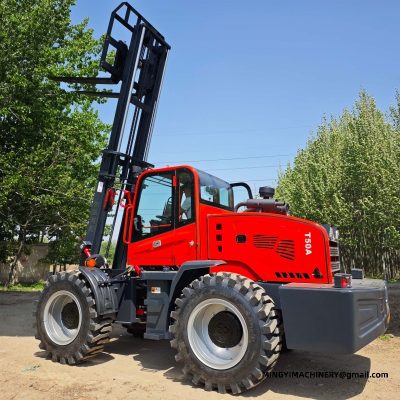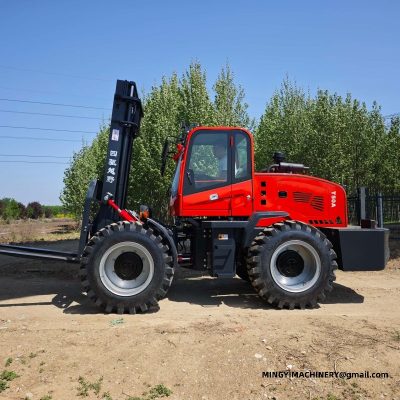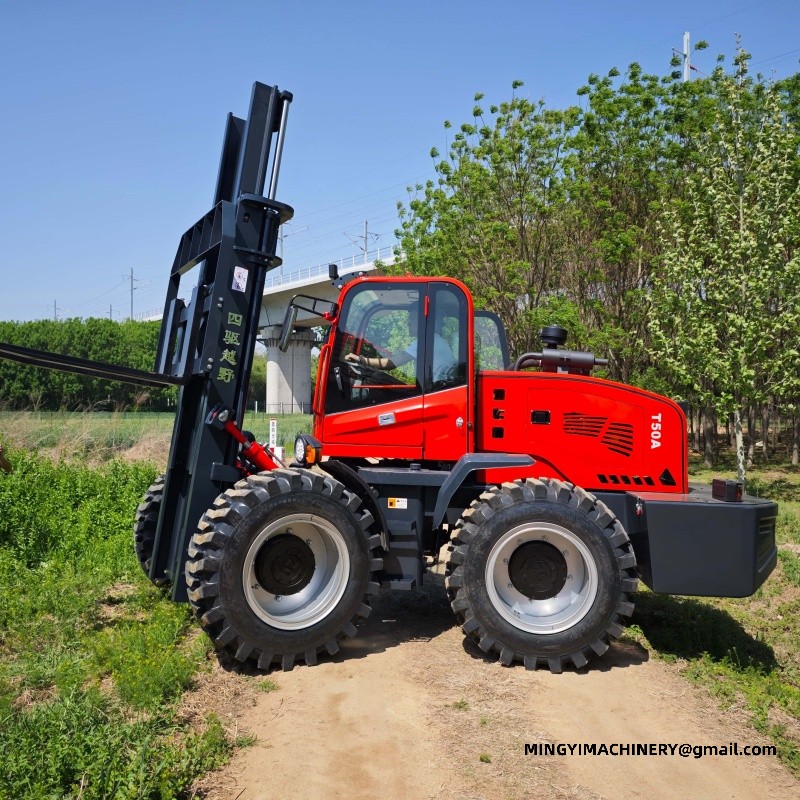
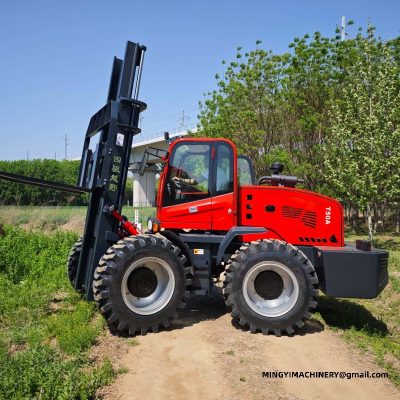
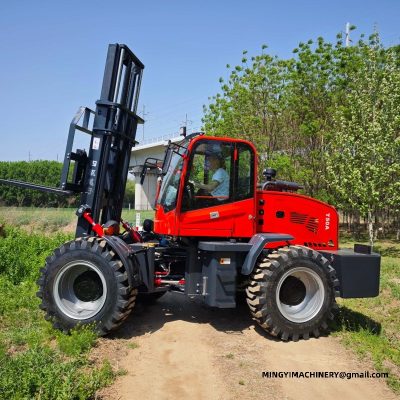
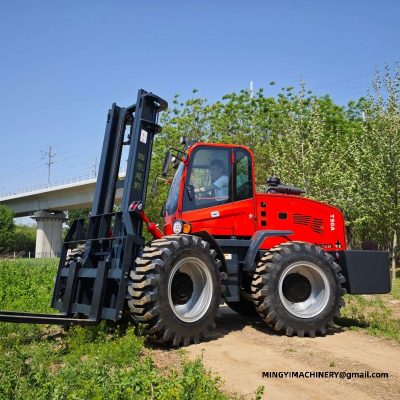
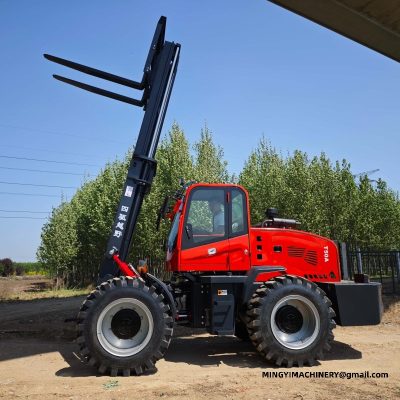
Several forms of the forklift appear in this range, and the right one depends on the ground more than on the brochure. Below, the practical differences are set out alongside the figures so the two can be read together.
Machine output varies more between operators than between brands. Smooth, planned movements put less load on the structure and use less fuel, and that difference is visible on the hour meter and in the service bills for this class of machine.
Lighting matters more than it appears. Work that starts before daylight or finishes after it is common on site, and the unit in daily use with adequate forward and rear lighting keeps that work safe.
Standing still is hard on machinery. A machine of this size left for weeks benefits from a clean, dry, covered space, a charged battery and a fuel system prepared for the layoff, and all three effort very little.
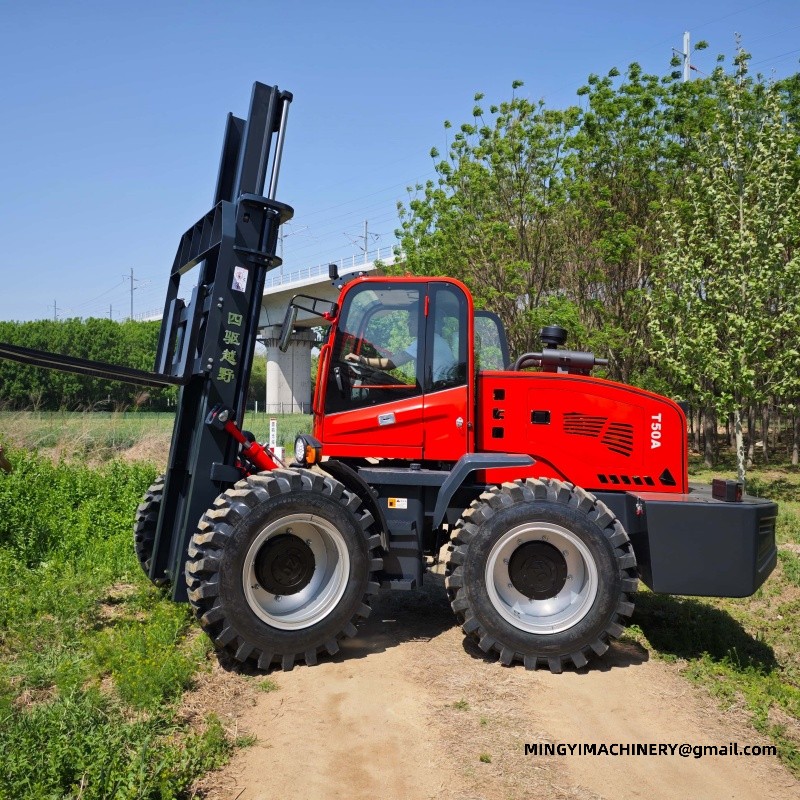
Capacity is a chart, not a number. The rating of the equipment on site applies at a stated load centre and height, and the honest way to compare machines is to read the chart at the height and reach the work actually needs. Forks and carriage matter as much as the mast. Correct fork length and a carriage suited to the load on the machine itself make the difference between a stable lift and one that has to be repeated.
Ground decides more of the outcome than power does. Soft, wet or loose surfaces call for a wider footprint and lower ground pressure, while hard standing allows a narrower machine that turns in less space and travels faster between tasks. Traction and flotation are two separate questions. The model in question may have the power for a slope and still not have the grip, so the surface, not the engine rating, is usually what limits the working day.
Rough terrain forklifts exist because a warehouse truck cannot work there. The machine in that duty with four-wheel drive, a high ground clearance and suitable tyres works on a site that stops a standard forklift at the gate.
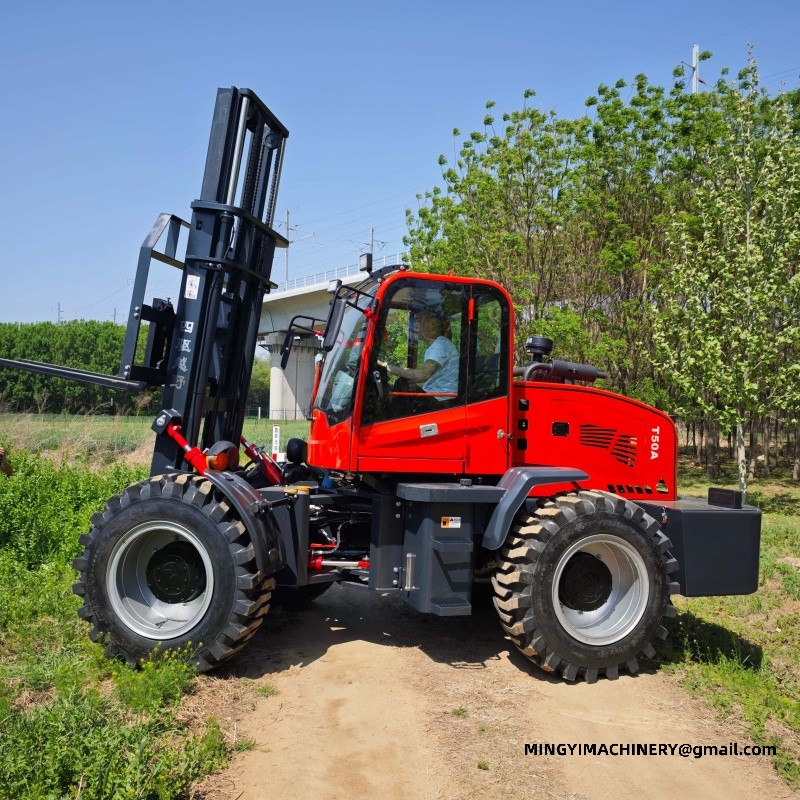
Low temperatures also make materials behave differently. Ground that is frozen hard in the morning can be soft by midday, and planning the sequence around that is easier than fighting it with the unit on the job.
Working after daylight changes the risk. Lighting coverage on the equipment in service and across the working area, plus high-visibility clothing for anyone on foot, are the items that make low-light work practical. Visibility from the seat is different at night. Reflections, shadows and glare all hide detail, so a machine built for the work used after dark benefits from clean lenses, working wipers and a slower working pace.
Fuel is usually the largest controllable running demand. Operating style, correct tyre or track condition and a clean air supply all move consumption on this class of machine by more than most buyers expect.
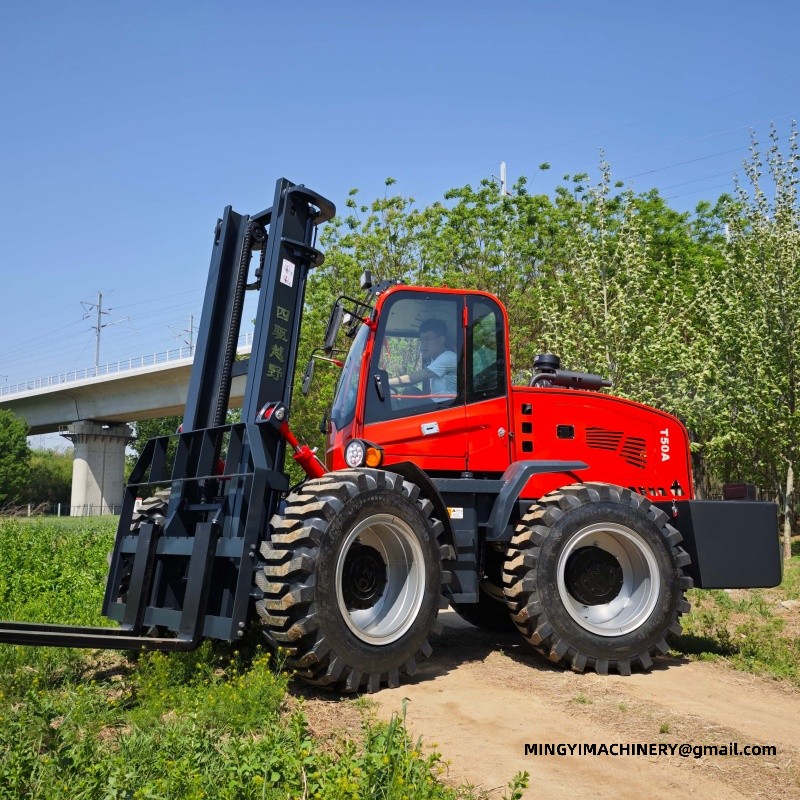
Stability is the first limit, not the last. Load, reach, ground and gradient together decide what a machine of this size can safely carry, and the conservative figure is the one that keeps the machine upright. Seat belt, parking brake and a level load are basics that get skipped. On rough ground especially, the discipline of lowering the load before travelling on the equipment on site is what prevents most tip-overs.
Handover should include the documents as well as the keys. Parts list, service schedule and the operator notes for the model in question are what the workshop needs in month six, and they are much harder to obtain later. A short familiarisation session prevents the early faults. Most first-month problems on the machine in that duty come from unfamiliarity with controls, limits or checks rather than from the machine itself. Keeping the manuals where they can be reached matters. The unit on the job whose documents stay with the machine gets serviced on schedule; one whose paperwork was filed elsewhere tends to run on memory instead.
Wear rate follows conditions far more than hours. The equipment in service working on abrasive ground or in mud will consume undercarriage or tyre life much faster than the same machine on clean ground. Replacing wear items early is usually simpler. Worn components on the forklift load the parts they run against, so a worn part left too long often becomes a major repair.
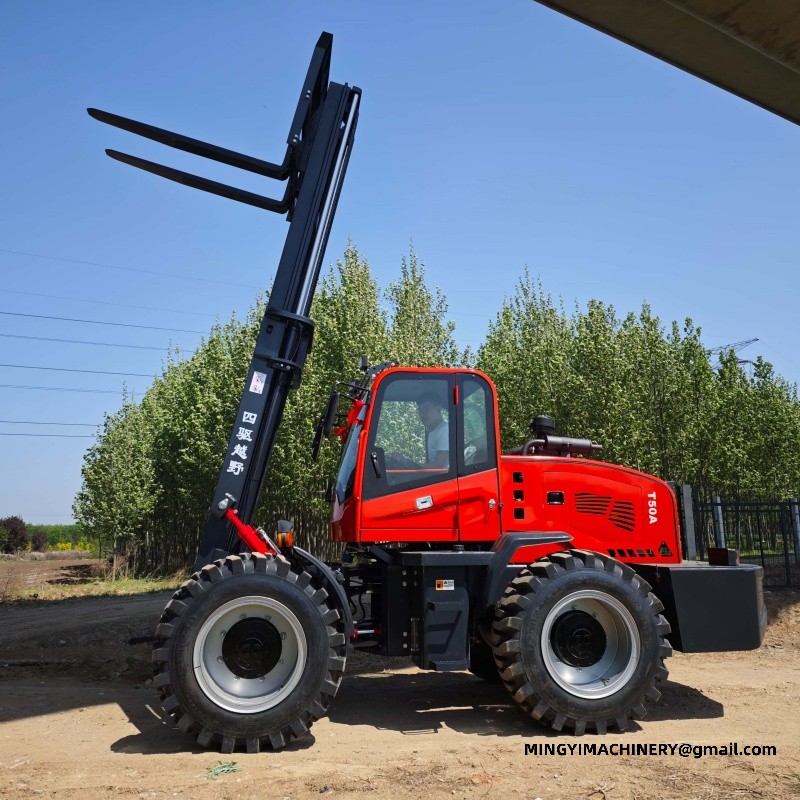
Machine productivity depends on what happens around it. Deliveries, other trades and the sequence of work decide how much of the shift the unit in daily use spends actually working rather than waiting. Access and storage are worth settling early. Where a machine of this size will be parked, refuelled and serviced on site affects the working day more than most specification details, and it takes nothing to plan. Sequencing avoids rework. Doing the work in the order that suits the ground and the following trades keeps the equipment on site productive and prevents finishing a task that then has to be opened up again.
Export orders add steps that domestic buyers never see. Packed dimensions, securing points, documentation and any dismantling required are all settled before the model in question leaves the factory, and each one affects the freight booking. Documentation should be agreed at order stage. The commercial invoice, packing list and any certificate required at destination are part of shipping the machine in that duty, and missing papers delay clearance longer than the voyage takes.
Most failures start as something small that a walk-around would have caught. Fluid levels, belt tension, tyre or track condition and any fresh leak are the items worth two minutes at the start of each shift on a machine built for the work. A simple log helps. Recording hours, fuel and any adjustment made to the equipment in service gives the workshop a history, and that history is what turns an intermittent fault into a one-visit repair instead of three.
Sealed points and guarded areas deserve a look in these conditions. This class of machine working in abrasive dust benefits from checked boots, intact guards and clean breathers, all of which are quick to verify.
The order should state the configuration in writing. Engine, attachments, colour, documents and any market requirement are clearer on the build sheet for a machine of this size than in a conversation after delivery.
The models below are the four-wheel drive rough terrain forklifts in this range. Capacity, mast, axle and dimensional data are read together, because the load chart at the working height is what the job is actually limited by.
| Model | Wheelbase | Rated lift capacity | Engine | cab | Gradeability | Axle | Overall size | Lift height |
|---|---|---|---|---|---|---|---|---|
| 3.5 tfront articulated | 2060 mm | 3500 kg | 49036.8 kw | new electrophoretic deluxe round canopy | 45 deg | heavy cast steel wheel-side reduction axle | 3950 x 1850 x 2380 mm | Lift height 3-6 m |
| 3.5 trear articulated | 1875 mm | 3500 kg | 49036.8 kw | new electrophoretic deluxe round canopy | 45 deg | heavy cast steel wheel-side reduction axle | 3450 x 1850 x 2250 mm | Lift height 3-6 m |
| CPCD-35 short wheelbase | 1875 mm | 3500 kg | 49036.8 kw | new electrophoretic deluxe round canopy | 45 deg | heavy cast steel wheel-side reduction axle | 3730 x 1850 x 2380 mm | Lift height 3-6 m |
| CPCD-50 short wheelbase | 2160 mm | 5000 kg | 4102 turbo 78 kw*1.36=106.8 hp | new electrophoretic deluxe round canopy | 45 deg | heavy cast steel wheel-side reduction axle | 4450 x 2150 x 2600 mm | Lift height 3-6 m |
| 4 tfront articulated | 2060 mm | 4000 kg | 410265 kw*1.36=88.4 hp | new electrophoretic deluxe round canopy | 45 deg | heavy cast steel wheel-side reduction axle | 4050 x 1950 x 2470 mm | Lift height 3-6 m |
| Item | Note |
|---|---|
| Attachments | Side shift, fork positioner, drum clamp, bale clamp and load stabiliser are the attachments most often specified with this range. |
| Mast and fork options | Two-stage 3 m / 3.5 m / 4 m / 4.5 m masts and three-stage 4.5 m / 5 m / 6 m masts are matched to the load chart before the truck is built. |
| Tyre options | Chevron pattern, semi-solid and solid tyres are available; solid tyres suit scrap and foundry work, semi-solid suits mixed ground. |
Rubber, seals and hoses age whether the machine works or not. Keeping the machine in that duty out of direct sun and off damp ground slows that, and running it briefly at intervals keeps everything moving.
Documentation should match the machine that was actually built. The sheet supplied with a machine built for the work records the configuration as delivered, because the generic catalogue description is not what the customer needs when ordering a part.
Securing the load is not optional. Lashing the forklift at the points intended for it, checking the tension before the vehicle moves and rechecking after the first kilometres is standard practice rather than extra care.
Later changes are easier when they were anticipated. Asking for the extra hydraulic circuit or the heavier mounting plate on the unit in daily use at build time adds little and leaves the option open.
The parts that stop a machine are rarely the parts that are hardest to find. Filters, belts, seals and the ground engaging tools on the equipment on site are easy to hold and slow to replace, which is why they belong on the shelf rather than on an order.
Fluid quality is a storage problem before it is a machine problem. Water and sediment in a drum will find the injection system of the model in question eventually, and a settling period is nothing compared with a pump.
Different operators suit different work. The person who is quickest with the unit on the job on open ground is not always the one who is safest in a confined space, and having both available is a genuine advantage.
Every line above comes from the build sheet for a machine built for the work, and the final configuration is confirmed against the working conditions and the destination before production.
E-mail:sales@mingycn.com
LINE(ID):mingyicn