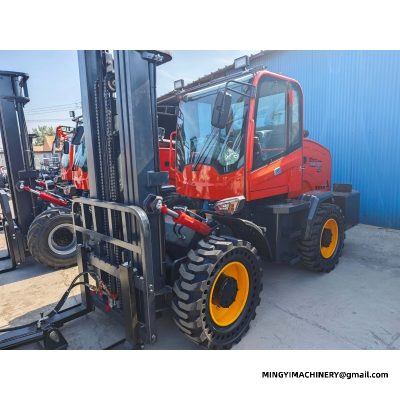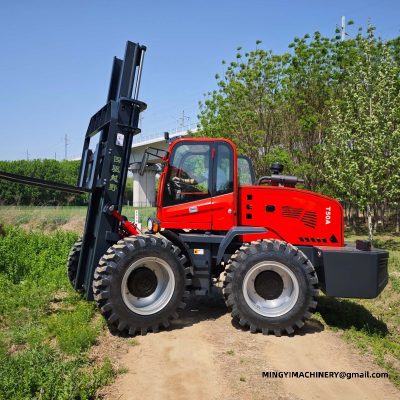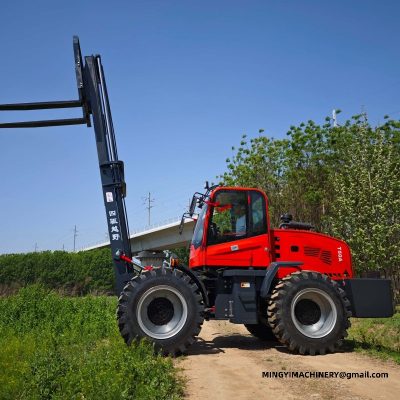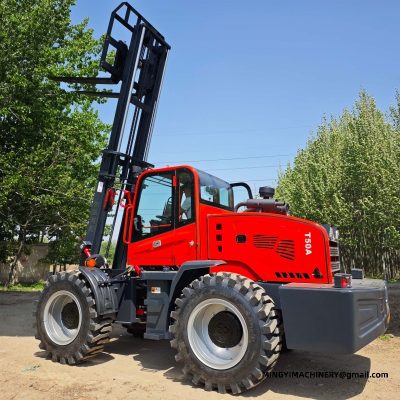
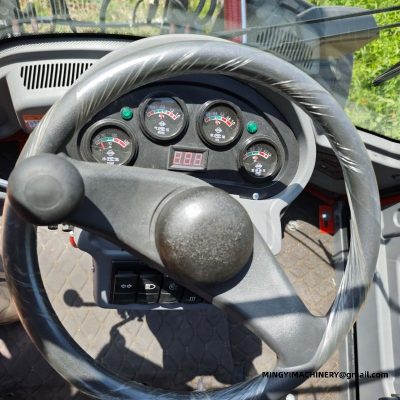
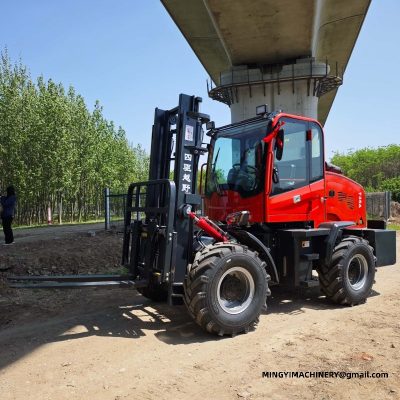
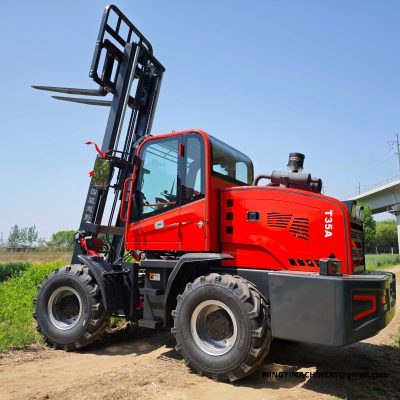
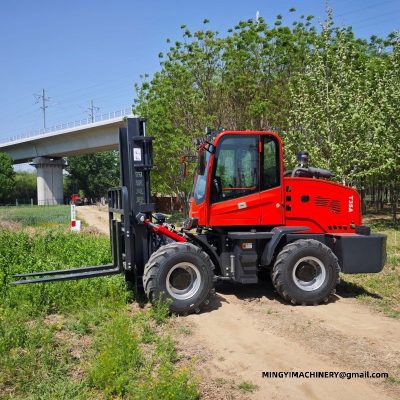
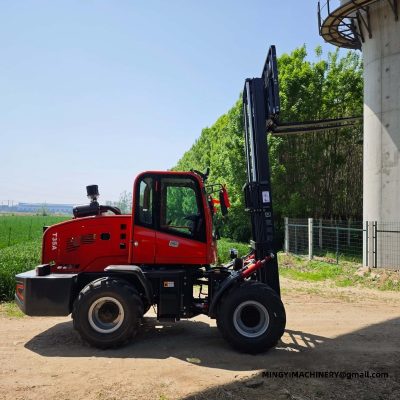
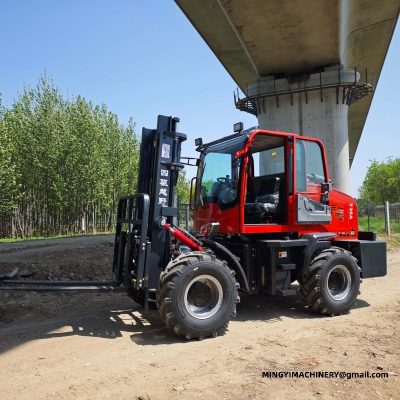
The forklift is built for the work that fills the calendar rather than the work that looks impressive. This page sets out what the machine does, where it fits and what to settle before ordering, so the specification can be matched to the job instead of guessed at.
Brakes on a loaded machine travelling downhill are the critical system. Testing the service and parking brake on this class of machine at the start of a shift is simple, and it is the check most often missed. Smooth inputs protect the machine as well as the load. Avoiding sudden direction changes and braking with the load raised on the unit in daily use extends tyre, mast and axle life noticeably over a year.
Ground decides more of the outcome than power does. Soft, wet or loose surfaces call for a wider footprint and lower ground pressure, while hard standing allows a narrower machine that turns in less space and travels faster between tasks. The working surface should be surveyed before the equipment on site is specified. A machine that is stable on compacted gravel can be unusable on the same site after rain, and the difference shows up as lost days rather than as a fault. Traction and flotation are two separate questions. A machine of this size may have the power for a slope and still not have the grip, so the surface, not the engine rating, is usually what limits the working day.
Support after delivery is a parts question. Filters, belts, hoses and the wearing items specific to the machine itself are what a buyer should plan to hold before the first service interval rather than order after a failure.
Buyers who specify the model in question on paper before enquiring get specifications that can be compared. Without that list, two suppliers will propose two different machines and the simpler one is usually the smaller one, not the better value.
Fleet buyers often want consistency rather than variety. Specifying the machine in that duty so that several units share controls, filters and service points reduces training time and keeps the parts shelf small. Customisation should still be limited to what the work needs. Each addition to the unit on the job is another item to maintain, so the useful question is not what can be added but what the job list actually requires.
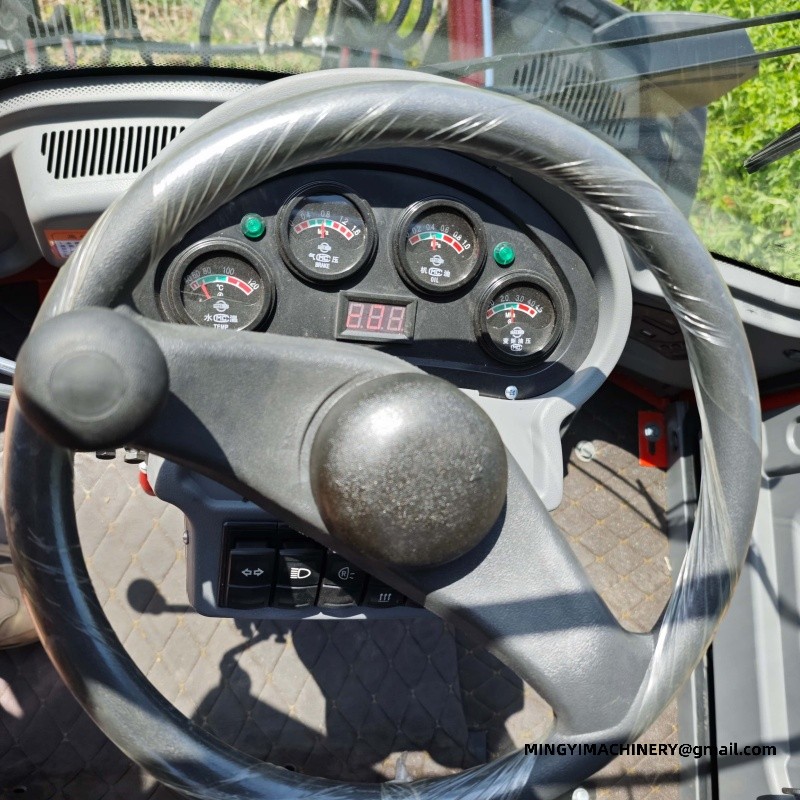
Handover should include the documents as well as the keys. Parts list, service schedule and the operator notes for a machine built for the work are what the workshop needs in month six, and they are much harder to obtain later. A short familiarisation session prevents the early faults. Most first-month problems on the equipment in service come from unfamiliarity with controls, limits or checks rather than from the machine itself.
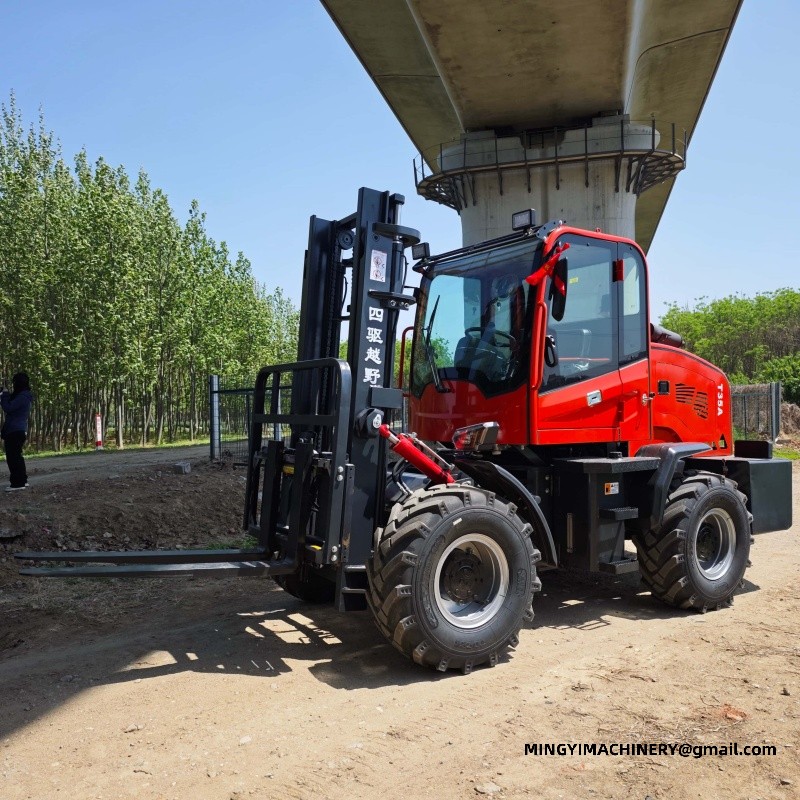
Reconfiguration can extend the useful life of a machine. The forklift that no longer suits the current work may suit it again with a different attachment, guarding or control arrangement. Upgrades should be checked against the base machine. Hydraulic capacity, mounting interface and stability all limit what can reasonably be added to this class of machine, and confirming those limits avoids an unsatisfactory result. The decision is economic as well as technical. Comparing the work of reconfiguring the unit in daily use against a different machine is a short calculation that usually gives a clear answer.
Attachment decisions are best made before delivery. Specifying hydraulics and couplers at build time is simpler than adding them later, and it avoids the downtime of a workshop visit in the first month. Most owners find that the second attachment changes how often the machine is used. A machine of this size that was bought for one task often becomes the general machine on site once a second tool is available.
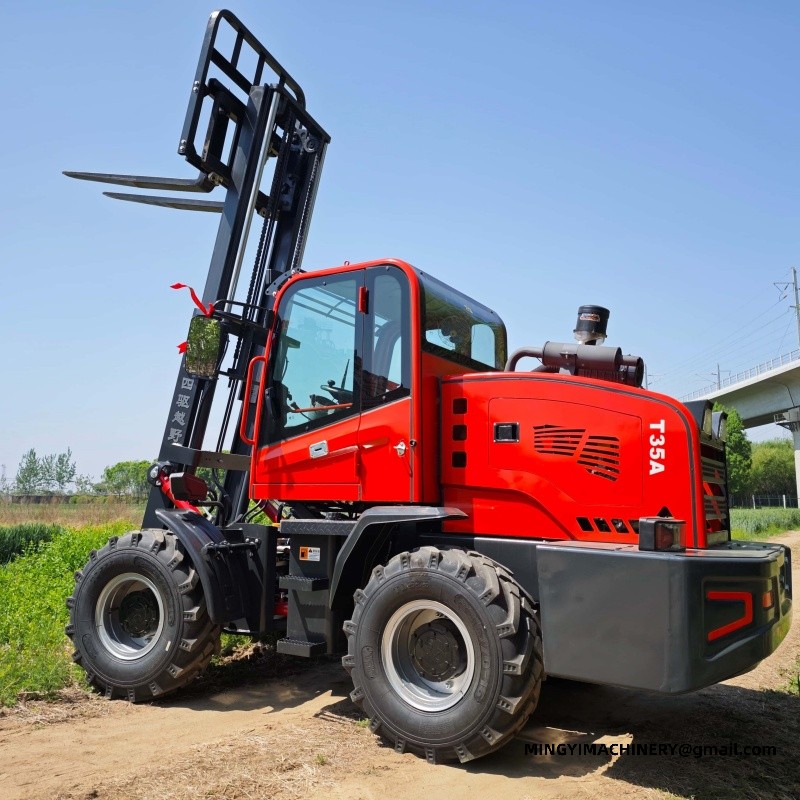
Stability follows the load and its position. Knowing the rated capacity of the machine itself at the working radius, rather than at its best case, is what keeps handling predictable and the machine upright.
Cold changes how a machine starts and how it warms up. Allowing the machine in that duty to reach operating temperature before loading it, and using the correct grade of oil and fuel for the season, prevents most cold-start problems. Batteries and fluids are the parts that notice the cold first. The unit on the job kept on a maintainer through a freezing spell starts on the first turn, while one left standing is the usual cause of a lost morning. Low temperatures also make materials behave differently. Ground that is frozen hard in the morning can be soft by midday, and planning the sequence around that is easier than fighting it with a machine built for the work.
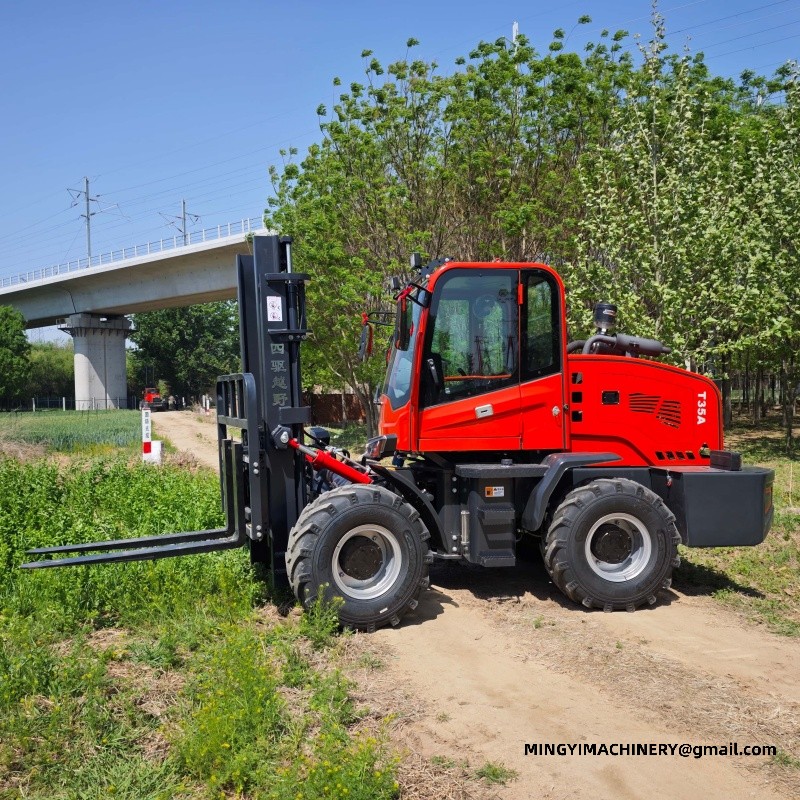
Power unit choice is usually a parts question, not a performance one. Two buyers can order the same the forklift and sensibly choose different engines, because the right answer depends on which brand the local workshop already supports. Emissions documentation is part of engine selection for some destinations. Confirming which units can be supplied and documented for the destination country is worth doing at enquiry stage rather than after the build sheet is signed.
Slopes and edges deserve a separate check. The unit in daily use that is stable on level ground behaves differently across a gradient, and the safe working angle is a number worth knowing rather than estimating.
Standing still is hard on machinery. The equipment on site left for weeks benefits from a clean, dry, covered space, a charged battery and a fuel system prepared for the layoff, and all three effort very little. Before-storage preparation prevents most return-to-work faults. Draining or treating fuel, protecting exposed rods and relieving pressure where the maker specifies it are the items worth an hour when the machine itself is parked.
Certain parts are designed to be consumed. Knowing which items on the machine in that duty are wearing parts, and roughly how long they last in the duty the machine sees, turns replacement into a plan rather than a breakdown.
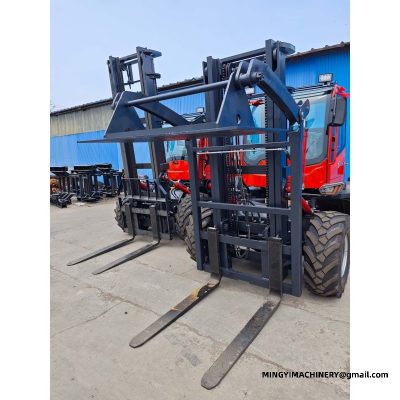
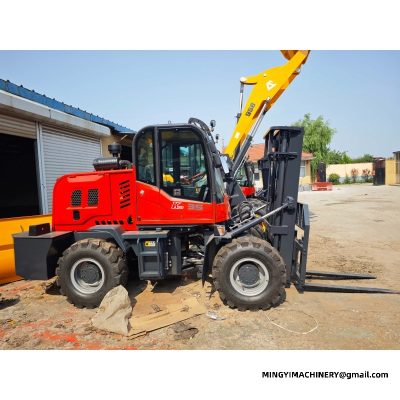
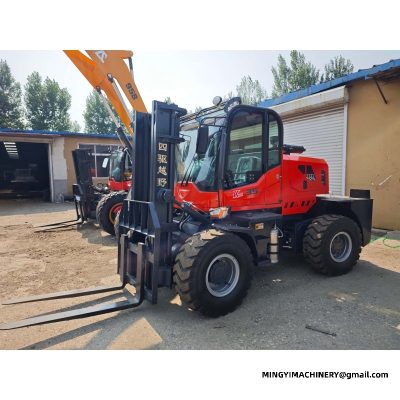
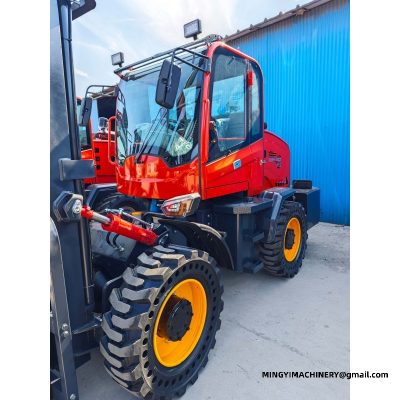
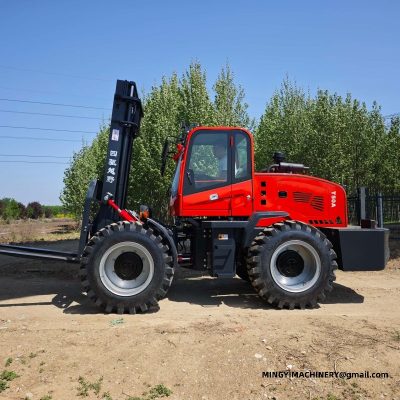
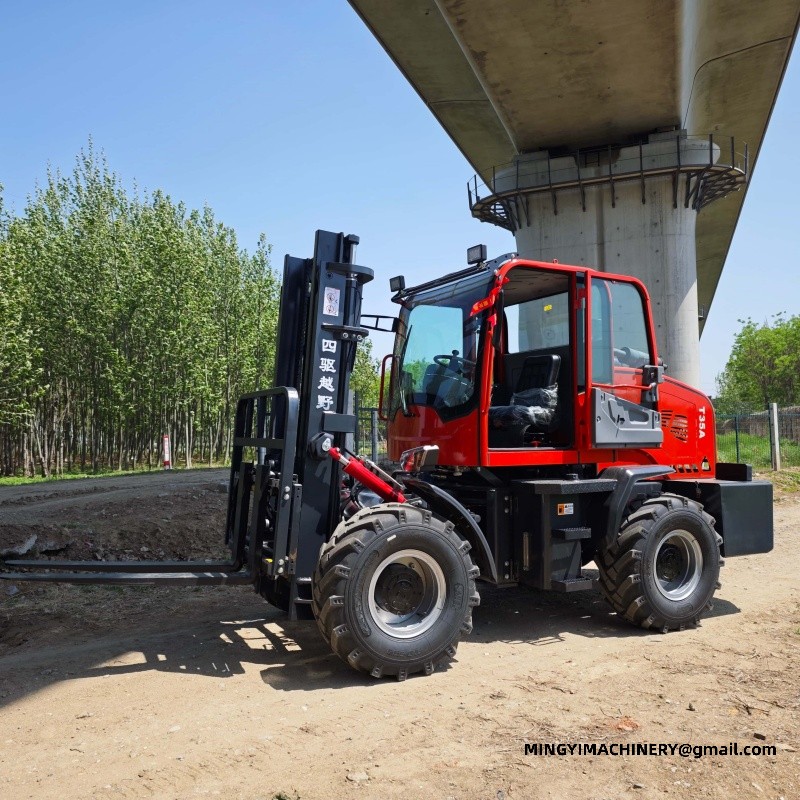
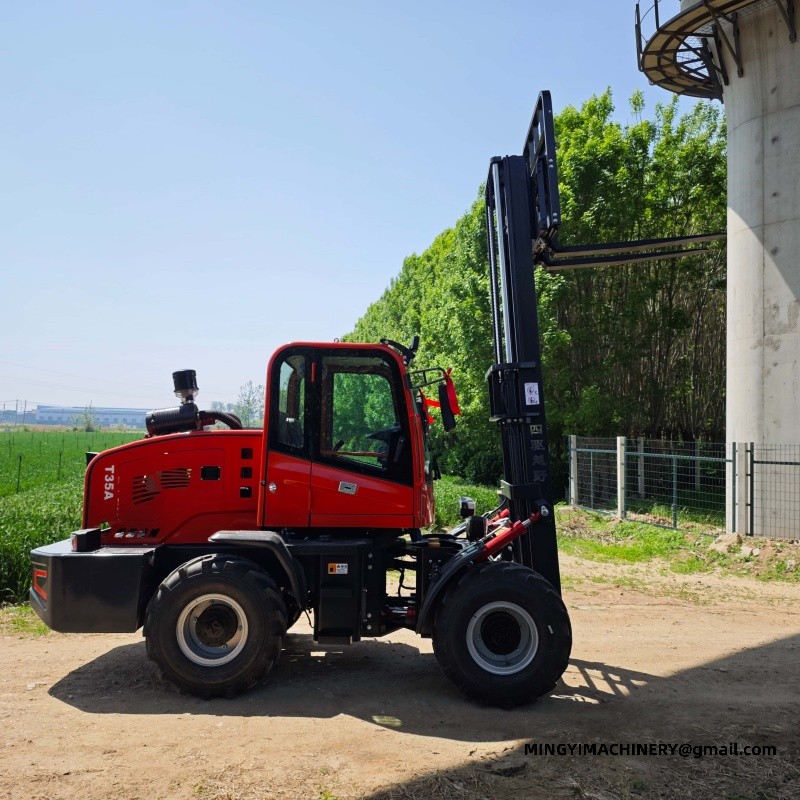
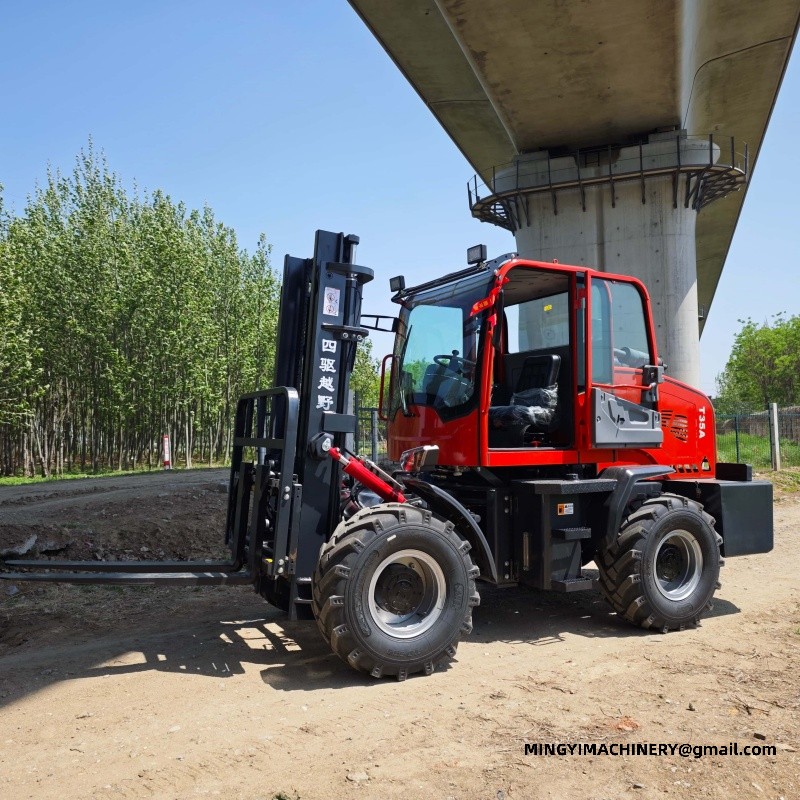
Rough terrain forklifts exist because a warehouse truck cannot work there. A machine built for the work with four-wheel drive, a high ground clearance and suitable tyres works on a site that stops a standard forklift at the gate. Gradient limits are part of the specification. The equipment in service working on a slope carries the load differently, and the safe practice is to keep the load uphill and to plan the route rather than the shortest line. Ground condition should be surveyed before delivery. Loose gravel, mud and ruts change what the forklift can do safely, and the site that works in dry weather may need a different route after rain.
The models below are the four-wheel drive rough terrain forklifts in this range. Capacity, mast, axle and dimensional data are read together, because the load chart at the working height is what the job is actually limited by.
| Model | Wheelbase | Rated lift capacity | Engine | cab | Gradeability | Axle | Overall size | Lift height |
|---|---|---|---|---|---|---|---|---|
| 3.5 trear articulated | 1875 mm | 3500 kg | 49036.8 kw | new electrophoretic deluxe round canopy | 45 deg | heavy cast steel wheel-side reduction axle | 3450 x 1850 x 2250 mm | Lift height 3-6 m |
| 3.5 tfront articulated | 2060 mm | 3500 kg | 49036.8 kw | new electrophoretic deluxe round canopy | 45 deg | heavy cast steel wheel-side reduction axle | 3950 x 1850 x 2380 mm | Lift height 3-6 m |
| CPCD-35 short wheelbase | 1875 mm | 3500 kg | 49036.8 kw | new electrophoretic deluxe round canopy | 45 deg | heavy cast steel wheel-side reduction axle | 3730 x 1850 x 2380 mm | Lift height 3-6 m |
| CPCD-50 short wheelbase | 2160 mm | 5000 kg | 4102 turbo 78 kw*1.36=106.8 hp | new electrophoretic deluxe round canopy | 45 deg | heavy cast steel wheel-side reduction axle | 4450 x 2150 x 2600 mm | Lift height 3-6 m |
| 4 tfront articulated | 2060 mm | 4000 kg | 410265 kw*1.36=88.4 hp | new electrophoretic deluxe round canopy | 45 deg | heavy cast steel wheel-side reduction axle | 4050 x 1950 x 2470 mm | Lift height 3-6 m |
| Item | Note |
|---|---|
| Mast and fork options | Two-stage 3 m / 3.5 m / 4 m / 4.5 m masts and three-stage 4.5 m / 5 m / 6 m masts are matched to the load chart before the truck is built. |
| Attachments | Side shift, fork positioner, drum clamp, bale clamp and load stabiliser are the attachments most often specified with this range. |
| Tyre options | Chevron pattern, semi-solid and solid tyres are available; solid tyres suit scrap and foundry work, semi-solid suits mixed ground. |
Familiarisation is not the same as reading the manual. Sitting on the equipment on site, working through the controls at low speed and learning where the machine balances takes an hour, and that hour is what keeps the first week uneventful.
The parts that stop a machine are rarely the parts that are hardest to find. Filters, belts, seals and the ground engaging tools on the model in question are easy to hold and slow to replace, which is why they belong on the shelf rather than on an order.
A machine that only one person can use is a single point of failure. Training a second operator on the unit on the job takes a day and removes the dependency that otherwise governs holidays, illness and busy weeks.
Seasonal work rewards a machine that can change duty. Through the year the equipment in service may move from one task to another, and the attachment list should be chosen for the whole year rather than for the first job.
Contamination is easier to prevent than to cure. Keeping the filler caps sealed, the funnels clean and the containers closed around this class of machine is unglamorous work that shows up as reliability later.
Export packing is part of the machine, not an afterthought. A machine of this size is blocked and braced inside the container so that it arrives in the same condition it left, and the load plan is decided by the dimensions rather than by what fits loosely.
Machines rarely fail without warning. A change in sound, a slower function or a new leak on the machine itself is the machine saying something early, and listening then takes a fraction of the time that waiting does.
Every line above comes from the build sheet for the model in question, and the final configuration is confirmed against the working conditions and the destination before production.
E-mail:sales@mingycn.com
LINE(ID):mingyicn