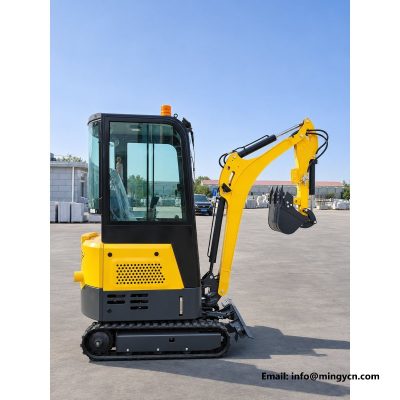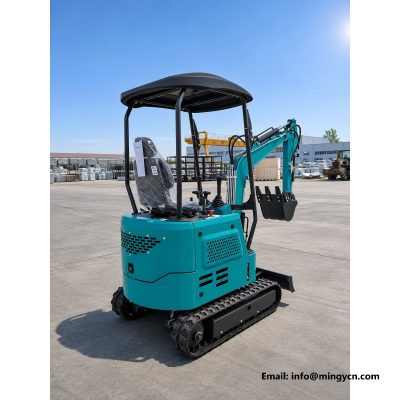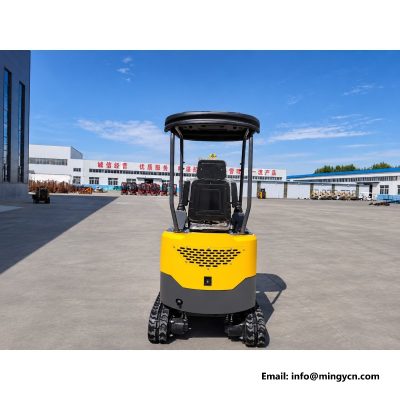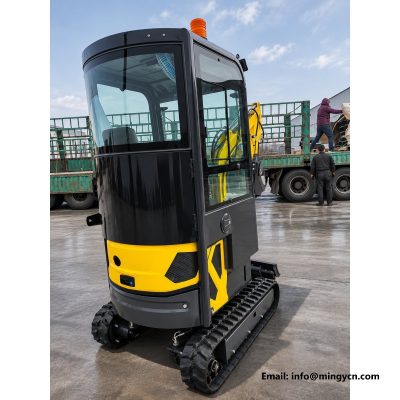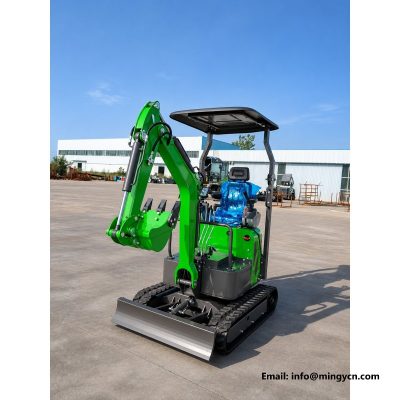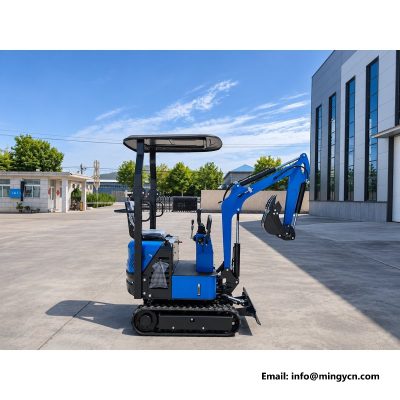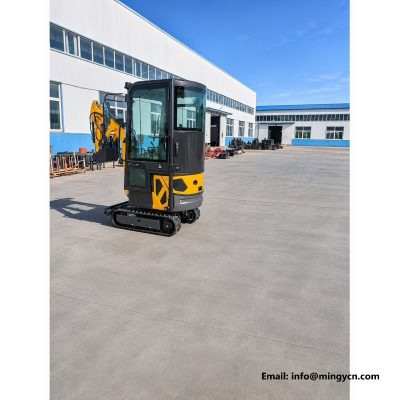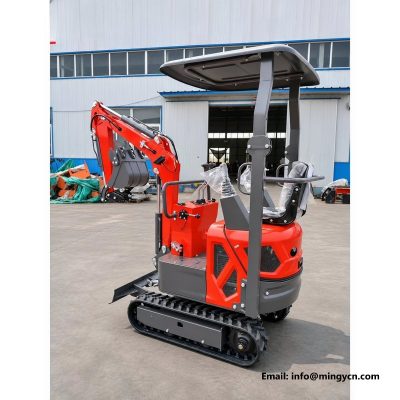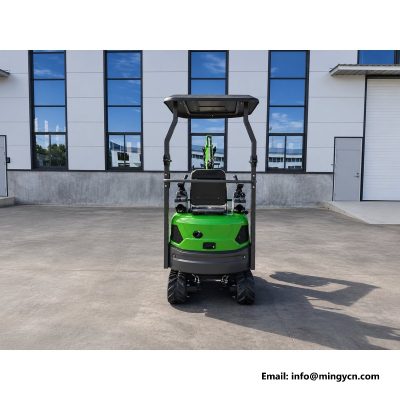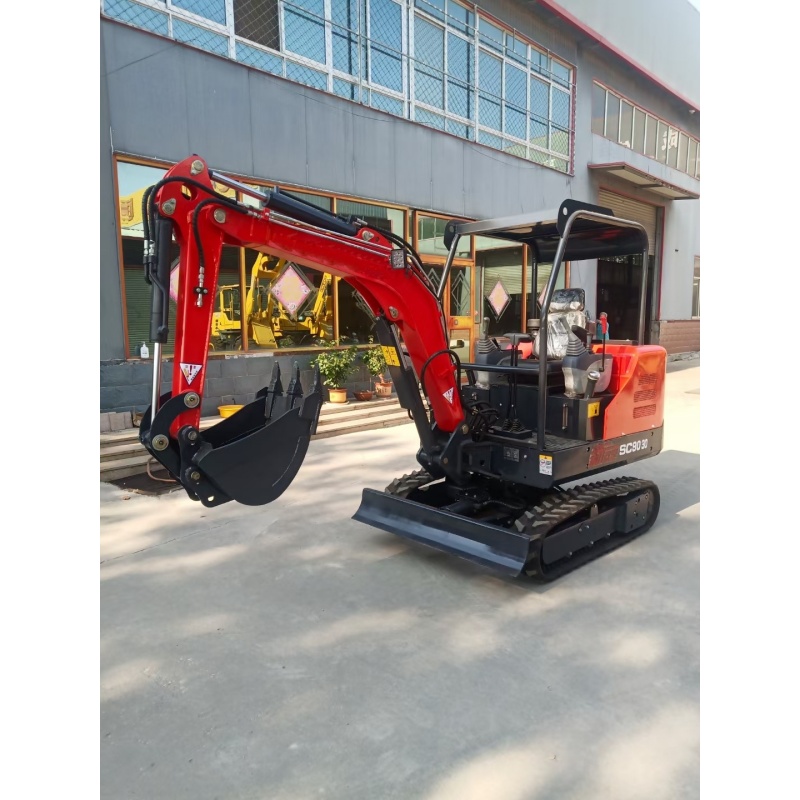
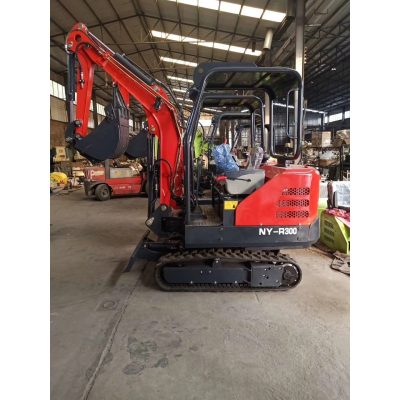
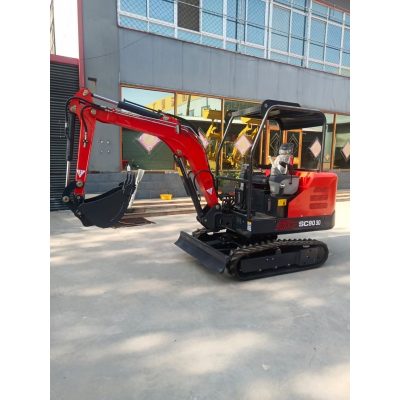
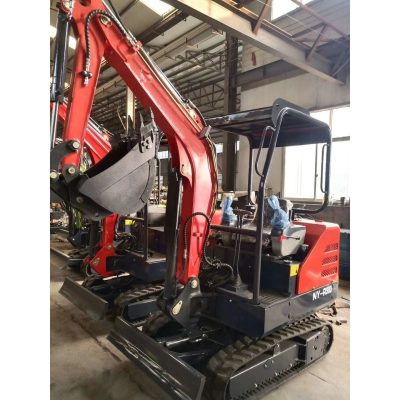
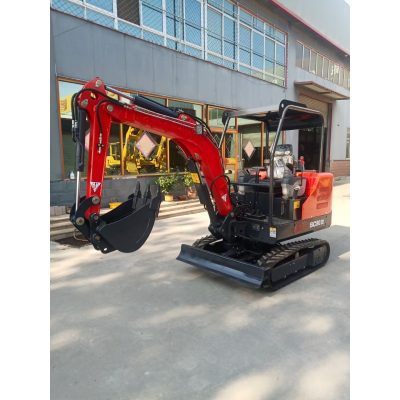
Engineering contractors rarely have a dedicated machine for every task, so the excavator must cover groundwork, drainage, finishing and handling on one contract. MINGYI builds small crawler excavators for this duty, each produced to order against the buyer's contract list.
The range covers 0.8 to 6 tonnes, placing a suitable carrier within reach of most engineering jobs, from service trenches to trimming pads before concrete. Boom length, track type and hydraulic set-up are fixed on the order sheet.
On a typical site the machine handles foundation trenches, ducting runs, backfill and final trimming, then clears spoil and loads trucks with the same bucket set. Road maintenance gangs favour the smaller classes for moving between scattered jobs; heavier units hold their footing cutting subgrade.
Municipal repair, culvert renewal and small bridge fills sit inside the same envelope. Where concrete or rock appears mid-programme, a breaker hammer on the coupler opens it.
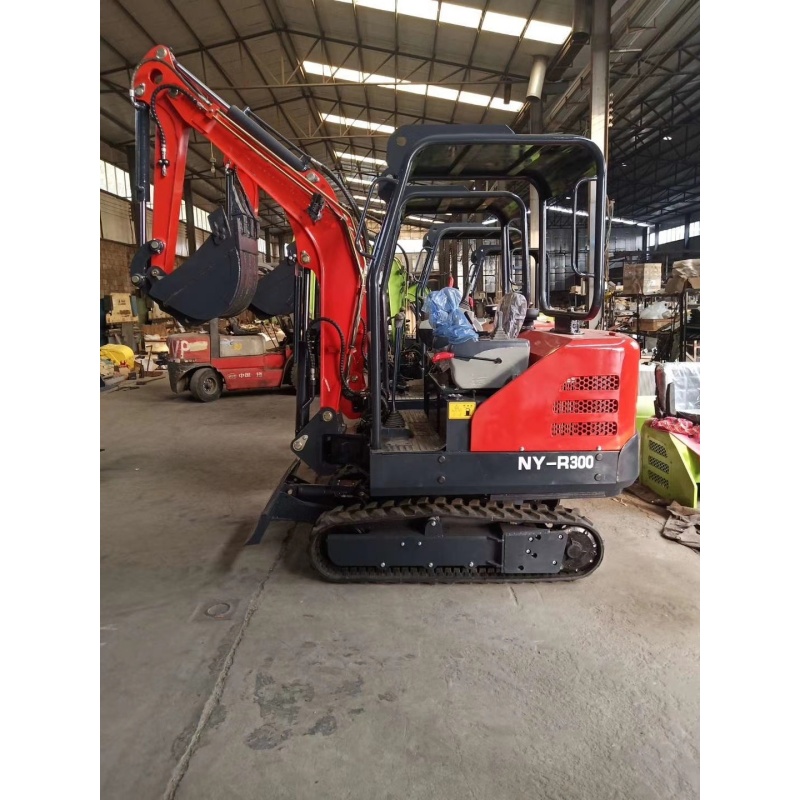
Track choice follows the surfaces the machine will cross: rubber tracks spare finished pavement and lawns, while steel tracks with rubber blocks resist wear on abrasive ground. Engine options from Kubota, YANMAR and Changchai, plus boom and cab configuration, are written into the order.
Buyers should also state which attachments the hydraulics must feed, since auxiliary flow shapes the valve arrangement. Recording this at the ordering stage avoids retrofit work after delivery.
An engineering excavator earns its place by doing several jobs competently instead of one job brilliantly. Settle tracks, boom and hydraulics against the contract mix, and let the attachment list follow from the work.
Weather decides which days are productive. Rain turns some ground unusable and cold changes how the excavator starts and warms up, so planning the wet months around maintenance is more useful than planning around output. Seasonal planning smooths the workload. Machines that are busy for a few months and idle for the rest benefit from a service slot in the quiet period, and this class of machine prepared in the off-season starts the busy months reliably.
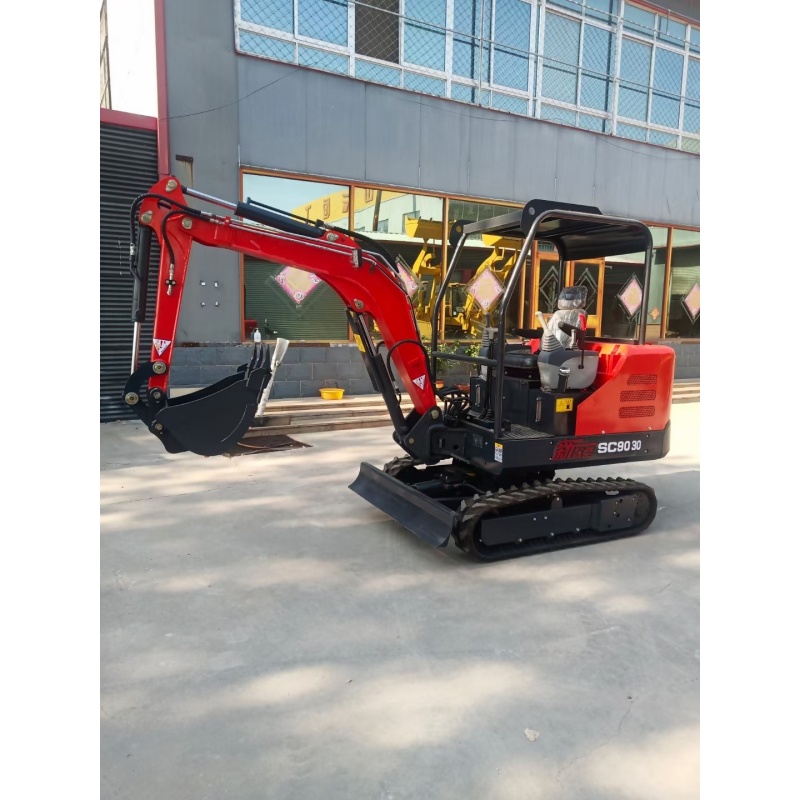
The choice follows the hours. Work that fills a few weeks a year is usually better hired, while the unit in daily use that would be on site most weeks starts to justify ownership once the transport and booking time is counted. Ownership brings obligations that hiring does not. Storage, servicing, insurance and an operator are the items to set against the hire rate before deciding which way a machine of this size should be supplied.
Daily maintenance on the equipment on site is a short list: engine oil level, coolant, track tension, hydraulic oil level and a look at the hoses. Ten minutes at the start of the shift prevents most of the failures that stop a machine. Greasing is the second item. The slew ring, the boom and arm pins and the bucket linkage on the machine itself take grease daily in dusty work, and the intervals shorten further when the machine is used in water or mud.
Trench quality depends on the bucket width and the operator, not on machine size. The model in question with a narrow bucket and a swing boom cuts a clean run along a boundary without disturbing the ground either side of it. Depth control matters more on service work than speed. The machine in that duty working beside live services is chosen because it can be placed precisely and stopped instantly, which is what the job actually requires.
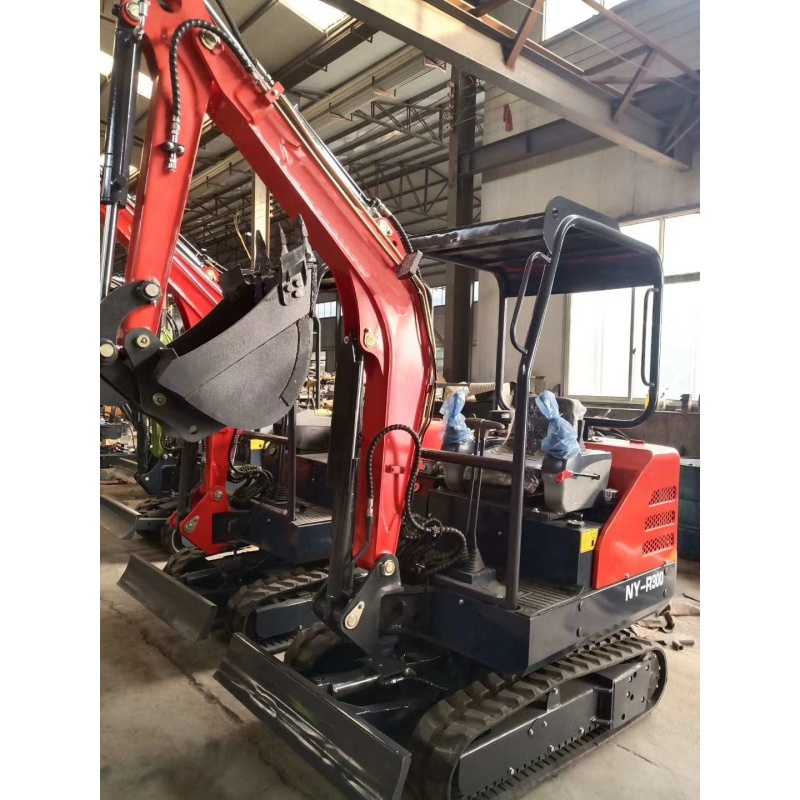
Rental fleets buy for utilisation, not for a single job. The unit on the job with a quick coupler and a common attachment standard is hired more often because it suits more of the calls that come in. The specification that rents best is usually the simplest one to explain at the counter. A machine built for the work with rubber tracks, a canopy and a coupler covers the majority of weekend and short-term hires.
Drainage repair, tree planting, footway reconstruction and cemetery work are all within the range of the equipment in service. The jobs are small individually and continuous across the year. Noise and surface protection matter on public work. The excavator on rubber tracks across paving, with a sealed cab for the operator, suits the conditions better than a larger tracked machine.
A canopy keeps the machine light and the operator aware of the surroundings, which suits short jobs in warm weather. A fully enclosed cab is specified where rain, dust or cold are part of the working year, and it can be added to the unit in daily use as a retrofit rather than only at build time. Enclosure also changes noise and dust exposure. A sealed cab on a machine of this size keeps dust out on dry sites and lets the machine work through weather that would otherwise stop a canopy machine for the day.
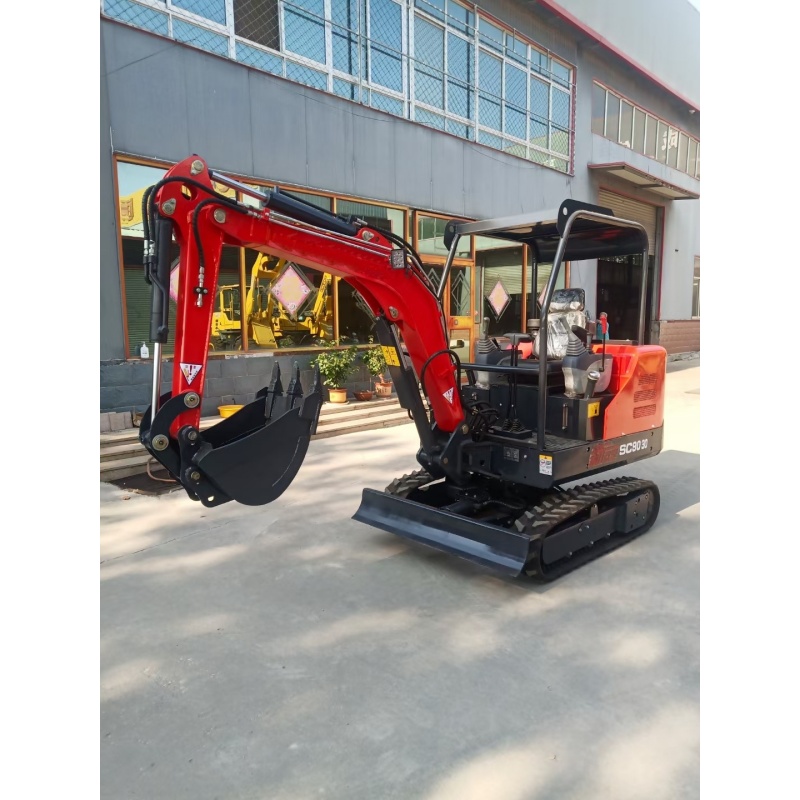
Distributors and rental fleets usually need the machine to look like theirs. Paint, decals, seat colour and attachment branding can be specified on the machine itself at build time rather than applied after import. Documentation can be prepared to suit the importer. Manuals, parts books and decal sets for the model in question can be supplied with the buyer's own branding where the order size justifies it.
The second habit is tool discipline. Running the unit on the job with the right bucket width for the trench means less spoil, less reinstatement and a cleaner job than a wide bucket and a lot of trimming. Stability is the third. A machine built for the work working across the tracks rather than over the corners keeps the machine steady and the undercarriage loaded evenly, which shows up as track life at the end of the season.
Road repair generates short, interrupted jobs - a patch, a drainage connection, a kerb line. The excavator is economical here because it travels on a small trailer and starts working minutes after arriving. Patching and reinstatement favour a machine that can work in a lane closure. This class of machine occupies less road than a full-size excavator, which reduces the traffic management needed and the length of the closure.
Slope work is a stability question before it is a traction question. Knowing the gradient a machine of this size is rated for, and working across rather than straight up where the ground allows, removes most of the risk. Ground that looks level often is not. The equipment on site crossing a filled trench, a soft edge or a hidden void behaves differently from one on undisturbed ground, and those are the places worth walking before driving.
The base machine is a carrier; the tool on the end of the arm decides the task. The model in question fitted with a toothed bucket digs, and the same machine with a breaker, an auger or a grab does work that would otherwise need a second unit on site. Attachment lists are best written before delivery. Specifying the machine in that duty with the tools the job list needs avoids the work and delay of adding hydraulics later, and a quick coupler makes the swap a few minutes instead of a workshop job.
Rubber tracks suit paved and landscaped ground because they spread the machine weight and leave the surface intact. Steel tracks with rubber blocks are specified where the ground is rougher or the working day is longer, and the choice can be made per machine rather than accepted as a factory default. Undercarriage selection is a ground question, not a preference question. A machine built for the work running on finished paving needs rubber; the same machine on demolition rubble or rock wears rubber quickly, so steel with rubber blocks becomes the better answer over a full season.
Documentation should be agreed at order stage. The commercial invoice, packing list and any certificate required at destination are part of shipping the excavator, and missing papers delay clearance longer than the voyage takes.
Where the unit in daily use is being specified for a job list, the table below gives the factory figures that matter most: what the machine weighs, how deep and how far it works, and what it measures on a trailer.
| Reference specification — mini excavator range | 15W | 15L | 20-2L | 25L |
|---|---|---|---|---|
| Operating weight | 1400 kg (3086.47 lb) | 1400 kg (3086.47 lb) | 1900 kg (4188.78 lb) | 2200 kg (4850.17 lb) |
| Transport size (L×W×H) | 2200 × 930 × 2250 mm | 2200 × 930 × 2250 mm | 2600 × 1300 × 2344 mm | 3000 × 1300 × 2700 mm |
| Max digging depth | 1630 mm (64.17 in) | 1700 mm (66.93 in) | 2100 mm (82.68 in) | 2300 mm (90.55 in) |
| Max digging height | 2750 mm (108.27 in) | 2750 mm (108.27 in) | 2880 mm (113.39 in) | 3100 mm (122.05 in) |
| Max dumping height | 1960 mm (77.17 in) | 1960 mm (77.17 in) | 2100 mm (82.68 in) | 2050 mm (80.71 in) |
| Max digging radius | 2900 mm (114.17 in) | 2900 mm (114.17 in) | 3215 mm (126.57 in) | 3900 mm (153.54 in) |
| Max digging distance | 2100 mm (82.68 in) | 2300 mm (90.55 in) | 2460 mm (96.85 in) | 3100 mm (125.05 in) |
| Minimum turning radius | 1300 mm (51.18 in) | 1450 mm (57.09 in) | 1587 mm (62.48 in) | 1800 mm (70.87 in) |
| Travel speed | 3 km/h (1.86 mph) | 3 km/h (1.86 mph) | 5 km/h (3.11 mph) | 7 km/h (4.35 mph) |
| Gradeability | 30° | 30° | 30° | 30° |
| Fuel consumption | 1-1.3 L/h (0.264—0.343 gal) | 1-1.3 L/h (0.264—0.343 gal) | 2-3 L/h (0.528—0.793 gal) | 2-3 L/h (0.528—0.793 gal) |
| Fuel tank capacity | 10 L (2.64 gal) | 10 L (2.64 gal) | 16 L (4.23 gal) | 16 L (4.23 gal) |
| Hydraulic oil tank | 16 L (4.23 gal) | 16 L (4.23 gal) | 18 L (4.76 gal) | 18 L (4.76 gal) |
| Dozer blade lift height | 180 mm (7.09 in) | 180 mm (7.09 in) | 180 mm (7.09 in) | 230 mm (9.06 in) |
| Dozer blade drop depth | 210 mm (8.27 in) | 210 mm (8.27 in) | 210 mm (8.27 in) | 280 mm (11.02 in) |
These are the reference figures for a machine of this size. MINGYI confirms the final build sheet, including engine and attachment choices, against the destination and the job list before production.
Export documentation, decals and paint are settled before packing. Asking for them with the machine itself order avoids a second handling session and keeps the machine on the booked vessel. Buyers who import regularly plan the spare parts with the machine. The equipment on site ordered with a wearing-parts kit arrives ready to work rather than ready to wait for the first service interval.
Frequently Asked QuestionsQ. What is the model in question?
A. Roadside and municipal jobs are small in size and large in number: kerbs, gutters, retaining walls, reinstatement after utility work. A swing boom reaches the line while the carrier stays off the carriageway. For groundwork applications the practical route is to send the job list to the factory and let the build sheet answer it - which is exactly what this page invites.
Q. Can it handle foundations and retaining walls?
A. Footing trenches, drainage behind the wall and placement of blocks are all compact-class work; read the page with the attachment list and the build covers the job end to end.
Q. Can I see the machine before it ships?
A. Inspection is arranged at the factory, in person or by a scheduled video walk-around - the same session covers paint, decals and attachment fitment for the groundwork specification, so the machine inspected is the machine that ships.
Container loading is a planning exercise. The overall dimensions and the operating weight of the unit on the job decide whether it ships whole, partly disassembled or with the attachment removed, and that decision is made before the booking.
A stored machine should be brought back carefully. Before the equipment in service returns to work the fluids, the brakes and the controls are checked, because months of standing change more than a weekend does.
E-mail : sales@mingycn.com
LINE ( ID ): mingyicn