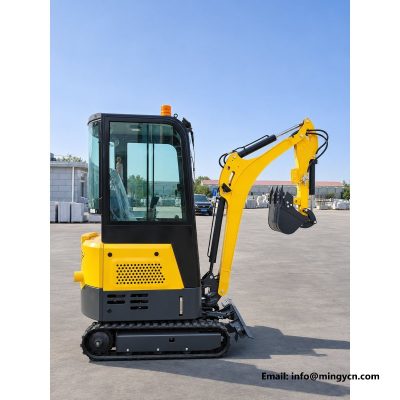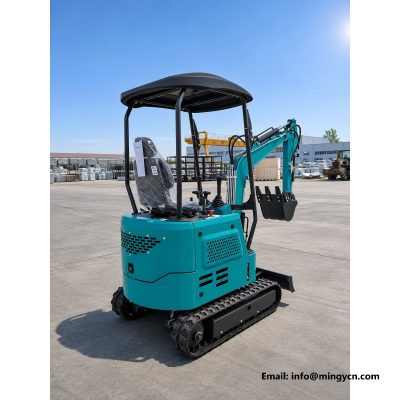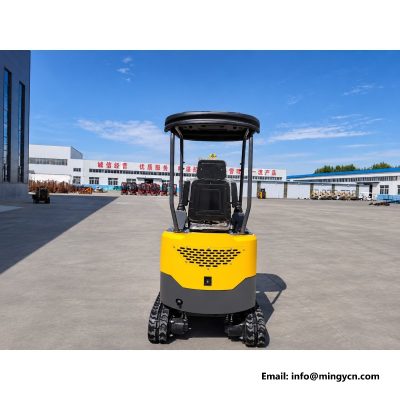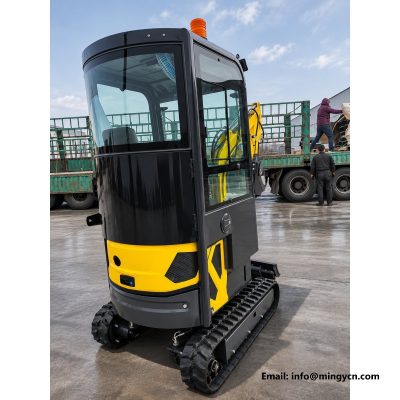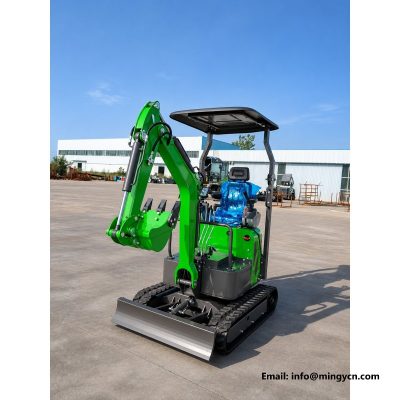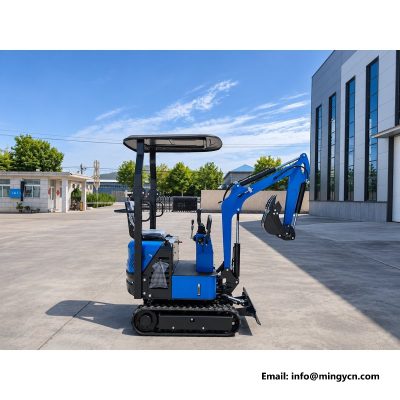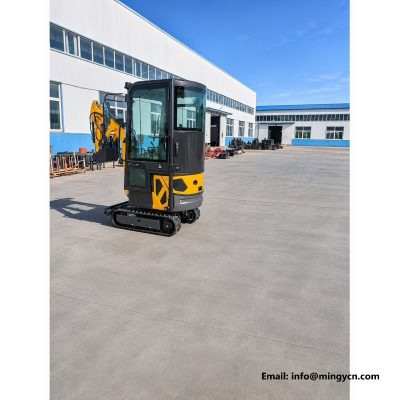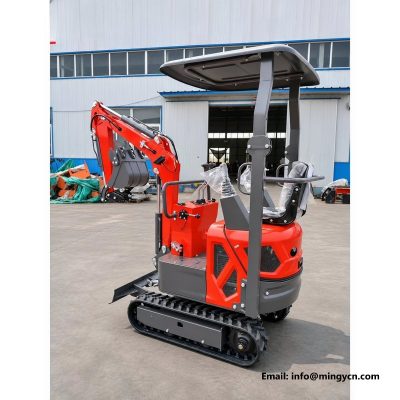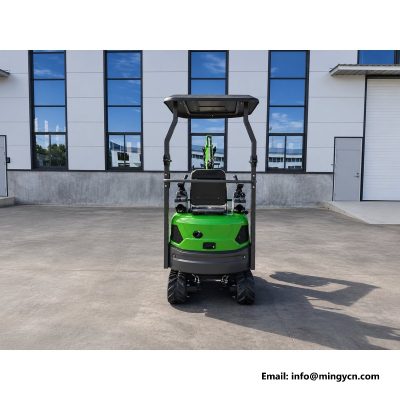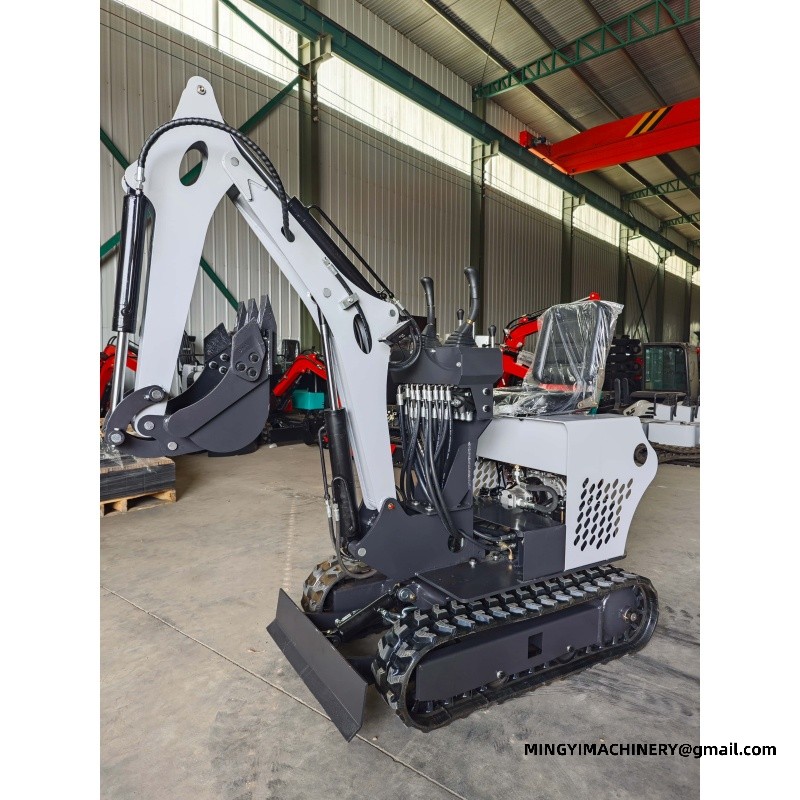
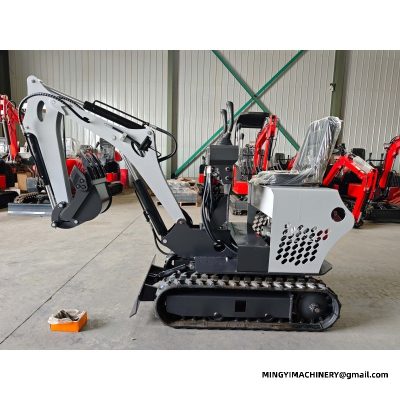
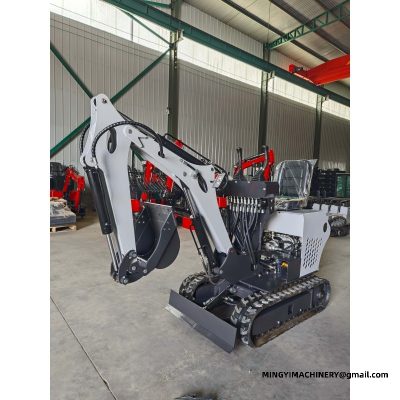
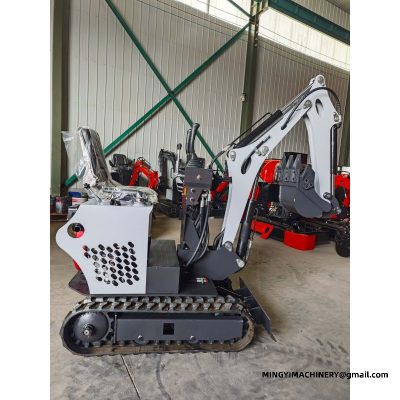
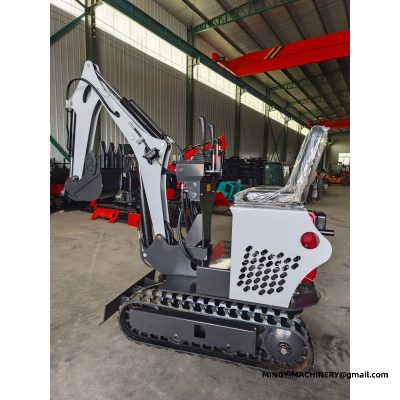
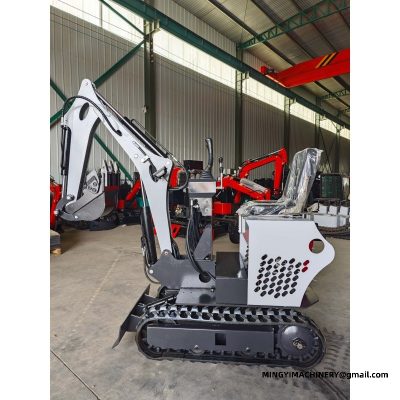
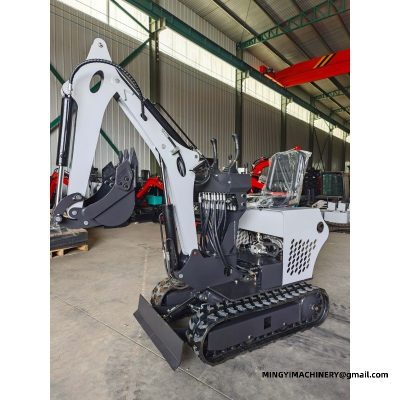
A construction company buys compact excavators in a different way from a sole trader. The machine has to suit several sites, be handed between operators, and stay on the road rather than sit in a yard. That pushes the specification towards a middle setting rather than a specialist one.
MINGYI supplies compact excavators to construction companies as built to order units. Standardising the model, coupler and bucket set across a fleet simplifies training, spares and attachment sharing between machines.
When several machines share a yard, interchangeable attachments matter more than any single feature. If every excavator uses the same coupler, buckets and powered tools can move between them as work demands.
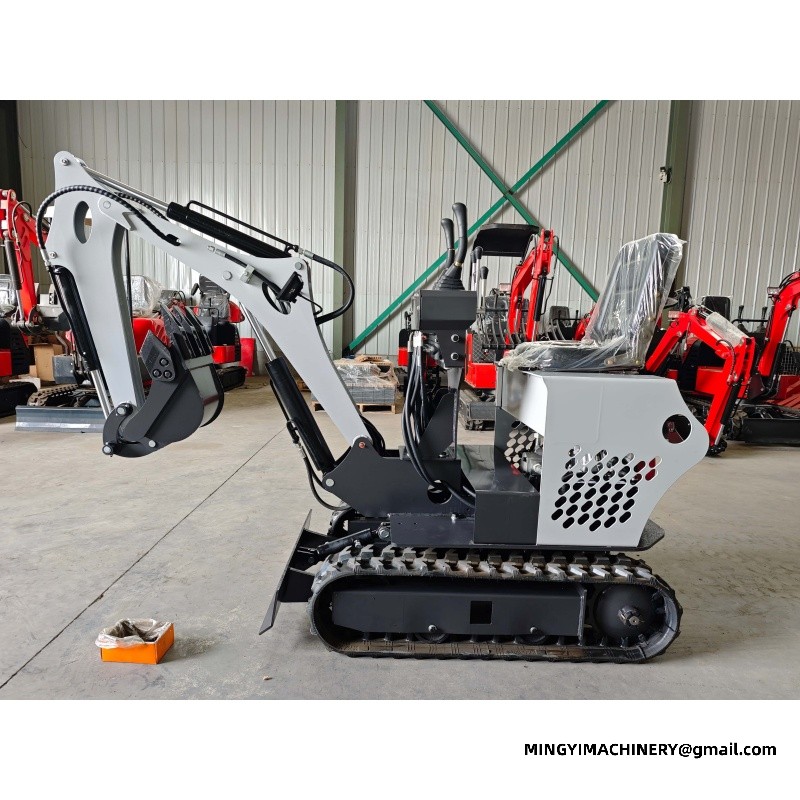
The same thinking applies to the operator station and controls. A common layout reduces the time it takes for an operator to move from one machine to another, and it makes handover checks quicker at the start of a shift.
Fleet buyers usually order a standard attachment pack with each machine: a digging bucket, a grading bucket, a thumb and one powered tool. Spare buckets are shared, which lowers the number each excavator needs to carry.
Service information and spare parts should be part of the purchase, not an afterthought. MINGYI supplies this material with the machines so a company can plan maintenance across the fleet rather than machine by machine.
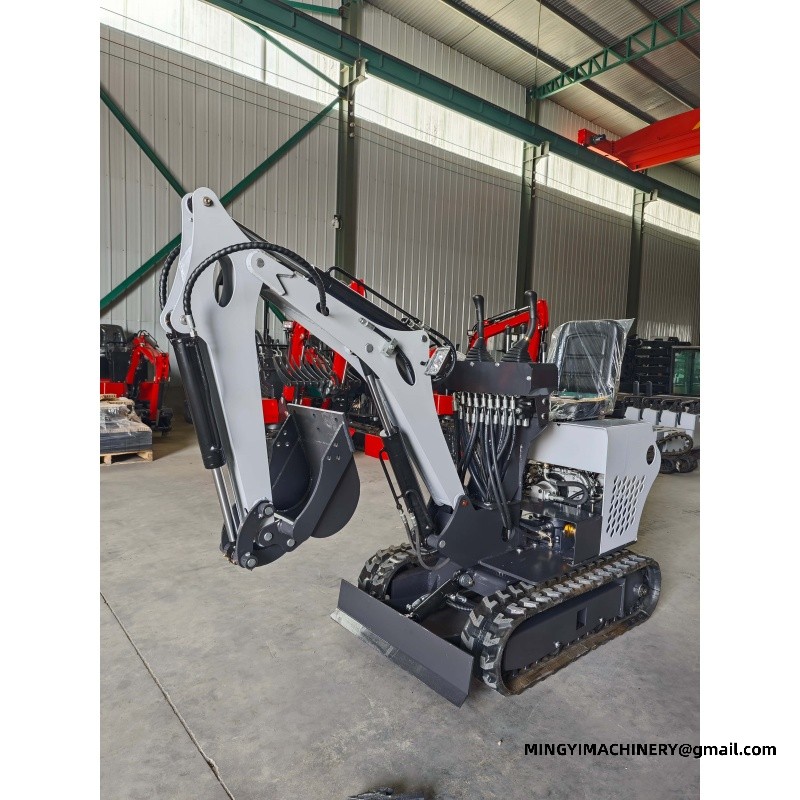
Construction companies get the most from compact excavators when the machines and their attachments are standardised. MINGYI builds these excavators to order for fleet buyers.
Stability changes with reach. A load the excavator handles close in becomes a different proposition at full extension, so the working radius belongs in the plan before the lift rather than during it. Ground condition under the machine is part of every lift. Soft or uneven support is the common factor in handling incidents, and checking it takes less time than recovering this class of machine that has settled.
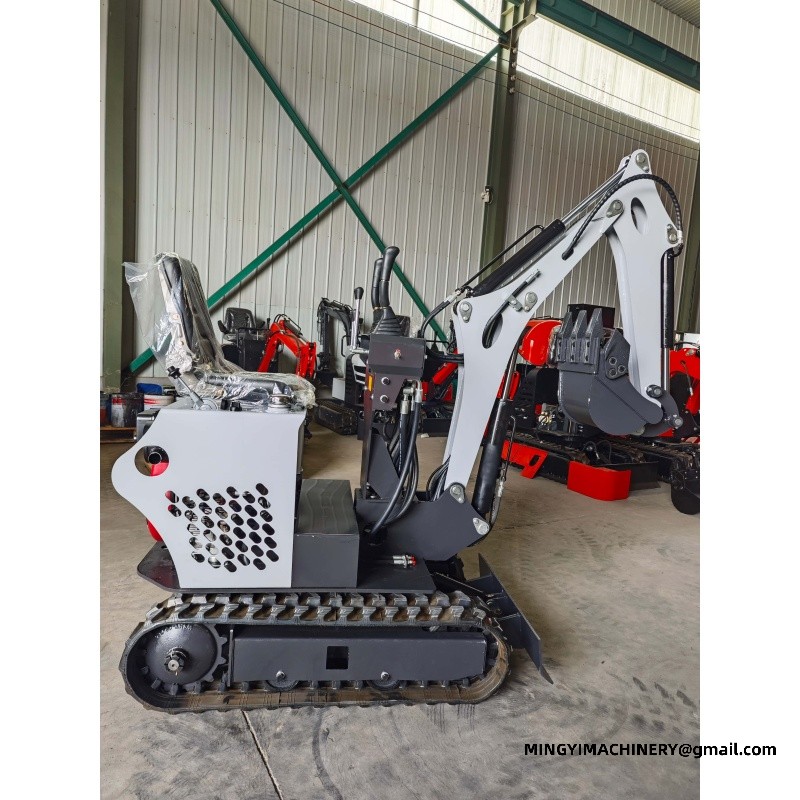
Delivery day is the best time to find a problem. Checking the specification against the order, the fluid levels, the fasteners and any transport damage while the machine of this size is still on the trailer is faster than claiming later. Documentation should arrive with the machine. Parts list, service schedule and any certificates for the unit in daily use are what the workshop needs later, and they are much easier to obtain at delivery than in month six.
Two buyers can order the same the machine itself and receive different engines. The decision is rarely about peak power; it is about which parts counter is closest to the site and which engine the local mechanic already knows. Engine choice is also an emissions and documentation question for some markets. Listing the available units with the equipment on site enquiry lets the factory confirm what can be supplied and documented for the destination country.
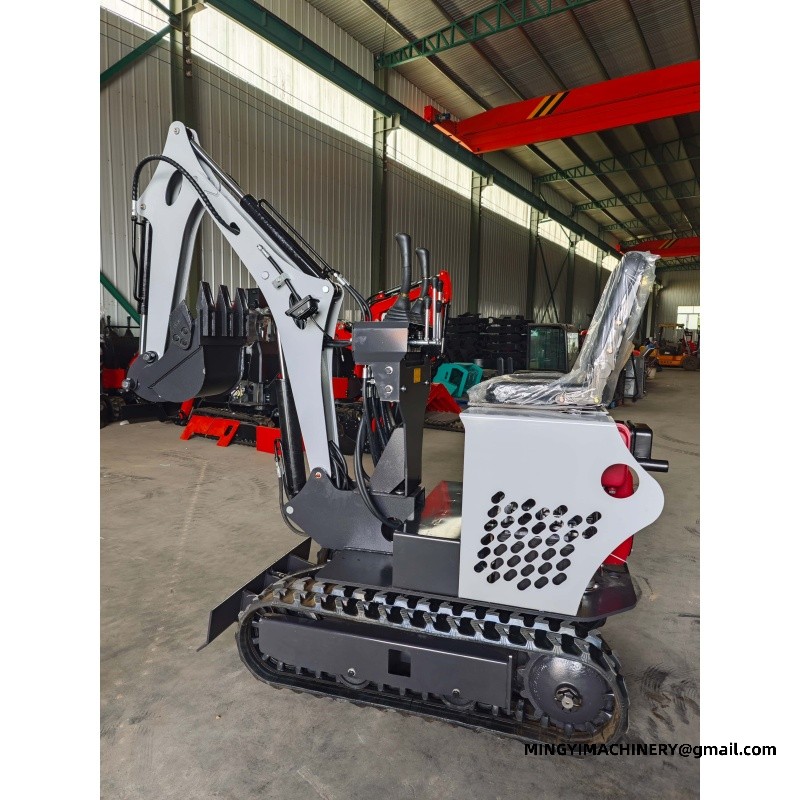
Road repair generates short, interrupted jobs - a patch, a drainage connection, a kerb line. The model in question is economical here because it travels on a small trailer and starts working minutes after arriving. Breaking out a failed slab and backfilling the same hole in one visit is normal work for the machine in that duty. The breaker and the bucket come off the same coupler, so the road is reopened the same day.
A quick coupler is the single option that changes how a machine is used day to day. Fitted to the unit on the job, it turns an attachment change from a two-person workshop job into a task the operator does alone in minutes. For a fleet that shares attachments between machines, a common coupler standard matters more than the coupler brand. A machine built for the work that picks up the same tools as the larger machines keeps the rack usable across the yard.
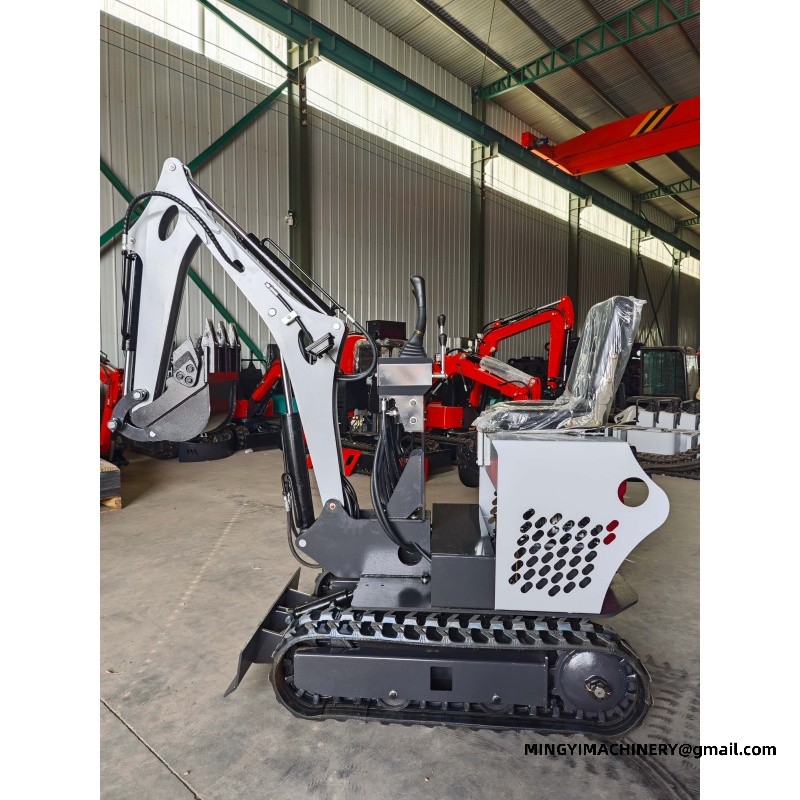
Purchase decision is the visible part of the effort. Fuel, filters, tracks or tyres, the operator and the transport between sites are the items that decide what the equipment in service actually demands over a few seasons, and they are worth listing before the order. Downtime is the hidden line item. The excavator waiting on a part earns nothing while it stands, so parts availability and service access belong in the plan as much as fuel does.
Confined sites are decided by dimensions. Overall width, tail swing and the space needed to work the arm are what let the unit in daily use operate inside a building, between walls or in a courtyard. Clearance above matters as much as around. Door heights, pipework and overhead services set the limit for a machine of this size indoors, and measuring them first avoids a machine that arrives and cannot be used.
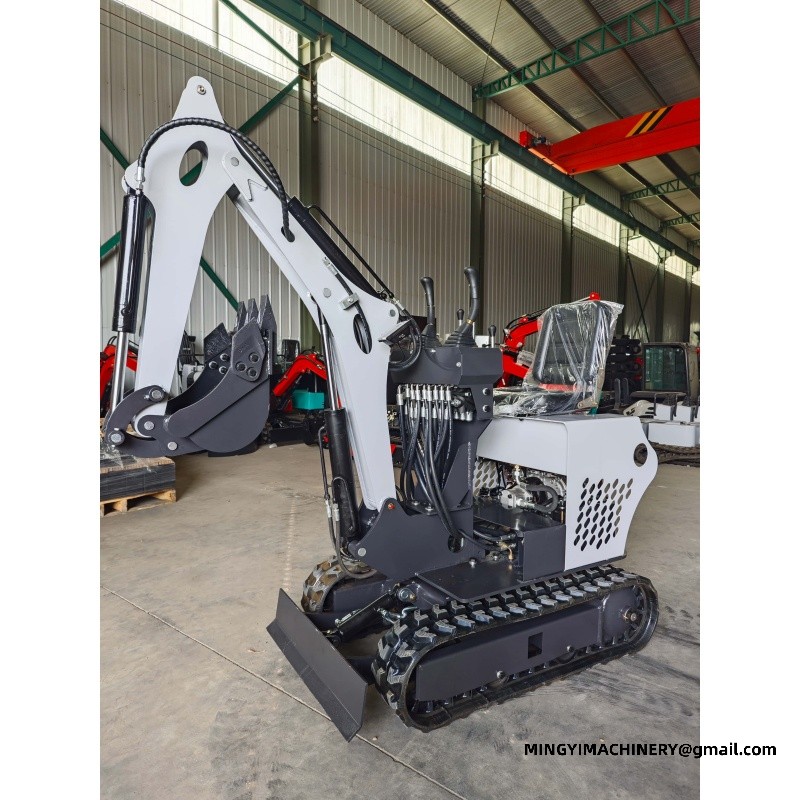
Weather decides which days are productive. Rain turns some ground unusable and cold changes how the machine itself starts and warms up, so planning the wet months around maintenance is more useful than planning around output. Heat and dust are as limiting as rain. Air intake condition and cooling cleanliness decide how the model in question behaves in a dry season, and both are checked in a minute rather than repaired later.
Distributors and rental fleets usually need the machine to look like theirs. Paint, decals, seat colour and attachment branding can be specified on the unit on the job at build time rather than applied after import. Customisation also covers the specification sheet. A fleet buyer may want every machine built for the work delivered with the same coupler, the same engine and the same tool kit so training and parts stock stay simple.
Support after delivery is a parts question. Wearing items for the excavator - filters, belts, track components, bucket teeth and pins - are the items a buyer should plan to hold before the first service interval. Remote support is handled by video. This class of machine fault can often be diagnosed on a walk-around call with the panel open, which is faster than waiting for a visit and avoids shipping a part that is not needed.
Loading practice matters as much as the numbers. A machine of this size is driven up ramps under its own power with the boom lowered and the tracks aligned, and secured at the points the manufacturer specifies. Detachable components reduce transport length. The equipment on site built with a removable arm section or a folding step fits a shorter trailer and may avoid an oversize movement permit.
Flow and pressure are matched to the tool, not to the machine size. Asking for the attachment list first means the model in question leaves the factory with circuits that suit the heaviest tool the buyer intends to run. Hydraulic specification is easier to settle at build time than to correct later. The machine in that duty delivered without auxiliary lines can still dig, but every additional tool becomes a retrofit project.
Municipal crews work on streets, footpaths and parks where the public is present. A machine built for the work is specified because it occupies little space, works inside a small exclusion zone and can be moved on a standard trailer. Drainage repair, tree planting, footway reconstruction and cemetery work are all within the range of the equipment in service. The jobs are small individually and continuous across the year.
Where this class of machine is being specified for a job list, the table below gives the factory figures that matter most: what the machine weighs, how deep and how far it works, and what it measures on a trailer.
| Reference specification — mini excavator range | 30-1W | 09L | 12L | 15L |
|---|---|---|---|---|
| Operating weight | 2900 kg (6393.41 lb) | 1100 kg (2425.08 lb) | 1200 kg (2645.55 lb) | 1400 kg (3086.47 lb) |
| Transport size (L×W×H) | 3000 × 1250 × 2780 mm | 2300 × 720 × 1870 mm | 2200 × 930 × 2250 mm | 2200 × 930 × 2250 mm |
| Max digging depth | 2200 mm (86.61 in) | 1400 mm (55.12 in) | 1700 mm (66.93 in) | 1700 mm (66.93 in) |
| Max digging height | 3400 mm (133.86 in) | 2800 mm (110.24 in) | 2600 mm (102.36 in) | 2750 mm (108.27 in) |
| Max dumping height | 2400 mm (94.49 in) | 1880 mm (74.02 in) | 1800 mm (70.87 in) | 1960 mm (77.17 in) |
| Max digging radius | 4000 mm (157.48 in) | 2490 mm (98.03 in) | 2900 mm (114.17 in) | 2900 mm (114.17 in) |
| Max digging distance | 2800 mm (110.24 in) | 2000 mm (78.74 in) | 2300 mm (90.55 in) | 2300 mm (90.55 in) |
| Minimum turning radius | 2000 mm (78.74 in) | 1400 mm (55.12 in) | 1450 mm (57.09 in) | 1450 mm (57.09 in) |
| Travel speed | 5 km/h (3.11 mph) | 3 km/h (1.86 mph) | 3 km/h (1.86 mph) | 3 km/h (1.86 mph) |
| Gradeability | 30° | 30° | 30° | 30° |
| Fuel consumption | 2-3 L/h (0.528—0.793 gal) | 1-1.3 L/h (0.264—0.343 gal) | 1-1.3 L/h (0.264—0.343 gal) | 1-1.3 L/h (0.264—0.343 gal) |
| Fuel tank capacity | 16 L (4.23 gal) | 8 L (2.11 gal) | 10 L (2.64 gal) | 10 L (2.64 gal) |
| Hydraulic oil tank | 20 L (5.28 gal) | 16 L (4.23 gal) | 16 L (4.23 gal) | 16 L (4.23 gal) |
| Dozer blade lift height | 420 mm (16.54 in) | 180 mm (7.09 in) | 180 mm (7.09 in) | 180 mm (7.09 in) |
| Dozer blade drop depth | 210 mm (8.27 in) | 210 mm (8.27 in) | 210 mm (8.27 in) | 210 mm (8.27 in) |
Figures are factory figures and are confirmed on the build sheet for the unit in daily use. Where a job sits between two models, the larger machine usually takes less time than the smaller one spends on rework.
Undercarriage selection is a ground question, not a preference question. A machine of this size running on finished paving needs rubber; the same machine on demolition rubble or rock wears rubber quickly, so steel with rubber blocks becomes the better answer over a full season. Track type changes what the machine can cross and what it leaves behind. Buyers specify rubber for lawns, driveways and municipal work, and steel with rubber blocks for sites where sharp material would cut a rubber belt in a week.
Frequently Asked QuestionsQ. Who uses the equipment on site?
A. A hire-fleet excavator is judged on availability - durable components, simple controls and parts that arrive before the next booking. Fleet buyers order to a specification the counter staff can hand over without a briefing. For construction fleets applications the practical route is to send the job list to the factory and let the build sheet answer it - which is exactly what this page invites.
Q. How are rental machines kept running?
A. Scheduled service between hires, wear parts stocked ahead of failure and a damage check at hand-back. A machine that services in an hour goes back on the hire sheet the same day.
Q. Can I see the machine before it ships?
A. Inspection is arranged at the factory, in person or by a scheduled video walk-around - the same session covers paint, decals and attachment fitment for the construction fleets specification, so the machine inspected is the machine that ships.
The symptom is usually not at the fault. A hydraulic function that has become sluggish on the model in question may point to a filter, a relief setting or a pump, and starting with the simple checks avoids the wrong guess.
Fluid quality is a storage problem before it is a machine problem. Water and sediment in a drum will find the injection system of the unit on the job eventually, and a settling period is nothing compared with a pump.
E-mail : sales@mingycn.com
LINE ( ID ): mingyicn