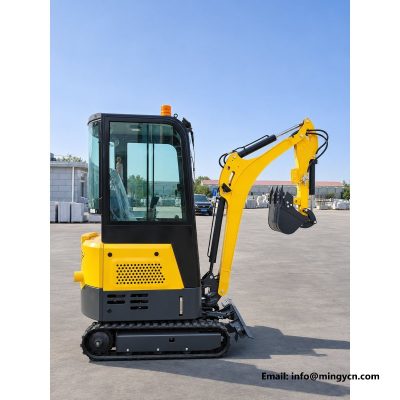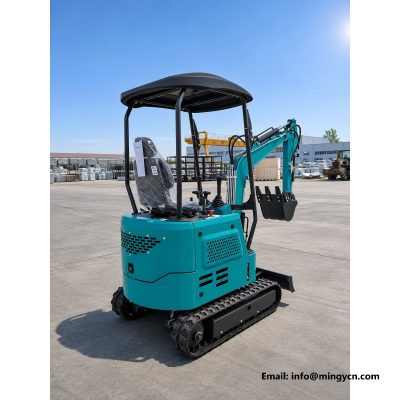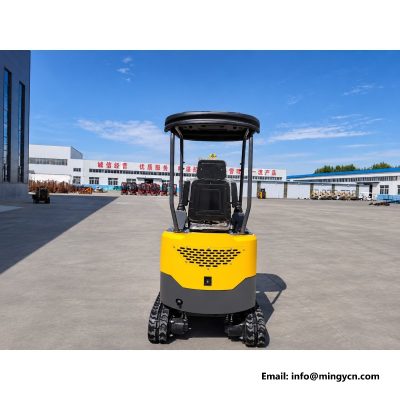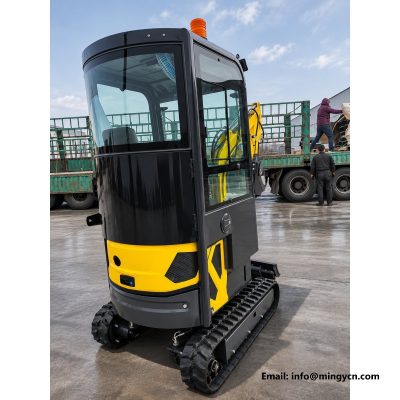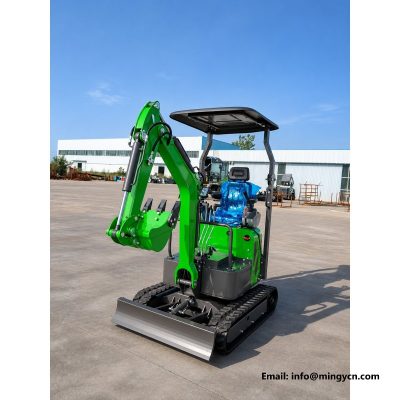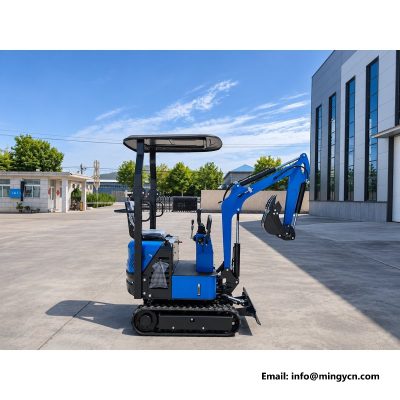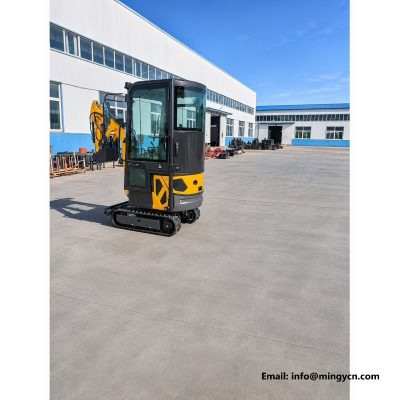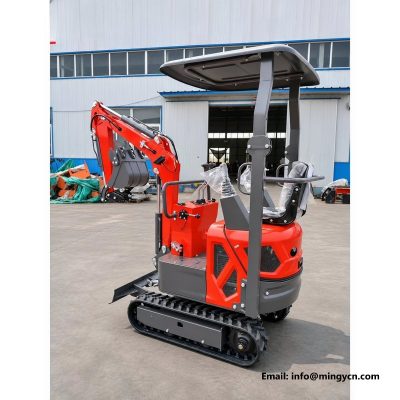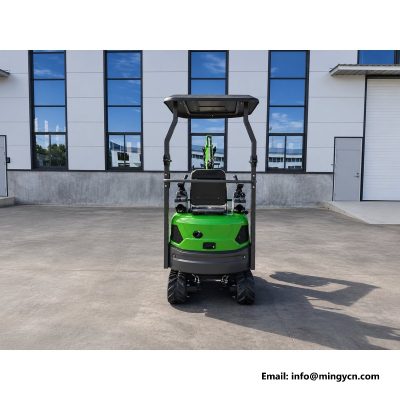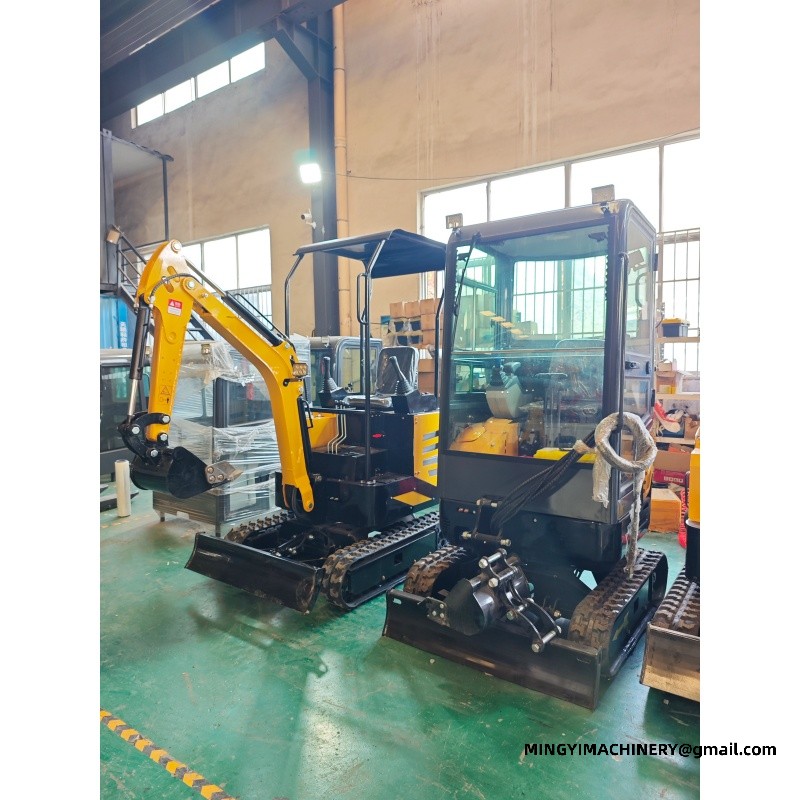
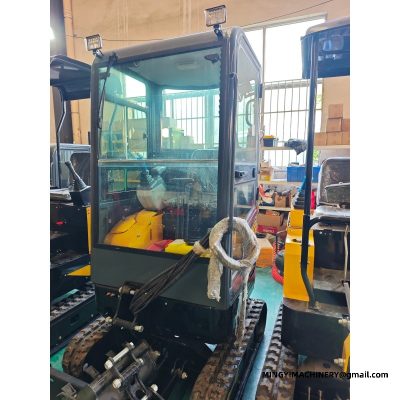
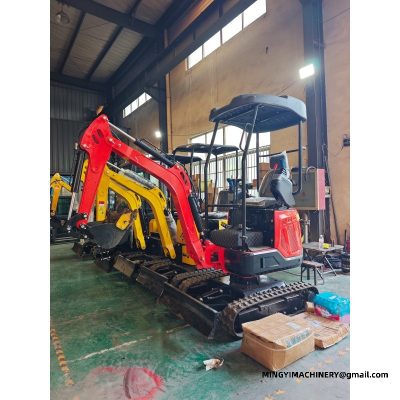
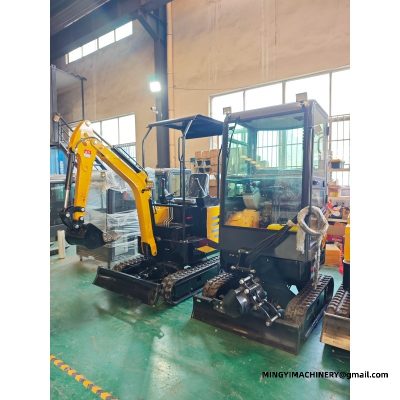
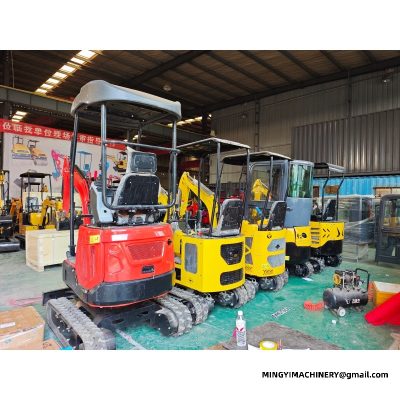
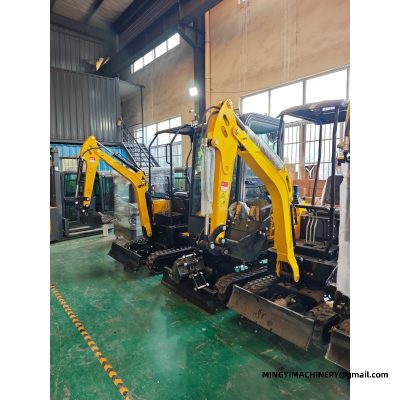
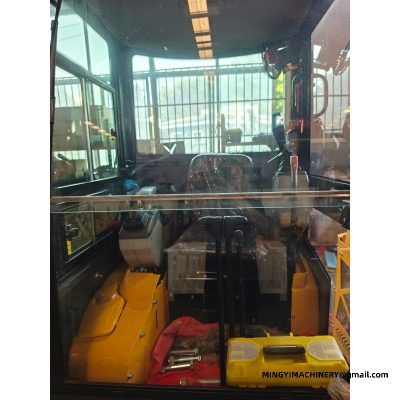
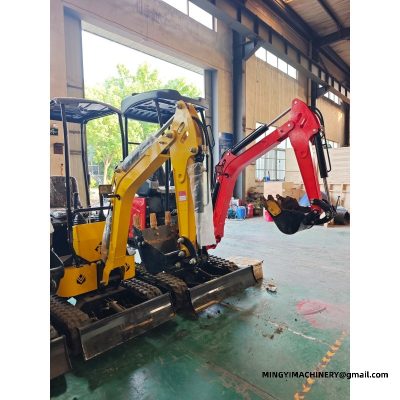
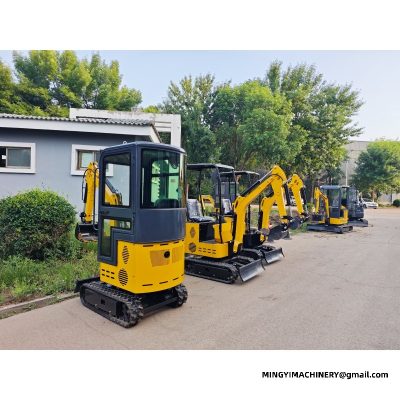
Narrow access work, between buildings, along boundary walls and through gated rear gardens, defines a class of excavation that full-size machines cannot specification for. MINGYI compact mini excavators for narrow access pass the opening and then work as excavators.
The specification centres on width: retractable undercarriages that narrow for the passage and widen for stability, and short or zero tail swing that lets the upper structure turn close to walls. All of it is agreed at the ordering stage.
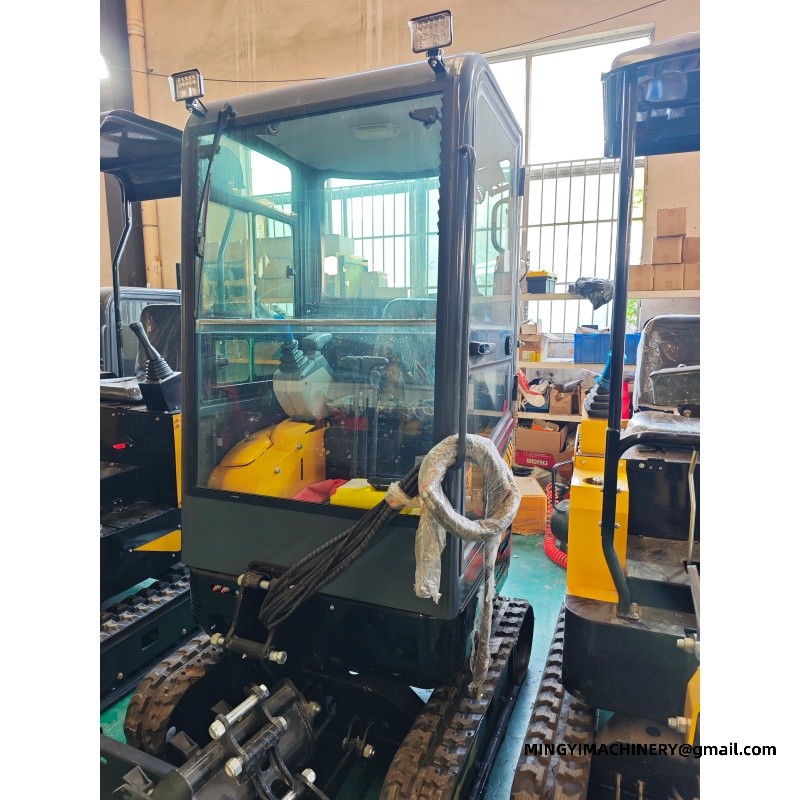
Rear garden projects reached through a side gate, trenching along party walls and service runs through alleyways are the daily work of this class. The machine passes the same opening the wheelbarrow uses and then digs like a proper excavator.
Zero tail swing keeps the counterweight inside the track footprint, so the machine turns within its own shadow beside walls and parked vehicles. The retractable track gauge holds the machine steady once the working position is reached.
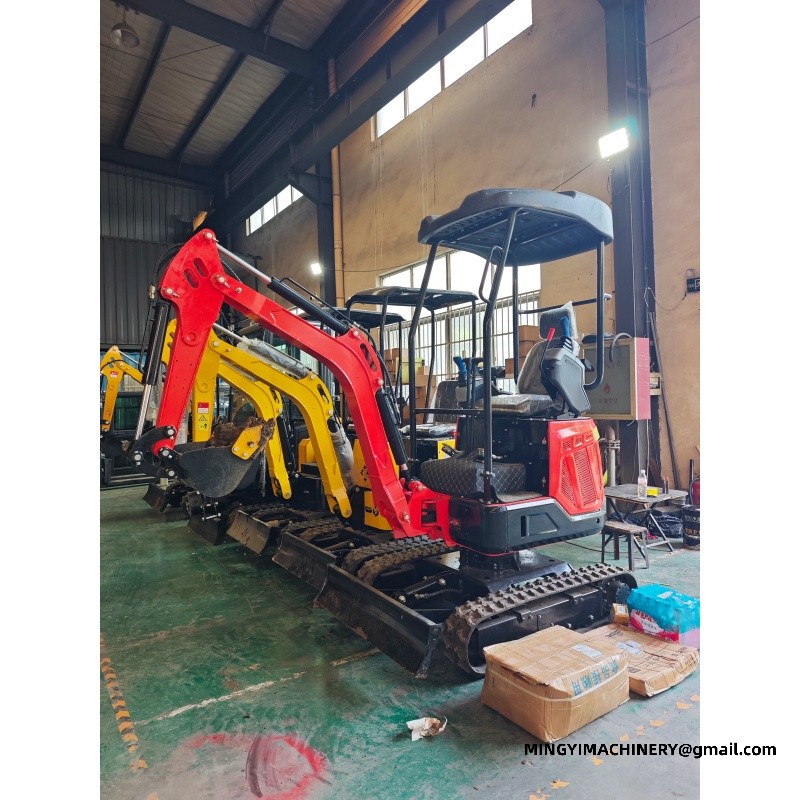
The buyer's first task is measuring: the narrowest passage, the tightest corner and the working space on the far side. Those numbers, stated at ordering, select the machine class and track arrangement, with rubber tracks the usual choice for finished surfaces en route.
Cab format and engine option complete the sheet, and the whole specification is recorded against the build. Spare parts and service information arrive with the machine, which matters for equipment working behind gates where recovery is awkward.
Narrow access is a measurement problem first and a machine problem second. Bring the numbers to the order, and the machine fits through the gap and works past it.
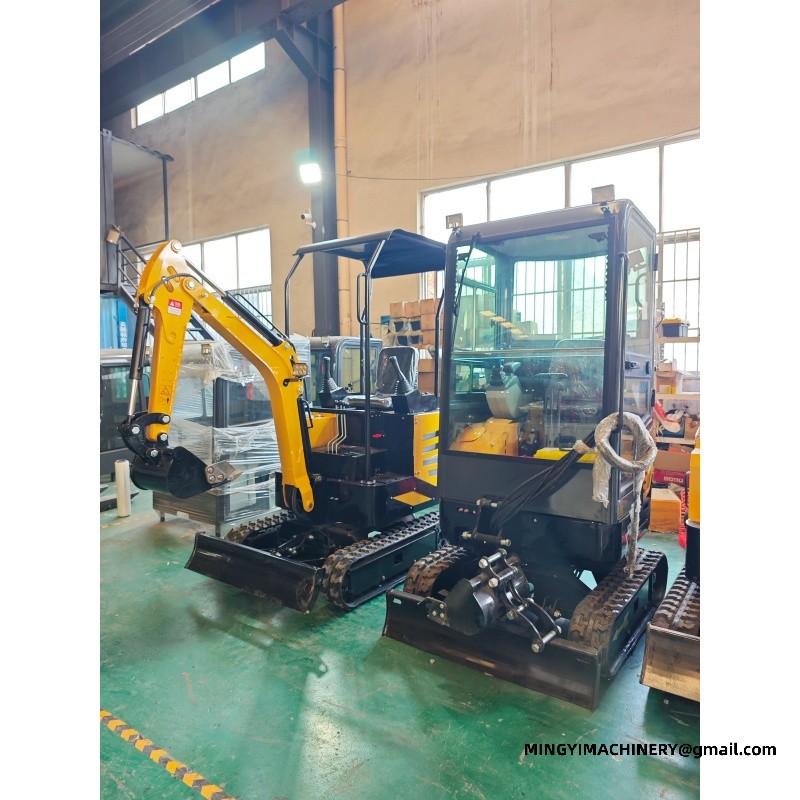
Service trenches are the most common reason the excavator is hired. Water, sewage, cable and gas runs are narrow, shallow and often close to existing services, which is exactly the work a full-size machine cannot do safely. Depth control matters more on service work than speed. This class of machine working beside live services is chosen because it can be placed precisely and stopped instantly, which is what the job actually requires.
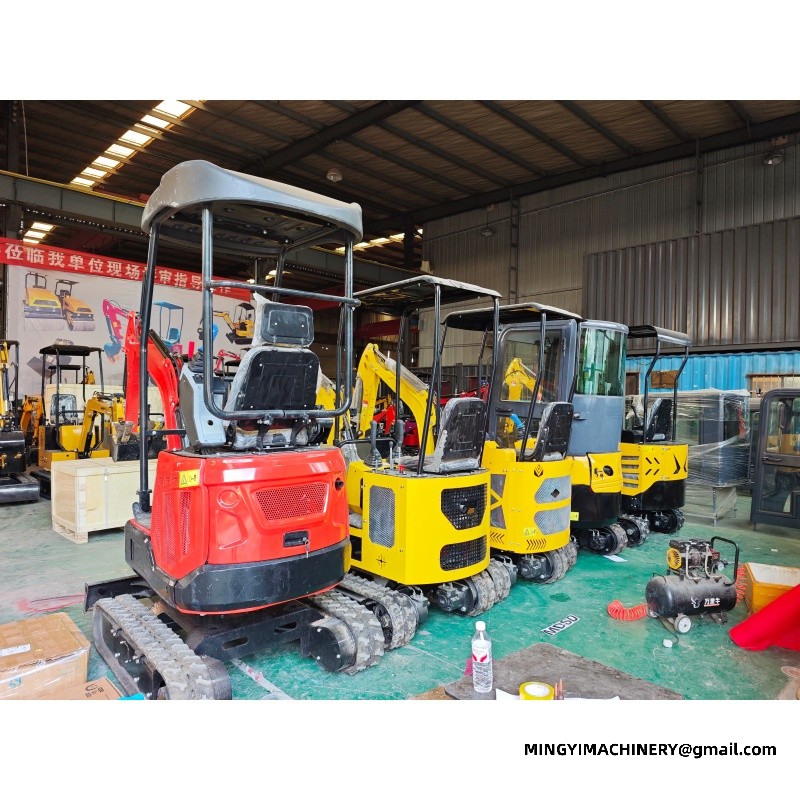
Hard and abrasive ground reverses the specification. On rock, demolition rubble or sharp gravel, steel tracks with rubber blocks on the unit in daily use survive conditions that cut a rubber belt quickly. Mixed sites are common and argue for a compromise specification. Most buyers choose rubber for a machine of this size and accept the wear, unless the majority of the work is on material that will damage it.
Seasonal planning smooths the workload. Machines that are busy for a few months and idle for the rest benefit from a service slot in the quiet period, and the equipment on site prepared in the off-season starts the busy months reliably. Heat and dust are as limiting as rain. Air intake condition and cooling cleanliness decide how the machine itself behaves in a dry season, and both are checked in a minute rather than repaired later.
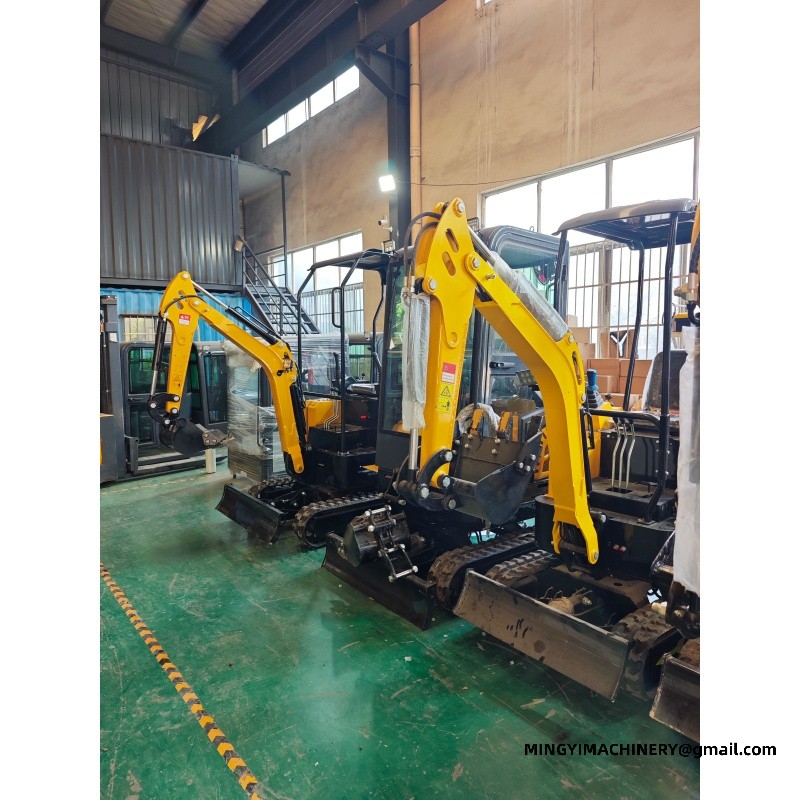
Distributors and rental fleets usually need the machine to look like theirs. Paint, decals, seat colour and attachment branding can be specified on the model in question at build time rather than applied after import. Documentation can be prepared to suit the importer. Manuals, parts books and decal sets for the machine in that duty can be supplied with the buyer's own branding where the order size justifies it.
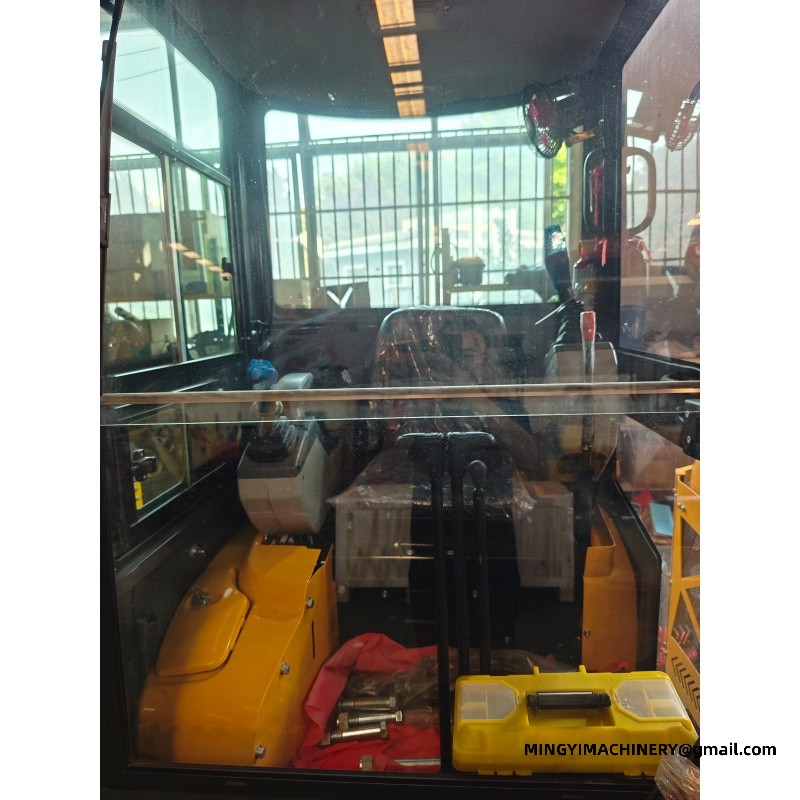
Slope work is a stability question before it is a traction question. Knowing the gradient the unit on the job is rated for, and working across rather than straight up where the ground allows, removes most of the risk. Ground that looks level often is not. A machine built for the work crossing a filled trench, a soft edge or a hidden void behaves differently from one on undisturbed ground, and those are the places worth walking before driving.
The base machine is a carrier; the tool on the end of the arm decides the task. The equipment in service fitted with a toothed bucket digs, and the same machine with a breaker, an auger or a grab does work that would otherwise need a second unit on site. Most of the daily variety on the excavator comes from the attachment rack rather than from the machine itself. Bucket, breaker, auger, ripper, rake and grab cover the large majority of the work a contractor will see.
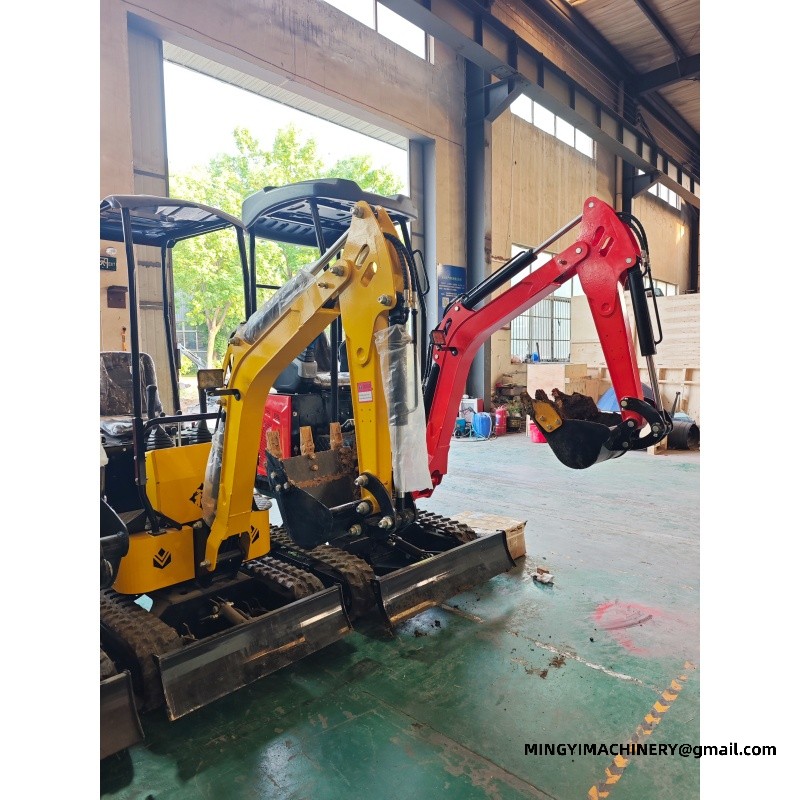
A quick coupler is the single option that changes how a machine is used day to day. Fitted to the unit in daily use, it turns an attachment change from a two-person workshop job into a task the operator does alone in minutes. Couplers are specified early because they affect the arm and the hydraulic kit. Adding one to a machine of this size after delivery means new pins, new hoses and a fitment session; adding it at build time is a line on the sheet.
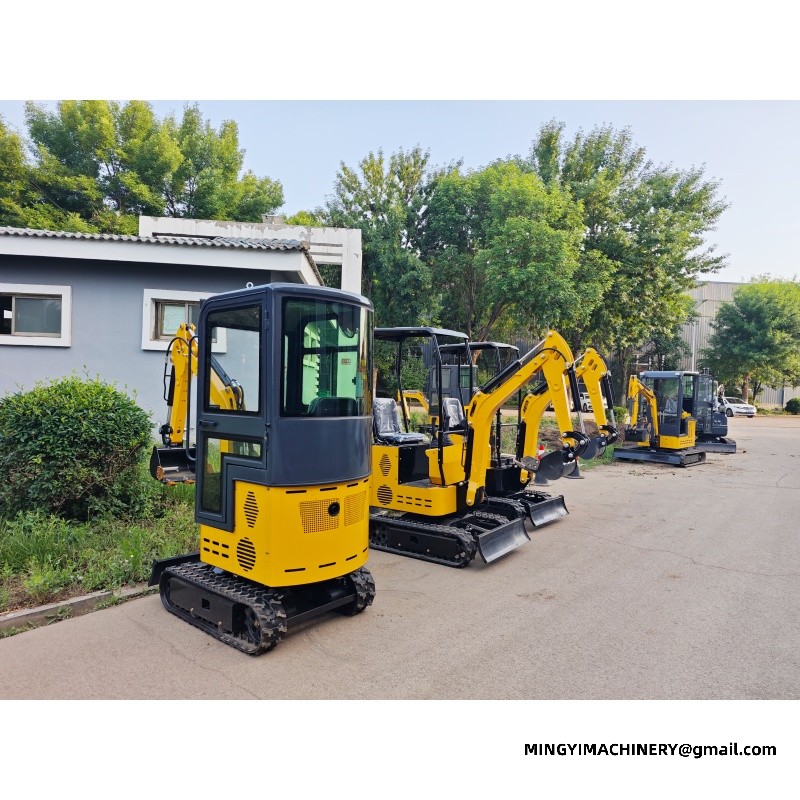
Rental fleets buy for utilisation, not for a single job. The machine itself with a quick coupler and a common attachment standard is hired more often because it suits more of the calls that come in. The specification that rents best is usually the simplest one to explain at the counter. The model in question with rubber tracks, a canopy and a coupler covers the majority of weekend and short-term hires.
Power unit selection is settled against the service network the buyer already uses. MINGYI offers Kubota D722, Kubota D902, YANMAR, Changchai, Laidong, Runtong, YARMAX, Youpu 2V80 and Youpu 195, so a fleet running one brand of engine can keep the same filters, the same parts supplier and the same mechanic. Engine choice is also an emissions and documentation question for some markets. Listing the available units with the unit on the job enquiry lets the factory confirm what can be supplied and documented for the destination country.
Rubber tracks suit paved and landscaped ground because they spread the machine weight and leave the surface intact. Steel tracks with rubber blocks are specified where the ground is rougher or the working day is longer, and the choice can be made per machine rather than accepted as a factory default. Undercarriage selection is a ground question, not a preference question. The equipment in service running on finished paving needs rubber; the same machine on demolition rubble or rock wears rubber quickly, so steel with rubber blocks becomes the better answer over a full season.
Buyers comparing this class of machine usually start from four numbers - weight, digging depth, reach and transport width - because those are the ones that decide whether the machine can be delivered and whether it can do the job once it is there.
| Reference specification — mini excavator range | 20-3W | 20-2L | 25L | 30-2L |
|---|---|---|---|---|
| Operating weight | 1900 kg (4188.78 lb) | 1900 kg (4188.78 lb) | 2200 kg (4850.17 lb) | 2400 kg (5291 lb) |
| Transport size (L×W×H) | 2550 × 1100 × 2200 mm | 2600 × 1300 × 2344 mm | 3000 × 1300 × 2700 mm | 2800 × 1500 × 2500 mm |
| Max digging depth | 1800 mm (70.87 in) | 2100 mm (82.68 in) | 2300 mm (90.55 in) | 2200 mm (86.61 in) |
| Max digging height | 2820 mm (111.02 in) | 2880 mm (113.39 in) | 3100 mm (122.05 in) | 2900 mm (114.17 in) |
| Max dumping height | 2050 mm (80.71 in) | 2100 mm (82.68 in) | 2050 mm (80.71 in) | 2100 mm (82.68 in) |
| Max digging radius | 3050 mm (120.08 in) | 3215 mm (126.57 in) | 3900 mm (153.54 in) | 3330 mm (131.1 in) |
| Max digging distance | 2300 mm (90.55 in) | 2460 mm (96.85 in) | 3100 mm (125.05 in) | 2700 mm (106.3 in) |
| Minimum turning radius | 1450 mm (57.09 in) | 1587 mm (62.48 in) | 1800 mm (70.87 in) | 1555 mm (61.22 in) |
| Travel speed | 5 km/h (3.11 mph) | 5 km/h (3.11 mph) | 7 km/h (4.35 mph) | 7 km/h (4.35 mph) |
| Gradeability | 30° | 30° | 30° | 30° |
| Fuel consumption | 2-3 L/h (0.528—0.793 gal) | 2-3 L/h (0.528—0.793 gal) | 2-3 L/h (0.528—0.793 gal) | 2-3 L/h (0.528—0.793 gal) |
| Fuel tank capacity | 16 L (4.23 gal) | 16 L (4.23 gal) | 16 L (4.23 gal) | 16 L (4.23 gal) |
| Hydraulic oil tank | 18 L (4.76 gal) | 18 L (4.76 gal) | 18 L (4.76 gal) | 18 L (4.76 gal) |
| Dozer blade lift height | 180 mm (7.09 in) | 180 mm (7.09 in) | 230 mm (9.06 in) | 230 mm (9.06 in) |
| Dozer blade drop depth | 210 mm (8.27 in) | 210 mm (8.27 in) | 280 mm (11.02 in) | 280 mm (11.02 in) |
Figures are factory figures and are confirmed on the build sheet for the unit in daily use. Where a job sits between two models, the larger machine usually takes less time than the smaller one spends on rework.
Purchase decision is the visible part of the effort. Fuel, filters, tracks or tyres, the operator and the transport between sites are the items that decide what a machine of this size actually demands over a few seasons, and they are worth listing before the order. The useful comparison is demand per working hour, not demand per machine. The equipment on site that works more hours a year spreads its standing takes over more output, which is why utilisation usually matters more than the invoice figure.
Frequently Asked QuestionsQ. What is the machine itself?
A. Zero tail swing, retractable frames and short-radius booms exist for one reason: to put a real digging machine through a gap and let it work at full rate on the other side. Inside a basement or behind a boundary the machine digs footings, breaks floors and grades the sub-base at rates hand work cannot touch. MINGYI builds the 08, 12 and 18 models covering the 0.8 to 6 tonne class, and the model in question is where that range meets narrow access.
Q. Is a micro machine still worth buying?
A. If the work is behind a single gate or down a stairwell, yes - it is the only machine that reaches the job at all. Pair it with the attachment set and it specifications like a bigger machine on small sites.
Q. Does MINGYI supply attachments with the machine?
A. Yes - buckets, breakers, augers, rakes and the rest of the working set ship with the carrier, matched to the hydraulic flow and the coupler. For narrow access the package is confirmed on the build sheet, so machine and tools arrive together and start work together.
Different operators suit different work. The person who is quickest with the unit on the job on open ground is not always the one who is safest in a confined space, and having both available is a genuine advantage.
The battery and the fuel are the first things to suffer in storage. Preparing the equipment in service properly at the start of the idle period avoids the flat battery and the contaminated tank that greet an unprepared machine.
Transport shakes things loose. A short check of this class of machine after the crate is opened, covering the same points the pre-delivery inspection covered, is the most useful insurance available on delivery day.
E-mail : sales@mingycn.com
LINE ( ID ): mingyicn