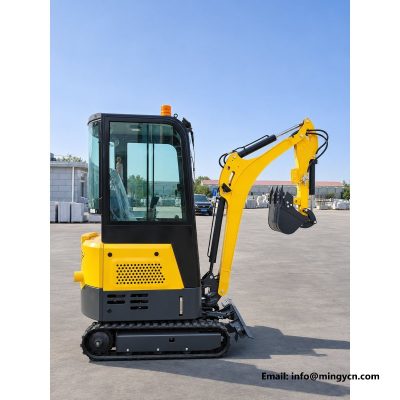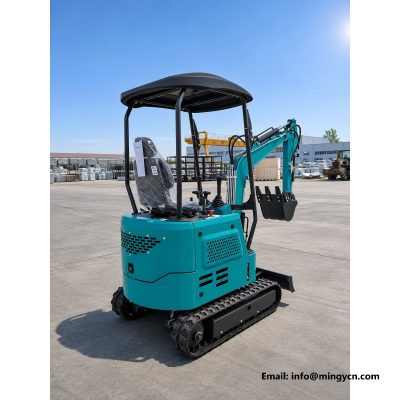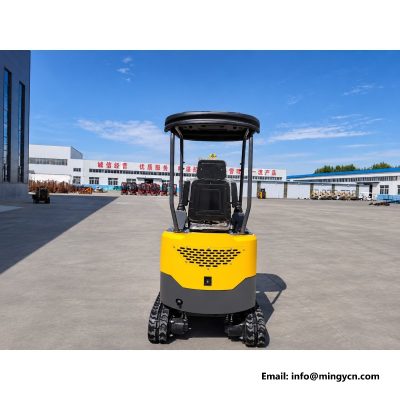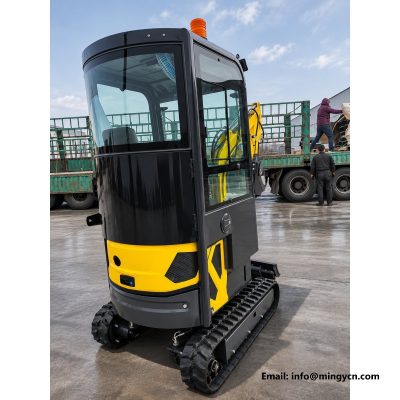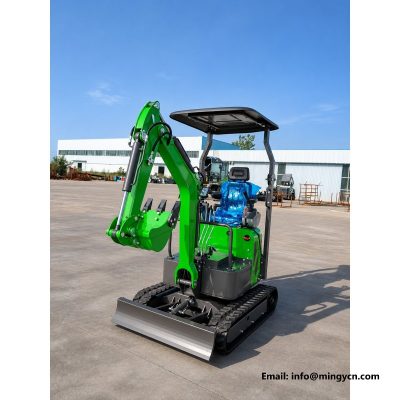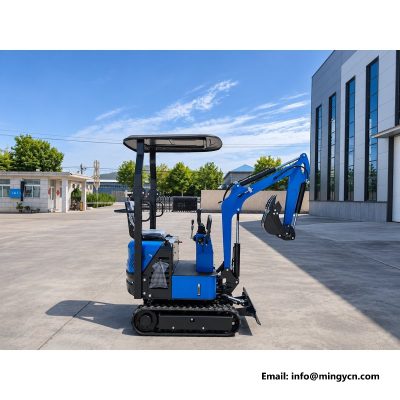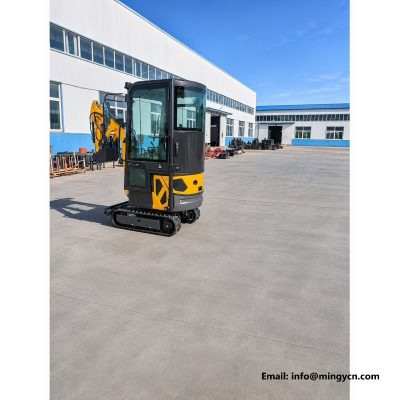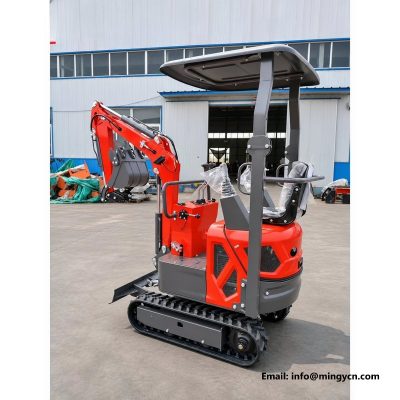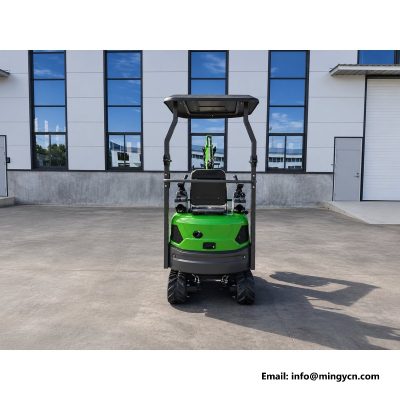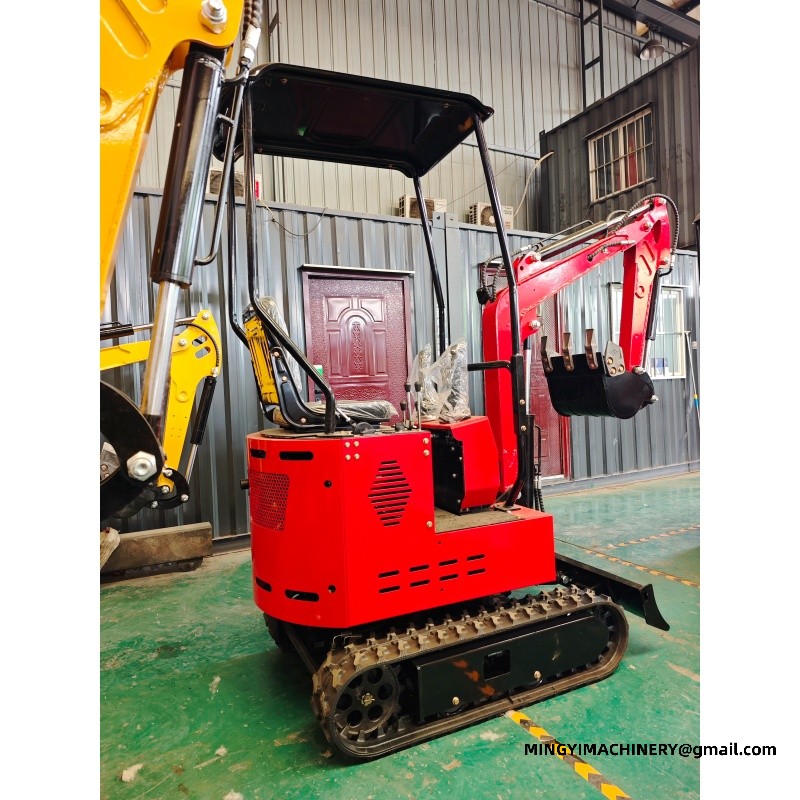
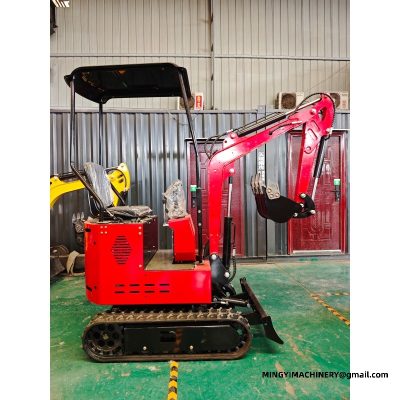
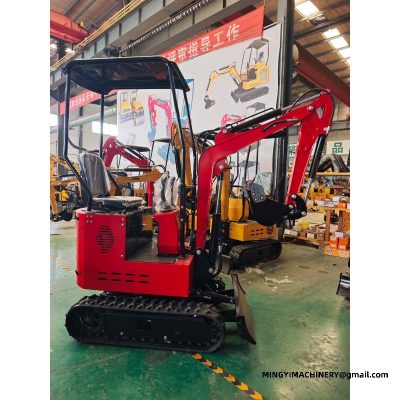
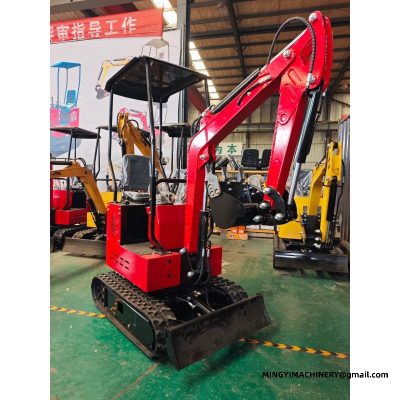
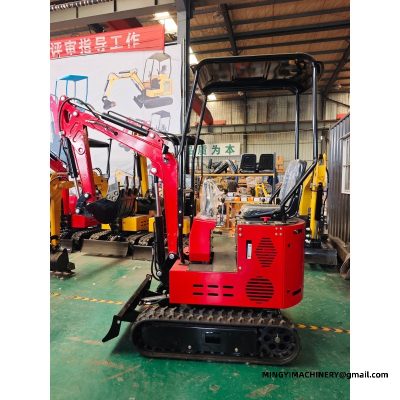
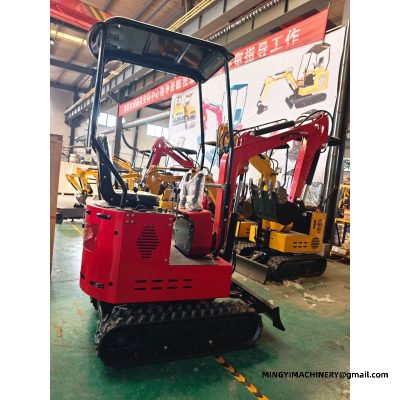
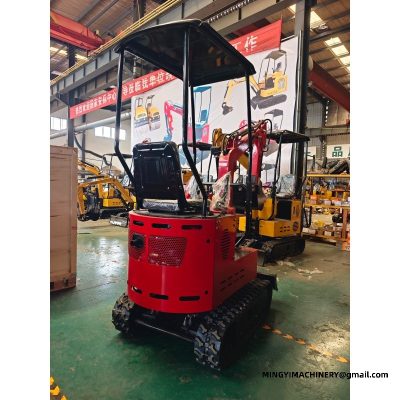
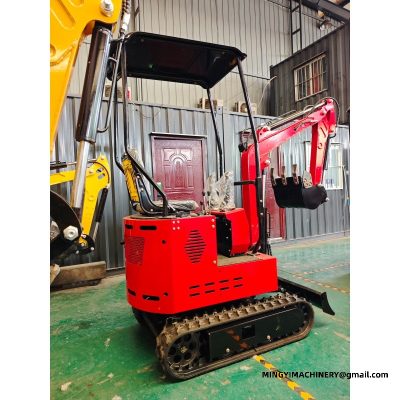
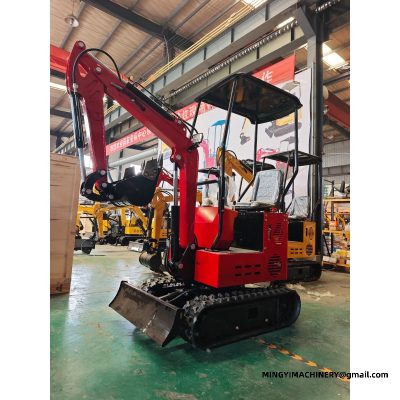
Road maintenance crews work in short, disrupted windows, often with traffic running beside them. A small crawler excavator fits that pattern because it can be set up quickly, work within a confined area and clear the site again before the road is reopened.
MINGYI builds compact machines across the 0.8 to 6 tonnes band, so a buyer can match the unit to the type of repair being carried out. Steel tracks with rubber blocks are common here, combining grip on the formation with protection for the running surface.
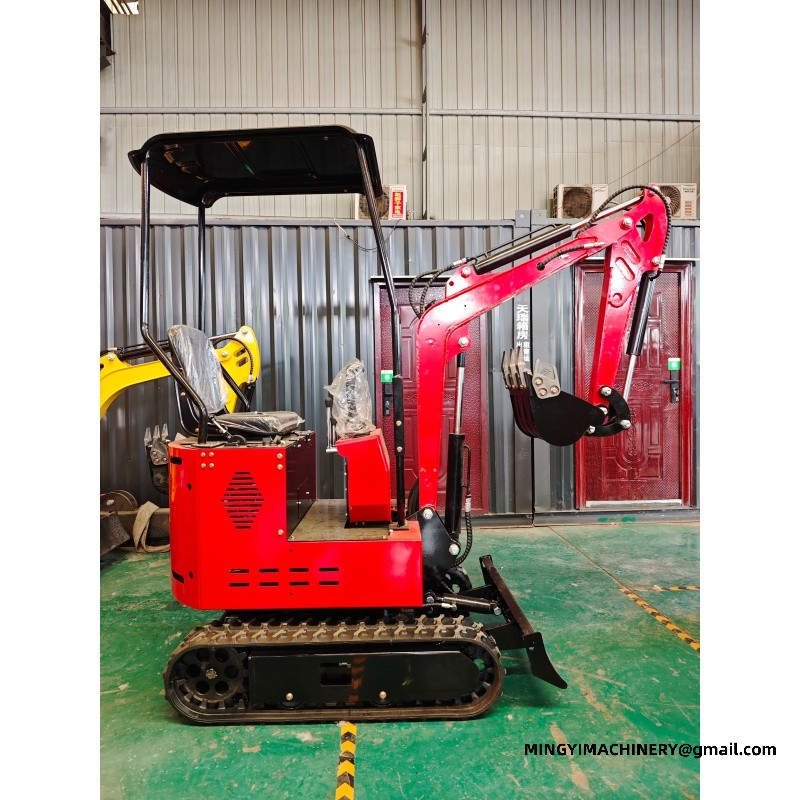
The work ranges from cutting out failed surfacing and trimming the edges of a patch to opening a drainage gully at the verge. A tilting bucket is useful for trimming a straight edge before new material is placed, which is difficult with a fixed bucket.
Verge and ditch maintenance is often part of the same job. A grass rake or a flail mower on the same machine keeps the growth down while the ditch is cut, so the crew does not return later with different equipment.
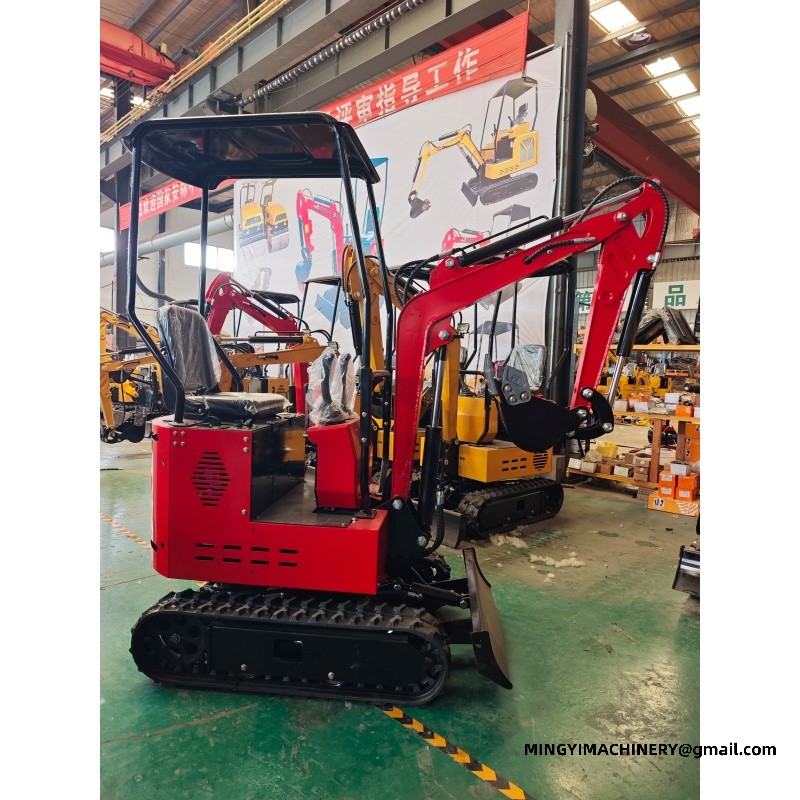
When the machine works within a coned-off lane, tail swing becomes the limiting dimension. A zero or short tail swing design keeps the counterweight inside the closure, allowing the operator to turn without the rear crossing the running lane.
Stability on a cut edge is the second concern. A tracked machine with a long footprint stays level when the bucket reaches out over a trench at the verge, which is the position most repairs are carried out from.
For road maintenance, a small excavator is specified for how it works beside traffic and how quickly it can be repositioned, not for the size of the bucket. Setting out the repair tasks at the order keeps the machine suited to the work.
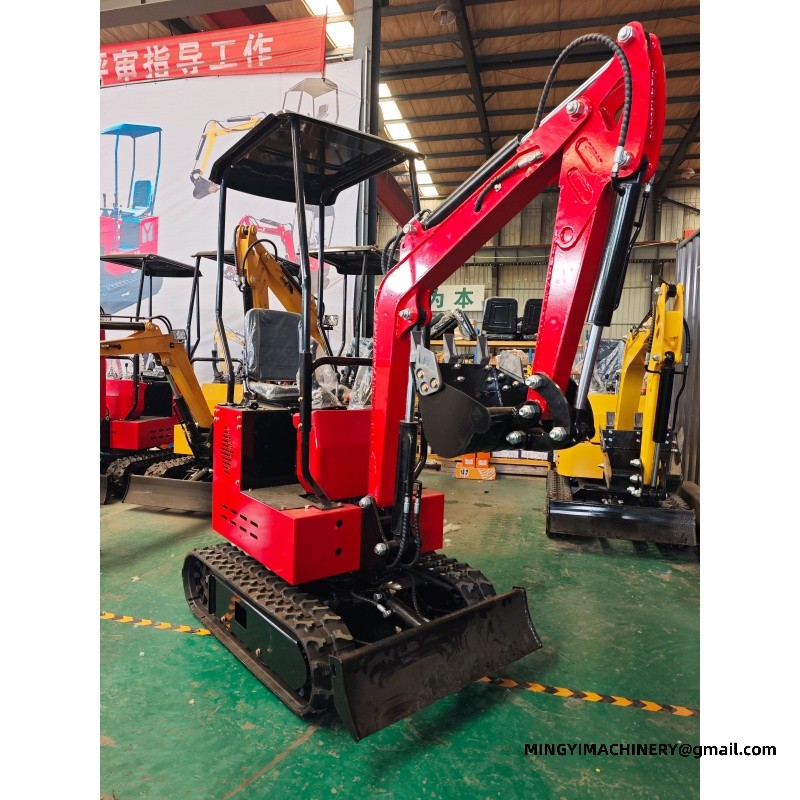
Customisation also covers the specification sheet. A fleet buyer may want every this class of machine delivered with the same coupler, the same engine and the same tool kit so training and parts stock stay simple. Documentation can be prepared to suit the importer. Manuals, parts books and decal sets for the excavator can be supplied with the buyer's own branding where the order size justifies it.
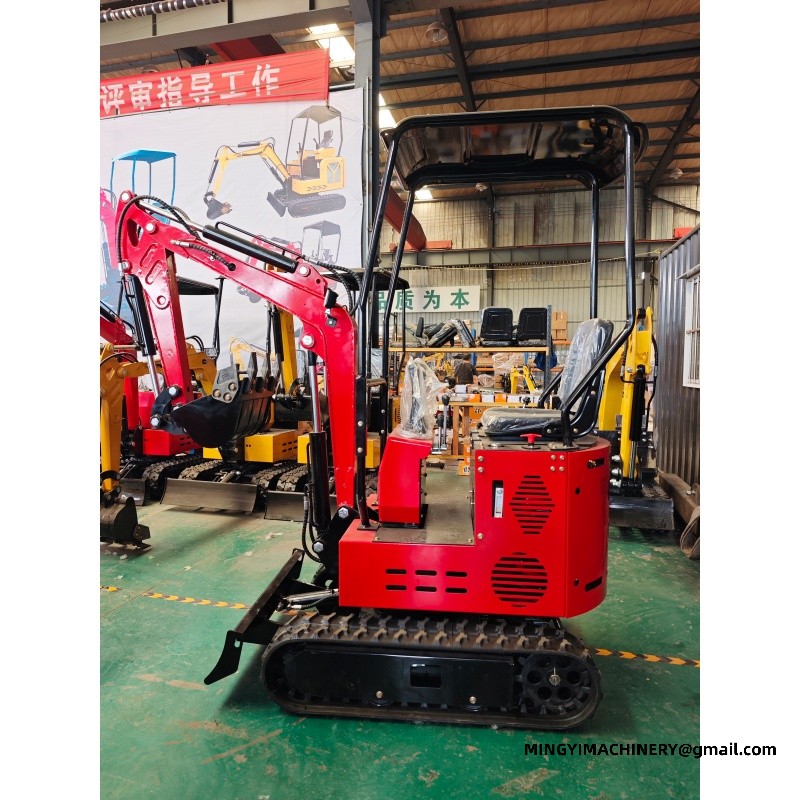
Weather decides which days are productive. Rain turns some ground unusable and cold changes how the unit in daily use starts and warms up, so planning the wet months around maintenance is more useful than planning around output. Heat and dust are as limiting as rain. Air intake condition and cooling cleanliness decide how a machine of this size behaves in a dry season, and both are checked in a minute rather than repaired later.
Power unit selection is settled against the service network the buyer already uses. MINGYI offers Kubota D722, Kubota D902, YANMAR, Changchai, Laidong, Runtong, YARMAX, Youpu 2V80 and Youpu 195, so a fleet running one brand of engine can keep the same filters, the same parts supplier and the same mechanic. Two buyers can order the same the equipment on site and receive different engines. The decision is rarely about peak power; it is about which parts counter is closest to the site and which engine the local mechanic already knows.
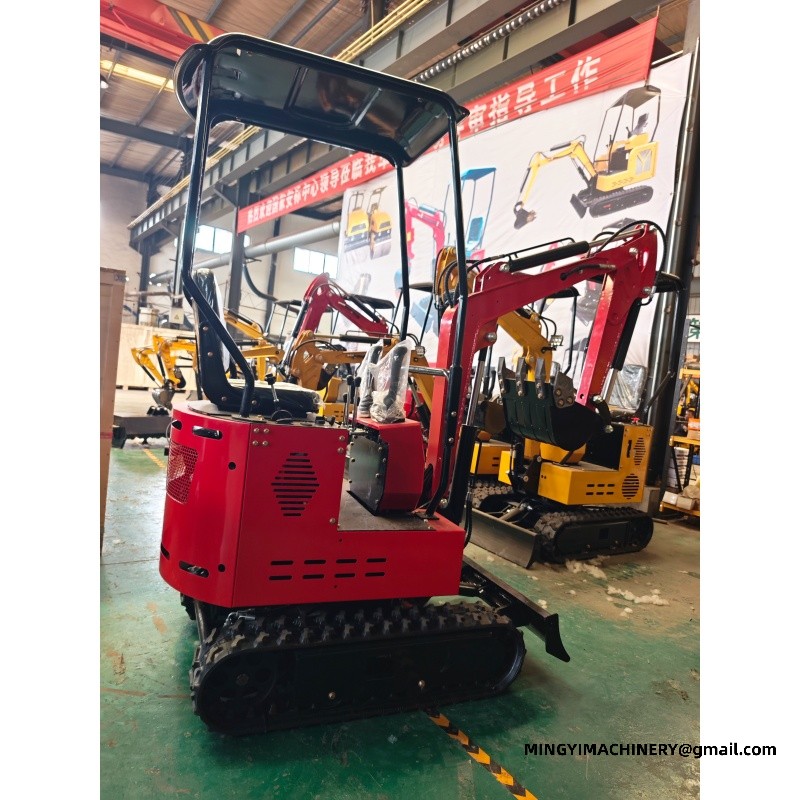
Delivery day is the best time to find a problem. Checking the specification against the order, the fluid levels, the fasteners and any transport damage while the model in question is still on the trailer is faster than claiming later. A function check before the machine goes to work is worth the hour. Running through the controls, the travel and the attachment circuit on the machine itself confirms it is set up as specified and ready for the site.
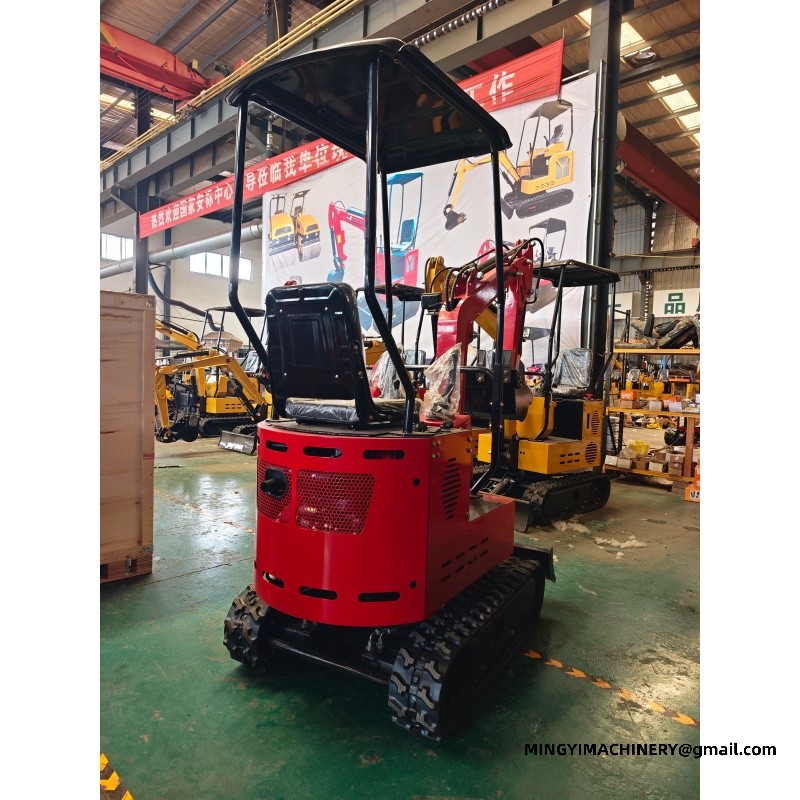
A canopy keeps the machine light and the operator aware of the surroundings, which suits short jobs in warm weather. A fully enclosed cab is specified where rain, dust or cold are part of the working year, and it can be added to the machine in that duty as a retrofit rather than only at build time. The cab decision follows the climate and the hours. Operators working a full shift in the unit on the job benefit from a sealed cab with wipers and heating; operators stepping on and off every few minutes usually prefer the canopy for the visibility and the quick exit.
Availability is part of the decision. Owning a machine built for the work means it is there on the day the ground is ready; hiring means competing for the same machine at the same time as everyone else in the season. Ownership brings obligations that hiring does not. Storage, servicing, insurance and an operator are the items to set against the hire rate before deciding which way the equipment in service should be supplied.
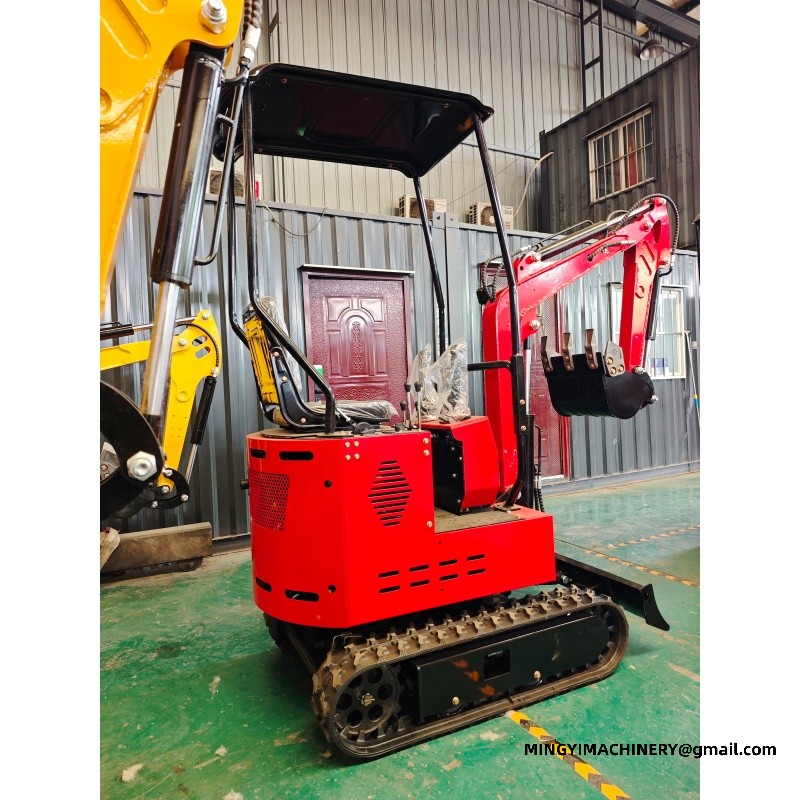
Confined sites are decided by dimensions. Overall width, tail swing and the space needed to work the arm are what let this class of machine operate inside a building, between walls or in a courtyard. Clearance above matters as much as around. Door heights, pipework and overhead services set the limit for the unit in daily use indoors, and measuring them first avoids a machine that arrives and cannot be used.
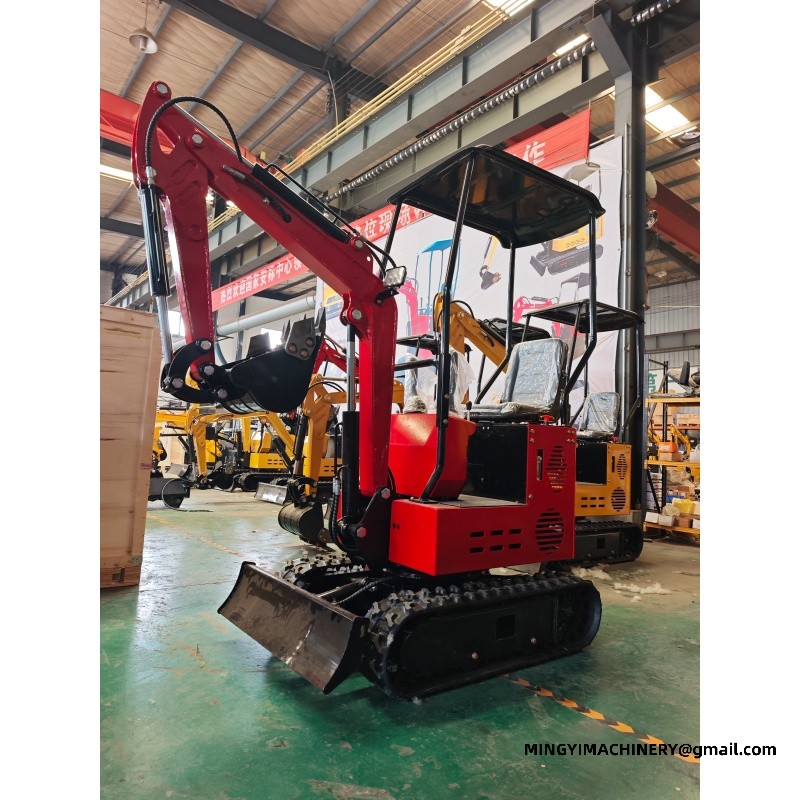
Undercarriage selection is a ground question, not a preference question. The equipment on site running on finished paving needs rubber; the same machine on demolition rubble or rock wears rubber quickly, so steel with rubber blocks becomes the better answer over a full season. Track type changes what the machine can cross and what it leaves behind. Buyers specify rubber for lawns, driveways and municipal work, and steel with rubber blocks for sites where sharp material would cut a rubber belt in a week.
The practical way to specify is to write the job list first: the narrowest access, the deepest trench, the heaviest tool and the surfaces the machine must cross. The model in question is then matched to those four numbers. Buyers who skip this step either over-buy or under-buy. The machine in that duty specified only from machine size tends to arrive without the coupler, the circuits or the track type the work actually needs.
Municipal crews work on streets, footpaths and parks where the public is present. A machine built for the work is specified because it occupies little space, works inside a small exclusion zone and can be moved on a standard trailer. Noise and surface protection matter on public work. The equipment in service on rubber tracks across paving, with a sealed cab for the operator, suits the conditions better than a larger tracked machine.
Purchase decision is the visible part of the effort. Fuel, filters, tracks or tyres, the operator and the transport between sites are the items that decide what this class of machine actually demands over a few seasons, and they are worth listing before the order. The useful comparison is demand per working hour, not demand per machine. The unit in daily use that works more hours a year spreads its standing takes over more output, which is why utilisation usually matters more than the invoice figure.
The figures below are the factory figures for the models most often matched to the equipment on site. They are the numbers to check against the site: the depth the work needs, the reach from one position, and the width of the narrowest point on the route in.
| Reference specification — mini excavator range | 09W | 30-1W | 09L | 30-2L |
|---|---|---|---|---|
| Operating weight | 1100 kg (2425.08 lb) | 2900 kg (6393.41 lb) | 1100 kg (2425.08 lb) | 2400 kg (5291 lb) |
| Transport size (L×W×H) | 1800 × 750 × 1970 mm | 3000 × 1250 × 2780 mm | 2300 × 720 × 1870 mm | 2800 × 1500 × 2500 mm |
| Max digging depth | 1250 mm (49.21 in) | 2200 mm (86.61 in) | 1400 mm (55.12 in) | 2200 mm (86.61 in) |
| Max digging height | 2800 mm (110.24 in) | 3400 mm (133.86 in) | 2800 mm (110.24 in) | 2900 mm (114.17 in) |
| Max dumping height | 1700 mm (66.93 in) | 2400 mm (94.49 in) | 1880 mm (74.02 in) | 2100 mm (82.68 in) |
| Max digging radius | 2570 mm (101.18 in) | 4000 mm (157.48 in) | 2490 mm (98.03 in) | 3330 mm (131.1 in) |
| Max digging distance | 1869 mm (73.58 in) | 2800 mm (110.24 in) | 2000 mm (78.74 in) | 2700 mm (106.3 in) |
| Minimum turning radius | 1000 mm (39.37 in) | 2000 mm (78.74 in) | 1400 mm (55.12 in) | 1555 mm (61.22 in) |
| Travel speed | 3 km/h (1.86 mph) | 5 km/h (3.11 mph) | 3 km/h (1.86 mph) | 7 km/h (4.35 mph) |
| Gradeability | 30° | 30° | 30° | 30° |
| Fuel consumption | 1-1.3 L/h (0.264—0.343 gal) | 2-3 L/h (0.528—0.793 gal) | 1-1.3 L/h (0.264—0.343 gal) | 2-3 L/h (0.528—0.793 gal) |
| Fuel tank capacity | 8 L (2.11 gal) | 16 L (4.23 gal) | 8 L (2.11 gal) | 16 L (4.23 gal) |
| Hydraulic oil tank | 16 L (4.23 gal) | 20 L (5.28 gal) | 16 L (4.23 gal) | 18 L (4.76 gal) |
| Dozer blade lift height | 180 mm (7.09 in) | 420 mm (16.54 in) | 180 mm (7.09 in) | 230 mm (9.06 in) |
| Dozer blade drop depth | 210 mm (8.27 in) | 210 mm (8.27 in) | 210 mm (8.27 in) | 280 mm (11.02 in) |
Every value shown is as built for the machine itself; options such as cab, side swing or a telescopic undercarriage change the transport dimensions and are confirmed at order stage.
Support after delivery is a parts question. Wearing items for the model in question - filters, belts, track components, bucket teeth and pins - are the items a buyer should plan to hold before the first service interval. Remote support is handled by video. The machine in that duty fault can often be diagnosed on a walk-around call with the panel open, which is faster than waiting for a visit and avoids shipping a part that is not needed.
Frequently Asked QuestionsQ. What is the unit on the job?
A. Public works and groundworks reward the machine that arrives small, works steady and reinstates cleanly - exactly the compact excavator brief. A swing boom reaches the line while the carrier stays off the carriageway. For road maintenance applications the practical route is to send the job list to the factory and let the build sheet answer it - which is exactly what this page invites.
Q. How does one machine cover a day of small municipal works?
A. By swapping attachments at the kerbside: bucket to dig, grab to place kerbs, compaction wheel to reinstate. The coupler and a planned trailer keep the crew self-sufficient all shift.
Q. Can I see the machine before it ships?
A. Inspection is arranged at the factory, in person or by a scheduled video walk-around - the same session covers paint, decals and attachment fitment for the road maintenance specification, so the machine inspected is the machine that ships.
A machine that only one person can use is a single point of failure. Training a second operator on the equipment in service takes a day and removes the dependency that otherwise governs holidays, illness and busy weeks.
Inspection is a list, not a glance. Before this class of machine is released the fluid levels, belt tension, electrical connections and safety decals are each ticked off, and anything that fails stays in the shop rather than travelling with the machine.
E-mail : sales@mingycn.com
LINE ( ID ): mingyicn